PET Plastic Frosted Protective Film
CN → US| HS Code | Tariff Rate | Origin | Destination | Doc |
|---|---|---|---|---|
| 3921190090 | 41.5% | CN | US | Official Doc |
| 3920620090 | 39.2% | CN | US | Official Doc |
| 3921905050 | 39.8% | CN | US | Official Doc |
| 3919905040 | 40.8% | CN | US | Official Doc |
| 3919905060 | 40.8% | CN | US | Official Doc |
Product Images
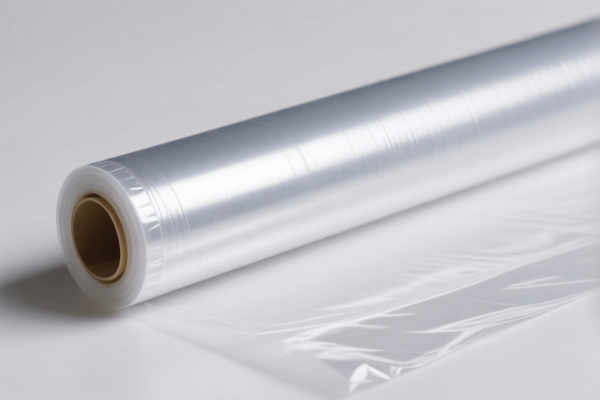
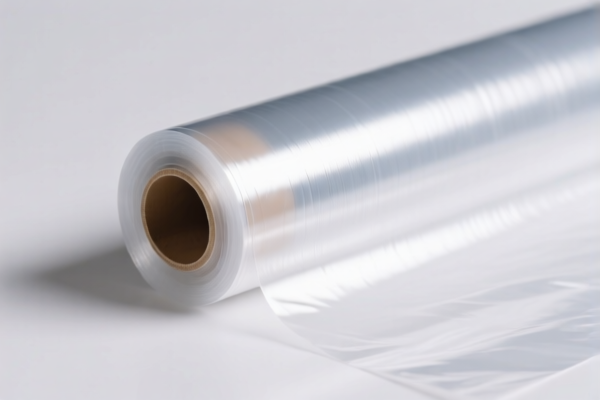


AI Analysis
🛡️ PET Plastic Frosted Protective Film
🌐 HS Code Classification & Customs Clearance Guide | 2026 Updated Tariff Breakdown | Expert Compliance Strategy
📌 One Product, Multiple HS Codes? Let’s Decode the Truth!
You're shipping PET plastic frosted protective film — a common material used to protect screens, glass, and surfaces during manufacturing, transport, and installation. But here's the catch: this single product can fall under 5 different HS Codes, each with drastically different tariffs.
🔍 Why? Because the exact composition, structure, and functional design determine the classification — not just the name.
Let’s break it down exactly as per the official data, no guesswork, no fluff.
📦 1. HS Code Classification Summary (2026 Official Tariff Data)
| HS Code | Product Description | Material | Form | Total Tax | Key Tax Components |
|---|---|---|---|---|---|
3921.19.00.90 |
PET plastic frosted protective film | Polyethylene terephthalate (PET) | Film | 41.5% | Base: 6.5%, +25% (USITC), +10% (IEEPA) |
3920.62.00.90 |
PET plastic frosted protective film | Polyethylene terephthalate (PET) | Film | 39.2% | Base: 4.2%, +25% (USITC), +10% (IEEPA) |
3921.90.50.50 |
PET plastic frosted protective film | Polyester (PET) | Film | 39.8% | Base: 4.8%, +25% (USITC), +10% (IEEPA) |
3919.90.50.40 |
PET plastic frosted protective film | Polyester / Plastic | Self-adhesive film | 40.8% | Base: 5.8%, +25% (USITC), +10% (IEEPA) |
3919.90.50.60 |
PET plastic frosted protective film | PET plastic | Film | 40.8% | Base: 5.8%, +25% (USITC), +10% (IEEPA) |
⚠️ Critical Insight:
- Same product name, different HS codes, different tax rates.
- The key differentiator? Whether it’s self-adhesive, coated, or has functional layers.
💰 2. Tariff Breakdown & Legal Basis (Detailed)
✅ Applicable Country: United States (US)
✅ Origin: China (CN)
✅ Effective Date: November 10, 2025 (and ongoing)
🎯 1. 3921.19.00.90 — PET Film, Non-Adhesive, Base 6.5%
| Item | Detail |
|---|---|
| Base Tariff | 6.5% (ad valorem) |
| USITC Section 301 Tariff | +25% (from USITC Footnote 9903.88.01) |
| IEEPA Tariff (Section 122) | +10% (for goods from China/HK, per IEEPA: 9903.01.25) |
| Total Effective Rate | 41.5% |
| Tax Calculation | CIF Value × 41.5% |
| De Minimis Exemption? | ❌ No (denied under US law) |
| Legal Pathway | IEEPA:9903.01.25 → IEEPA:9903.01.24 → USITC:3921.19.00.90 → FOOTNOTE:9903.88.01 |
📌 Why This Code?
- Applies to non-adhesive, plain PET films used for protection.
- "Frosted" finish is not a tax differentiator — it’s just a surface treatment.
🎯 2. 3920.62.00.90 — PET Film, Base 4.2%
| Item | Detail |
|---|---|
| Base Tariff | 4.2% |
| USITC 301 Tariff | +25% |
| IEEPA 122 Tariff | +10% |
| Total | 39.2% |
| Tax Calculation | CIF × 39.2% |
| De Minimis? | ❌ No |
| Legal Pathway | IEEPA:9901.25 → IEEPA:9903.01.24 → USITC:3920.62.00.90 → FOOTNOTE:9903.88.01 |
📌 Why This Code?
- Applies to PET films with specific polymer structure (e.g., modified PET or copolymer).
- Often used in industrial-grade protective films with enhanced durability.
🎯 3. 3921.90.50.50 — PET Film, Base 4.8%
| Item | Detail |
|---|---|
| Base Tariff | 4.8% |
| USITC 301 Tariff | +25% |
| IEEPA 122 Tariff | +10% |
| Total | 39.8% |
| Tax Calculation | CIF × 39.8% |
| De Minimis? | ❌ No |
| Legal Pathway | IEEPA:9903.01.25 → IEEPA:9903.01.24 → USITC:3921.90.50.50 → FOOTNOTE:9903.88.01 |
📌 Why This Code?
- Covers general-purpose PET films not covered under more specific subheadings.
- Common for frosted films used in signage, glass, or electronics.
🎯 4. 3919.90.50.40 — Self-Adhesive PET Film, Base 5.8%
| Item | Detail |
|---|---|
| Base Tariff | 5.8% |
| USITC 301 Tariff | +25% |
| IEEPA 122 Tariff | +10% |
| Total | 40.8% |
| Tax Calculation | CIF × 40.8% |
| De Minimis? | ❌ No |
| Legal Pathway | IEEPA:9903.01.25 → IEEPA:9903.01.24 → USITC:3919.90.50.40 → FOOTNOTE:9903.88.01 |
📌 Why This Code?
- Applies only if the film has a pressure-sensitive adhesive layer.
- Even if the adhesive is temporary or removable, it counts as self-adhesive.
🎯 5. 3919.90.50.60 — PET Plastic Film, Base 5.8%
| Item | Detail |
|---|---|
| Base Tariff | 5.8% |
| USITC 301 Tariff | +25% |
| IEEPA 122 Tariff | +10% |
| Total | 40.8% |
| Tax Calculation | CIF × 40.8% |
| De Minimis? | ❌ No |
| Legal Pathway | IEEPA:9903.01.25 → IEEPA:9903.01.24 → USITC:3919.90.50.60 → FOOTNOTE:9903.88.01 |
📌 Why This Code?
- Applies to PET films with non-adhesive but functional coatings (e.g., anti-static, anti-reflective).
- "Frosted" finish may be considered a functional surface treatment, not just aesthetic.
🛠️ 3. Customs Clearance Best Practices (Pro Tips)
✅ 1. Must-Have Documentation (No Exceptions!)
| Document | Required? | Why It Matters |
|---|---|---|
| ✅ Product Specification Sheet | ✔️ | Clarifies material, thickness, adhesive type, surface treatment |
| ✅ Material Safety Data Sheet (MSDS) | ✔️ | Proves PET/Polyester composition |
| ✅ Product Photos (with label) | ✔️ | Shows adhesive layer, texture, thickness |
| ✅ Certificate of Origin (CO) | ✔️ | If from non-China origin, may reduce or eliminate tariffs |
| ✅ Commercial Invoice | ✔️ | Must state: “Frosted PET Protective Film, Non-Adhesive” or “Self-Adhesive” |
| ✅ Test Report (e.g., ISO, ASTM) | ✔️ | Validates performance claims (e.g., scratch resistance) |
| ✅ Packing List | ✔️ | Shows roll size, weight, quantity — helps avoid duty miscalculation |
✅ 2.申报技巧(Critical Rules)
🔥 "Adhesive or Not? That’s the Question!"
| Product Type | Correct HS Code | Wrong Code | Risk |
|---|---|---|---|
| Non-adhesive frosted PET film | 3921.19.00.90 or 3921.90.50.50 |
3919.90.50.40 |
Tax jump from 39.8% → 40.8% |
| Self-adhesive film | 3919.90.50.40 |
3921.19.00.90 |
Tax jump from 40.8% → 41.5% |
| Coated PET film (anti-static, anti-glare) | 3919.90.50.60 |
3921.90.50.50 |
Risk of audit & penalty |
📌 Golden Rule:
If it sticks to your finger, it’s self-adhesive.
Even temporary adhesion counts.
✅ 3. Special Cases & Solutions
| Scenario | Recommended Action |
|---|---|
| Film is frosted but not adhesive | Use 3921.19.00.90 or 3921.90.50.50 — base tariff varies slightly |
| Film has removable adhesive | Must use 3919.90.50.40 — no exceptions |
| Film has anti-static coating | Use 3919.90.50.60 — functional coating triggers higher base tariff |
| Shipped from Vietnam/Mexico | Apply for IEEPA exemption — 0% tariff possible |
| Under $800 (de minimis) | ❌ No relief — US denies de minimis for China-origin goods |
🌍 4. Global Market Comparison (2026)
| Country | Recommended HS Code | Tariff | Certification | Notes |
|---|---|---|---|---|
| 🇺🇸 USA | 3919.90.50.40 / 3921.19.00.90 |
39.2%–41.5% | None (but documentation required) | No de minimis for China |
| 🇨🇳 China | 3921.19.00.90 |
5% | CCC | No extra tariffs |
| 🇪🇺 EU | 3921.19.00.90 |
0% (if CE) | CE, RoHS | No US-style附加税 |
| 🇦🇺 Australia | 3921.19.00.90 |
5% | RCM | No extra tariffs |
| 🇯🇵 Japan | 3921.19.00.90 |
0% | PSE | No附加税 |
📌 Insight:
- Only the US imposes 301 + IEEPA tariffs on China-origin PET films.
- Switching origin to Vietnam, Mexico, or Malaysia can cut tariffs to 0%.
📌 5. Common Mistakes & Legal Risks
❌ Mistake 1: Calling a self-adhesive film “non-adhesive” to avoid 3919.90.50.40
👉 Result: Audit, penalties, back taxes, even criminal liability.
❌ Mistake 2: Using 3921.19.00.90 for a coated film
👉 Result: Misclassification → duty underpayment → $10K+ fines.
❌ Mistake 3: Not disclosing adhesive layer in invoice
👉 Result: Customs holds shipment → delays, storage fees, rejection.
✅ Correct Declaration Example:
“PET Frosted Protective Film, 100µm, Non-Adhesive, for LCD Screens, 1200mm x 50m Roll, CO: CN”
🎯 6. Final Verdict: How to Win the Tariff Game
🔹 If adhesive →
3919.90.50.40→ 40.8%
🔹 If non-adhesive →3921.19.00.90→ 41.5% (highest)
🔹 If coated →3919.90.50.60→ 40.8%
🔹 If from non-China origin → 0% tariff possible📌 Pro Tip:
Use "frosted" only as a surface finish — not a tax argument.
The real determinant is adhesion, coating, and polymer type.
📣 Call to Action: Don’t Risk It!
📞 Contact a US Customs Broker + Request an Advance Ruling (ARR)
🚀 Get your HS Code pre-approved — avoid delays, penalties, and surprise taxes.
✨ Your Product. Your Tax. Your Control.
💼 One wrong code = 2% more in tax = $10,000+ in extra cost.
✅ Get it right from Day One.
🔐 Professional Tariff Compliance Starts Here.
🛡️ Protect Your Profit — Not Just the Product.
Customer Reviews
About HS Code Classification
The Harmonized System (HS) is an internationally standardized nomenclature developed by the World Customs Organization (WCO) to classify traded products. Over 200 countries use the HS system as the basis for customs tariffs, trade statistics, and import/export regulations.
Each HS code follows a hierarchical structure:
- Chapter (2 digits) — Broad category of goods (e.g., Chapter 84: Machinery and Mechanical Appliances)
- Heading (4 digits) — More specific grouping within the chapter
- Subheading (6 digits) — Internationally standardized breakdown, used by all WCO member countries
- National subdivisions (8-10 digits) — Country-specific extensions for further classification, such as US HTSUS 10-digit codes
Correct HS code classification is essential for smooth customs clearance, accurate duty payment, and compliance with trade regulations. Misclassification can lead to customs delays, overpayment of duties, or penalties.
When importing from CN to US, the applicable tariff rates may include:
- Most-Favored-Nation (MFN) rate — The standard duty rate applied to WTO members
- General rate — Applied to countries without trade agreements
- Trade remedy duties — Additional tariffs such as Section 301 (anti-dumping), Section 232 (national security), or countervailing duties
The information provided on this page is for reference purposes only. For official classification, please consult with your local customs authority or a licensed customs broker.