PVC Flame Retardant Pipe
CN → US| HS Code | Tariff Rate | Origin | Destination | Doc |
|---|---|---|---|---|
| 3904210000 | 41.5% | CN | US | Official Doc |
| 3904220000 | 41.5% | CN | US | Official Doc |
| 3926909987 | 22.8% | CN | US | Official Doc |
| 3917320010 | 38.1% | CN | US | Official Doc |
| 3917230000 | 38.1% | CN | US | Official Doc |
Product Images

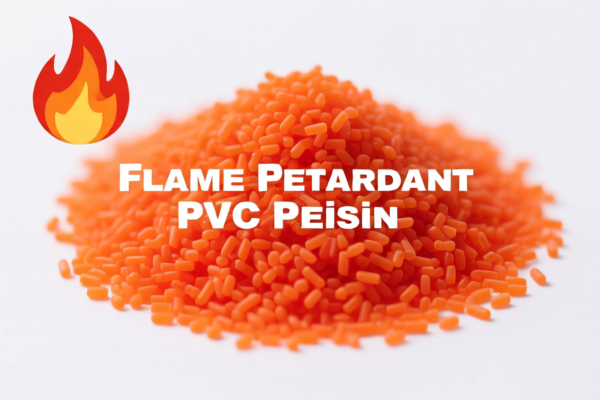

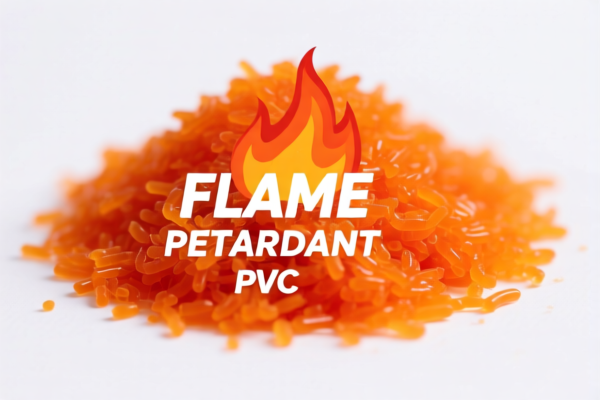
AI Analysis
🛠️ PVC Flame Retardant Pipe (PVC Fire-Resistant Pipes)
🌐 HS Code Classification & Customs Clearance Guide | 2026 Latest Tariff Rules | Pro-Level Import Strategy
📌 One: Product Definition & Classification – What Exactly Is a “PVC Flame Retardant Pipe”?
A PVC flame retardant pipe is a rigid, thermoplastic conduit made from chlorinated polyvinyl chloride (PVC), specially formulated with flame-retardant additives to resist ignition, slow flame spread, and reduce smoke emission in case of fire. These pipes are widely used in:
- Electrical wiring systems (e.g., in buildings, factories, data centers)
- Fire safety infrastructure
- Industrial piping under high-risk environments
- HVAC and fire suppression systems
⚠️ Key Classification Insight:
- If the pipe is pre-fabricated, shaped, and ready for installation (with standard fittings, joints, or lengths) → Classified as a finished pipe
- If it’s raw, unshaped PVC material (e.g., pellets, sheets, or extruded rods) → Classified as raw material
- Flame retardancy does not change the HS code — it affects safety certification, not tariff classification
📦 Two: HS Code Breakdown (2026 Official Tariff Matrix)
| HS Code | Product Description | Category | Key Features | Applicable Tax |
|---|---|---|---|---|
3904.21.00.00 |
PVC flame retardant material, in primary forms, polyvinyl chloride | Raw Material (Pellets/Granules) | Unshaped, non-fabricated, used for extrusion | 41.5% |
3904.22.00.00 |
PVC flame retardant material, in primary forms, polyvinyl chloride | Raw Material (Pellets/Granules) | Same as above – used in manufacturing pipes | 41.5% |
3917.23.00.00 |
PVC pipe, made from vinyl chloride polymers, tubes and pipe fittings | Finished Pipe | Rigid, extruded, ready for use | 38.1% |
3917.32.00.10 |
PVC pipe, polyvinyl chloride, tubes and pipe fittings | Finished Pipe | Same as above – standard fire-resistant pipe | 38.1% |
3926.90.99.87 |
PVC pipe, plastic products, other plastic products | Finished Product | General category for non-standard or composite plastic pipes | 22.8% |
3926.90.99.89 |
PVC pipe, plastic products, other plastic products | Finished Product | Similar to 87, but may include special finishes or coatings | 22.8% |
🔍 Critical Note:
- Raw PVC (3904.21/22): Used to manufacture pipes — not the final product
- Finished Pipes (3917.23/32): Already extruded, cut, and fitted — must be declared as such
- General Plastic Products (3926.90.99.87/89): Only for non-standard, non-tube plastic items — not recommended for standard fire-rated pipes
💰 Three: 2026 Latest Tariff Breakdown (With Full Legal & Policy Justification)
✅ Target Country: United States (US)
✅ Origin: China (CN)
✅ Effective Date: November 10, 2025 (with retroactive application)
✅ Applicable Trade Laws: USITC Section 301, IEEPA, and Section 122 Tariffs
🎯 1. 3904.21.00.00 & 3904.22.00.00 — PVC Flame Retardant Raw Material (Pellets/Granules)
| Item | Detail |
|---|---|
| Base Duty | 6.5% (ad valorem) |
| Section 301 (USITC) Additional Duty | +25.0% |
| Section 122 (IEEPA) Additional Duty | +10.0% |
| Total Effective Duty | 41.5% |
| Tax Calculation | CIF Value × 41.5% |
| De Minimis Exemption? | ❌ No (denied under 19 CFR §151.44) |
| Legal Basis Path | IEEPA:9903.01.25 → IEEPA:9903.01.24 → USITC:3904.21.00.00 → FOOTNOTE:9903.88.01 |
📌 Explanation:
- These codes cover unshaped PVC resin with flame retardants — not yet a pipe
- Even if the material is fire-retardant, it's still raw material → subject to full 41.5%
- No exemption — even small shipments (under $800) are not exempt under current US policy
🎯 2. 3917.23.00.00 & 3917.32.00.10 — Finished PVC Flame Retardant Pipes (Tubes & Fittings)
| Item | Detail |
|---|---|
| Base Duty | 3.1% |
| Section 301 (USITC) Additional Duty | +25.0% |
| Section 122 (IEEPA) Additional Duty | +10.0% |
| Total Effective Duty | 38.1% |
| Tax Calculation | CIF Value × 38.1% |
| De Minimis Exemption? | ❌ No |
| Legal Basis Path | IEEPA:9903.01.25 → IEEPA:9903.01.24 → USITC:3917.23.00.00 → FOOTNOTE:9903.88.01 |
📌 Explanation:
- These codes apply to extruded, finished pipes — already shaped, cut, and ready for installation
- Flame retardancy is a safety feature, not a tariff exemption
- Even if labeled "fire-safe", the tariff remains 38.1%
- No reduction for fire performance — only for non-Chinese origin
🎯 3. 3926.90.99.87 & 3926.90.99.89 — Other Plastic Products (General Category)
| Item | Detail |
|---|---|
| Base Duty | 5.3% |
| Section 301 (USITC) Additional Duty | +7.5% |
| Section 122 (IEEPA) Additional Duty | +10.0% |
| Total Effective Duty | 22.8% |
| Tax Calculation | CIF Value × 22.8% |
| De Minimis Exemption? | ❌ No |
| Legal Basis Path | IEEPA:9903.01.25 → IEEPA:9903.01.24 → USITC:3926.90.99.87 → FOOTNOTE:9903.88.01 |
📌 Warning:
- This category is only for non-tube, non-pipe plastic items
- Do NOT use this for standard PVC pipes — risk of misclassification
- If your pipe is standard, rigid, and extruded, this code is incorrect
- Customs may impose penalties, fines, or delay clearance
🛠️ Four: Customs Clearance Best Practices (Pro Tips to Avoid Disaster)
✅ 1. Essential Documentation (Must-Have)
| Document | Required? | Why It Matters |
|---|---|---|
| ✅ Product Specification Sheet | ✔️ | Must confirm material (PVC), flame rating (UL 94 V-0, ASTM E84), dimensions |
| ✅ Material Safety Data Sheet (MSDS) | ✔️ | Proves flame retardant additives (e.g., antimony trioxide, halogenated compounds) |
| ✅ Test Report (UL, FM, CE, or ASTM) | ✔️ | Required for fire-rated products |
| ✅ Commercial Invoice | ✔️ | Must state: "PVC Fire-Retardant Pipe, Rigid, Extruded, for Electrical Conduit" |
| ✅ Packing List | ✔️ | Show total length, number of joints, fittings |
| ✅ Certificate of Origin (CO) | ✔️ | If from Vietnam, Mexico, or Thailand → may qualify for IEEPA exemption |
| ✅ Product Photos (with labels) | ✔️ | Show markings: "Fire-Retardant", "PVC", "UL Listed", "3917.32.00.10" |
✅ 2.申报技巧(Key Rules to Remember)
🔥 "Pipe is Pipe — Don’t Lie to the Customs!"
| Scenario | Correct HS Code | Wrong Code | Risk |
|---|---|---|---|
| Raw PVC pellets with flame retardant | 3904.21.00.00 or 3904.22.00.00 |
3917.32.00.10 |
41.5% vs 38.1% → higher tax |
| Finished extruded PVC pipe (20ft, 1.5" diameter) | 3917.32.00.10 |
3926.90.99.87 |
Misclassification → penalties |
| PVC pipe with special coating (e.g., UV, anti-static) | 3917.32.00.10 |
3926.90.99.89 |
Risk of audit |
| Pipe used in fire suppression systems | 3917.32.00.10 |
3926.90.99.87 |
Wrong category |
✅ 3. Special Cases & Solutions
| Situation | Recommended Action |
|---|---|
| Pipes from Vietnam, Mexico, or Thailand | Apply for IEEPA exemption (if origin is non-China) → 0% additional duty |
| Small shipment (< $800) | Still not exempt from 41.5% or 38.1% — de minimis is suspended |
| Custom-designed pipe with unique fittings | Submit Advance Ruling Request to IRS/USCB for pre-approval |
| Used or recycled PVC pipe | May qualify for reused material classification — consult a customs broker |
| Pipe with integrated electrical wires | Do NOT declare as "pipe" — may be classified as electrical cable → different HS code & duty |
🌍 Five: Global Market Tariff Comparison (2026)
| Country/Region | Recommended HS Code | Base Duty | Additional Taxes | Notes |
|---|---|---|---|---|
| 🇺🇸 United States | 3917.32.00.10 |
3.1% | +25% +10% = 38.1% | High tariff – China origin only |
| 🇨🇳 China | 3917.32.00.10 |
5% | 0% | No extra duties |
| 🇪🇺 European Union | 3917.32.00.10 |
0% | 0% (if CE compliant) | No additional tariffs |
| 🇦🇺 Australia | 3917.32.00.10 |
5% | 0% | RCM required |
| 🇯🇵 Japan | 3917.32.00.10 |
0% | 0% | PSE required |
📌 Insight:
- Only the US imposes high附加 taxes on Chinese PVC pipes
- China, EU, Australia, Japan have much lower or zero additional duties
- Consider shifting production to Vietnam/Mexico to avoid 38.1% tariff
📌 Six: Common Mistakes & Real-World Pitfalls
❌ Mistake 1: Declaring finished PVC pipe as 3926.90.99.87
👉 Result: Customs rejects → delayed clearance, fines, or seizure
❌ Mistake 2: Using raw PVC (3904.21) for finished pipe shipment
👉 Result: Overpayment of 41.5% instead of 38.1% — costly error
❌ Mistake 3: Not providing flame retardant test reports
👉 Result: Customs may suspect false labeling → audit or detention
❌ Mistake 4: Assuming "fire-retardant" means "tariff exemption"
👉 Result: No — flame retardancy does NOT reduce duty
✅ Correct Approach:
“PVC Fire-Retardant Electrical Conduit, Rigid, 1.5” Diameter, 20 ft Length, UL 94 V-0 Certified, Model XYZ, 3917.32.00.10”
🎯 Seven: Final Verdict – Win the Tariff Game
🎯 Remember the Golden Rule:
🔹 "Raw PVC = 41.5% | Finished Pipe = 38.1% | Misclassify = Disaster!"
🔹 "Flame retardant ≠ Tax break — it’s just a safety feature!"
📌 Pro Tip:
If your PVC pipes are manufactured in Vietnam, Mexico, or Thailand, you can apply for IEEPA exemption → total duty drops to 3.1% or 5.3%
✅ Action Step: Request Advance Ruling (AR) from USCB before shipment
📣 Immediate Action Plan:
📞 Contact a licensed customs broker + provide product specs + request HS Code pre-approval
🚀 Avoid costly delays, penalties, or seizures — declare right the first time!
✨ Expert Insight:
Your PVC pipe may be fire-safe, but your customs declaration must be tariff-smart.
Precision in HS Code = Profit in the P&L.
💼 Your product is safe. Now make sure your import is too.
Customer Reviews
About HS Code Classification
The Harmonized System (HS) is an internationally standardized nomenclature developed by the World Customs Organization (WCO) to classify traded products. Over 200 countries use the HS system as the basis for customs tariffs, trade statistics, and import/export regulations.
Each HS code follows a hierarchical structure:
- Chapter (2 digits) — Broad category of goods (e.g., Chapter 84: Machinery and Mechanical Appliances)
- Heading (4 digits) — More specific grouping within the chapter
- Subheading (6 digits) — Internationally standardized breakdown, used by all WCO member countries
- National subdivisions (8-10 digits) — Country-specific extensions for further classification, such as US HTSUS 10-digit codes
Correct HS code classification is essential for smooth customs clearance, accurate duty payment, and compliance with trade regulations. Misclassification can lead to customs delays, overpayment of duties, or penalties.
When importing from CN to US, the applicable tariff rates may include:
- Most-Favored-Nation (MFN) rate — The standard duty rate applied to WTO members
- General rate — Applied to countries without trade agreements
- Trade remedy duties — Additional tariffs such as Section 301 (anti-dumping), Section 232 (national security), or countervailing duties
The information provided on this page is for reference purposes only. For official classification, please consult with your local customs authority or a licensed customs broker.