2 l square container
CN → US| HS编码 | 关税税率 | 原产国 | 目的国 | 文档 |
|---|---|---|---|---|
| 3923102000 | 35.0% | CN | US | 官方文档 |
| 3923109000 | 38.0% | CN | US | 官方文档 |
| 7323930035 | 62.0% | CN | US | 官方文档 |
| 7323940021 | 70.2% | CN | US | 官方文档 |
商品图片
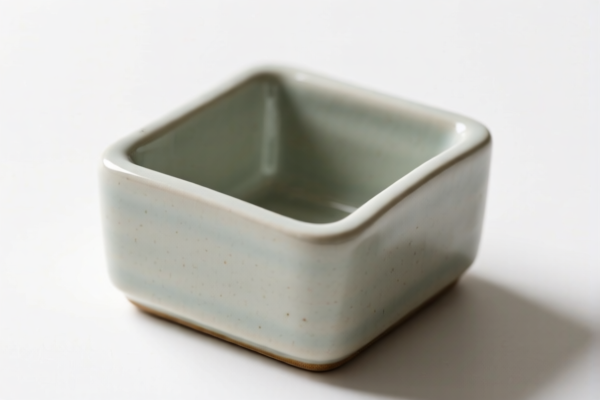
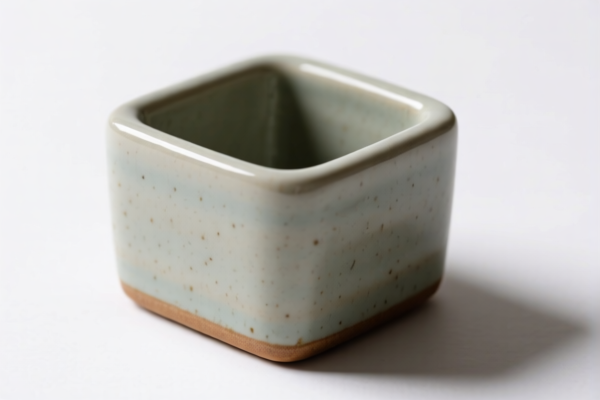
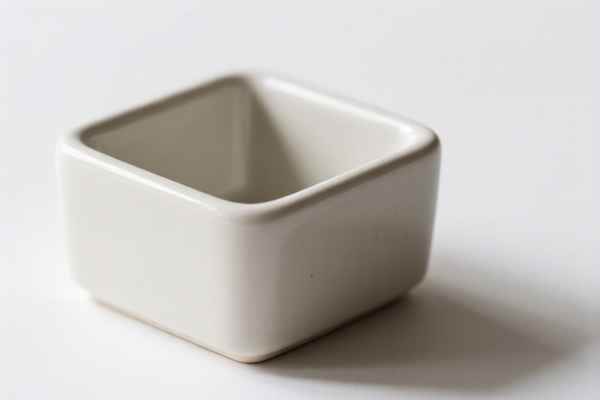
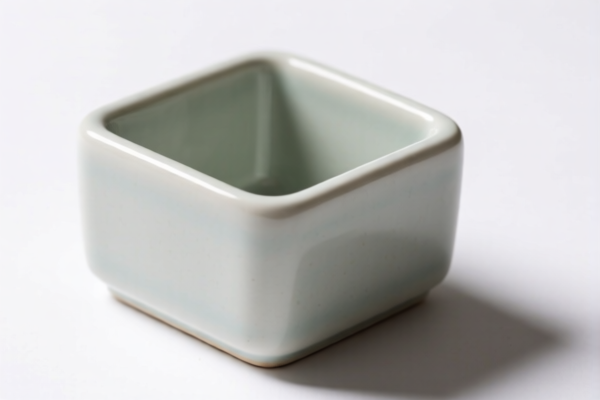
AI分析
📦 2L Square Container (Plastic Packaging)
🌐 HS Code Reference & Customs Clearance Guide | 2026 Latest Tariff Analysis | Professional Logistics Strategy
📌 I. Product Definition & Classification: What Exactly is a "2L Square Container"?
A 2L Square Container typically refers to rigid plastic packaging used for food, beverages, chemicals, or general retail goods. In international trade, its classification depends heavily on:
1. Material: Plastic (Chapter 39).
2. Function: Conveyance or packing of goods (Boxes, cases, crates).
3. Specialization: Is it generic, or specially shaped for semiconductors?
⚠️ Key Distinction:
- Generic Plastic Containers (for food, drinks, cosmetics) → Likely 3923.10.90.00.
- Specially Shaped Semiconductor Wafers/Masks Containers → Likely 3923.10.20.00.
- Note: Most standard "2L Square Containers" are NOT for semiconductors and fall under the "Other" category.
📦 II. HS Code Classification Details (2026 Latest Tariff Authority)
| HS Code | Product Description | Application Scenario | Tariff Impact |
|---|---|---|---|
3923.10.90.00 |
Articles for conveyance or packing of goods, of plastics; Boxes, cases, crates, and similar articles: Other | Standard 2L Square Plastic Jugs/Containers for water, oil, chemicals, food packaging | 28.0% (High) |
3923.10.20.00 |
Specially shaped or fitted for the conveyance or packing of semiconductor wafers, masks, or reticles | Specialized ESD-safe or Precision Plastic Boxes for semiconductor manufacturing | 25.0% (Slightly Lower) |
🔍 Critical Analysis:
- If your 2L Square Container is a generic jug (e.g., for cooking oil, detergent, or water), it MUST be classified under 3923.10.90.00.
- Do NOT misclassify generic plastic containers as semiconductor packaging to save 3%. Customs will reject this due to lack of "special shape/fitting" proof.
- Total Tax Rate for Generic Containers: 28.0% (3% Base + 25% Additional).
- Total Tax Rate for Semiconductor Containers: 25.0% (0% Base + 25% Additional).
💰 III. 2026 Latest Tariff Rate Breakdown (With Surcharges & Policy Details)
✅ Applicable Country: United States (US)
✅ Origin: China (CN)
✅ Effective Date: From Nov 10, 2025 (and subsequent imports)
🎯 1. 3923.10.90.00 —— Generic Plastic Packaging Containers (Most Likely for 2L Square Containers)
| Item | Detail |
|---|---|
| Base Tariff | 3.0% (ad valorem) |
| USITC Surcharge (Section 301) | +25.0% |
| IEEPA Surcharge | N/A (Not listed in data as IEEPA applicable here, but Section 301 is dominant) |
| Total Tariff | 28.0% |
| Tax Calculation | CIF Value × 28.0% |
| De Minimis Exemption | ❌ NOT Eligible (Deny de minimis for Section 301 goods) |
| Legal Basis Path | USITC:3923.10.90.00 → FOOTNOTE:3923.10.90.00 |
📌 Explanation:
- The 25% surcharge is imposed under the Section 301 Trade Act on Chinese plastic articles.
- Total Tax = 28%. This is a significant cost factor.
- No Base Tariff Exemption: Even though some plastics have 0% base, this specific subheading has a 3% base.
- Warning: Do not rely on de minimis (under $800) if you are importing via informal entry and the goods are subject to Section 301. Most Section 301 goods are excluded from de minimis.
🎯 2. 3923.10.20.00 —— Semiconductor-Specific Plastic Containers (Specialized)
| Item | Detail |
|---|---|
| Base Tariff | 0.0% (ad valorem) |
| USITC Surcharge (Section 301) | +25.0% |
| Total Tariff | 25.0% |
| Tax Calculation | CIF Value × 25.0% |
| De Minimis Exemption | ❌ NOT Eligible (Deny de minimis for Section 301 goods) |
| Legal Basis Path | USITC:3923.10.20.00 → FOOTNOTE:3923.10.20.00 |
📌 Note:
- Only applicable if the container is specially shaped/fitted for semiconductor wafers/masks.
- Saves 3% compared to generic containers, but proving this classification is difficult and requires strict documentation.
- Risk: Misclassification leads to penalties. Only use if you are in the semiconductor supply chain.
🛠️ IV. Customs Clearance Practical Advice (Real-World Pitfall Avoidance)
✅ 1. Required Documentation List (Non-Negotiable)
| Document | Must Provide? | Explanation |
|---|---|---|
| ✅ Product Specification Sheet | ✔️ | Material type (e.g., HDPE, PP), dimensions, volume (2L), intended use. |
| ✅ Product Photos | ✔️ | Clear images showing the container shape, markings, and any certifications. |
| ✅ Commercial Invoice | ✔️ | Must clearly state: "Plastic Containers, 2L Square, For Packing [Specific Good]" |
| ✅ Packing List | ✔️ | Quantity, weight, packaging type. |
| ✅ Material Declaration | ✔️ | Confirm it is plastic (HS Code 39). |
| ✅ FDA Documentation (If for Food) | ✔️ | If used for food/beverage, provide FDA compliance statement or registration number. |
✅ 2. Declaration Tips (Key Mantra)
🔥 "Be Honest, Be Specific, Avoid General Terms!"
| Scenario | Correct Declaration | Incorrect Practice |
|---|---|---|
| Standard 2L Plastic Jug | "Plastic Container, 2L, Square Shape, HDPE, For Packing Cooking Oil" | "Plastic Box" or "Container" (Too vague → Risk of misclassification) |
| Semiconductor Container | "Plastic Container, Specially Shaped for Semiconductor Wafers, ESD-Safe" | "Plastic Box" (Will be audited and penalized) |
| Generic Plastic Crate | "Plastic Crate, For Conveyance of Goods" | "Wooden Crate" (Wrong material → Severe penalty) |
✅ 3. Special Case Handling
| Scenario | Handling Advice |
|---|---|
| Food Contact | If the container touches food, ensure it meets FDA 21 CFR standards. Provide a Declaration of Compliance. |
| Chemical Transport | If for hazardous chemicals, ensure UN-certified packaging if required. |
| Customs Audit | If Customs questions the HS Code, provide technical drawings proving it is NOT specially shaped for semiconductors (if claiming 3923.10.90.00). |
| Origin Marking | Ensure containers are marked "Made in China" to avoid origin-related penalties. |
🌍 V. Global Market Comparison (2026 Latest)
| Country/Region | Recommended HS Code | Tariff Rate | Certification Requirements | Remarks |
|---|---|---|---|---|
| 🇺🇸 USA | 3923.10.90.00 |
28.0% | FDA (if food) | High tariff due to Section 301. |
| 🇨🇳 China | 3923.10.90.00 |
6.5% | N/A | Lower base tariff. |
| 🇪🇺 EU | 3923.10.90 |
6.5% | REACH (Material Compliance) | No Section 301 surcharge. |
| 🇬🇧 UK | 3923.10.90 |
6.5% | UKCA (if applicable) | Post-Brexit rules apply. |
| 🇯🇵 Japan | 3923.10.90 |
8.0% | JIS Standards | No additional surcharges. |
📌 Conclusion:
- USA is the most expensive market for Chinese-origin plastic containers due to the 28% total tariff.
- EU/UK/Japan offer significantly lower costs (6.5%–8.0%).
- Strategy: Consider supply chain diversification (e.g., sourcing from Vietnam or Mexico) if targeting the US market to avoid Section 301 tariffs.
📌 VI. Common Mistakes & Pitfall Avoidance (Blood & Tears Lessons)
❌ Mistake 1: Declaring as "Other Plastic Articles" (3926.90) to avoid Section 301.
👉 Consequence: Customs will reclassify to 3923.10, apply 28% tariff, and impose penalties.
❌ Mistake 2: Using "Semiconductor Container" for generic 2L jugs.
👉 Consequence: Customs will request proof of "special shape/fitting." Failure to provide → Reclassification to 3923.10.90.00 + Penalties.
❌ Mistake 3: Ignoring FDA Requirements for Food Containers.
👉 Consequence: Goods detained or destroyed at US port. No tariff issue, but total loss of product.
❌ Mistake 4: Claiming De Minimis Exemption for Section 301 Goods.
👉 Consequence: Entry rejected, tariffs + interest charged. Section 301 goods are excluded from de minimis.
✅ Correct Practice:
"Plastic Container, 2L, Square Shape, High-Density Polyethylene (HDPE), FDA Compliant, For Packing Cooking Oil, Model XYZ, Made in China"
🎯 VII. Conclusion: Professional Classification, Cost Control, Smooth Clearance!
🎯 Remember the Mantra:
🔹 "Plastic Container = 3923.10, Generic = 28%, Semi = 25%, Don't Lie, Don't Split!"
🔹 "HS Code Determines Cost, 28% is High, Clear Declaration Saves Time!"
📌 Pro Tip:
If your 2L Square Containers are not made in China, or if you are sourcing from Vietnam, Thailand, or Mexico, you MAY be eligible to avoid Section 301 surcharges.
Recommendation:
📞 Consult a Licensed Customs Broker + Provide Product Specs + Apply for Advance Ruling if volume is high.
🚀 Ensure your supply chain is tariff-aware, your costs are accurate, and your customs clearance is seamless!
✨ Professional Customs Clearance Starts with Accurate Classification!
💼 Every Dollar of Cost Deserves Precise Calculation!
用户评价
关于 HS 编码归类
协调制度(HS)是由世界海关组织(WCO)制定的国际贸易商品分类标准。全球 200 多个国家采用 HS 系统作为海关关税、贸易统计和进出口监管的基础。
每个 HS 编码遵循以下层级结构:
- 章(2 位)——商品大类(例如:第 84 章:机器和机械设备)
- 品目(4 位)——章内的更具体分类
- 子目(6 位)——国际通用细分,所有 WCO 成员国统一使用
- 本国细分(8-10 位)——各国自行扩展的细分编码,如美国 HTSUS 10 位编码
正确的 HS 编码归类对于顺利通关、准确缴纳关税和遵守贸易法规至关重要。错误归类可能导致海关延误、多缴关税或罚款。
从CN进口到US时,适用的关税税率可能包括:
- 最惠国(MFN)税率——适用于 WTO 成员国的标准关税税率
- 普通税率——适用于无贸易协定国家
- 贸易救济关税——附加关税,如 301 条款(反倾销)、232 条款(国家安全)或反补贴税
本页内容仅供参考。如需正式归类,请咨询当地海关或持牌报关代理。