Boy's Bathrobe
CN → US| HS编码 | 关税税率 | 原产国 | 目的国 | 文档 |
|---|---|---|---|---|
| 6114303060 | 32.4% | CN | US | 官方文档 |
| 6114200055 | 28.3% | CN | US | 官方文档 |
| 6207997520 | 24.9% | CN | US | 官方文档 |
| 6207911000 | 25.9% | CN | US | 官方文档 |
| 6114909070 | 15.6% | CN | US | 官方文档 |
商品图片
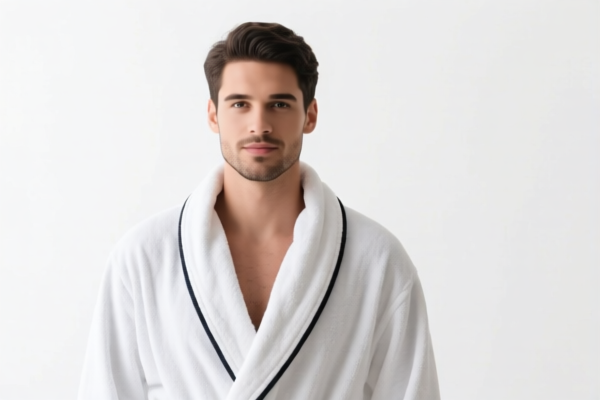
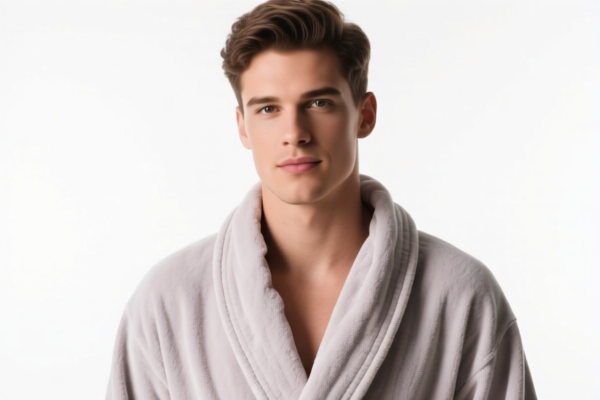
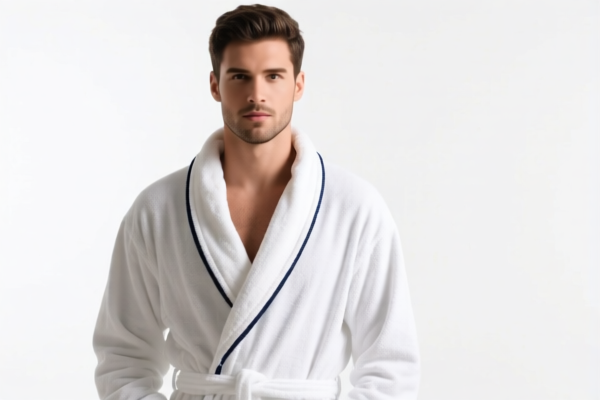
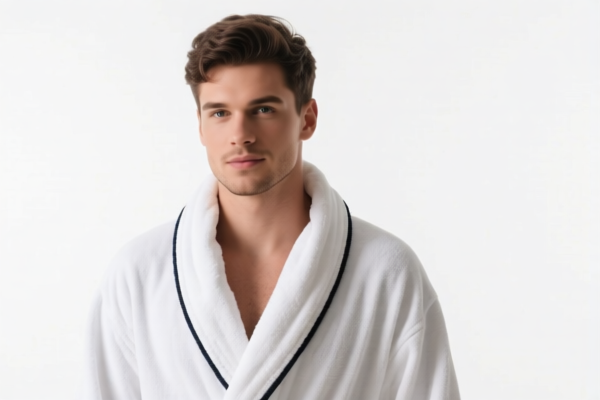
AI分析
👶 Boy’s Bathrobe (Kids' Nightwear & Loungewear)
🌐 HS Code Reference & Customs Clearance Guide | 2026 Latest Tariff Analysis | Professional Clearance Strategy
📌 I. Product Definition & Classification: Do You Really Understand "Boy's Bathrobe"?
A boy's bathrobe is a loose-fitting, front-closing garment primarily used for drying off after bathing or for lounging. In international trade, its classification depends strictly on two factors: Manufacturing Method (Knitted vs. Non-Knitted) and Material Composition (Cotton vs. Synthetic vs. Blended).
Key Classification Distinctions: * Knitted/Hooked (Chapter 61): Soft, stretchy fabrics (e.g., terry cloth, fleece). Most common for bathrobes. * Non-Knitted/Woven (Chapter 62): Stiffer fabrics (e.g., flannel, woven cotton, synthetic blends). Often used for "dressing gowns" or lighter sleepwear.
⚠️ Critical Distinction Point:
- If the fabric is knitted (loops interlocked, stretchy) → Chapter 61
- If the fabric is woven/non-knitted (threads crisscrossed, structured) → Chapter 62
- Material matters: Cotton, Artificial Fibers (Polyester/Nylon), and Blends have different tax rates.
📦 II. HS Code Classification Details (2026 Latest Tariff Authority Comparison)
| HS Code | Product Description | Scenario | Material Type | Manufacturing |
|---|---|---|---|---|
6114.30.30.60 |
Men's/Boy's Bathrobe, Knitted/Hooked, Artificial Fibers | Thick terry, fleece, synthetic plush robes | Artificial Fibers (e.g., Polyester) | ✅ Knitted |
6114.20.00.55 |
Men's/Boy's Bathrobe, Knitted/Hooked, Cotton | Standard cotton terry bathrobe | Cotton | ✅ Knitted |
6207.99.75.20 |
Boy's Nightwear/Robes, Non-Knitted, Non-Wool/Synthetic or Cotton | Woven loungewear, lightweight robes | Non-Wool Synthetic or Cotton | ❌ Non-Knitted |
6207.91.10.00 |
Boy's Nightwear/Robes, Non-Knitted, Cotton | Woven cotton flannel or broadcloth robes | Cotton | ❌ Non-Knitted |
6114.90.90.70 |
Boy's Mixed Fiber Bathrobe, Knitted/Hooked, Mixed Fibers | Robes made from blended fabrics (e.g., Cotton-Poly blend) | Mixed Fibers | ✅ Knitted |
🔍 Key Reminder:
- "Bathrobe" vs. "Nightwear": While functionally similar, customs often separate strict "Bathrobes" (Thick, Terry, for drying) from general "Nightwear/Sleepwear" (Lighter, for sleeping). However, in the provided data,6207.99...and6207.91...cover "Boy's Robes" under the Nightwear chapter if non-knitted. - Knitted is King for Bathrobes: Most traditional thick bathrobes are knitted (6114). Woven robes (6207) are often lighter or specific to certain markets.
💰 III. 2026 Latest Tariff Rate Breakdown (Including Additional Taxes & Policies)
✅ Applicable Country: United States (US)
✅ Origin: China (CN)
✅ Effective Date: Current Trade War Status (Section 301 & Section 122 Tariffs Applied)
🎯 1. 6114.30.30.60 – Knitted Bathrobe, Artificial Fibers
| Item | Content |
|---|---|
| Base Tariff | 14.9% |
| Trade War Tariff (Sec. 301) | +7.5% |
| Section 122 Tariff | +10% |
| Total Tax Rate | 32.4% |
| Tax Calculation | CIF Value × 32.4% |
| De Minimis Exemption | ❌ Not Available (High value items usually excluded or subject to strict scrutiny) |
| Legal Basis Path | HTSUS:6114.30.30.60 → Section 301 (7.5%) → Section 122 (10%) |
📌 Explanation:
- Synthetic bathrobes face the highest total tax rate (32.4%) due to the combination of base tariff and two layers of additional tariffs. - Section 122 adds an extra 10% on top of standard duties for certain apparel imports.
🎯 2. 6114.20.00.55 – Knitted Bathrobe, Cotton
| Item | Content |
|---|---|
| Base Tariff | 10.8% |
| Trade War Tariff (Sec. 301) | +7.5% |
| Section 122 Tariff | +10% |
| Total Tax Rate | 28.3% |
| Tax Calculation | CIF Value × 28.3% |
| De Minimis Exemption | ❌ Not Available |
| Legal Basis Path | HTSUS:6114.20.00.55 → Section 301 (7.5%) → Section 122 (10%) |
📌 Note:
- Cotton knitted robes have a lower base tariff (10.8%) compared to synthetics (14.9%), resulting in a 3.1% savings in total tax. - Still subject to both additional tariffs.
🎯 3. 6207.99.75.20 – Boy's Robe, Non-Knitted, Non-Wool/Synthetic or Cotton
| Item | Content |
|---|---|
| Base Tariff | 14.9% |
| Trade War Tariff (Sec. 301) | 0.0% |
| Section 122 Tariff | +10% |
| Total Tax Rate | 24.9% |
| Tax Calculation | CIF Value × 24.9% |
| De Minimis Exemption | ❌ Not Available |
| Legal Basis Path | HTSUS:6207.99.75.20 → Section 122 (10%) |
📌 Crucial Advantage:
- NO Trade War Tariff (7.5%) applies here! This is a significant saving. - Only Base (14.9%) + Section 122 (10%) apply.
🎯 4. 6207.91.10.00 – Boy's Robe, Non-Knitted, Cotton
| Item | Content |
|---|---|
| Base Tariff | 8.4% |
| Trade War Tariff (Sec. 301) | +7.5% |
| Section 122 Tariff | +10% |
| Total Tax Rate | 25.9% |
| Tax Calculation | CIF Value × 25.9% |
| De Minimis Exemption | ❌ Not Available |
| Legal Basis Path | HTSUS:6207.91.10.00 → Section 301 (7.5%) → Section 122 (10%) |
📌 Note:
- Low base tariff (8.4%), but the 7.5% Trade War tariff kicks back in, making it slightly more expensive than the synthetic non-knitted version (25.9%vs24.9%).
🎯 5. 6114.90.90.70 – Boy's Mixed Fiber Bathrobe, Knitted
| Item | Content |
|---|---|
| Base Tariff | 5.6% |
| Trade War Tariff (Sec. 301) | 0.0% |
| Section 122 Tariff | +10% |
| Total Tax Rate | 15.6% |
| Tax Calculation | CIF Value × 15.6% |
| De Minimis Exemption | ❌ Not Available |
| Legal Basis Path | HTSUS:6114.90.90.70 → Section 122 (10%) |
📌 🏆 WINNER: Lowest Tax Rate!
- Only 15.6% Total Tax.
- Why? Low Base Tariff (5.6%) + NO Trade War Tariff.
- Condition: Must be Knitted AND made of Mixed Fibers (not 100% cotton or 100% synthetic).
🛠️ IV. Customs Clearance Practical Advice (Battle-Tested Pitfall Guide)
✅ 1. Documentation Checklist (Non-Negotiable)
| Document | Mandatory? | Details |
|---|---|---|
| ✅ Commercial Invoice | ✔️ | Must specify: "Boy's Bathrobe," Material (e.g., 60% Cotton, 40% Polyester), Knitted/Woven. |
| ✅ Packing List | ✔️ | Include dimensions, weight, and quantity. |
| ✅ Product Photo | ✔️ | Show label, fabric texture (to prove knit/weave), and closure type. |
| ✅ Material Composition Label | ✔️ | Critical for proving "Mixed Fiber" vs. "100% Cotton" vs. "100% Synthetic." |
| ✅ Declaration of Non-Steel/Non-Wool | ✔️ | For 6207.99..., confirm no wool content to avoid misclassification. |
✅ 2. Declaration Tips (Key Mnemonic)
🔥 “Knit vs. Weave, Material is Key, Mixed Fibers Save Money, Avoid the 7.5% Penalty!”
| Scenario | Correct HS Code | Tax Rate | Why? |
|---|---|---|---|
| 100% Cotton, Knitted | 6114.20.00.55 |
28.3% | High base + Trade War + Sec 122 |
| 100% Polyester, Knitted | 6114.30.30.60 |
32.4% | Highest base + Trade War + Sec 122 |
| Mixed Fiber, Knitted | 6114.90.90.70 |
15.6% | LOWEST! No Trade War. |
| Cotton, Non-Knitted | 6207.91.10.00 |
25.9% | Low base, but Trade War applies |
| Synthetic/Cotton Blend, Non-Knitted | 6207.99.75.20 |
24.9% | Low base, NO Trade War |
📌 Strategy:
- If you can manufacture or source Knitted Mixed-Fiber Bathrobes, you save ~12-17% in taxes compared to 100% cotton/synthetic knitted versions. - Ensure the material tag accurately reflects the blend (e.g., "Cotton/Polyester Blend") to qualify for6114.90.90.70.
✅ 3. Special Cases Handling
| Situation | Recommendation |
|---|---|
| OEM Private Label | Ensure the supplier provides a Material Test Report (ASTM D5215) to prove fiber content. Mislabeling can lead to penalties. |
| "Unisex" Marketing | Customs classifies by actual use/design. If designed for boys (smaller sizes, specific cuts), declare as Boy's. If truly unisex, it may fall under Men's/Women's codes, which could have different rates. |
| Set with Towel? | If sold as a set, the principal component dictates the HS code. If the robe is the main item, classify as robe. If towels are dominant, classify as towels (different HS). |
| Seasonal Import | Avoid peak holiday surcharges if possible, but tax rates remain constant. |
🌍 V. Global Market Comparison (2026 Latest)
| Country/Region | Recommended HS Code | Tariff (China Origin) | Notes |
|---|---|---|---|
| 🇺🇸 USA | 6114.90.90.70 (Best) |
15.6% | Best strategy: Mixed Fiber, Knitted |
| 🇪🇺 EU | 6114.90.90 |
~12% | No Section 301/122 equivalent. VAT applies separately. |
| 🇨🇳 China | 6114.90.90 |
~10-12% | Import duties apply. Domestic sales exempt from export taxes. |
| 🇬🇧 UK | 6114.90.90 |
~12% | Post-Brexit tariffs similar to EU. |
| 🇨🇦 Canada | 6114.90.90 |
~12-16% | No major additional tariffs like US Sec 301. |
📌 Conclusion:
- The USA is the most complex market due to Section 301 and Section 122 tariffs.
- Mixed-fiber knitted robes are the most tax-efficient product for the US market.
- For other markets, standard MFN rates apply, and the difference between cotton and synthetic is less drastic.
📌 VI. Common Errors & Pitfall Guide (Lessons Learned)
❌ Error 1: Declaring a Mixed Fiber robe as 100% Cotton
👉 Consequence: Customs audits the material. If found mixed, penalty for undervaluation/tax evasion. Risk: High.
❌ Error 2: Declaring a Knitted robe as Non-Knitted to avoid Section 122?
👉 Consequence: Incorrect classification. If visually obvious (terry cloth loops), CBP will reject. Risk: Medium-High.
❌ Error 3: Ignoring Section 122 Tariff in cost calculation
👉 Consequence: Underestimating landed cost by 10%. Result: Lost Profit.
❌ Error 4: Using "Bathrobe" for a Sleep Gown (Light, Woven)
👉 Consequence: Misclassification. Should be 6108 (Women's/Children's Nightdresses) if distinct. Risk: Medium.
✅ Correct Practice:
"Boy's Bathrobe, Knitted, 65% Cotton / 35% Polyester, Terry Cloth, Front Closure, with Belt, Model XYZ, HS 6114.90.90.70"
🎯 VII. Conclusion: Smart Declaration, Maximize Profit!
🎯 Remember the Mnemonic:
🔹 "Mixed Fiber Knit = 15.6% (Winner!)
🔹 "Cotton/Poly Knit = 28-32% (Expensive)
🔹 "Non-Knitted = 25-26% (Middle Ground)
🔹 "Always Declare Material % Accurately!"
📌 Pro Tip:
If your product is 100% Cotton Knitted, consider if you can blend it with synthetic fibers to qualify for the 15.6% rate. Even a small blend (e.g., 90/10) might qualify, but check HS code rules of origin carefully.
Recommendation: Apply for an Advance Ruling from CBP if your material composition is borderline.
📣 Immediate Action:
📞 Contact your freight forwarder + Provide Material Test Report + Declare "Mixed Fiber" if applicable
🚀 Maximize your margin with the right HS Code!
✨ Professional Customs Clearance Starts with Accurate Classification!
💼 Every 1% of tax saved is pure profit!
用户评价
关于 HS 编码归类
协调制度(HS)是由世界海关组织(WCO)制定的国际贸易商品分类标准。全球 200 多个国家采用 HS 系统作为海关关税、贸易统计和进出口监管的基础。
每个 HS 编码遵循以下层级结构:
- 章(2 位)——商品大类(例如:第 84 章:机器和机械设备)
- 品目(4 位)——章内的更具体分类
- 子目(6 位)——国际通用细分,所有 WCO 成员国统一使用
- 本国细分(8-10 位)——各国自行扩展的细分编码,如美国 HTSUS 10 位编码
正确的 HS 编码归类对于顺利通关、准确缴纳关税和遵守贸易法规至关重要。错误归类可能导致海关延误、多缴关税或罚款。
从CN进口到US时,适用的关税税率可能包括:
- 最惠国(MFN)税率——适用于 WTO 成员国的标准关税税率
- 普通税率——适用于无贸易协定国家
- 贸易救济关税——附加关税,如 301 条款(反倾销)、232 条款(国家安全)或反补贴税
本页内容仅供参考。如需正式归类,请咨询当地海关或持牌报关代理。