Boys' Knitted Vest
CN → US| HS编码 | 关税税率 | 原产国 | 目的国 | 文档 |
|---|---|---|---|---|
| 6209205050 | 26.8% | CN | US | 官方文档 |
| 6111303000 | 49.5% | CN | US | 官方文档 |
| 6110303030 | 49.5% | CN | US | 官方文档 |
| 6111303000 | 49.5% | CN | US | 官方文档 |
| 6209909000 | 20.3% | CN | US | 官方文档 |
商品图片


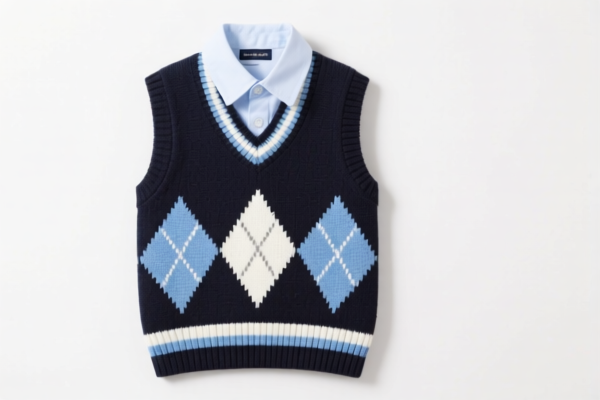

AI分析
👕 Boys' Knitted Vest (Children's Outerwear)
🌐 HS Code Reference & Clearance Guide | 2026 Tariff Breakdown | Professional Customs Strategy
📌 1. Product Definition & Classification: Do You Know What "Knitted Vest" Means?
A Boys' Knitted Vest is a sleeveless garment designed for children (typically ages 2–16), knitted from natural fibers (like cotton) or synthetic fibers (like polyester/nylon blends). In international trade, its classification hinges on two critical factors:
- Material Composition: Is it primarily Cotton or Synthetic Fibers?
- Knitting vs. Weaving: Is it Knitted (looped stitches, stretchy) or Woven (interlaced threads, rigid)?
⚠️ Critical Distinction:
- Knitted (Looped) → Falls under Chapter 61 (Knitted or Crocheted).
- Woven (Stitched) → Falls under Chapter 62 (Not Knitted).
- Synthetic vs. Cotton → Drastically changes the tariff rate in the US.
📦 2. HS Code Classification Details (2026 Tariff Authority)
Based on the input product "Boys' Knitted Vest," the following HS Codes and Tax Scenarios apply:
| HS Code | Product Description | Material Inference | Applicable Scenario |
|---|---|---|---|
| 6110.30.30.30 | Knitted Vests, Boys | Synthetic Fibers | Knitted boys' vests made of polyester, acrylic, etc. |
| 6111.30.30.00 | Knitted Vests, Children | Synthetic Fibers | General children's knitted vests (synthetic). |
| 6209.20.50.50 | Non-Knitted Vests, Boys | Cotton/Blended | Note: Woven boys' vests (if mistakenly classified as knitted in summary) |
| 6209.90.90.00 | Other Children's Apparel, Vests | Textile/General | Non-specified textile vests for children (mixed material). |
🔍 Key Insight:
- The term "Knitted" primarily points to Chapter 61 (Codes6110...and6111...).
- Synthetic materials (Chapter 61/62 sub-categories) attract higher base tariffs than cotton.
- Woven vests (Chapter 62) have lower base tariffs but are subject to specific "Children's Wear" codes.
💰 3. 2026 Latest Tariff Rate Analysis (US Market - China Origin)
✅ Applicable Market: United States (US)
✅ Country of Origin: China (CN)
✅ Effective Date: Current (2025-2026 Period)
✅ Total Tax Burden: Ranges from 20.3% to 49.5% depending on material.
🎯 Scenario A: Synthetic Fibers (High Tax)
Target Codes: 6110.30.30.30, 6111.30.30.00
Inference: Knitted vests made of synthetic fibers (Polyester, Nylon, etc.)
| Item | Details |
|---|---|
| Base Tariff | 32.0% |
| Section 301 (Additional) | +7.5% |
| Section 122 Tariff | +10.0% |
| Total Tariff | 49.5% |
| Tax Calculation | CIF Value × 49.5% |
| De Minimis Exemption | ❌ NO (High-value classification) |
| Legal Path | USITC:6110.30.30.30 → 301:7.5% → 122:10% |
📌 Explanation:
- 32.0% Base: High rate for synthetic fibers in children's apparel.
- 7.5% Section 301: US retaliatory tariff on specific Chinese textile categories.
- 10% Section 122: Additional tariff targeting specific textile sectors (often linked to trade remedies).
- Total 49.5%: This is an extremely high cost. Synthetic knitted vests are heavily penalized.
🎯 Scenario B: Cotton / Blended / Woven (Lower Tax)
Target Codes: 6209.20.50.50, 6209.90.90.00
Inference: If the vest is Woven (not knitted) or primarily Cotton.
| Item | Details |
|---|---|
| Base Tariff | 2.8% - 9.3% |
| Section 301 (Additional) | +7.5% |
| Section 122 Tariff | +10.0% |
| Total Tariff | 20.3% - 26.8% |
| Tax Calculation | CIF Value × 20.3%~26.8% |
| De Minimis Exemption | ❌ NO |
| Legal Path | USITC:6209... → 301:7.5% → 122:10% |
📌 Explanation:
- Base Tariff (2.8% - 9.3%): Significantly lower for cotton or woven goods.
- Total Tax: Even with the 17.5% (7.5+10) in extra tariffs, the base is low, bringing the total to ~20-27%.
- Strategic Win: If the vest is Cotton or Woven, it saves ~23% in tax compared to Synthetic Knitted.
🛠️ 4. Practical Clearance Suggestions (Avoid Pitfalls)
✅ 1. Material Verification (The #1 Risk Factor)
The "Knitted vs. Synthetic" Trap:
- If you declare a Polyester Knitted Vest as6110.30.30.30, you pay 49.5%.
- If you declare a Cotton Woven Vest as6209.20.50.50, you pay 26.8%.
Action: Check your Fabric Content Label. If it says "100% Polyester," you cannot avoid the 49.5% unless you change the material to Cotton or switch to Woven.
✅ 2. Declaration Tips (Critical Keywords)
| Situation | Correct Declaration | Wrong Declaration (Risk) |
|---|---|---|
| Knitted + Synthetic | "Boys' Knitted Synthetic Vest" | "Boys' Vest" (Ambiguous → Audit) |
| Knitted + Cotton | "Boys' Knitted Cotton Vest" | "Men's Vest" (Age mismatch → Seizure) |
| Woven + Cotton | "Boys' Woven Cotton Vest" | "Knitted Vest" (Incorrect classification) |
| Mixed Material | "Boys' Knitted Vest (55% Cotton/45% Poly)" | "Synthetic Vest" (Under-declaring Cotton) |
🔥 Golden Rule:
"State Material + State Construction (Knit/Woven) + State Age Group."
Example: "Boys' Knitted Vest, 100% Cotton."
✅ 3. Documentation Checklist
| Document | Requirement | Why? |
|---|---|---|
| Fabric Composition Sheet | Must be signed by manufacturer | To prove % of Cotton vs. Synthetic. |
| Technical Data Sheet (TDS) | Show knitting method (Loop vs. Weave) | To distinguish Chapter 61 vs. 62. |
| Commercial Invoice | Clearly state "Boys' Knitted Vest" | Match HS Code description exactly. |
| Packing List | Separate by material if mixed | Avoid "mixed bag" confusion. |
🌍 5. Global Market Comparison (2026 Outlook)
| Region | Preferred HS Code | Tariff (China) | Notes |
|---|---|---|---|
| 🇺🇸 USA | 6110.30.30.30 (Synth) |
49.5% | Avoid if possible. Use Cotton/Woven. |
| 🇺🇸 USA | 6209.20.50.50 (Cotton) |
26.8% | Preferred. Lower base rate. |
| 🇪🇺 EU | 6110.30.30.30 |
~12% | No 301/122 tariffs, but VAT applies. |
| 🇨🇳 China | 6110.30.30.30 |
0-5% | Export to China? No extra tax. |
| 🇯🇵 Japan | 6110.30.30.30 |
~8% | Moderate tax, no extra tariffs. |
📌 Conclusion:
The US Market is the only one imposing the 49.5% burden on synthetic knitted vests.
Strategy: For US export, switch to Cotton or Woven construction to reduce tax from ~50% to ~27%.
📌 6. Common Mistakes & Solutions (Lessons Learned)
❌ Mistake 1: Declaring a Synthetic Knitted Vest as 6209... (Woven) to avoid tax.
👉 Result: Customs audit, seizure, and penalties for misdeclaration.
❌ Mistake 2: Ignoring the "122 Clause".
👉 Result: Underestimating the 10% surcharge, leading to profit margin loss.
❌ Mistake 3: Vague descriptions like "Kids Vest."
👉 Result: Customs forces a higher default classification (usually Synthetic + Knit).
✅ Solution:
"Declare the Truth: Material + Construction + Age."
Example: "Boys' Knitted Vest, 100% Cotton" →6209.20.50.50→ 26.8% Tax.
🎯 7. Final Verdict: Strategic Recommendation
🚀 Action Plan:
1. Check Material: If >50% Synthetic + Knitted = High Risk (49.5%).
2. Switch Material: If possible, use Cotton (or Cotton blend >50%).
3. Switch Construction: If possible, use Woven (Chapter 62) instead of Knitted.
4. Apply Pre-Ruling: If the product is complex (mixed materials), file for an Advance Ruling with CBP to confirm the exact HS Code before shipping.💡 Pro Tip:
"A 23% tax difference can make or break your profit. Don't guess the HS Code—verify the fiber!"
✨ Professional Customs Clearance Starts with Precision!
💼 Every Percent Saved is Pure Profit!
用户评价
关于 HS 编码归类
协调制度(HS)是由世界海关组织(WCO)制定的国际贸易商品分类标准。全球 200 多个国家采用 HS 系统作为海关关税、贸易统计和进出口监管的基础。
每个 HS 编码遵循以下层级结构:
- 章(2 位)——商品大类(例如:第 84 章:机器和机械设备)
- 品目(4 位)——章内的更具体分类
- 子目(6 位)——国际通用细分,所有 WCO 成员国统一使用
- 本国细分(8-10 位)——各国自行扩展的细分编码,如美国 HTSUS 10 位编码
正确的 HS 编码归类对于顺利通关、准确缴纳关税和遵守贸易法规至关重要。错误归类可能导致海关延误、多缴关税或罚款。
从CN进口到US时,适用的关税税率可能包括:
- 最惠国(MFN)税率——适用于 WTO 成员国的标准关税税率
- 普通税率——适用于无贸易协定国家
- 贸易救济关税——附加关税,如 301 条款(反倾销)、232 条款(国家安全)或反补贴税
本页内容仅供参考。如需正式归类,请咨询当地海关或持牌报关代理。