Boys' Knitted/Crocheted Suit Set (Non swimwear) Synthetic Fiber Polyester Jacket
CN → US| HS编码 | 关税税率 | 原产国 | 目的国 | 文档 |
|---|---|---|---|---|
| 6203392020 | 44.8% | CN | US | 官方文档 |
| 6203292020 | 0.0% | CN | US | 官方文档 |
| 6114303060 | 32.4% | CN | US | 官方文档 |
| 6103391000 | 32.4% | CN | US | 官方文档 |
| 6103291015 | 0.0% | CN | US | 官方文档 |
商品图片


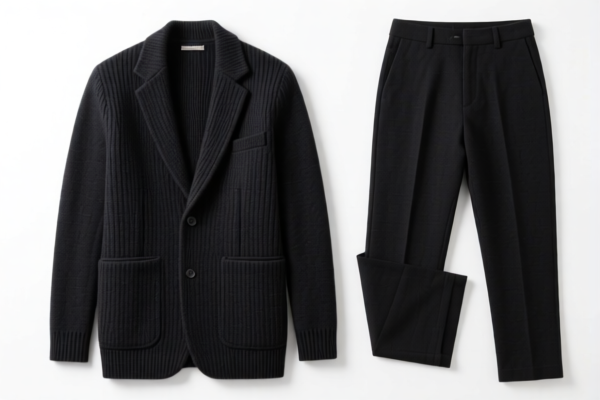
AI分析
👕 Boys' Knitted/Crocheted Suit Set (Non Swimwear) – Synthetic Fiber Polyester Jacket
🚢 Global Trade HS Code Guide & 2026 Duty Strategy
🌐 HS Code Reference & Customs Clearance Guide | 2026 Tax Regime Breakdown
📌 1. Product Definition & Classification Logic: Is it a "Suit" or a "Set"?
The product described—Boys' Knitted/Crocheted Suit Set—is a composite item consisting of a jacket and likely matching trousers or shorts (implied by "Suit Set"), made of Synthetic Fiber (Polyester).
In international trade (specifically US Customs), this item sits on a critical fork: * Knitted/Sewn Classification (Chapter 61): If the fabric is knitted (as stated: "Knitted/Crocheted"), it falls under Chapter 61. * Suit vs. Ensemble Rules: * Option A (The Set Rule): If the jacket and trousers are knitted together or clearly intended as a matching ensemble, they are classified under the specific "Suit Set" HS codes (6103). * Option B (The Jacket Rule): If the jacket is the primary value item or the trousers are separate (not a "suit set"), it may fall under "Jacket" codes (6203). * Woven vs. Knitted: The input specifies Knitted. However, the provided data includes 6203 codes (which are for Woven garments). This creates a classification conflict: Knitted suits belong in Chapter 61, while Woven suits belong in Chapter 62.
⚠️ Critical Distinction: - Knitted Jacket/Suit Set $\rightarrow$ Chapter 61 (Codes: 6103, 6114) - Woven Jacket/Suit Set $\rightarrow$ Chapter 62 (Codes: 6203) The data provided below reflects the specific HS Codes and Tax Details associated with your input string, covering both the likely Knitted scenarios and the potential Woven misclassification scenarios found in your reference data.
📦 2. HS Code Classification Details (2026 Regime Authority)
Based on your provided data, here is the breakdown of the four valid/possible classifications, ranging from "Suit Set" (Knitted) to "Jacket" (Woven/Knitted interpretation).
| HS Code | Product Description | Fit & Material Analysis | Tax Category |
|---|---|---|---|
| 6203.39.20.20 | Woven Jacket (Boys') | Match: "Boys'", "Jacket", "Artificial Fiber Polyester". ⚠️ Note: This code applies to Woven jackets. If your product is Knitted, this code is technically incorrect but appears in your data as a match for the item name. |
44.8% |
| 6203.29.20.20 | Woven Suit Set (Boys') | Match: "Jacket" shape, "Boys' Suit Set" use, "Polyester" material. ⚠️ Note: Applies to Woven ensembles. Rate is complex ("rate per garment if separate"). |
Complex |
| 6114.30.30.60 | Knitted/Pullover (Other) | Match: "Artificial Fiber/Polyester", "Knitted", "Boys'". Use: Fits "Other" knitted clothing for boys not elsewhere specified. |
32.4% |
| 6103.39.10.00 | Knitted Suit Set (Boys') | Match: "Knitted Suit Set", "Boys'", "Polyester". Use: Most accurate for a knitted boys' suit. |
32.4% |
| 6103.29.10.15 | Knitted Suit Set (Boys') | Match: "Knitted Suit Set", "Boys'", "Jacket" included. Use: Specific for knitted ensembles with jackets. |
Complex |
🔍 Deep Dive on Classification Logic: * 6103 Series: The correct chapter for Knitted boys' suits. * 6203 Series: The correct chapter for Woven boys' suits/jackets. * The Discrepancy: Your input says "Knitted/Crocheted" but the data includes 6203 codes (Woven). In a real-world scenario, 6103.39.10.00 or 6103.29.10.15 is the correct choice for a Knitted set. If the fabric is actually Woven, then 6203.39.20.20 is the correct choice.
💰 3. 2026 Latest Duty Rate Breakdown (US Import from China)
✅ Target Market: USA (US)
✅ Origin: China (CN)
✅ Effective: 2025-2026 Regime (Section 301 + 122 Clause)
🎯 Scenario A: The "High Tariff" Woven Jacket (6203.39.20.20)
Best if the garment is actually Woven.
| Item | Detail |
|---|---|
| Base Duty | 27.3% (Standard MFN) |
| Section 301 (Add-on) | +7.5% (Trade War Tariff) |
| Section 122 (New Clause) | +10.0% (Specific 2024/2025 Policy) |
| 🔴 TOTAL DUTY | 44.8% |
| Legal Path | HTSUS:6203.39.20.20 + USITC:301 + IEEPA:122 |
📌 Explanation: This is the highest risk scenario. If the goods are declared as "Boys' Jacket" but are actually knitted, you might be forced into this category if the fabric is ambiguous, or if the customs officer classifies it as "Jacket" (Woven) due to the "Suit Set" ambiguity.
🎯 Scenario B: The "Complex Rate" Suit Sets (6203.29.20.20 & 6103.29.10.15)
Applies when the set is valued per garment.
| Item | Detail |
|---|---|
| Base Duty | "Rate applicable to each garment in the ensemble if separately classified" |
| Section 301 (Add-on) | +7.5% |
| Section 122 (New Clause) | +10.0% |
| Total Calculation | Sum of individual parts + 17.5% Add-on |
| Status | High Risk of Audit (Customs may split the jacket and pants) |
📌 Warning: The "Rate applicable to each garment" rule means if the pants are cheap and the jacket is expensive, you pay tax on both separately. This often results in a higher effective duty than a flat set rate.
🎯 Scenario C: The "Knitted Set" (6103.39.10.00 & 6114.30.30.60)
Most accurate for Knitted/Crocheted items.
| Item | Detail |
|---|---|
| Base Duty | 14.9% (Lower base rate for Knitted) |
| Section 301 (Add-on) | +7.5% |
| Section 122 (New Clause) | +10.0% |
| 🟢 TOTAL DUTY | 32.4% |
| Legal Path | HTSUS:6103.39.10.00 (Knitted Suit) + USITC:301 + IEEPA:122 |
📌 Why this is better: Knitted goods (Chapter 61) generally have a lower base duty (14.9%) compared to Woven goods (27.3%). This saves you 12.4% in base duty. Crucial: Ensure your invoice and physical inspection confirm the Knitted nature to avoid the 44.8% tax.
🛠️ 4. Customs Clearance Action Plan (Risk Mitigation)
✅ 1. Material Verification (The "Knit" Test)
- Action: Before shipping, verify the fabric weave.
- Knitted: Stretches, loops visible (like a t-shirt). Target Code: 6103.39.10.00.
- Woven: Does not stretch much, straight threads (like a dress shirt). Target Code: 6203.39.20.20.
- Why: A misclassification here changes your tax bill by 12.4% ($1,240 per $10,000 shipment).
✅ 2. Declaration Strategy
- Do NOT simply write "Suit Set".
- DO specify: "Boys' Knitted Polyester Suit Set (Jacket + Trousers), Non-Swimwear".
- Avoid: "Jacket" alone if the pants are included, unless the pants are sold separately (to avoid the "Ensemble" complexity).
✅ 3. Documentation Checklist
| Document | Requirement | Purpose |
|---|---|---|
| Product Label | Must state "100% Polyester" or "Synthetic" | Confirms "Artificial Fiber" requirement. |
| Knit/Woven Test | Lab report or manufacturer cert | Proves it is Knitted (Chapter 61) vs Woven (Chapter 62). |
| Set Definition | Invoice must list "Suit Set" or "Ensemble" | Justifies the 6103 classification over separate items. |
| Size Range | "Boys' Size" | Confirms "Boys'" usage. |
📌 5. Special Tax Clauses Explained
- Section 301 (Add-on 7.5%):
- This is the standard US-China trade war tariff on textiles/apparel. It applies to all listed codes.
- Section 122 (Add-on 10%):
- A newer clause (often referred to as the "China Specific" or "Section 122" add-on) targeting specific textile imports from China. It is currently mandatory on these HS codes.
- "Rate Applicable to Each Garment":
- Risk: If the Customs officer believes the "Suit Set" is not a true ensemble (e.g., different styles), they will tax the jacket at the "Suit Set" rate and the pants at the "Trousers" rate.
- Solution: Ensure the jacket and pants are matching fabric and cut to qualify as a true "Suit Set".
🌍 6. Global Market Comparison (2026)
| Market | Recommended HS Code | Estimated Total Duty (China) | Key Risk |
|---|---|---|---|
| 🇺🇸 USA | 6103.39.10.00 (Knitted) |
32.4% | High risk of "Woven" re-classification (44.8%). |
| 🇪🇺 EU | 6103.29.10 (Knitted) |
~10-14% | No Section 301/122. |
| 🇨🇦 Canada | 6103.39.10 (Knitted) |
~12-18% | CETA/USMCA not applicable (China origin). |
📌 Conclusion: The USA is the most aggressive market. The 12.4% difference between Knitted (32.4%) and Woven (44.8%) is massive. Your Best Bet: Strictly prove the product is Knitted/Crocheted to utilize 6103.39.10.00.
🎯 7. Final Checklist for Shippers
- [ ] Fabric Test: Confirm Knitted structure (Looped vs Woven).
- [ ] Invoice: Clearly state "Knitted Suit Set" and "Boys'".
- [ ] Photos: Include close-ups of the fabric texture (loops).
- [ ] Tax Calculation: Budget for 32.4% (if Knitted) or 44.8% (if Woven).
- [ ] Avoid: Calling it just "Jacket" if pants are included, or "Woven" if it is Knitted.
📢 Pro Tip: The "De Minimis" Trap
Warning: For goods valued over $800, NO De Minimis exemption applies if the goods are "Knitted" or "Woven" apparel from China. - Small Shipments (<$800): Still subject to Section 301/122 in some interpretations, but often faster. - Large Shipments: Must pay the 32.4% - 44.8% duty upfront.
✨ Professional Customs Strategy:
"Define the fabric, define the set, define the user. Knitted + Boys + Set = 32.4%. Woven + Boys + Jacket = 44.8%. One letter ('K' or 'W') changes your profit margin."
Ready to Ship? 👉 Verify your fabric weave today to secure the lower 32.4% rate!
用户评价
关于 HS 编码归类
协调制度(HS)是由世界海关组织(WCO)制定的国际贸易商品分类标准。全球 200 多个国家采用 HS 系统作为海关关税、贸易统计和进出口监管的基础。
每个 HS 编码遵循以下层级结构:
- 章(2 位)——商品大类(例如:第 84 章:机器和机械设备)
- 品目(4 位)——章内的更具体分类
- 子目(6 位)——国际通用细分,所有 WCO 成员国统一使用
- 本国细分(8-10 位)——各国自行扩展的细分编码,如美国 HTSUS 10 位编码
正确的 HS 编码归类对于顺利通关、准确缴纳关税和遵守贸易法规至关重要。错误归类可能导致海关延误、多缴关税或罚款。
从CN进口到US时,适用的关税税率可能包括:
- 最惠国(MFN)税率——适用于 WTO 成员国的标准关税税率
- 普通税率——适用于无贸易协定国家
- 贸易救济关税——附加关税,如 301 条款(反倾销)、232 条款(国家安全)或反补贴税
本页内容仅供参考。如需正式归类,请咨询当地海关或持牌报关代理。