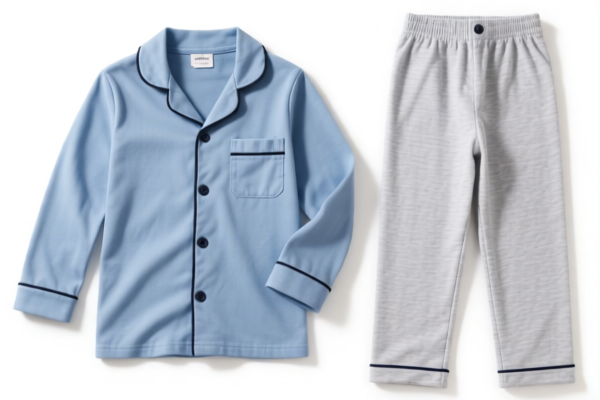
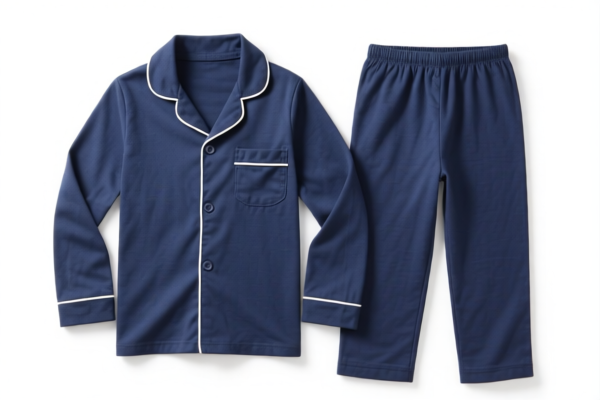
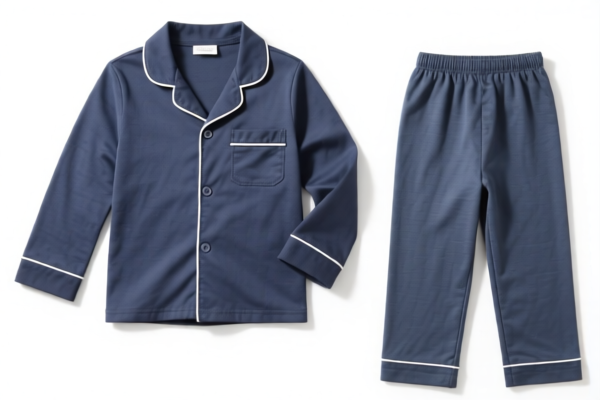
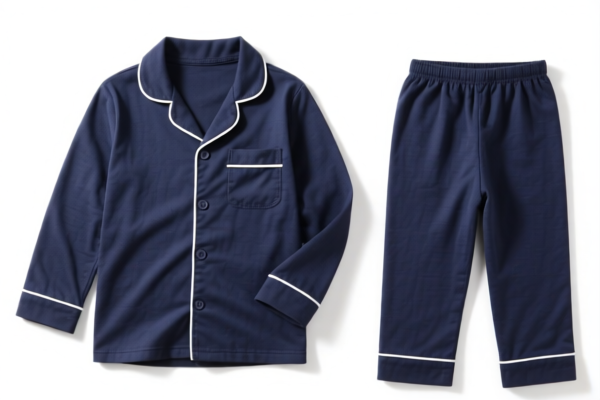
Boys' Man made Fiber Striped Pajamas
CN → US| HS编码 | 关税税率 | 原产国 | 目的国 | 文档 |
|---|---|---|---|---|
| 6114303060 | 32.4% | CN | US | 官方文档 |
| 6114303044 | 32.4% | CN | US | 官方文档 |
| 6107220015 | 33.5% | CN | US | 官方文档 |
| 6107220025 | 26.0% | CN | US | 官方文档 |
| 6207220000 | 33.5% | CN | US | 官方文档 |
商品图片
AI分析
🌙 Boys' Man-Made Fiber Striped Pajamas: HS Code Classification & US Customs Clearance Guide (2026)
🌐 HS Code Reference & Customs Strategy | Latest 2026 Tariff Breakdown | Professional Clearance Advice
📌 Product Definition: What Are We Actually Classifying?
Boys’ Man-Made Fiber Striped Pajamas are nightwear garments designed specifically for male children. They are manufactured from synthetic or regenerated fibers (e.g., polyester, rayon/viscose, nylon) rather than natural fibers like cotton or wool. The "striped" pattern is a design element but does not change the fundamental nature of the garment as sleepwear.
In international trade, pajamas are often confused with other types of men’s/children’s sleepwear or loungewear. The key distinction lies in: 1. Purpose: Specifically for sleeping. 2. Construction: Typically two-piece sets (jacket + pants) or one-piece suits, distinct from robes or blankets. 3. Material: Man-made fibers (Chapter 61 for knit/crochet, Chapter 62 for woven).
⚠️ Critical Distinction:
- If the garment is a two-piece set (top + bottom) or a one-piece suit designed for sleep → It is Pajamas.
- If it is a long robe → It is Bathrobe.
- If it is a knitted nightshirt without specific pajama construction → It may fall under Nightshirts/Nightdresses or Other Menswear.
📦 II. HS Code Classification Details (2026 Latest Tariff Authority Comparison)
Based on the provided data for "Boys' Man-Made Fiber Striped Pajamas", here are the possible HS Code classifications, their rationale, and associated tax rates.
| HS Code | Product Description & Rationale | Total Tax Rate | Tax Breakdown (US Import from China) |
|---|---|---|---|
| 6114.30.30.60 | Boys' Long-Sleeve Man-Made Fiber Pajamas Rationale: Classified under "Other men's or boys' knitted/crocheted garments of man-made fibers." Fits the broad category of pajamas that don't fit other specific sub-headings. |
32.4% | Base: 14.9% Section 301 (Add'l): 7.5% Section 122: 10% |
| 6114.30.30.44 | Boys' Long-Sleeve Man-Made Fiber Pajamas Rationale: Classified under "Onesies, workwear, and similar garments." If the pajamas are one-piece or considered "similar" to workwear/sleep-suits, this code may apply. |
32.4% | Base: 14.9% Section 301 (Add'l): 7.5% Section 122: 10% |
| 6107.22.00.15 | Boys' Long-Sleeve Man-Made Fiber Sleepwear Rationale: Specifically for boys' sleepwear of man-made fibers. This is a more precise fit if the item is strictly defined as sleepwear in the knitted category. |
33.5% | Base: 16.0% Section 301 (Add'l): 7.5% Section 122: 10% |
| 6107.22.00.25 | Boys' Long-Sleeve Man-Made Fiber Sleepwear Rationale: Same as above, but potentially excluding blanket pajamas. Note: This code has a lower additional tax component. |
26.0% | Base: 16.0% Section 301 (Add'l): 0.0% Section 122: 10% |
| 6207.22.00.00 | Boys' Long-Sleeve Man-Made Fiber Pajamas (Woven) Rationale: If the pajamas are woven (not knitted), they fall under Chapter 62. This code covers other men’s/boys’ nightshirts and pajamas. |
33.5% | Base: 16.0% Section 301 (Add'l): 7.5% Section 122: 10% |
🔍 Key Observation:
- Knitted vs. Woven: Most pajamas are knitted (Chapter 61). If your product is woven (e.g., flannel-like but synthetic), use 6207.22.00.00.
- Section 122 Impact: All listed codes include a 10% Section 122 tariff (likely related to specific trade enforcement or recent policy adjustments).
- Section 301 Variance: Code 6107.22.00.25 offers a 0% Section 301 rate, resulting in a significantly lower total tax (26.0%) compared to others (32.4%-33.5%). This makes it the most cost-effective classification if applicable.
💰 III. 2026 Latest Tariff Rate Breakdown (Detailed Analysis)
✅ Applicable Country: United States (US)
✅ Origin: China (CN)
✅ Effective Date: Current 2026 Tariff Schedule
🎯 1. 6114.30.30.60 & 6114.30.30.44 — General Men’s/Boys’ Knitted Garments
| Item | Detail |
|---|---|
| Base Duty | 14.9% |
| Section 301 Additional Duty | +7.5% |
| Section 122 Duty | +10% |
| Total Effective Rate | 32.4% |
| Calculation | CIF Value × 32.4% |
| De Minimis Exemption | ❌ Not Eligible (Section 321 de minimis does not apply to goods subject to Section 301/122 tariffs) |
| Legal Basis | USITC:6114.30.30.60 → IEEPA:9903.01.25 → USITC:Footnote |
📌 Explanation:
- These codes fall under general "other men’s/boys’ knitted garments."
- The 7.5% Section 301 rate applies to most Chinese textile imports.
- 10% Section 122 is a recent enforcement tariff, likely targeting specific trade practices or overcapacities.
🎯 2. 6107.22.00.15 & 6207.22.00.00 — Specific Sleepwear Categories
| Item | Detail |
|---|---|
| Base Duty | 16.0% |
| Section 301 Additional Duty | +7.5% |
| Section 122 Duty | +10% |
| Total Effective Rate | 33.5% |
| Calculation | CIF Value × 33.5% |
| De Minimis Exemption | ❌ Not Eligible |
| Legal Basis | USITC:6107.22.00.15 / 6207.22.00.00 → IEEPA:9903.01.25 → USITC:Footnote |
📌 Explanation:
- These codes are more specific to sleepwear, which often carries a slightly higher base duty (16.0% vs. 14.9%).
- The additional tariffs remain the same as above.
🎯 3. 6107.22.00.25 — OPTIMAL CLASSIFICATION (If Applicable)
| Item | Detail |
|---|---|
| Base Duty | 16.0% |
| Section 301 Additional Duty | 0.0% |
| Section 122 Duty | +10% |
| Total Effective Rate | 26.0% |
| Calculation | CIF Value × 26.0% |
| De Minimis Exemption | ❌ Not Eligible |
| Legal Basis | USITC:6107.22.00.25 → IEEPA:9903.01.24 (Different Footnote) |
📌 Explanation:
- This code appears to have a different legal footnote (9903.01.24vs.9903.01.25), resulting in 0% Section 301 tariff.
- This is the most tax-efficient classification, saving 7.5% on top duties.
- Condition: Must qualify under the specific criteria for this subheading (likely excluding blanket pajamas or fitting a specific "sleepwear" definition that exempts it from Section 301).
🛠️ IV. Customs Clearance Practical Advice (Avoid Pitfalls)
✅ 1. Required Documentation Checklist
| Document | Mandatory? | Purpose |
|---|---|---|
| ✅ Product Specification Sheet | ✔️ | Must state: Material (e.g., 100% Polyester), Construction (Knitted/Woven), Style (Pajama Set), Target Demographic (Boys). |
| ✅ Product Images | ✔️ | Show striped pattern, long sleeves, two-piece set (if applicable), and labels. |
| ✅ Commercial Invoice | ✔️ | Clearly describe as "Boys' Striped Pajamas, Man-Made Fiber, Knitted/Woven." Avoid vague terms like "Clothing." |
| ✅ Packing List | ✔️ | Confirm quantity, packaging method, and dimensions. |
| ✅ Labeling Compliance | ✔️ | US Customs requires Fiber Content, Country of Origin, and Manufacturer/Importer Info on garments. |
✅ 2. Classification Strategy (Key Tips)
🔥 “Describe Exactly, Don’t Guess!”
| Scenario | Correct Declaration | Risk if Incorrect |
|---|---|---|
| Knitted Pajama Set | 6107.22.00.25 (if eligible) or 6107.22.00.15 |
Misclassifying as general wear (6114) → Overpay or Underpay duties. |
| Woven Pajama Set | 6207.22.00.00 |
Misclassifying as knitted (61xx) → Rejection, Penalty, Delay. |
| One-Piece Sleepsuit | 6114.30.30.44 ("Similar Garments") |
If declared as pajamas but looks like a suit, Customs may question. |
| Blanket Pajamas | Not 6107.22.00.25 |
Must use other codes with higher taxes. |
✅ 3. Special Considerations
- Section 122 Tariff: All classified codes above include a 10% Section 122 tariff. Ensure your customs broker is aware of this additional charge, as it is recent and sometimes overlooked.
- De Minimis (Section 321): Since these goods are subject to Section 301 and Section 122 tariffs, they DO NOT QUALIFY for the $800 de minimis exemption. All shipments must be formally entered.
- Pre-Ruling Recommendation: Given the difference between 26.0% (Code .25) and 32.4-33.5% (other codes), apply for an Advance Ruling from US Customs and Border Protection (CBP) to confirm eligibility for 6107.22.00.25.
🌍 V. Global Market Clearance Comparison (2026)
| Country/Region | Recommended HS Code | Duty Rate | Key Certification | Notes |
|---|---|---|---|---|
| 🇺🇸 USA | 6107.22.00.25 (if eligible) |
26.0% | FCC (if electronic), CPSIA (Children’s Product) | High tariffs due to China origin. Verify Section 301 exemption. |
| 🇺🇸 USA | 6114.30.30.60 |
32.4% | CPSIA | Default if .25 not eligible. |
| 🇨🇳 China | 6107.22.00 |
~10-15% | CCC (if applicable) | Lower base duties, no Section 301/122. |
| 🇪🇺 EU | 6107.22 |
0-12% | CE, REACH, CPSR | No Section 301/122. Standard EU duty applies. |
| 🇬🇧 UK | 6107.22 |
0-12% | UKCA | Post-Brexit rules apply. |
📌 Conclusion:
- USA is the most challenging market due to high additional tariffs (Section 301 + 122).
- Optimizing HS Code to6107.22.00.25can save 7.5% on duties, a significant margin for low-margin apparel.
📌 VI. Common Mistakes & Pitfalls (Learn from Others’ Errors)
❌ Mistake 1: Declaring "Striped Pajamas" as "Children’s Clothing" generally.
👉 Consequence: May be misclassified under general headings, leading to incorrect duty assessment and potential audits.
❌ Mistake 2: Ignoring the Knitted vs. Woven distinction.
👉 Consequence: Knitted items go to Chapter 61, Woven to Chapter 62. Misclassification can lead to 100% penalty on duties.
❌ Mistake 3: Assuming De Minimis applies.
👉 Consequence: Shipments under $800 will be seized or delayed if not formally entered, as Section 301/122 goods are exempt from de minimis.
❌ Mistake 4: Using "Man-Made Fiber" without specifying Knitted/Woven.
👉 Consequence: CBP may request additional info, causing clearance delays. Always specify construction method.
✅ Best Practice Declaration Example:
"Boys' Knitted Striped Pajama Set, 100% Polyester, Long Sleeve, Two-Piece, Model XYZ, CPSIA Compliant"
🎯 VII. Conclusion: Precision in Classification Saves Money!
🎯 Remember the Strategy:
🔹 "Check Knitted/Woven first."
🔹 "Aim for 6107.22.00.25 (26% tax) if possible!"
🔹 "If not eligible, 6114.30.30.60/44 (32.4%) is the backup."
🔹 "Never use De Minimis for China-origin textiles under $800."
📌 Pro Tip:
If your pajamas are made of cotton, the tax structure changes completely. Ensure you are using the correct man-made fiber classification.
Consider applying for a CBP Advance Ruling to lock in the 26.0% rate for 6107.22.00.25 if your product qualifies.
📣 Immediate Action:
📞 Consult your customs broker with product images and material specs.
📄 Submit for CBP Advance Ruling to confirm eligibility for 6107.22.00.25.
🚀 Clearance is not just about speed—it’s about accuracy and cost optimization!
✨ Professional customs clearance starts with precise classification!
💼 Every percentage point saved is pure profit!
用户评价
关于 HS 编码归类
协调制度(HS)是由世界海关组织(WCO)制定的国际贸易商品分类标准。全球 200 多个国家采用 HS 系统作为海关关税、贸易统计和进出口监管的基础。
每个 HS 编码遵循以下层级结构:
- 章(2 位)——商品大类(例如:第 84 章:机器和机械设备)
- 品目(4 位)——章内的更具体分类
- 子目(6 位)——国际通用细分,所有 WCO 成员国统一使用
- 本国细分(8-10 位)——各国自行扩展的细分编码,如美国 HTSUS 10 位编码
正确的 HS 编码归类对于顺利通关、准确缴纳关税和遵守贸易法规至关重要。错误归类可能导致海关延误、多缴关税或罚款。
从CN进口到US时,适用的关税税率可能包括:
- 最惠国(MFN)税率——适用于 WTO 成员国的标准关税税率
- 普通税率——适用于无贸易协定国家
- 贸易救济关税——附加关税,如 301 条款(反倾销)、232 条款(国家安全)或反补贴税
本页内容仅供参考。如需正式归类,请咨询当地海关或持牌报关代理。