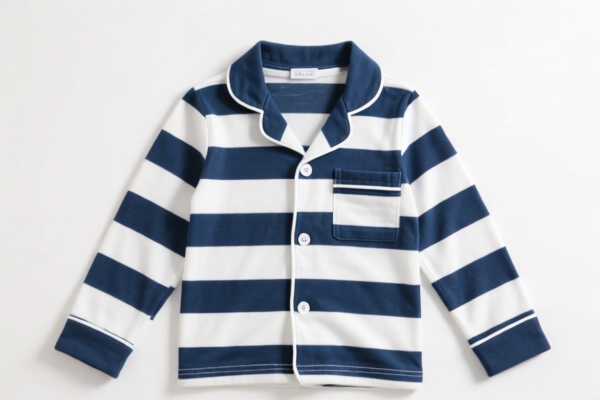
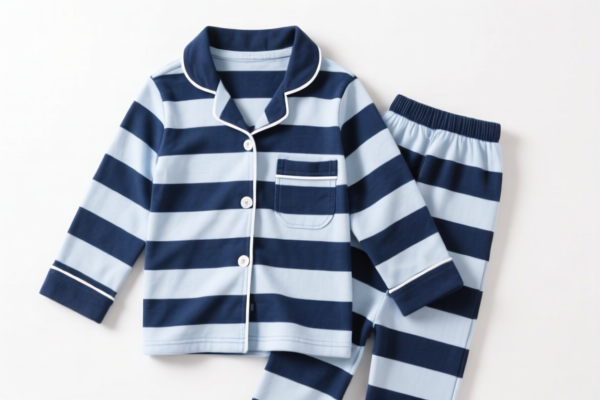
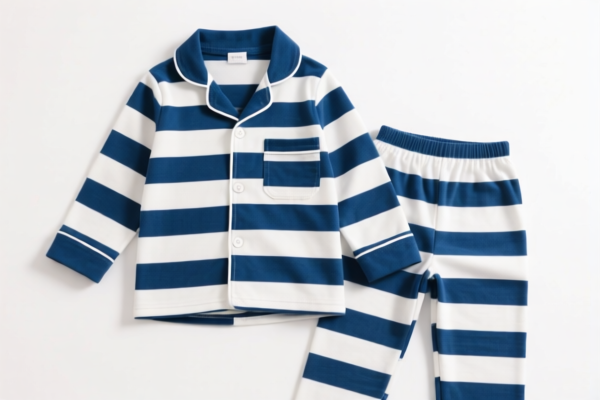
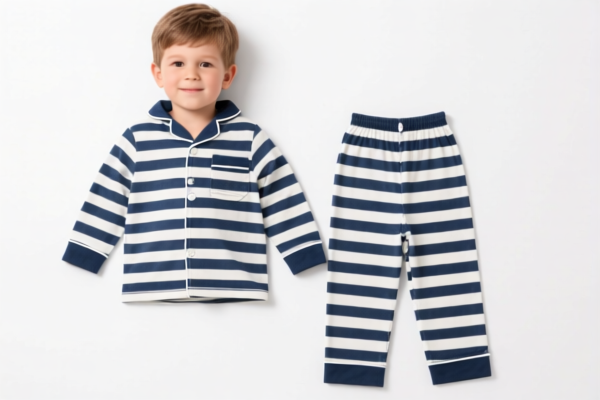
Boys' Striped Underwear
CN → US| HS编码 | 关税税率 | 原产国 | 目的国 | 文档 |
|---|---|---|---|---|
| 6207199010 | 28.0% | CN | US | 官方文档 |
| 6114200020 | 28.3% | CN | US | 官方文档 |
| 6107120010 | 32.4% | CN | US | 官方文档 |
| 6107110010 | 17.4% | CN | US | 官方文档 |
| 6114302010 | 49.5% | CN | US | 官方文档 |
| 6107110020 | 24.9% | CN | US | 官方文档 |
商品图片
AI分析
👕 Boys' Striped Underwear (Men's & Boys' Briefs/Panties)
🌐 HS Code Reference & Customs Clearance Guide | 2026 Latest Tariff Analysis | Strategic Entry Strategy
📌 I. Product Definition & Classification: Do You Know "Striped Underwear"?
Boys' striped underwear, typically classified under Men's or Boys' Knitted or Crocheted Underwear, falls into the category of textile apparel. In international trade, the specific HS Code and resulting tax liability depend heavily on the material composition and the structure of the fabric (knitted vs. woven).
Key Distinction: * Cotton-Dominant: If the main material is cotton, it falls under specific subheadings with lower base duties. * Synthetic/Blended: If it contains significant amounts of synthetic fibers (polyester, nylon) or spandex (elasticity), it falls under different subheadings with higher base duties. * Knitted vs. Woven: Most boys' underwear is knitted (HS Chapter 61). Woven (HS Chapter 62) is less common for standard briefs but possible for specific styles.
⚠️ Critical Note:
- "Striped" refers to the pattern/colorway, not the material or structure. It does not change the HS Code itself, but must be accurately declared.
- "Boys'" items often follow the same classification as Men's underwear under US Customs rulings unless specifically sized for infants (Chapter 61/62 generally cover children's garments differently only if clearly distinct; otherwise, they are often grouped with men's or specific children's headings, but the provided data maps to Men's/General categories).
📦 II. HS Code Classification Details (Based on Provided DATA)
| HS Code | Product Description | Material/Structure | Total Tax Rate | Key Tax Components |
|---|---|---|---|---|
| 6107.11.00.10 | Men's Underwear, Textile Material, Cotton or Similar Fibers | Mainly Cotton | 17.4% | Base: 7.4% + Add'l: 0.0% + Sec 122: 10% |
| 6107.12.00.10 | Men's Underwear, Textile Material, Artificial Fibers or Cotton Blend | Synthetic Blend/Artificial | 32.4% | Base: 14.9% + Add'l: 7.5% + Sec 122: 10% |
| 6114.20.00.20 | Men's Underwear, Knitted/Crocheted, Cotton or Fiber Blend | Knitted Blend | 28.3% | Base: 10.8% + Add'l: 7.5% + Sec 122: 10% |
| 6114.30.20.10 | Men's Underwear, Intimates, Contains Spandex/Elastic Fibers | High Elasticity (Spandex) | 49.5% | Base: 32.0% + Add'l: 7.5% + Sec 122: 10% |
| 6207.19.90.10 | Men's Underwear, Textile Material, Meets Fiber Requirements | Woven/Other Textile | 28.0% | Base: 10.5% + Add'l: 7.5% + Sec 122: 10% |
🔍 重点提醒:
- Cotton vs. Synthetic: Cotton-heavy items (6107.11.00.10) have the lowest base duty (7.4%). Synthetic blends or artificial fibers increase the base duty significantly (14.9% - 32.0%).
- Elasticity Matters: If the underwear contains spandex/elastane for stretch (6114.30.20.10), the base duty jumps to 32.0%, making the total tax rate the highest at 49.5%.
- Section 122 Tariff: All items above include a 10% tariff under "Section 122" (likely referring to specific US trade provisions or a placeholder for recent tariffs). This is a fixed add-on.
💰 III. 2026 Latest Tariff Rate Detailed Explanation (Including Add-ons)
✅ Applicable Country: United States (US)
✅ Origin: China (CN)
✅ Effective Time: As per 2026 Tariff Schedule
🎯 1. 6107.11.00.10 —— Cotton Underwear (Lowest Cost)
| Item | Detail |
|---|---|
| Base Duty | 7.4% |
| Additional Duty | 0.0% |
| Section 122 Tariff | +10% |
| Total Tax Rate | 17.4% |
| Tax Calculation | CIF Value × 17.4% |
| De Minimis Eligibility | ❌ Not Eligible (Textiles often excluded from $800 de minimis if subject to tariffs) |
| Legal Basis | HTSUS 6107.11 + Section 122 Provisions |
📌 Explanation:
- This is the most cost-effective classification for boys' striped underwear if made primarily of cotton.
- The 0% additional duty makes this the best option for pure cotton products.
- Total 17.4% is relatively low compared to synthetic/elastic options.
🎯 2. 6107.12.00.10 —— Artificial Fiber/Cotton Blend
| Item | Detail |
|---|---|
| Base Duty | 14.9% |
| Additional Duty | +7.5% |
| Section 122 Tariff | +10% |
| Total Tax Rate | 32.4% |
| Tax Calculation | CIF Value × 32.4% |
| De Minimis Eligibility | ❌ Not Eligible |
| Legal Basis | HTSUS 6107.12 + Section 122 Provisions |
📌 Explanation:
- If the striped pattern is achieved using polyester or nylon blends with cotton, this code applies.
- The 7.5% additional duty significantly increases costs compared to pure cotton.
🎯 3. 6114.20.00.20 —— Knitted/Crocheted Blend
| Item | Detail |
|---|---|
| Base Duty | 10.8% |
| Additional Duty | +7.5% |
| Section 122 Tariff | +10% |
| Total Tax Rate | 28.3% |
| Tax Calculation | CIF Value × 28.3% |
| De Minimis Eligibility | ❌ Not Eligible |
| Legal Basis | HTSUS 6114.20 + Section 122 Provisions |
📌 Explanation:
- Applies to knitted garments made from blends.
- Lower base duty (10.8%) than6107.12, but still incurs the 7.5% additional duty.
🎯 4. 6114.30.20.10 —— High Elasticity/Spandex (Highest Cost)
| Item | Detail |
|---|---|
| Base Duty | 32.0% |
| Additional Duty | +7.5% |
| Section 122 Tariff | +10% |
| Total Tax Rate | 49.5% |
| Tax Calculation | CIF Value × 49.5% |
| De Minimis Eligibility | ❌ Not Eligible |
| Legal Basis | HTSUS 6114.30 + Section 122 Provisions |
📌 Explanation:
- If the boys' underwear is stretchy (contains spandex/elastane), this is the likely code.
- Highest tax burden at 49.5%. Avoid this classification if possible by using non-stretch cotton blends, if quality allows.
🎯 5. 6207.19.90.10 —— Woven/Other Textile
| Item | Detail |
|---|---|
| Base Duty | 10.5% |
| Additional Duty | +7.5% |
| Section 122 Tariff | +10% |
| Total Tax Rate | 28.0% |
| Tax Calculation | CIF Value × 28.0% |
| De Minimis Eligibility | ❌ Not Eligible |
| Legal Basis | HTSUS 6207.19 + Section 122 Provisions |
📌 Explanation:
- Rare for standard underwear, but may apply if the garment is woven (e.g., specific boxers or woven briefs).
- Moderate tax rate of 28.0%.
🛠️ IV. Customs Clearance Practical Advice (Avoid Pitfalls)
✅ 1. Documentation Checklist (Mandatory)
| Document | Required? | Description |
|---|---|---|
| ✅ Product Specification | ✔️ | Must clearly state Material Composition (e.g., 95% Cotton, 5% Spandex). |
| ✅ Commercial Invoice | ✔️ | Must specify "Boys' Striped Underwear", HS Code, and Country of Origin. |
| ✅ Packing List | ✔️ | Detail quantity, weight, and packaging type. |
| ✅ Fabric Swatch/Photo | ✔️ | To prove knitted vs. woven and material content. |
| ✅ Third-Party Test Report | ✔️ | For fiber content verification (if requested by CBP). |
✅ 2. Declaration Tips (Key Strategies)
🔥 "Material First, Structure Second, Pattern Third!"
| Scenario | Correct Declaration | Wrong Declaration |
|---|---|---|
| 100% Cotton Knitted | 6107.11.00.10 |
Misdeclare as Synthetic → 32.4% tax |
| Cotton + Spandex Blend | 6114.30.20.10 |
Misdeclare as Cotton → 17.4% (Risk of Audit) |
| Polyester/Cotton Blend | 6107.12.00.10 |
Misdeclare as Knitted Blend → 28.3% (Incorrect) |
| Woven Boxers | 6207.19.90.10 |
Misdeclare as Knitted → Penalty |
📌 Key Reminder:
- "Striped" is a visual feature. Do not use it as the primary classifier. Use Material + Structure.
- Accuracy in Fiber Content is critical. If CBP tests the fabric and finds 5% spandex, you will be reassessed under6114.30.20.10(49.5% tax) + penalties.
✅ 3. Special Cases
| Case | Handling Advice |
|---|---|
| OEM/Private Label | Provide brand authorization letters to avoid IP issues. |
| Mixed Sizes (Boys/Men) | Clearly separate in packing list. Boys' sizes may sometimes be classified differently, but US Customs often groups them under Men's/Boys' headings depending on size. |
| Gift Sets | If packed with other items, declare separately to avoid misclassification. |
🌍 V. Global Market Comparison (2026)
| Market | Recommended HS Code | Approx. Tax Rate | Notes |
|---|---|---|---|
| 🇺🇸 USA | 6107.11.00.10 |
17.4% | Lowest tax if 100% Cotton. |
| 🇺🇸 USA | 6114.30.20.10 |
49.5% | Highest tax if Spandex-heavy. |
| 🇨🇳 China | 6107.11.00.10 |
~5-10% | Lower duties, no Section 122. |
| 🇪🇺 EU | 6107.11.00 |
~4-8% | No additional Section 122 tariffs. |
📌 Conclusion:
- US Market is Cost-Sensitive: Aim for Cotton-Dominant products to stay under 20% tax.
- Avoid Spandex: If possible, reduce spandex content to avoid the 49.5% bracket.
📌 VI. Common Mistakes & Pitfalls (Lessons Learned)
❌ Mistake 1: Declaring "Men's" instead of "Boys'"
👉 Consequence: May not change tax rate, but could cause confusion if size standards differ. Ensure correct labeling.
❌ Mistake 2: Ignoring Fiber Content in Description
👉 Consequence: CBP may conduct a fiber test. If spandex is found, tax jumps from 17.4% to 49.5% + penalties.
❌ Mistake 3: Using "Underwear" as Generic Term
👉 Consequence: CBP may assign a generic code with higher duty. Specify "Knitted/Crocheted".
❌ Mistake 4: Not Accounting for Section 122 Tariff
👉 Consequence: Unexpected 10% add-on increases profit margin pressure.
✅ Correct Practice:
"Boys' Knitted Cotton Striped Briefs, 95% Cotton, 5% Spandex, HS 6114.30.20.10, Origin: China"
🎯 VII. Conclusion: Smart Declaration, Higher Profit!
🎯 Remember the Rule:
🔹 "Cotton is King (17.4%), Spandex is Expensive (49.5%)."
🔹 "Declare Material First, Pattern Second."
📌 Pro Tip:
If your product is 100% Cotton, ensure your supplier certifies this. Use 6107.11.00.10 for the lowest tax (17.4%).
If you must use Spandex, budget for 49.5% tax.
📣 Action Required:
📞 Consult a Customs Broker for Pre-Ruling on fiber content.
🚀 Optimize your supply chain to use Cotton-Dominant fabrics for the US market.
✨ Professional Clearance Starts with Accurate Classification!
💼 Every Percent of Tax Saved is Pure Profit!
用户评价
关于 HS 编码归类
协调制度(HS)是由世界海关组织(WCO)制定的国际贸易商品分类标准。全球 200 多个国家采用 HS 系统作为海关关税、贸易统计和进出口监管的基础。
每个 HS 编码遵循以下层级结构:
- 章(2 位)——商品大类(例如:第 84 章:机器和机械设备)
- 品目(4 位)——章内的更具体分类
- 子目(6 位)——国际通用细分,所有 WCO 成员国统一使用
- 本国细分(8-10 位)——各国自行扩展的细分编码,如美国 HTSUS 10 位编码
正确的 HS 编码归类对于顺利通关、准确缴纳关税和遵守贸易法规至关重要。错误归类可能导致海关延误、多缴关税或罚款。
从CN进口到US时,适用的关税税率可能包括:
- 最惠国(MFN)税率——适用于 WTO 成员国的标准关税税率
- 普通税率——适用于无贸易协定国家
- 贸易救济关税——附加关税,如 301 条款(反倾销)、232 条款(国家安全)或反补贴税
本页内容仅供参考。如需正式归类,请咨询当地海关或持牌报关代理。