Boys' Summer Clothing Set
CN → US| HS编码 | 关税税率 | 原产国 | 目的国 | 文档 |
|---|---|---|---|---|
| 6211325050 | 25.6% | CN | US | 官方文档 |
| 6211335035 | 33.5% | CN | US | 官方文档 |
| 6209303020 | 33.5% | CN | US | 官方文档 |
| 6111305020 | 33.5% | CN | US | 官方文档 |
| 6109100014 | 34.0% | CN | US | 官方文档 |
| 6209205035 | 26.8% | CN | US | 官方文档 |
商品图片
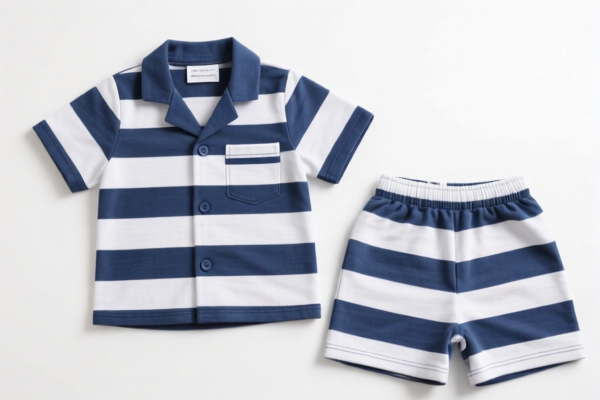
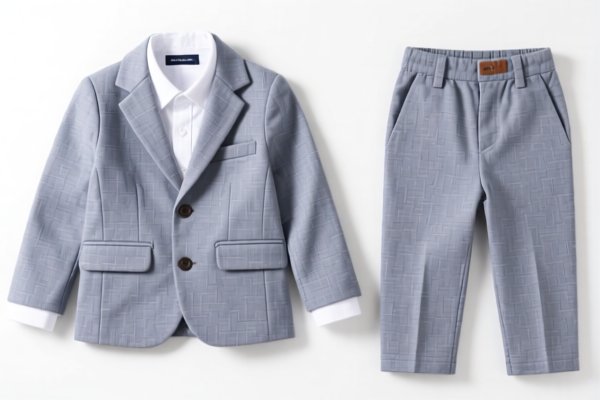
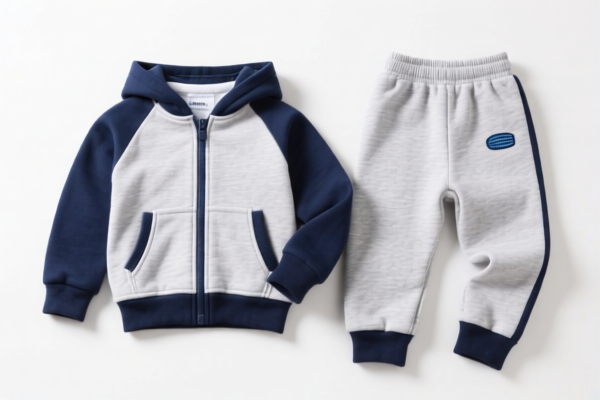
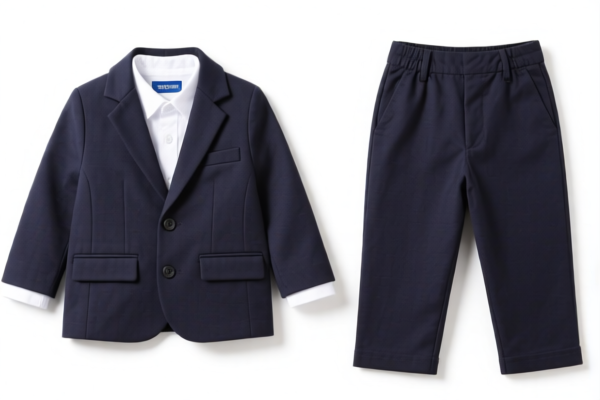
AI分析
🌞 Boys' Summer Clothing Set (Children's Sportswear)
🌐 HS Code Reference & Customs Clearance Guide | 2026 Tariff Rate Analysis | Professional Strategy
📌 I. Product Definition: What Exactly is "Boys' Summer Clothing Set"?
Boys' Summer Clothing Sets are coordinated two-piece (or more) garments designed for male children, specifically tailored for warm-weather activities, sports, or casual wear. In international trade, the classification depends heavily on: 1. Fabric Composition: Is it natural fiber (Cotton) or synthetic (Polyester/Spandex)? 2. Knitting Method: Is it knitted (Jersey/T-shirt style) or woven (Trousers/Shirt style)? 3. Target Audience: "Boys" vs. "Children" (HS codes often distinguish based on age/size, but "Boys' Set" generally falls under "Children" categories in the data provided).
⚠️ Critical Classification Logic: - Woven Sets (e.g., cotton pants + polo shirt): Typically fall under Chapter 62. - Knitted Sets (e.g., cotton t-shirt + shorts): Typically fall under Chapter 61. - Material Matters: Cotton (Chapter 6211/6111) vs. Synthetic (Chapter 6211/6111) triggers different tax rates.
📦 II. HS Code Classification Matrix (2026 Data Analysis)
Based on the provided trade data, here is the precise breakdown for Boys' Summer Clothing Sets:
| HS Code | Product Description | Material Type | Garment Construction | Total Tax Rate |
|---|---|---|---|---|
| 6211.32.50.50 | Boys'/Children's Sports Set (Woven) | Cotton or other natural fibers | Woven | 25.6% |
| 6211.33.50.35 | Boys'/Children's Sports Set (Woven) | Synthetic or Man-made fibers | Woven | 33.5% |
| 6209.30.30.20 | Children's Set (Woven) | Synthetic fibers | Woven | 33.5% |
| 6111.30.50.20 | Children's Set (Knitted) | Synthetic fibers | Knitted | 33.5% |
| 6109.10.00.14 | Children's Set (Knitted) | Synthetic fibers | Knitted | 34.0% |
🔍 Decoding the Codes: - 6211: Outer garments, including sports clothing (Woven). - 6209: Articles of apparel and clothing accessories, for babies/children (Woven). - 6111: Articles of apparel and clothing accessories, knitted or crocheted (Synthetic). - 6109: T-shirts, singlets, etc., knitted (often used for "sets" if a shirt is the main component).
💰 III. 2026 Tariff Rate Breakdown & Policy Details
✅ Applicable Market: USA (Import from China)
✅ Product Category: Children's Boys' Summer Clothing
✅ Effective Date: Current / 2026 Projection based on active Section 232 & 301 clauses.
The total tax rate is a cumulative sum of three distinct layers:
1. The "Base" Layer (MFN Tariff)
- Cotton Sets: 8.1% (e.g., 6211.32.50.50)
- Synthetic Sets: 16.0% - 16.5% (e.g., 6211.33.50.35, 6209.30.30.20, 6111.30.50.20, 6109.10.00.14)
- Note: Synthetic fibers attract a higher base tariff due to competition with domestic production.
2. The "Section 232" / "Added" Tariff (+7.5%)
- Rate: 7.5%
- Reason: This is the "Section 232" steel/aluminum or general trade safeguard tariff applied to specific textile categories to protect domestic industries or retaliate against unfair trade practices.
- Applicability: Mandatory for all items in the provided dataset.
3. The "Section 301" / "122 Clause" Tariff (+10%)
- Rate: 10%
- Reason: This refers to the "Section 301" retaliatory tariffs on Chinese imports (often categorized under "122 clauses" in specific customs filings or legacy data). It targets China-originating goods.
- Applicability: Mandatory for all items in the provided dataset.
📊 Total Tax Calculation Formula
| Item Category | Base Rate | + Added (7.5%) | + 122 Clause (10%) | TOTAL TAX |
|---|---|---|---|---|
| Cotton Boys' Set | 8.1% | 7.5% | 10% | 25.6% |
| Synthetic Boys' Set | 16.0% | 7.5% | 10% | 33.5% |
| Knitted Synthetic Set | 16.5% | 7.5% | 10% | 34.0% |
📌 Crucial Warning: - No De Minimis Exemption: The provided data explicitly states these items are not eligible for the $800 de minimis exemption. Every single item must be declared and taxed. - Cumulative Impact: The "122 Clause" (10%) and "Added" (7.5%) tariffs are additive, not percentage-of-percentage. They significantly increase the landed cost, especially for synthetic blends.
🛠️ IV. Customs Clearance Strategy (Pro Tips)
✅ 1. Preparation Checklist (Mandatory Documents)
To avoid delays at US Customs (CBP), ensure you have: | Document | Requirement | Why It Matters | | :--- | :--- | :--- | | Commercial Invoice | Must list HS Code, Country of Origin (China), and Value | Prevents "Valuation" disputes. | | Packing List | Must detail quantity per size/color | CBP checks against HS Code volume. | | Composition Label | Critical: Must explicitly state % Cotton vs. % Polyester | Determines if you pay 25.6% or 33.5%. | | Brand Authorization | If applicable | Avoids "Counterfeit" seizure. | | Child Safety Certs | CPSIA / ASTM F963 | Mandatory for children's wear in the US. |
✅ 2. Classification Strategy (How to Save Money)
- Strategy A: Fabric Optimization
- If possible, switch to 100% Cotton for boys' sets.
- Savings: 7.9% (33.5% vs 25.6% total tax).
- Trade-off: Cotton may be heavier/more expensive, but tax savings are significant.
- Strategy B: Avoid "Mixed" Ambiguity
- Do not label a set as "Polyester Blend" if it contains 49% Cotton.
- Risk: CBP may reclassify as synthetic (33.5%) if the synthetic content is deemed dominant or if the blend rule is misapplied. Be precise: "50% Cotton, 50% Polyester".
✅ 3. Declaration Language (The "Perfect" Phrase)
When filing, do not just write "Boys' Clothes." Use:
"Boys' Woven Sports Set (Two-Piece), 100% Cotton, Size 4-14, Origin: China. HS Code: 6211.32.50.50."
If Synthetic:
"Boys' Knitted Summer Set, 100% Polyester, Size 2-10, Origin: China. HS Code: 6111.30.50.20."
🚫 V. Common Pitfalls & "Red Flags"
| ❌ Mistake | 🚨 Consequence | 💡 Solution |
|---|---|---|
| Wrong Material Claim | Claiming "Cotton" but fabric is "Polyester" | Tax jumps from 25.6% → 33.5% + Potential Penalty |
| Ignoring Knitting vs. Woven | Misclassifying a Knitted Set as Woven (61xx vs 62xx) | Leads to 100% Audit and seizure of goods |
| Omitting "122 Clause" | Not declaring the 10% surcharge | CBP Fine + Interest on unpaid tax |
| Ignoring "Boys" vs "Children" | Some codes are gender-neutral, but "Boys" sets might fall under specific "Children" codes (6209/6111) if age/size dictates | Match the Gender Code: Use 6211/6111 for "Boys", 6209 for general "Children" if age < 2 (check specific size rules) |
🌍 VI. Market Comparison (USA vs. Rest of World)
| Market | Typical Base Tax | Additional Tariffs | Total Effective Rate (Synthetic) | Verdict |
|---|---|---|---|---|
| 🇺🇸 USA | 16.0% | +7.5% (Addl) + 10% (122) | 33.5% - 34.0% | 🔴 High Risk/High Cost |
| 🇪🇺 EU | ~12% | No Section 232/301 | ~12-15% | 🟢 Better for Exports |
| 🇨🇦 Canada | ~12% | No Section 232/301 | ~12-15% | 🟢 Better for Exports |
| 🇦🇺 Australia | ~10% | No Section 232/301 | ~10-12% | 🟢 Better for Exports |
💡 Insight: The USA is currently the most expensive market for Chinese boys' summer clothing due to the specific Section 232 and Section 301叠加 (stacking). - Recommendation: If your target is the US, consider Cotton options to minimize the 8.1% vs 16% base gap. - Alternative: If selling to the EU/Canada, avoid the "122 Clause" and "Added Tax" entirely.
📌 VII. Final Conclusion & Action Plan
🎯 Key Takeaway:
"Cotton saves you 8%, Synthetic hits you with 34%."
The 7.5% Added Tax and 10% 122 Clause Tax are unavoidable for China-origin goods, but the Base Tariff is your only lever to control costs.
✅ Action Checklist for Importers: 1. Verify Fabric: Confirm 100% Cotton vs. Synthetic % immediately. 2. Check Construction: Is it Knitted (61xx) or Woven (62xx)? 3. Calculate Landed Cost: Use the 33.5% rate for synthetic and 25.6% for cotton. 4. Prepare Safety Docs: Ensure CPSIA compliance is attached to the shipment. 5. Pre-Arrange: If shipping large volumes, apply for CBP Prior Ruling on the HS Code to avoid hold-ups.
✨ Pro Tip: For maximum savings, consider sourcing boys' sets from Vietnam or Bangladesh (if rules of origin allow) to potentially bypass the 10% "122 Clause" and 7.5% "Added Tax," though base rates may vary.
💼 Your Every Penny Counts!
Precision in HS Code = Precision in Profit.
🚀 Ship Smarter, Not Harder.
用户评价
关于 HS 编码归类
协调制度(HS)是由世界海关组织(WCO)制定的国际贸易商品分类标准。全球 200 多个国家采用 HS 系统作为海关关税、贸易统计和进出口监管的基础。
每个 HS 编码遵循以下层级结构:
- 章(2 位)——商品大类(例如:第 84 章:机器和机械设备)
- 品目(4 位)——章内的更具体分类
- 子目(6 位)——国际通用细分,所有 WCO 成员国统一使用
- 本国细分(8-10 位)——各国自行扩展的细分编码,如美国 HTSUS 10 位编码
正确的 HS 编码归类对于顺利通关、准确缴纳关税和遵守贸易法规至关重要。错误归类可能导致海关延误、多缴关税或罚款。
从CN进口到US时,适用的关税税率可能包括:
- 最惠国(MFN)税率——适用于 WTO 成员国的标准关税税率
- 普通税率——适用于无贸易协定国家
- 贸易救济关税——附加关税,如 301 条款(反倾销)、232 条款(国家安全)或反补贴税
本页内容仅供参考。如需正式归类,请咨询当地海关或持牌报关代理。