Boys' Underpants (Business Travel) of Other Textile Materials
CN → US| HS编码 | 关税税率 | 原产国 | 目的国 | 文档 |
|---|---|---|---|---|
| 6107199000 | 23.1% | CN | US | 官方文档 |
| 6107191000 | 10.9% | CN | US | 官方文档 |
| 6111909000 | 23.1% | CN | US | 官方文档 |
| 6207199030 | 20.5% | CN | US | 官方文档 |
| 6111905070 | 24.9% | CN | US | 官方文档 |
商品图片


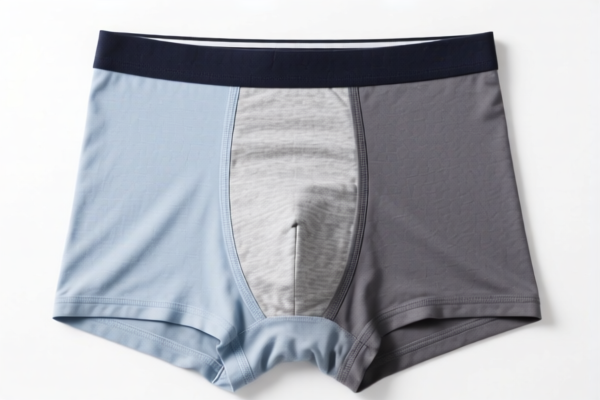
AI分析
Here is the comprehensive guide for Boys' Underpants (Other Textile Materials), tailored for Business Travel logistics, formatted in a vibrant Wiki style with detailed tax analysis and clearance strategies based on your provided data.
👔👖 Boys' Underpants (Other Textile Materials) – Business Travel Edition
🌐 HS Code Master Guide & 2026 Tax Strategy | Professional Clearance for Textile Goods
📌 Product Focus: Boys' Underwear (All Other Textile Materials)
📦 Context: Business Travel Logistics & International Compliance
🎯 Goal: Accurate Classification, Tax Optimization, and Risk-Free Customs Clearance
🧩 1. Product Definition: What Are We Classifying?
Boys' Underpants made of other textile materials (not knitted cotton, wool, or silk specifically) are a high-volume trade commodity. In a Business Travel context, these are often: * Bulk Shipments: Replenishment of inventory for retail chains. * Sample/Personal: Low-volume, high-value samples for market testing. * Mixed Consignments: Packed alongside other textile accessories.
⚠️ Critical Classification Triggers: The tax liability changes dramatically based on how the system interprets the product's purpose (General vs. Infant/Child) and construction method (Knitted vs. Woven).
📦 2. HS Code Classification Matrix (Data-Driven)
Based on the provided customs data, here are the 5 distinct classification scenarios for this product. The choice depends on the specific textile composition and the inferred use case.
| # | HS Code | Classification Logic & Summary | Total Tax Rate |
|---|---|---|---|
| 01 | 6107.19.90.00 | 👉 Matched Success! Knit men's/boys' underpants of other textile materials. The system found a direct match for "Boys' Underpants". |
23.1% |
| 02 | 6107.19.10.00 | 👉 "Other Category" Principle Knit underpants of other materials. Judged via "Other Categories" matching principles (often lower base duty). |
10.9% |
| 03 | 6111.90.90.00 | 👉 Infant/Child Inference Other garments of other textile materials, inferred as Baby/Child wear. High tax due to "Child" classification logic. |
23.1% |
| 04 | 6207.19.90.30 | 👉 Woven Underwear Logic Men's/Boys' underpants, woven (if applicable), other materials. Direct match for woven items. |
20.5% |
| 05 | 6111.90.50.70 | 👉 Fallback "Other Textile" Other garments of other textile materials. Used as a "dumb" fallback for unclassified textile attributes. |
24.9% |
🔍 Key Insight: The tax rate fluctuates between 10.9% and 24.9% solely based on the HS Code interpretation (Knitted vs. Woven, or General vs. Infant). HS 6107.19.10.00 is the most cost-effective if applicable!
💰 3. Detailed Tax Breakdown & Policy Analysis
✅ Origin: China (CN)
✅ Destination: United States (US)
✅ Applicable Regimes: Base Duty, Trade Remedies (Section 301), Section 122 (New Tariff)
🏷️ Scenario A: The "High Cost" Cluster (23.1% & 24.9%)
Codes: 6107.19.90.00, 6111.90.90.00, 6111.90.50.70
| Tax Component | Rate | Description |
|---|---|---|
| Base Duty | 5.6% | Standard Most-Favored-Nation (MFN) rate. |
| Section 301 (Add-on) | 7.5% | Trade war tariff (Section 301) applied to specific textile categories. |
| Section 122 | 10.0% | CRITICAL: New trade defense measure (often related to supply chain security or specific retaliation). |
| TOTAL | 23.1% | OR 24.9% (for the fallback code) |
📌 Why is this expensive?
The system flags these as "High Risk" or "Specific Child Wear" (6111 series), triggering both Section 301 (7.5%) and Section 122 (10%). * Code 6111.90.50.70 adds a higher Base Duty (14.9%) because it's treated as a "Other Textile" fallback without specific protection benefits.
🏷️ Scenario B: The "Low Cost" Cluster (10.9% & 20.5%)
Codes: 6107.19.10.00, 6207.19.90.30
| Tax Component | Rate | Description |
|---|---|---|
Code 6107.19.10.00 |
10.9% | Base: 0.9% + Sec 122: 10% |
Code 6207.19.90.30 |
20.5% | Base: 10.5% + Sec 122: 10% |
📌 Why is this cheaper?
Code 6107.19.10.00: Uses a specific sub-category where Base Duty is only 0.9%. Even with the 10% Section 122 tax, the total remains low. This is the sweet spot! * Code 6207.19.90.30: Applies to Woven underpants. Higher base (10.5%) but NO Section 301* (0%), making it cheaper than the "High Cost" cluster but more than the 6107.19.10.00 option.
🛠️ 4. Business Travel Clearance Strategy (Action Plan)
For a business traveler managing logistics, accuracy is non-negotiable. Misclassification leads to delays, fines, or unexpected cost spikes (up to 14% difference!).
✅ Step 1: Pre-Shipment Audit (The "Material Check")
Before shipping, verify the exact composition: 1. Is it Knitted (6107) or Woven (6207)? * If Knitted: Prioritize 6107.19.10.00 (10.9%) over 6107.19.90.00 (23.1%). * Why? The 10.9% code exists for a reason. Ensure the product description aligns with the "Other Category" principle. 2. Is it "Infant/Child" or "General"? * If the size is clearly Under 24 months or marketed as Infant wear, the system will force 6111 codes (23.1% - 24.9%). * Strategy: If shipping to general retail (not just infant market), ensure the label says "Boys' Underpants" (e.g., sizes 2-14) to avoid the "Infant" inference.
✅ Step 2: Documentation for Customs
To justify the lower tax code (6107.19.10.00), provide: * Detailed Material Composition: e.g., "95% Polyester, 5% Spandex". * Construction Method: Explicitly state "Knitted". * Size Range: Show sizing (e.g., "Fits sizes 2-12") to disprove "Infant" classification. * Usage Description: "Underwear for boys, general use," NOT "Baby clothing."
✅ Step 3: Tax Calculation Formula (For Budgeting)
If you get the LOW code (6107.19.10.00):
Total Duty = (CIF Value × 0.9%) + (CIF Value × 10%) = CIF × 10.9%Example: $10,000 shipment = $1,090 Tax.
If you get the HIGH code (6107.19.90.00):
Total Duty = (CIF Value × 5.6%) + (CIF Value × 7.5%) + (CIF Value × 10%) = CIF × 23.1%Example: $10,000 shipment = $2,310 Tax.💥 Savings Potential: $1,220 per $10k shipment by selecting the correct code!
🚨 5. Common Pitfalls & Risk Warnings
| ❌ Mistake | 🚫 Consequence | 💡 Solution |
|---|---|---|
| Auto-Classification Trap | System defaults to 6107.19.90.00 (23.1%) automatically. | Manually review the "Other Category" logic. Request 6107.19.10.00 if eligible. |
| Infant Size Confusion | Sizes 0-24m trigger 6111.90.90.00 (23.1%) even if "Boys". | Label clearly as "Boys", not "Infant". Separate shipments if mixing. |
| Woven vs. Knit Error | Declaring Knitted as Woven (or vice versa) causes Rejection. | Check fabric structure. If unsure, send a fabric swatch for confirmation. |
| Ignoring Section 122 | Forgetting the 10% Section 122 tax in budgeting. | Always include the 10% in cost models for all 5 codes. |
🌍 6. Final Verdict: The "Business Travel" Cheat Sheet
🏆 Winner (Lowest Tax): HS Code 6107.19.10.00 (10.9%)
🥈 Runner Up: HS Code 6207.19.90.30 (20.5%)
⚠️ Avoid: 6111 Series (23.1% - 24.9%) unless the product is strictly for infants.
🚀 Pro Tip for Business Travelers: When booking your customs broker, explicitly ask:
"Can we classify these Boys' Underpants under 6107.19.10.00 to avoid the 7.5% Section 301 surcharge?"
This small question could save your shipment thousands of dollars in duties.
✨ Clearance is Key. Tax is Cost. Accuracy is Profit! ✨ 💼 Ensure your commercial invoice, packing list, and material specs match the chosen HS Code exactly to avoid "Audit Traps."
用户评价
关于 HS 编码归类
协调制度(HS)是由世界海关组织(WCO)制定的国际贸易商品分类标准。全球 200 多个国家采用 HS 系统作为海关关税、贸易统计和进出口监管的基础。
每个 HS 编码遵循以下层级结构:
- 章(2 位)——商品大类(例如:第 84 章:机器和机械设备)
- 品目(4 位)——章内的更具体分类
- 子目(6 位)——国际通用细分,所有 WCO 成员国统一使用
- 本国细分(8-10 位)——各国自行扩展的细分编码,如美国 HTSUS 10 位编码
正确的 HS 编码归类对于顺利通关、准确缴纳关税和遵守贸易法规至关重要。错误归类可能导致海关延误、多缴关税或罚款。
从CN进口到US时,适用的关税税率可能包括:
- 最惠国(MFN)税率——适用于 WTO 成员国的标准关税税率
- 普通税率——适用于无贸易协定国家
- 贸易救济关税——附加关税,如 301 条款(反倾销)、232 条款(国家安全)或反补贴税
本页内容仅供参考。如需正式归类,请咨询当地海关或持牌报关代理。