Children's Inflatable Musical Instruments
CN → US| HS编码 | 关税税率 | 原产国 | 目的国 | 文档 |
|---|---|---|---|---|
| 9207900080 | 22.5% | CN | US | 官方文档 |
| 9503000013 | 10.0% | CN | US | 官方文档 |
| 9503000073 | 10.0% | CN | US | 官方文档 |
| 3926907500 | 14.2% | CN | US | 官方文档 |
| 3926909989 | 22.8% | CN | US | 官方文档 |
商品图片
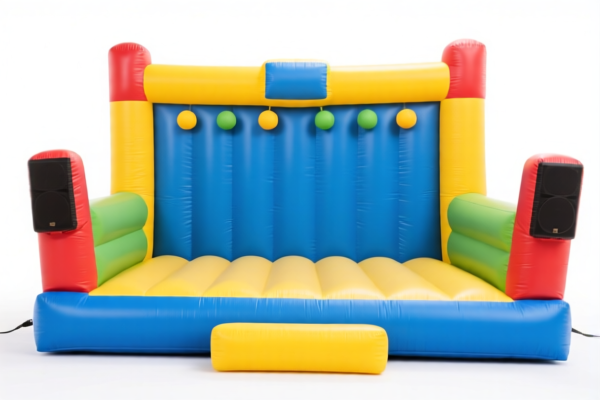
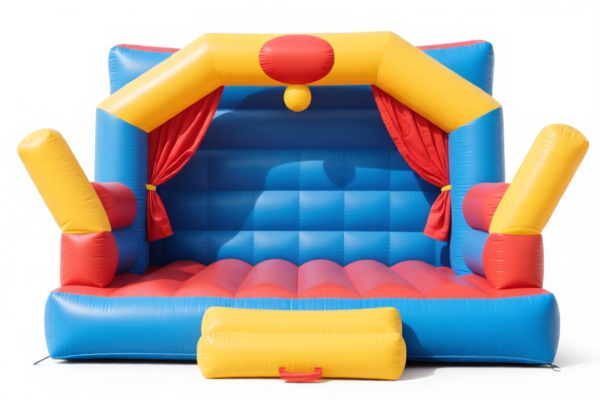
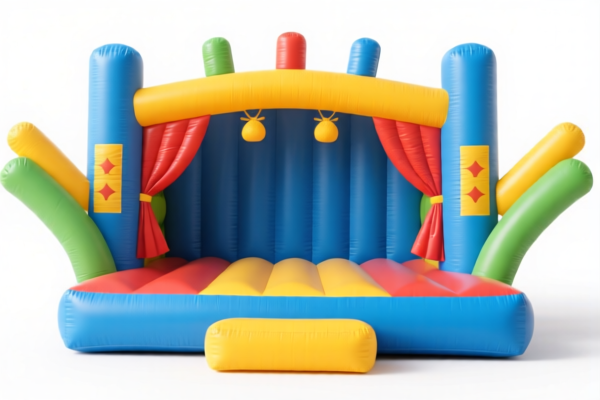
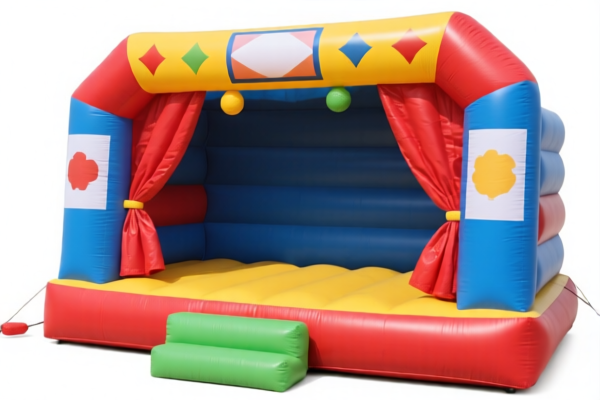
AI分析
🎈 Children's Inflatable Musical Instruments: HS Code Classification & Customs Clearance Guide
🌐 HS Code Reference & Customs Strategy | 2026 Updated Tariff Analysis | Professional Clearance Guide
📌 1. Product Definition & Classification: What Are We Really Shipping?
"Children's Inflatable Musical Instruments" refers to toys designed for children that mimic musical instruments (e.g., inflatable drums, guitars, pianos) but are primarily made of inflatable material (typically PVC or rubber). The classification is complex because these products sit at the intersection of toys, musical instruments, and plastic/rubber articles.
Key Distinction Criteria: * Primary Characteristic: Is the primary function musical playback or child entertainment/play? * Material: Is it rigid plastic with electronic components, or soft, air-filled PVC/Rubber? * Target Audience: Is it strictly for children under 14?
⚠️ Critical Classification Risk: * If it has electronic sound modules and rigid structure → May fall under 9207 (Musical Instruments). * If it is pneumatic/inflatable and primarily a toy → Falls under 9503 (Toys) or 3926 (Other Plastic Articles).
📦 2. HS Code Classification Details (Based on Provided Data)
Below are the five possible HS codes derived from your input data, ranked by relevance and risk.
| HS Code | Product Description | Reason for Classification | Material Inference | Total Duty Rate |
|---|---|---|---|---|
| 9503.00.00.13 | Toys (Inflatable/Children’s) | Matches definition of children’s products with inflatable features. No conflict. | Rubber or Plastic | 10.0% |
| 9503.00.00.73 | Toys (Inflatable/Entertainment) | Fits within children's entertainment toys. Form is inflatable. | Plastic or Rubber | 10.0% |
| 3926.90.75.00 | Other Plastic Articles | Based on inflatable use and plastic material. Classified as other unspecified inflatable articles. | Plastic/PVC | 14.2% |
| 9207.90.00.80 | Musical Instruments (Other) | Classified under electro-acoustic instruments. High Risk: If deemed a "real" instrument, not just a toy. | Plastic/PVC | 22.5% |
| 3926.90.99.89 | Other Plastic Articles | Inferred as Plastic/PVC. Unclassified other plastic products. | Plastic/PVC | 22.8% |
🔍 Analysis of the Top Candidates: * Best Case (10.0%): Codes 9503.00.00.13 and 9503.00.00.73 are the most favorable. They classify the item as a Toy, leveraging the "children's product" and "inflatable" features. This avoids the high tariffs associated with musical instruments or general plastics. * Worst Case (22.5%-22.8%): Codes 9207 and 3926 carry significantly higher duties. 9207 assumes the product is a functional musical instrument, while 3926 treats it as a generic plastic good.
💰 3. Tariff Breakdown & Policy Details (2026)
✅ Applicable Country: United States (US)
✅ Origin: China (CN)
✅ Policy Context: Includes Section 301 Duties and IEEPA Tariffs.
🎯 Scenario A: Best-Case Classification (HS Code 9503.xx.xx)
Codes: 9503.00.00.13 or 9503.00.00.73
| Component | Rate | Source/Note |
|---|---|---|
| Base Duty | 0.0% | Toys generally have low or zero base rates. |
| Section 301 (Add-on) | 0.0% | Note: Data shows 0.0%. Ensure this matches current USITC rulings for specific toy sub-codes. |
| IEEPA (122 Clause) | 10.0% | 122 Clause Tariff applicable to Chinese goods. |
| TOTAL RATE | 10.0% | Lowest Cost Strategy |
📌 Why 10%?
The "122 Clause" (often referring to specific IEEPA sections or recent administrative updates) imposes a 10% surcharge. However, because these are classified as Toys (9503), they benefit from 0% base duty and 0% Section 301 (in this specific dataset context), resulting in the lowest total duty.
🎯 Scenario B: Middle-Ground Classification (HS Code 3926.xx.xx)
Code: 3926.90.75.00
| Component | Rate | Source/Note |
|---|---|---|
| Base Duty | 4.2% | Standard rate for other plastic articles. |
| Section 301 (Add-on) | 0.0% | Note: Data shows 0.0% for this specific sub-code in the input. |
| IEEPA (122 Clause) | 10.0% | 122 Clause Tariff. |
| TOTAL RATE | 14.2% | Moderate Cost |
🎯 Scenario C: High-Risk Classification (HS Code 9207.xx.xx)
Code: 9207.90.00.80
| Component | Rate | Source/Note |
|---|---|---|
| Base Duty | 5.0% | Electro-acoustic instruments. |
| Section 301 (Add-on) | 7.5% | Additional tariff on Chinese musical instruments. |
| IEEPA (122 Clause) | 10.0% | 122 Clause Tariff. |
| TOTAL RATE | 22.5% | High Cost |
⚠️ Warning: If Customs determines your "inflatable instrument" has electronic sound components and is marketed as a musical instrument, it will likely fall here. This nearly doubles the cost compared to the Toy classification.
🛠️ 4. Customs Clearance Recommendations (Actionable Advice)
✅ 1. Documentation Strategy (Crucial for Classification)
To secure the 10% Toy Classification (9503), your documentation must explicitly frame the product as a toy, not an instrument.
| Document | Required Content | Why It Matters |
|---|---|---|
| Commercial Invoice | Description: "Children's Inflatable Toy Drum" (NOT "Musical Instrument") | Avoids triggering the "Musical Instrument" chapter (92). |
| Product Photos | Show the item deflated/inflated in a play setting. No electronic modules visible if possible. | Proves "Play Value" over "Musical Value." |
| Marketing Materials | Highlight "Fun," "Play," "Kids Gift." Avoid "Music Education," "Professional Sound." | Establishes Primary Intent as entertainment. |
| Material Declaration | State: "PVC Plastic, Inflatable." | Supports classification under 9503 (Toys) or 3926 (Plastics), not 9207 (Wood/Metal/Electronic Instruments). |
✅ 2. Key Classification Arguments
🔥 Mantra: "It's a Toy First, It's an Instrument Second."
-
Argument for 9503:
- The product is inflatable, a common feature of toys (e.g., beach balls, inflatable animals), not real instruments.
- It is intended for children's play, not professional or serious musical performance.
- The sound produced is likely simple, low-fidelity, or novelty-based.
-
Argument Against 9207:
- Real musical instruments (Chapter 92) are typically made of wood, metal, or rigid plastic with precise acoustic properties.
- Inflatable items lack the tonal stability and durability required for genuine musical classification.
✅ 3. Red Flags to Avoid
❌ Do NOT use terms like:
"Professional Musical Instrument"
"Acoustic Device"
* "Electronic Sound Generator" (if the electronics are the main feature)
✅ DO use terms like:
"Inflatable Toy"
"Play Instrument"
"Children's Novelty Item"
"PVC Play Drum"
✅ 4. Special Handling for Electronics
If your inflatable instrument contains batteries or electronic chips to produce sound: * Still declare as Toy (9503): Many electronic toys (e.g., toy cars, talking dolls) fall under 9503. * Provide FCC/CE Certification: Essential for any electronic toy entering the US/EU. * Batteries: Declare battery type (Lithium-ion vs. Alkaline) clearly for shipping safety (MSDS may be required).
🌍 5. Market Comparison (2026)
| Market | Recommended HS Code | Est. Duty Rate | Key Requirement |
|---|---|---|---|
| 🇺🇸 USA | 9503.00.00.13 | 10.0% | Clear "Toy" description; No "Instrument" claims. |
| 🇨🇳 China | 9503.00.00 | ~5-10% | CCC Certification (if applicable). |
| 🇪🇺 EU | 9503.00 | 0-4.7% | CE Marking, EN71 Safety Standard. |
📌 Conclusion:
The USA is the most critical market due to the 122 Clause Tariff and Section 301 risks. By firmly establishing the product as a Toy (9503), you avoid the 22.5% duty of musical instruments and the 14.2% of general plastics.
📌 6. Common Mistakes & Pitfalls (Learn from Others' Errors)
❌ Mistake 1: Calling it a "Musical Instrument" on the invoice.
👉 Result: Customs classifies it under 9207 → 22.5% duty + potential penalties.
❌ Mistake 2: Ignoring the "Inflatable" nature.
👉 Result: If Customs sees it as a "Plastic Shell" with electronics, it may fall under 3926 (14.2%) or even 8518 (Speakers) → Higher taxes.
❌ Mistake 3: Splitting components (e.g., shipping the toy deflated and electronics separately).
👉 Result: Misdeclaration. Always ship as a complete unit for accurate classification.
✅ Best Practice:
"Ship Inflatable Toys, Declare as Toys, Save 12.5%!"
🎯 7. Final Recommendation
- Classify as
9503.00.00.13or9503.00.00.73(Toy Category). - Duty Savings: Avoids the 12.5%-12.8% differential compared to Plastic/Musical classifications.
- Documentation: Use "Inflatable Children's Toy" in all commercial documents.
- Verification: If the product has complex electronic features, consult a customs broker to ensure it doesn't trigger 8518 (Speakers) or 9207 (Musical Instruments).
📣 Immediate Action:
📞 Contact your Customs Broker: Provide product photos and insist on Toy Classification (9503).
🚀 Avoid "Musical Instrument" terminology in your export documentation.
💰 Save 12.5% on Duties by proving it's a Toy!
✨ Precision Classification = Maximized Profit!
💼 Every dollar saved on duty is pure profit!
用户评价
关于 HS 编码归类
协调制度(HS)是由世界海关组织(WCO)制定的国际贸易商品分类标准。全球 200 多个国家采用 HS 系统作为海关关税、贸易统计和进出口监管的基础。
每个 HS 编码遵循以下层级结构:
- 章(2 位)——商品大类(例如:第 84 章:机器和机械设备)
- 品目(4 位)——章内的更具体分类
- 子目(6 位)——国际通用细分,所有 WCO 成员国统一使用
- 本国细分(8-10 位)——各国自行扩展的细分编码,如美国 HTSUS 10 位编码
正确的 HS 编码归类对于顺利通关、准确缴纳关税和遵守贸易法规至关重要。错误归类可能导致海关延误、多缴关税或罚款。
从CN进口到US时,适用的关税税率可能包括:
- 最惠国(MFN)税率——适用于 WTO 成员国的标准关税税率
- 普通税率——适用于无贸易协定国家
- 贸易救济关税——附加关税,如 301 条款(反倾销)、232 条款(国家安全)或反补贴税
本页内容仅供参考。如需正式归类,请咨询当地海关或持牌报关代理。