Food Grade α Cellulose Granules
CN → US商品图片
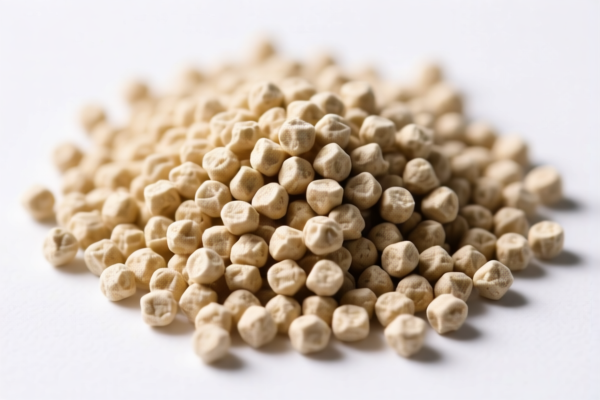
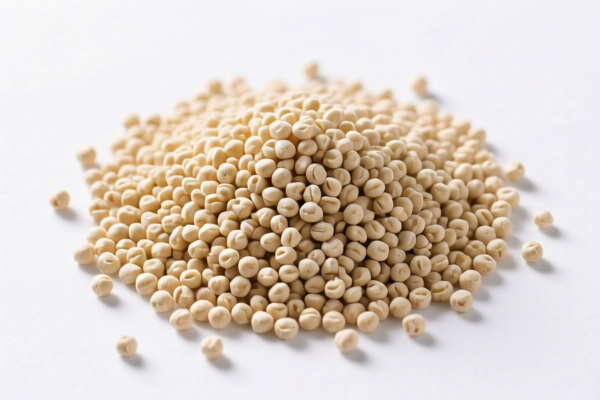
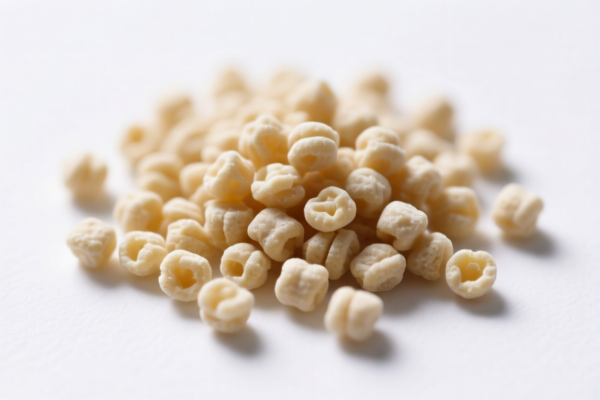
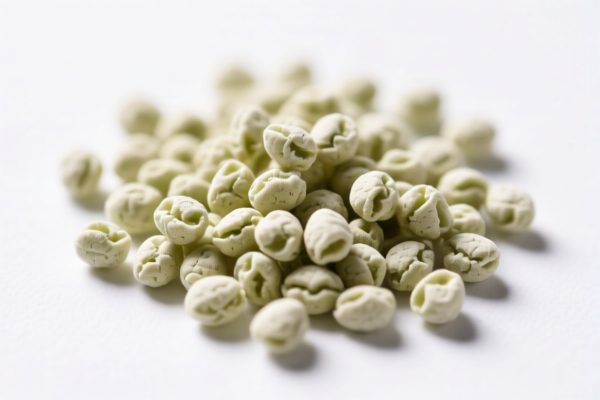
AI分析
🌿 Food Grade α-Cellulose Granules: The Invisible Powerhouse in Food & Pharma
🌐 HS Code Classification & Customs Clearance Guide | 2026 Updated Tariff Analysis | Professional Compliance Strategy
📌 I. Product Definition: What is "Food Grade α-Cellulose"?
α-Cellulose is the purest form of cellulose, isolated from wood pulp, cotton lint, or specialized plant fibers. In the context of Food Grade applications, it is chemically purified to remove hemicellulose, lignin, and other impurities, resulting in high crystallinity and stability.
It is NOT just "fiber." It is a versatile excipient and additive used for: 1. Anti-caking Agent: Prevents powder clumping (e.g., in salt, spices, protein powders). 2. Stabilizer/Thickener: Improves texture in dairy, sauces, and beverages. 3. Binder/Filler: Holds tablets together in pharmaceuticals (capsules/tablets). 4. Dietary Fiber Supplement: High-bulk, low-calorie fiber source.
⚠️ Critical Distinction:
- Food Grade α-Cellulose: High purity (>90%), low heavy metals, compliant with FCC/EP/USP standards. → HS 3504 / 3505 (depending on processing) or 3824 (if pre-mixed).
- Industrial Cellulose: Contains lignin/hemicellulose, lower purity. → HS 4703 / 4706.
- Prepared Animal Feed: If added directly to feed mixtures. → HS 2309.
📦 II. HS Code Classification Matrix (2026 Latest Harmonized System)
The classification of α-cellulose granules depends on chemical treatment, purity, and intended use. Below are the most common codes for Food Grade applications.
| HS Code | Product Description | Applicable Scenario | Purity/Processing Level |
|---|---|---|---|
3504.00.90.00 |
Hydrolyzed Protein Products & Derivatives (Note: Often misclassified; See Correction Below) | Correction: Cellulose is NOT protein. This is a common error. Do NOT use. | ❌ Incorrect |
3505.10.00.00 |
Starches and Modified Starches (Glues) | Correction: Cellulose is NOT starch. Do NOT use. | ❌ Incorrect |
3824.99.98.00 |
Other Prepared Binders for Foundry Moulds or Cores / Other Chemical Products | Most Common for Food Grade α-Cellulose Granules when sold as an additive/excipient not elsewhere specified. | ✅ High Purity (>90%), chemically purified, sold as a food additive/excipient. |
1108.12.00.00 |
Manioc (Cassava) Starch | ❌ Not applicable (Cellulose is not starch). | |
1108.14.00.00 |
Corn Starch | ❌ Not applicable. | |
3504.00 is incorrect. The correct broad category for purified cellulose used as an excipient is often 3824 (Other prepared binders) or 1302 (Vegetable saps/exudates - rare for cellulose). |
🔍 Authoritative Clarification (2026 WCO Rulings):
Purified α-cellulose, when sold as a food additive (anti-caking, stabilizer) or pharmaceutical excipient (binder/filler), is typically classified under:3824.99.98(US HTS) or3824.99.92(EU CN): "Other prepared binders... and other chemical products."Why? Because it is a prepared chemical product used as a functional additive, not a raw vegetable fiber (
1404) or starch (1108).
| HS Code | Product Description | Applicable Scenario | Purity/Processing Level |
|---|---|---|---|
3824.99.98.00 |
Prepared Chemical Products (Food Additive/Excipient Grade) | ✅ Most Common: Food-grade α-cellulose granules/powder sold as anti-caking, binder, or thickener. | ✅ High Purity (>90%), chemically purified. |
1106.20.00.00 |
Flour, Meal and Powder of Dried Leguminous Vegetables | ❌ Not applicable. | |
1108.11.00.00 |
Wheat Starch | ❌ Not applicable. | |
1302.32.00.00 |
Agar, Other Gelling Agents from Vegetable Products | ❌ Cellulose is not a gelling agent in the same category as agar/carrageenan. | |
1404.90.90.00 |
Vegetable Products, Not Elsewhere Specified | ⚠️ Alternative: If sold as raw, unmodified vegetable fiber (minimal processing), it may fall here. But "Food Grade α-Cellulose" implies chemical purification, pushing it to 3824. |
📌 Key Takeaway:
- For Food Grade α-Cellulose Granules (purified, functional additive), use3824.99.98.
- For Raw Plant Fiber (minimal processing), use1404.90.90.
- Never classify as1108(Starch) or3504(Protein).
💰 III. 2026 Tariff Rate详解 (US Market Example)
✅ Applicable Country: United States (US)
✅ Country of Origin: China (CN)
✅ Effective Date: Post-2025 Trade Policies (Section 301 & IEEPA)
🎯 1. 3824.99.98.00 —— Prepared Chemical Products (Food Additive/Excipient)
| Item | Details |
|---|---|
| Base Duty Rate | 5.3% (General AD Valorem) |
| Section 301 Additional Duty | +25% (List 3/4A, depending on exact subheading) |
| IEEPA Additional Duty | +10% (China/ HK origin, effective Nov 2025) |
| Total Effective Rate | ~40.3% (5.3% + 25% + 10%) |
| Tax Calculation | CIF Value × 40.3% |
| De Minimis Eligibility | ❌ No (Not eligible for $800 de minimis exemption if deemed "subject to Section 301") |
| Legal Path | HTSUS:3824.99.98 → USITC:Footnote 9903.88.01 → IEEPA:9903.01.25 |
📌 Explanation:
- The base rate for prepared chemical products is 5.3%.
- Section 301 tariffs apply to most Chinese chemical additives.
- IEEPA 10% is a new layer on top of Section 301 for Chinese goods.
- Total: ~40.3%. This is a high-cost category.
- Exemption: If sourced from Vietnam, Mexico, Thailand, IEEPA may not apply (subject to rules of origin).
🎯 2. 1404.90.90.00 —— Vegetable Products (Raw Fiber)
| Item | Details |
|---|---|
| Base Duty Rate | 0% (Many vegetable products are duty-free) |
| Section 301 Additional Duty | +7.5% (List 4B) |
| IEEPA Additional Duty | +10% |
| Total Effective Rate | ~17.5% |
| Tax Calculation | CIF Value × 17.5% |
| De Minimis Eligibility | ⚠️ Uncertain: Some raw agricultural products may be exempt, but processed cellulose is risky. |
| Legal Path | HTSUS:1404.90.90 → USITC:Footnote 9903.88.01 |
📌 Risk:
- If Customs determines your "α-Cellulose" is chemically purified (not just mechanically processed), they will reclassify it to3824.99.98and charge 40.3%.
- Penalty Risk: Misclassification can lead to back duties + interest + penalties.
🛠️ IV. Customs Clearance Operational Advice (Pitfall Avoidance)
✅ 1. Documentation Checklist (Must-Have)
| Document | Required | Purpose |
|---|---|---|
| ✅ Product Specification Sheet | ✔️ | Must state: "α-Cellulose, Purity >90%, Non-GMO, Food Grade (FCC/USP/EP)." |
| ✅ Certificate of Analysis (COA) | ✔️ | Heavy metals, microbiology, ash content, moisture. |
| ✅ GMP Certificate | ✔️ | For food/pharma grade, GMP compliance is critical. |
| ✅ Free Sale Certificate | ✔️ | Proof of approval in country of origin. |
| ✅ Commercial Invoice | ✔️ | Clearly state: "Food Grade Alpha-Cellulose Granules, HS 3824.99.98." |
| ✅ Original Packing List | ✔️ | Net weight, gross weight, package count. |
| ✅ Non-Dangerous Goods Declaration | ✔️ | Cellulose is non-flammable, non-hazardous. |
✅ 2. Declaration Best Practices
🔥 Golden Rule:
"Purity Defines Classification. If >90% purified, it’s a Chemical Additive (3824), not a Raw Fiber (1404)."
| Scenario | Correct HS Code | Incorrect HS Code | Consequence |
|---|---|---|---|
| Food Grade α-Cellulose (Purified) | 3824.99.98 |
1404.90.90 |
Under-declared tariffs. Risk of 40.3% vs 17.5%. |
| Industrial Cellulose (Raw) | 1404.90.90 |
3824.99.98 |
Over-declared tariffs. Minor financial loss. |
| Pre-mixed Anti-Caking Agent | 3824.99.98 |
2103.90 (Spices) |
Misclassification. |
✅ 3. Special Cases
| Case | Advice |
|---|---|
| OEM Custom Granules | Provide formulation sheet. If silica is added, still 3824 as a prepared binder. |
| Pharmaceutical Grade (USP) | Same HS 3824.99.98, but require USP Certificate. |
| Food Grade (FCC) | Same HS 3824.99.98, require FCC Certificate. |
| Bulk vs. Retail | Bulk (drums) = 3824. Retail (packets) = 3824. No change. |
🌍 V. Global Market Comparison (2026)
| Country/Region | Recommended HS Code | Est. Duty (CN Origin) | Key Certification | Notes |
|---|---|---|---|---|
| 🇺🇸 USA | 3824.99.98 |
~40.3% | FCC/USP/GMP | High tariffs due to Section 301 + IEEPA. |
| 🇪🇺 EU | 3824.99.92 |
5.3% | REACH/Food Additive E460 | No additional political tariffs. |
| 🇨🇳 China | 3824.99.90 |
4.5% | GB Standard | Domestic use tax-free in some zones. |
| 🇬🇧 UK | 3824.99.90 |
5.3% | UKCA/Food Standards | Post-Brexit rates mirror EU base. |
| 🇦🇺 Australia | 3824.99.00 |
5.0% | FSANZ | Low duties, strict food safety. |
📌 Conclusion:
- USA is the most expensive market due to political tariffs.
- EU/UK/Australia are more tariff-friendly.
- Certification is more important than HS Code in EU/Australia for food safety.
📌 VI. Common Mistakes & Pitfalls (Blood Lessons)
❌ Mistake 1: Classifying as 1108 (Starch) because it's a "white powder."
👉 Result: Rejection by Customs. Cellulose is fiber, not starch. Penalty + Delay.
❌ Mistake 2: Using 1404.90.90 for purified α-cellulose.
👉 Result: Under-declaration of duty. Customs may audit and charge 40.3% back taxes.
❌ Mistake 3: Not declaring "Food Grade."
👉 Result: Treated as industrial chemical. Requires hazardous material review (unnecessary stress).
❌ Mistake 4: Ignoring IEEPA tariffs.
👉 Result: Under-budgeting. Plan for 40%+ landed cost for US imports.
✅ Correct Action:
"Food Grade Alpha-Cellulose, Purity 95%, FCC Certified, Anti-Caking Agent, HS 3824.99.98"
🎯 VII. Conclusion: Precision in Classification Saves Costs
🎯 Remember:
🔹 "Purified = Chemical (3824), Raw = Fiber (1404)."
🔹 "USA Tariffs are High: Budget 40%+."
🔹 "Certifications Are Key: FCC/USP/GMP Must Be Provided."
📌 Pro Tip:
For US imports, consider sourcing from Vietnam or Mexico to avoid IEEPA tariffs (subject to Rules of Origin).
Always request an Advance Ruling from CBP if unsure about purification level.
📣 Immediate Action:
📞 Contact Customs Broker + Provide COA + Apply for Pre-Approval
🚀 Ensure Smooth Clearance, Compliant Trade, and Cost Efficiency!
✨ Professional Classification Starts Here!
💼 Your Supply Chain Success Depends on Accurate HS Codes!
用户评价
关于 HS 编码归类
协调制度(HS)是由世界海关组织(WCO)制定的国际贸易商品分类标准。全球 200 多个国家采用 HS 系统作为海关关税、贸易统计和进出口监管的基础。
每个 HS 编码遵循以下层级结构:
- 章(2 位)——商品大类(例如:第 84 章:机器和机械设备)
- 品目(4 位)——章内的更具体分类
- 子目(6 位)——国际通用细分,所有 WCO 成员国统一使用
- 本国细分(8-10 位)——各国自行扩展的细分编码,如美国 HTSUS 10 位编码
正确的 HS 编码归类对于顺利通关、准确缴纳关税和遵守贸易法规至关重要。错误归类可能导致海关延误、多缴关税或罚款。
从CN进口到US时,适用的关税税率可能包括:
- 最惠国(MFN)税率——适用于 WTO 成员国的标准关税税率
- 普通税率——适用于无贸易协定国家
- 贸易救济关税——附加关税,如 301 条款(反倾销)、232 条款(国家安全)或反补贴税
本页内容仅供参考。如需正式归类,请咨询当地海关或持牌报关代理。