Girls' Cotton Shorts (Ethnic Style)
CN → US| HS编码 | 关税税率 | 原产国 | 目的国 | 文档 |
|---|---|---|---|---|
| 6104622060 | 32.4% | CN | US | 官方文档 |
| 6204628066 | 34.1% | CN | US | 官方文档 |
| 6204223050 | 0.0% | CN | US | 官方文档 |
| 6104220050 | 0.0% | CN | US | 官方文档 |
| 6111206030 | 25.6% | CN | US | 官方文档 |
商品图片
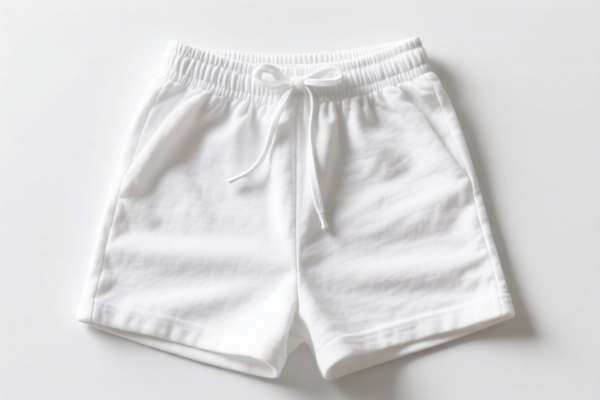
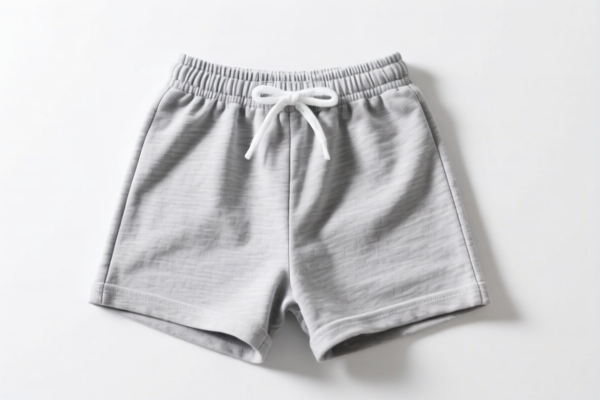
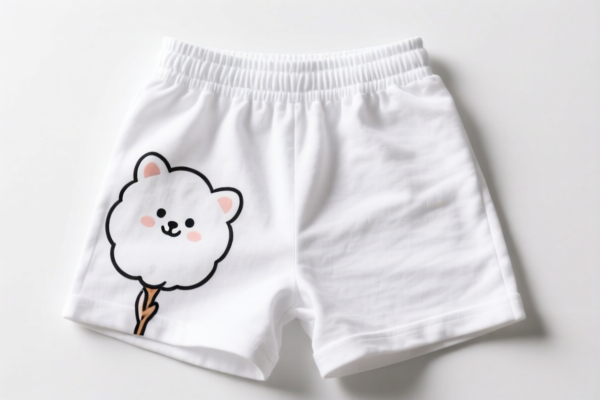
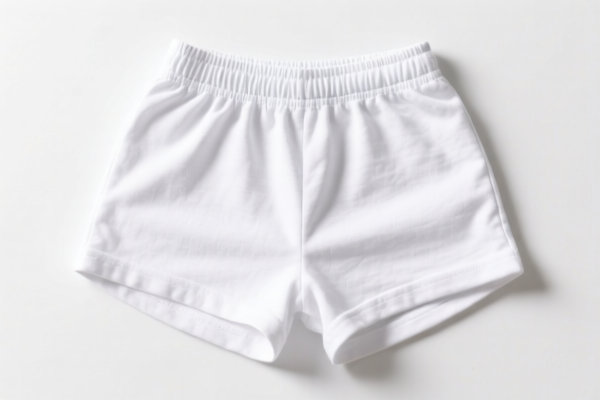
AI分析
👗 Girls' Cotton Shorts (Ethnic Style) – HS Code Classification & US Customs Clearance Guide 2026
🌐 HS Code Reference & Customs Clearance Guide | 2026 Latest Tariff Analysis | Professional Strategy for Ethnic Apparel
📌 I. Product Definition & Classification: Are You Classifying "Ethnic Shorts" Correctly?
"Girls' Cotton Shorts (Ethnic Style)" are a specific subset of children's apparel. In international trade, "ethnic style" is primarily a design/aesthetic feature (e.g., embroidery, traditional cuts, specific patterns) and does not change the fundamental material or functional classification.
The critical classification factors are: 1. Material: 100% Cotton (or Cotton blend, specified as "Cotton"). 2. Knitting/Crocheting vs. Weaving: This is the most common point of error. * Knitted/Crocheted (Chapter 61): Stretchy, looped fabric (e.g., jersey, rib knit). * Woven (Chapter 62): Non-stretchy, interlaced fabric (e.g., denim, twill, poplin, cotton drill). 3. Target Group: Girls (Children). 4. Garment Type: Shorts.
⚠️ Key Distinction:
- If the fabric is Knitted/Crocheted → Classify under Chapter 61 (e.g.,6104.62...)
- If the fabric is Woven → Classify under Chapter 62 (e.g.,6204.62...)
- "Ethnic Style" is irrelevant to HS Code selection. It only affects the product description in commercial invoices.
📦 II. HS Code Classification Details (Based on Provided Data)
The provided data contains five potential HS Codes. Below is the analysis for each, explaining why it fits (or might fit) and the associated tax implications.
| HS Code | Summary from Data | Material/Fabric Type | Gender/Use | Why This Code Fits? |
|---|---|---|---|---|
6104.62.20.60 |
Material: Cotton; Target: Girls; Form: Shorts. Matches classification explanation. | Knitted/Crocheted Cotton | Girls | The "61" prefix indicates Knitted/Crocheted articles. "62" indicates Cotton. "20" indicates Girls'/Girls' children's. This is the correct code if the shorts are made of knit fabric (like jersey). |
6204.62.80.66 |
Name: Material and use/form fully match classification explanation. | Woven Cotton | Girls | The "62" prefix indicates Woven articles. "62" indicates Cotton. "80" is a sub-category for Girls' shorts in woven fabric. This is the correct code if the shorts are made of woven fabric (like denim or twill). |
6204.22.30.50 |
Material: Cotton; Form: Shorts; Use: Girls. Fully matches tariff heading. | Woven Cotton | Girls | "6204.22" refers to Woven Women's or Girls' Shorts. "22" indicates Cotton. This code is valid for woven cotton shorts for girls. The summary confirms full compliance with the tariff definition. |
6104.22.00.50 |
Material: Cotton; Form: Shorts; Use: Girls. Matches material, form, and target. | Knitted/Crocheted Cotton | Girls | "6104.22" refers to Knitted/Crocheted Women's or Girls' Shorts. "22" indicates Cotton. This code is valid for knitted cotton shorts for girls. |
6111.20.60.30 |
Material: Cotton; Form: Clothing item; Matches cotton knitted/crocheted baby/children's apparel. | Knitted/Crocheted Cotton | Children/Babies | "6111" is for Baby Garments & Clothing Accessories. If the "Girls'" shorts are intended for very young children (babies/toddlers), this code may apply. It is a broader category for infant/child knitted cotton apparel. |
🔍 Critical Note on "Ethnic Style":
Customs authorities do not recognize "Ethnic Style" as a separate HS Code category. You must declare the actual fabric construction (Knitted vs. Woven) and Material (Cotton). The "Ethnic" description should be included in the Product Description field, not used to justify a different HS Code.
💰 III. 2026 Latest Tariff Rate Breakdown (Including Surtaxes & Policy Add-ons)
✅ Applicable Country: United States (US)
✅ Origin: China (CN)
✅ Effective Date: Rates include Section 301 and Section 232/122 tariffs where applicable.
🎯 1. 6104.62.20.60 – Knitted Cotton Girls' Shorts
| Item | Detail |
|---|---|
| Total Tax Rate | 32.4% |
| Breakdown | - Basic Duty: 14.9% - Section 301 Surcharge (Add-on Tariff): 7.5% - Section 122 Tariff: 10% |
| Tax Calculation | CIF Value × 32.4% |
| De Minimis Exemption | ❌ Not Applicable (Section 301 and 122 tariffs generally negate de minimis benefits for China-origin goods) |
| Legal Basis | HTSUS 6104.62.20.60 → Section 301 Footnote → Section 122 Authority |
📌 Explanation:
- 14.9% Basic Duty: Standard MFN rate for knitted cotton girls' shorts.
- 7.5% Section 301: Additional tariff on Chinese imports under Trade Act Section 301.
- 10% Section 122: Additional tariff under Section 122 of the Trade Act of 1974 (often applied to specific categories or as part of broader trade policies).
- Total: 32.4% is a significant cost. Must be factored into FOB pricing.
🎯 2. 6204.62.80.66 – Woven Cotton Girls' Shorts
| Item | Detail |
|---|---|
| Total Tax Rate | 34.1% |
| Breakdown | - Basic Duty: 16.6% - Section 301 Surcharge (Add-on Tariff): 7.5% - Section 122 Tariff: 10% |
| Tax Calculation | CIF Value × 34.1% |
| De Minimis Exemption | ❌ Not Applicable |
| Legal Basis | HTSUS 6204.62.80.66 → Section 301 Footnote → Section 122 Authority |
📌 Explanation:
- 16.6% Basic Duty: Standard MFN rate for woven cotton girls' shorts.
- 7.5% Section 301: Additional tariff on Chinese imports.
- 10% Section 122: Additional tariff under Section 122.
- Total: 34.1% is higher than the knitted version due to a higher basic duty rate for woven garments.
🎯 3. 6204.22.30.50 – Woven Cotton Girls' Shorts (Alternative Code)
| Item | Detail |
|---|---|
| Total Tax Rate | (Variable/Complex) |
| Breakdown | - Basic Duty: "The rate applicable to each garment in the ensemble if separately..." (Note: This phrasing suggests a possible ensemble or specific sub-category rule, but for single shorts, it likely defaults to standard woven rates). - Section 301 Surcharge: 7.5% - Section 122 Tariff: 10% |
| Total Tax Rate | Standard Basic + 17.5% (Basic + 7.5% + 10%) |
| De Minimis Exemption | ❌ Not Applicable |
| Legal Basis | HTSUS 6204.22.30.50 → Section 301 Footnote → Section 122 Authority |
📌 Explanation:
- The basic duty for this code may vary depending on specific HTSUS sub-headings, but the surtaxes (7.5% + 10% = 17.5%) are consistent with other codes.
- Recommendation: Verify the exact basic duty rate for6204.22.30.50in the latest HTSUS manual, as it may differ slightly from6204.62.80.66.
🎯 4. 6104.22.00.50 – Knitted Cotton Girls' Shorts (Alternative Code)
| Item | Detail |
|---|---|
| Total Tax Rate | (Variable/Complex) |
| Breakdown | - Basic Duty: "The rate applicable to each garment in the ensemble if separately..." - Section 301 Surcharge: 7.5% - Section 122 Tariff: 10% |
| Total Tax Rate | Standard Basic + 17.5% (Basic + 7.5% + 10%) |
| De Minimis Exemption | ❌ Not Applicable |
| Legal Basis | HTSUS 6104.22.00.50 → Section 301 Footnote → Section 122 Authority |
📌 Explanation:
- Similar to6204.22.30.50, the basic duty depends on the specific sub-heading interpretation.
- Surtaxes: Consistent 17.5% add-on.
- Recommendation: Cross-reference with6104.62.20.60(32.4% total) to ensure this code isn't being misapplied. If6104.22.00.50has a lower basic duty, it might be more favorable, but must be strictly compliant with HTSUS definitions.
🎯 5. 6111.20.60.30 – Knitted Cotton Baby/Children's Clothing
| Item | Detail |
|---|---|
| Total Tax Rate | 25.6% |
| Breakdown | - Basic Duty: 8.1% - Section 301 Surcharge: 7.5% - Section 122 Tariff: 10% |
| Tax Calculation | CIF Value × 25.6% |
| De Minimis Exemption | ❌ Not Applicable |
| Legal Basis | HTSUS 6111.20.60.30 → Section 301 Footnote → Section 122 Authority |
📌 Explanation:
- 8.1% Basic Duty: Lower basic duty for baby/infant knitted cotton clothing.
- 17.5% Surtaxes: Consistent 7.5% + 10%.
- Total: 25.6% is the lowest total tax rate among all options.
- ⚠️ Critical Warning: This code is for Baby clothing. If the "Girls' Shorts" are for children aged 2-14, using this code is high risk for misclassification. Customs may reject it if the size/label indicates it's not for babies. Only use if the shorts are explicitly sized for infants (e.g., 0-24 months).
🛠️ IV. Customs Clearance Practical Advice (Avoid Pitfalls)
✅ 1. Documentation Checklist (Non-Negotiable)
| Document | Required? | Description |
|---|---|---|
| Commercial Invoice | ✔️ | Must clearly state: "Girls' Cotton Shorts," Material: 100% Cotton, Fabric: Woven/Knitted, Country of Origin: China. |
| Packing List | ✔️ | Detail quantity, weight, and dimensions. |
| Product Description | ✔️ | Include "Ethnic Style" in the description field for clarity, but do not use it as the HS Code basis. |
| Fabric Construction Certificate | ✔️ | Crucial! Must state whether the fabric is Knitted or Woven. This determines Chapter 61 vs. 62. |
| Age Label/Sizing | ✔️ | Proof of target age (e.g., "Size 2T," "Girls Size 8"). Essential for distinguishing between 6104/6204 (Girls) and 6111 (Babies). |
| Country of Origin Label | ✔️ | "Made in China" must be on the garment. |
✅ 2. Declaration Strategy (Key Mnemonic)
🔥 "Knit = 61, Weave = 62. Cotton = 62/62. Girl = 22/20/62. Baby = 11."
| Scenario | Correct HS Code Choice | Reason |
|---|---|---|
| Knitted Fabric (Jersey, Rib) | 6104.62.20.60 |
Chapter 61 for knitted. 100% Cotton. Girls. |
| Woven Fabric (Denim, Twill) | 6204.62.80.66 |
Chapter 62 for woven. 100% Cotton. Girls. |
| Woven Fabric (Alternative) | 6204.22.30.50 |
Valid if specific sub-category matches. |
| Knitted Fabric (Alternative) | 6104.22.00.50 |
Valid if specific sub-category matches. |
| Baby/Toddler (0-24 Months) | 6111.20.60.30 |
Only if explicitly for babies. Lowest tax. |
📌 Risk Alert:
- Misclassifying Woven as Knitted (or vice versa) leads to corrective duties + penalties.
- Using6111for older girls' shorts is high-risk. Customs may audit and reassess at6104.62...rates.
✅ 3. Special Cases
| Scenario | Handling Advice |
|---|---|
| Cotton Blend (e.g., 95% Cotton, 5% Spandex) | Still classified under Cotton if cotton is the dominant fiber by weight. Declare as "Cotton Knitted/Woven Shorts." |
| Mixed Pack (Shorts + Tops) | If sold as a set, ensemble rules may apply. However, shorts are typically classified separately unless packaged together as a single ensemble for retail sale. |
| OEM/White Label | Provide the buyer's design approval and material test report. |
| High Value/High Volume | Consider applying for a Binding Ruling from U.S. CBP before shipment to lock in the HS Code and avoid disputes. |
🌍 V. Global Market Comparison (2026)
| Country/Region | Recommended HS Code | Tariff (China Origin) | Notes |
|---|---|---|---|
| 🇺🇸 USA | 6104.62.20.60 or 6204.62.80.66 |
32.4% - 34.1% | High tariffs due to Section 301 & 122. |
| 🇨🇳 China | 6104.62.00.00 or 6204.62.00.00 |
~8-10% | Lower basic duty. No Section 301/122. |
| 🇪🇺 EU | 6104.63.00 or 6204.63.00 |
~12% | No Section 301/122. GSP may apply if eligible. |
| 🇬🇧 UK | 6104.63.00 or 6204.63.00 |
~12% | Post-Brexit rules. No Section 301/122. |
| 🇦🇺 Australia | 6104.63.00 or 6204.63.00 |
~5% | FTA may reduce duty to 0%. |
| 🇯🇵 Japan | 6104.63.00 or 6204.63.00 |
~15% | JETP FTA may reduce duty to 0%. |
📌 Conclusion:
- USA is the most expensive market due to political tariffs (Section 301/122).
- China, EU, UK, Australia, Japan have significantly lower or zero tariffs under FTAs.
- Strategy: If exporting to the US, consider supply chain diversification (e.g., sourcing from Vietnam or India) to avoid high tariffs. If producing in China, factor the 32-34% tax into your pricing model.
📌 VI. Common Errors & Pitfalls (Lessons Learned)
❌ Error 1: Using "Ethnic Style" as the HS Code basis
👉 Consequence: Customs rejects the declaration. Delays + reclassification fines.
✅ Correct: Use material and fabric construction (Knitted/Woven) for HS Code.
❌ Error 2: Misidentifying Knitted vs. Woven Fabric
👉 Consequence: Wrong Chapter (61 vs. 62). Potential penalties and corrective duties.
✅ Correct: Always request a Fabric Construction Certificate from the supplier.
❌ Error 3: Using 6111 (Baby) for Girls' Shorts
👉 Consequence: Customs audit. Re-classification to 6104/6204 + back taxes + penalties.
✅ Correct: Only use 6111 if the garment is explicitly sized and labeled for infants (0-24 months).
❌ Error 4: Ignoring Section 122 Tariffs
👉 Consequence: Under-declaring taxes. 10% surprise charge at customs.
✅ Correct: Always include 10% Section 122 in total landed cost calculations.
🎯 VII. Conclusion: Professional Declaration, Cost Optimization
🎯 Key Takeaway:
🔹 "Knit = 61, Weave = 62. Cotton = 100%. Girl = 6104/6204. Baby = 6111."
🔹 "Ethnic Style" is a description, not a classification.
🔹 "US Tariffs are High: Plan for 32-34% Total Tax."
📌 Pro Tip:
If your goods are shipped under $800 (de minimis), check current USCBP rules. Currently, Section 301 and Section 122 tariffs often negate de minimis exemptions for China-origin goods. Assume de minimis does NOT apply and plan accordingly.
📣 Immediate Action:
📞 Contact a Licensed Customs Broker to verify the Fabric Construction Certificate.
📝 Apply for a Binding Ruling from USCBP if importing large volumes.
💼 Calculate Landed Cost: Include 32.4-34.1% Total Tax for US imports.
✨ Professional Customs Clearance Starts with Accurate Classification!
💼 Every Percent Matters in Global Trade!
用户评价
关于 HS 编码归类
协调制度(HS)是由世界海关组织(WCO)制定的国际贸易商品分类标准。全球 200 多个国家采用 HS 系统作为海关关税、贸易统计和进出口监管的基础。
每个 HS 编码遵循以下层级结构:
- 章(2 位)——商品大类(例如:第 84 章:机器和机械设备)
- 品目(4 位)——章内的更具体分类
- 子目(6 位)——国际通用细分,所有 WCO 成员国统一使用
- 本国细分(8-10 位)——各国自行扩展的细分编码,如美国 HTSUS 10 位编码
正确的 HS 编码归类对于顺利通关、准确缴纳关税和遵守贸易法规至关重要。错误归类可能导致海关延误、多缴关税或罚款。
从CN进口到US时,适用的关税税率可能包括:
- 最惠国(MFN)税率——适用于 WTO 成员国的标准关税税率
- 普通税率——适用于无贸易协定国家
- 贸易救济关税——附加关税,如 301 条款(反倾销)、232 条款(国家安全)或反补贴税
本页内容仅供参考。如需正式归类,请咨询当地海关或持牌报关代理。