Girls' Romper
CN → US| HS编码 | 关税税率 | 原产国 | 目的国 | 文档 |
|---|---|---|---|---|
| 6111206070 | 25.6% | CN | US | 官方文档 |
| 6104621030 | 27.8% | CN | US | 官方文档 |
| 6209205050 | 26.8% | CN | US | 官方文档 |
| 6111206020 | 25.6% | CN | US | 官方文档 |
| 6209205030 | 26.8% | CN | US | 官方文档 |
商品图片
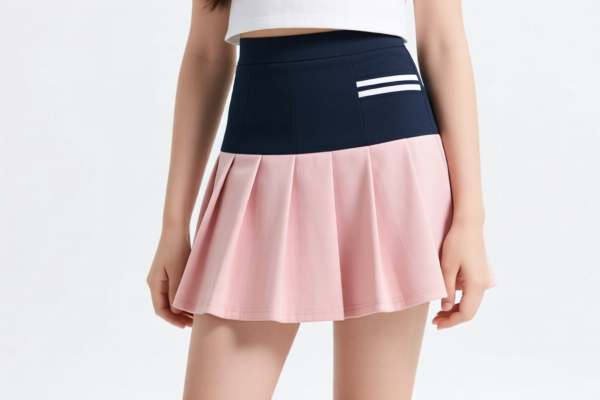


AI分析
👗 Girls' Romper (Cotton Knitted/Woven)
🌐 HS Code Reference & Customs Clearance Guide | 2026 Latest Tariff Breakdown | Professional Compliance Strategy
📌 Part 1: Product Definition & Classification Logic: What is a "Girls' Romper"?
A Romper is a one-piece garment consisting of a top and shorts/bloomers, typically worn by infants, toddlers, or young girls. In international trade (specifically US Customs), the classification depends heavily on two factors:
1. Material & Construction: Is it Knitted (e.g., jersey, ribbed knit) or Woven (e.g., cotton poplin, linen blend)?
2. Age Group: Is it classified as Infant/Toddler (usually under 2 years) or Girls' Children (older than 2 years)?
⚠️ Key Distinction Point:
- If the romper is Knitted and for Infants/Toddlers (typically size 0-24M): It falls under Chapter 61 (Knitted), specifically 6111.
- If the romper is Knitted for Older Girls (>2 years): It falls under Chapter 61 (Knitted), specifically 6104.
- If the romper is Woven (for any age): It falls under Chapter 62 (Woven), specifically 6209 (Infant) or 6104/6204 (Children).
📦 Part 2: HS Code Classification Details (Based on Provided Data)
The following HS Codes are derived strictly from the provided data context for Cotton Girls' Rompers. Note that USHTS codes are 10-digit.
| HS Code | Product Description | Logical Basis | Age/Category |
|---|---|---|---|
6111.20.60.70 |
Cotton Knitted Girls' Romper | Classified under Infant/Toddler knitwear. "6111" indicates knitted baby garments. | 🍼 Infant/Toddler (≤2 yrs) |
6104.62.10.30 |
Cotton Girls' Romper (Woven/Knit inferred) | Fallback category based on cotton and "girls" attributes. Likely represents a broader "Girls' Clothing" category if not explicitly infant. | 👧 Older Girls (>2 yrs) |
6209.20.50.50 |
Cotton Woven Infant/Toddler Romper | "6209" indicates Woven baby garments. Specific to infants/toddlers made of cotton. | 🍼 Infant/Toddler (Woven) |
6111.20.60.20 |
Cotton Knitted Girls' Romper | Another valid Infant/Toddler knitwear code. Similar to .70, falls under the same logic. | 🍼 Infant/Toddler (Knitted) |
6209.20.50.30 |
Cotton Woven Infant/Toddler Romper | Specific Woven infant category. No conflict with functional wear. | 🍼 Infant/Toddler (Woven) |
🔍 Critical Insight:
- Knitted (Chapter 61) vs. Woven (Chapter 62) is the primary differentiator.
- Infant (6111/6209) vs. Girls/Children (6104/6204) is the secondary differentiator.
- If your romper is knitted and for babies, use 6111. If woven and for babies, use 6209. If for older girls, use 6104.
💰 Part 3: 2026 Tariff Rate Breakdown (China Origin to USA)
✅ Applicable Country: United States (US)
✅ Origin: China (CN)
✅ Effective Date: Rates apply to imports from China under current trade policies.
🎯 1. Infant/Toddler Knitted Rompers (HS: 6111.20.60.70 / 6111.20.60.20)
| Item | Detail |
|---|---|
| Base Tariff Rate | 8.1% (General Rate) |
| Section 301 Additional Tariff | +7.5% |
| Section 122 Tariff (TEA) | +10% (Trade Enforcement Act) |
| Total Effective Tax Rate | 25.6% |
| Calculation Basis | CIF Value × 25.6% |
| De Minimis Exemption | ❌ Not Applicable (Section 301 and 122 tariffs typically void $800 de minimis exemption for these categories) |
| Legal Path | USITC:6111.20.60 → Section 301: Footnote 9903.88.01 → TEA: Section 122 |
📌 Explanation:
- The 8.1% base rate is standard for knitted baby garments.
- The 7.5% is the Section 301 "China-specific" tariff.
- The 10% is an additional tariff under recent trade enforcement measures.
- Total: 25.6%. This is a moderate-to-high burden compared to non-China origins.
🎯 2. Girls' Romper (Fallback/General Child Category) (HS: 6104.62.10.30)
| Item | Detail |
|---|---|
| Base Tariff Rate | 10.3% (General Rate) |
| Section 301 Additional Tariff | +7.5% |
| Section 122 Tariff (TEA) | +10% |
| Total Effective Tax Rate | 27.8% |
| Calculation Basis | CIF Value × 27.8% |
| De Minimis Exemption | ❌ Not Applicable |
| Legal Path | USITC:6104.62.10 → Section 301 → TEA |
📌 Explanation:
- This code carries a slightly higher base rate (10.3%) than infant codes.
- The additional tariffs remain the same.
- Total: 27.8%. This is the highest tariff among the listed options.
🎯 3. Infant/Toddler Woven Rompers (HS: 6209.20.50.50 / 6209.20.50.30)
| Item | Detail |
|---|---|
| Base Tariff Rate | 9.3% (General Rate) |
| Section 301 Additional Tariff | +7.5% |
| Section 122 Tariff (TEA) | +10% |
| Total Effective Tax Rate | 26.8% |
| Calculation Basis | CIF Value × 26.8% |
| De Minimis Exemption | ❌ Not Applicable |
| Legal Path | USITC:6209.20.50 → Section 301 → TEA |
📌 Explanation:
- Woven infant garments have a base rate of 9.3%.
- Total: 26.8%. This is in the middle range.
🛠️ Part 4: Customs Clearance Practical Advice
✅ 1. Documentation Checklist (Essential for Avoiding Delays)
| Document | Required? | Purpose |
|---|---|---|
| ✅ Product Specification Sheet | ✔️ | Must specify: Material (100% Cotton?), Construction (Knitted/Woven?), Age Range (Infant vs. Girls?). |
| ✅ Size Chart & Sample Photos | ✔️ | To prove it is indeed a "Romper" (one-piece) and not a "Set" (top + separate shorts). |
| ✅ Care Label Content | ✔️ | Must match the material composition declared (e.g., "100% Cotton"). |
| ✅ Commercial Invoice | ✔️ | Clear description: "Girls' Cotton Knitted Romper, Model XYZ". |
| ✅ Packing List | ✔️ | Total value, weight, quantity. |
✅ 2. Classification Strategy (Key Tips)
🔥 Golden Rule: "Material First, Age Second."
| Scenario | Correct HS Code Family | Risk if Misclassified |
|---|---|---|
| Knitted, Baby (≤2 yrs) | 6111.xxxxxx.xx |
If misclassified as Girls' (6104), base rate increases from 8.1% to 10.3% (+2.2% extra tax). |
| Knitted, Girls (>2 yrs) | 6104.xxxxxx.xx |
If misclassified as Infant, it may be questioned if size exceeds infant limits. |
| Woven, Baby | 6209.xxxxxx.xx |
Knitted and Woven are mutually exclusive. Wrong chapter = 100% misclassification penalty. |
| Woven, Girls | 6204.xxxxxx.xx |
(Note: Not in provided data, but common for older girls. Ensure you have the correct 10-digit code). |
✅ 3. Special Considerations
| Situation | Recommendation |
|---|---|
| "Romper" vs. "Coverall" | If the garment has long legs and buttons to the neck, it might be classified as a Coverall (often higher duty). Ensure the item is clearly "shorts/tank" style for Romper classification. |
| Mixed Materials | If the romper has cotton but 5% elastane, the 60%+ rule applies. Cotton is dominant, so it stays in Chapter 61/62. |
| Section 122 Tariff | This 10% tariff is non-negotiable for most Chinese goods. Do not assume it is waived. |
🌍 Part 5: Global Market Comparison (2026 Snapshot)
| Market | Recommended HS Code (Example) | Total Tax (China Origin) | Key Requirement |
|---|---|---|---|
| 🇺🇸 USA | 6111.20.60.70 (Infant Knit) |
25.6% | CPSC Safety Certification (Flammability, Small Parts) |
| 🇪🇺 EU | 6111.20 (NTHS) |
~12-16% | CE Mark, REACH Compliance, GOTS (if organic) |
| 🇨🇳 China | 6111.20.90.90 |
~10-15% | CCC (if applicable), GB Standards |
| 🇬🇧 UK | 6111.20 |
~12-16% | UKCA Mark, Post-Brexit Rules of Origin |
📌 USA-Specific Note:
- CPSC (Consumer Product Safety Commission) clearance is mandatory for infant clothing.
- Failure to provide Children’s Product Certificate (CPC) will result in customs hold or deportation.
- Flammability Testing (16 CFR 1610/1615) is required.
📌 Part 6: Common Mistakes & Pitfalls
❌ Mistake 1: Calling a "Knitted" romper "Woven" to avoid higher base rates.
👉 Consequence: Customs will inspect fabric weave. If found knitted, back taxes + penalties.
❌ Mistake 2: Misidentifying Age Group.
👉 Consequence: If a romper is size 2T (2 years old), classifying it as Infant (6111) is risky. It should be 6104 (Girls'). Misclassification leads to duty underpayment penalties.
❌ Mistake 3: Ignoring Section 122 Tariff.
👉 Consequence: Budgeting for only 15.6% tax (Base + 301) but facing 25.6%. Cash flow crisis.
✅ Correct Approach:
"100% Cotton Knitted Girls' Romper, Size 6-12M, Compliant with CPSC 16 CFR 1610, Made in China."
🎯 Part 7: Conclusion
🎯 Summary of Tax Burden (China Origin to USA):
- Lowest Tax: 6111.20.60.70 / 6111.20.60.20 → 25.6% (Infant Knitted)
- Middle Tax: 6209.20.50.50 / 6209.20.50.30 → 26.8% (Infant Woven)
- Highest Tax: 6104.62.10.30 → 27.8% (Girls' General)
📌 Strategic Advice:
1. Verify Age: If the romper is for toddlers/infants, strictly use 6111 (knit) or 6209 (woven) for the lowest base rate.
2. Material Proof: Keep fabric test reports handy to prove "Knitted" vs. "Woven".
3. Compliance: Ensure CPSC compliance for infant wear to avoid customs holds beyond just tariff issues.
4. Costing: Factor in the 25.6%-27.8% total landed duty cost when pricing from China.
✨ Professional Clearance Starts with Accurate Classification!
💼 Every Percent of Tariff Counts!
用户评价
关于 HS 编码归类
协调制度(HS)是由世界海关组织(WCO)制定的国际贸易商品分类标准。全球 200 多个国家采用 HS 系统作为海关关税、贸易统计和进出口监管的基础。
每个 HS 编码遵循以下层级结构:
- 章(2 位)——商品大类(例如:第 84 章:机器和机械设备)
- 品目(4 位)——章内的更具体分类
- 子目(6 位)——国际通用细分,所有 WCO 成员国统一使用
- 本国细分(8-10 位)——各国自行扩展的细分编码,如美国 HTSUS 10 位编码
正确的 HS 编码归类对于顺利通关、准确缴纳关税和遵守贸易法规至关重要。错误归类可能导致海关延误、多缴关税或罚款。
从CN进口到US时,适用的关税税率可能包括:
- 最惠国(MFN)税率——适用于 WTO 成员国的标准关税税率
- 普通税率——适用于无贸易协定国家
- 贸易救济关税——附加关税,如 301 条款(反倾销)、232 条款(国家安全)或反补贴税
本页内容仅供参考。如需正式归类,请咨询当地海关或持牌报关代理。