Girls' Suits of Other Textile Materials
CN → US商品图片



AI分析
👗 Girls' Suits of Other Textile Materials
🌐 HS Code Classification & Clearance Strategy | 2026 Global Trade Guide | Expert Customs Tactics
📌 I. Product Definition: What Exactly Are "Girls' Suits"?
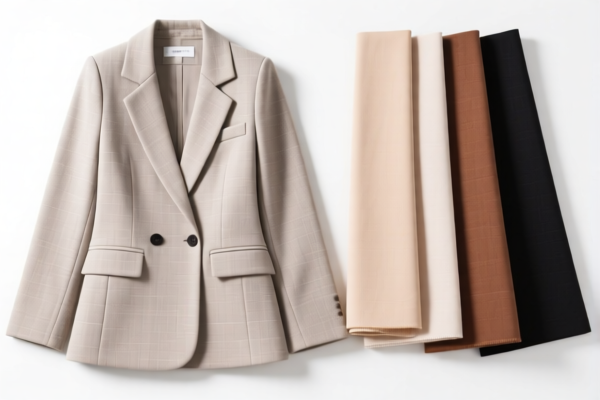
In international trade, "Girls' Suits" refers to tailored sets designed for female children (typically under 14 years), consisting of: 1. A Jacket or Blazer: With matching lapels, buttons, and structured fit. 2. Matching Trousers, Skirts, or Shorts: Cut to match the jacket in fabric and style.
⚠️ Crucial Classification Rule (The "Set" Definition): * Set (86% Match): Must be identical fabric, matching color/design, same cut, and sold together. Must be classified as a suit (Chapter 61/62). * Separate Items: If the jacket and bottom are different fabrics or colors, they must be declared separately as a jacket (61.04) and pants/skirt (61.04/62.04/62.05). Never force a mismatched set into a "suit" code to avoid penalties.
📦 II. HS Code Classification Matrix (2026 Customs Tariff)
Since the user specified "Other Textile Materials" (excluding Silk, Wool, Cotton), we focus on Man-made fibers (Synthetic) and Other Natural Fibers (e.g., Viscose/Rayon not classified as Wool/Cotton).
Primary Category: Chapter 61 (Knitted) or Chapter 62 (Woven/Non-knitted).
Note: Most formal "Suits" are Woven (Chapter 62). If knitted, use Chapter 61.
🏷️ Scenario A: Woven Suits (Most Common for "Suits")
| HS Code | Description | Material Type | Typical Usage |
|---|---|---|---|
| 6204.23 | Woven Suit (Jacket + Trousers/Skirt) | Synthetic Fibers (Polyester, Nylon, Acrylic) | School uniforms, formal party wear, business-casual |
| 6204.29 | Woven Suit | Other Textile Materials (Viscose, Ramie, Alpaca, etc.) | Luxury dresses, niche fashion, semi-formal wear |
| 6204.30 | Skirt Suits (Jacket + Skirt) | Any "Other" Material | Girls' school uniform sets, formal events |
🧶 Scenario B: Knitted Suits (Less Common for Formal Suits)
| HS Code | Description | Material Type | Typical Usage |
|---|---|---|---|
| 6104.23 | Knitted Suit Set | Synthetic Fibers | Casual wear, sporty suits, school uniforms |
| 6104.29 | Knitted Suit Set | Other Textile Materials | Lightweight, stretchable sets (e.g., rayon/spandex blends) |
🔍 Key Differentiator:
- "Other Textile Materials" in customs usually implies Synthetic (Man-made) or Vegetable Fibers (like Viscose) that are NOT Wool (51), Cotton (52), or Silk (50). - If the suit is Polyester (most common), it falls under 6204.23 or 6104.23. - If the suit is Viscose/Rayon, it falls under 6204.29 or 6104.29.
💰 III. 2026 Tariff & Duty Breakdown (USA Focus)
✅ Target Market: United States (US)
✅ Origin: China (CN) (Assuming high-risk origin for context)
✅ Effective Date: 2026 Tariff Schedule (Section 301 & IEEPA)
🎯 1. Synthetic Woven Suits (6204.23.00.00)
| Item | Detail |
|---|---|
| Base MFN Duty | 17.5% (Standard US rate for synthetic suits) |
| Section 301 Duty | +25% (Targeted on Chinese goods) |
| IEEPA/301 Phase 4 | +10% (Additional surcharge on textiles/apparel) |
| Total Duty Rate | 52.5% |
| De Minimis | ❌ Denied (Textiles are excluded) |
| Legal Path | HTSUS:6204.23.00.00 → Section 301: 1001.10 → IEEPA: 9903.88 |
📌 Explanation:
Synthetic suits are high-value targets. The 52.5% combined rate is a "brutal" tax wall. Even if you ship from Vietnam or Mexico, rules of origin must be strictly proven to avoid "transshipment" penalties.
🎯 2. "Other Material" Woven Suits (6204.29.00.00)
| Item | Detail |
|---|---|
| Base MFN Duty | 17.5% (Similar to synthetic) |
| Section 301 Duty | +25% |
| IEEPA/301 Phase 4 | +10% |
| Total Duty Rate | 52.5% |
| De Minimis | ❌ Denied |
| Legal Path | HTSUS:6204.29.00.00 → Section 301: 1001.10 → IEEPA: 9903.88 |
📌 Note:
Even if the material is exotic (e.g., Ramie, Alpaca), if it's not wool or silk, it falls into this bucket and suffers the same high tariff.
🛠️ IV. Clearance Practical Guide (Avoiding the Pitfalls)
✅ 1. Documentation Checklist (Mandatory)
| Document | Requirement | Why It Matters |
|---|---|---|
| Detailed Commercial Invoice | Must list Separate jacket & pants prices if not a set. | Prevents "Undervaluation" flags. |
| Fabric Content Certificate | Must specify % of Synthetic vs. Other. | Critical for choosing 6204.23 vs 6204.29. |
| Composition Label | Must be on the garment (e.g., "100% Polyester"). | Customs verifies against label. |
| Set Proof (Match Test) | Photos showing identical fabric swatch for jacket & pants. | Proves it qualifies as a "Suit" (lower duty for set vs. separate? Note: Duty is often same, but classification differs). |
| Country of Origin Form | Form A or Certificate of Origin. | Essential for claiming any Free Trade Agreement (FTA) benefits. |
✅ 2. Declaration Strategy (Golden Rules)
🔥 Rule of Thumb:
"If it doesn't match perfectly, declare separately!"
| Situation | Correct Declaration | Risk if Wrong |
|---|---|---|
| Perfect Match (Same fabric, cut) | Declare as "Suit" (6204.23/29) | If declared as separate items → Higher complexity, potential misclassification. |
| Mismatched Colors | Declare Jacket (6204.12/24) + Pants (6204.12/24) separately. | Declaring as a "Suit" → Customs Seizure or 100% fine. |
| Mix of Materials (e.g., Cotton jacket, Polyester pants) | Declare Separately as Jacket & Pants. | Declaring as a "Suit" → Rejected (Sets must be same material). |
| Knitted vs. Woven | Check the weave! Woven = Ch 62, Knitted = Ch 61. | Wrong Chapter → Automatic penalty. |
✅ 3. Special Case: "Girls" Age Limit
- Definition: Under 14 years old.
- Proof: If the size is XXS or labeled "Toddler" or "Girls 4-14", provide a size chart.
- Risk: If customs determines the item is for adults (e.g., "Miniature Woman"), the duty rate may change (Adult suits sometimes have different rates or higher scrutiny).
🌍 V. Global Market Comparison (2026)
| Market | HS Code (Woven) | Base Duty | US 301/IEEPA Impact | Total Duty (China Origin) | Strategy |
|---|---|---|---|---|---|
| 🇺🇸 USA | 6204.23 / 6204.29 |
17.5% | +35% (Combined) | 52.5% | Avoid direct shipping from China; use Vietnam/Mexico. |
| 🇪🇺 EU | 6204.23 / 6204.29 |
12.0% | 0% (No 301) | 12.0% | Excellent market if non-Chinese origin. |
| 🇯🇵 Japan | 6204.23 / 6204.29 |
15.0% | 0% | 15.0% | High demand for school uniforms. |
| 🇦🇺 Australia | 6204.23 / 6204.29 |
5.0% | 0% | 5.0% | Very low duty, but strict quarantine. |
📌 VI. Common Mistakes & "Blood Tears" (Avoid These!)
❌ Mistake 1: "Mix-and-Match" Sets
Scenario: A red polyester jacket + blue synthetic pants sold as a "Suit Set".
Result: Customs classifies as two separate items (Jacket + Trousers). If declared as a suit, you get a 100% fine for misclassification.
Fix: Always declare Jacket and Pants* separately if fabric/color differs.
❌ Mistake 2: Confusing "Knitted" vs. "Woven"
Scenario: You ship a stretchy, knit suit but declare it as Woven (6204).
Result: HS Code Error. Knitted suits (6104) often have lower duties than Woven (6204) in some countries, or vice versa. Misdeclaration leads to delays.
Fix:* Inspect the fabric weave under a microscope.
❌ Mistake 3: "Other Material" Ambiguity
Scenario: Label says "80% Viscose, 20% Polyester".
Result: Customs may classify as Cotton (if they mistake Viscose) or Synthetic.
Fix: Provide a Lab Test Report* from an accredited lab (e.g., SGS, Intertek) confirming exact fiber composition.
✅ Pro Tip:
"The Suit Must Be a Suit!"
If it's not a matching set (jacket + trousers/skirt, same fabric, same cut, same color), do not call it a suit. Call it a "Jacket and Trousers" set.
🎯 VII. Conclusion: Smart Shipping, Zero Risk
🎯 Final Checklist for Exporters: 1. Confirm Fabric: Is it Synthetic (Polyester/Nylon) or Other (Viscose/Rayon)? → Choose 6204.23 or 6204.29. 2. Confirm Construction: Woven (Ch 62) or Knitted (Ch 61)? 3. Confirm Set: Are jacket and pants identical? → If yes, Suit. If no, Separate. 4. Confirm Origin: If from China, Budget 52.5%. If from Vietnam/Mexico, Check FTA.
🚀 Action Plan:
📞 Contact your freight forwarder with the fabric swatch and photos of the matching set.
📄 Apply for a Binding Tariff Ruling (BTR) from US Customs (CBP) before shipping to lock in the HS Code and duty rate.
🚢 Consider Third-Party Warehousing (Vietnam/Mexico) to bypass high US Section 301 tariffs on Chinese-origin textile suits.
✨ "Textile Suits are tricky – one wrong word costs 50%!"
💼 Precision in Classification = Profit in Your Pocket.
用户评价
关于 HS 编码归类
协调制度(HS)是由世界海关组织(WCO)制定的国际贸易商品分类标准。全球 200 多个国家采用 HS 系统作为海关关税、贸易统计和进出口监管的基础。
每个 HS 编码遵循以下层级结构:
- 章(2 位)——商品大类(例如:第 84 章:机器和机械设备)
- 品目(4 位)——章内的更具体分类
- 子目(6 位)——国际通用细分,所有 WCO 成员国统一使用
- 本国细分(8-10 位)——各国自行扩展的细分编码,如美国 HTSUS 10 位编码
正确的 HS 编码归类对于顺利通关、准确缴纳关税和遵守贸易法规至关重要。错误归类可能导致海关延误、多缴关税或罚款。
从CN进口到US时,适用的关税税率可能包括:
- 最惠国(MFN)税率——适用于 WTO 成员国的标准关税税率
- 普通税率——适用于无贸易协定国家
- 贸易救济关税——附加关税,如 301 条款(反倾销)、232 条款(国家安全)或反补贴税
本页内容仅供参考。如需正式归类,请咨询当地海关或持牌报关代理。