Men's Backpack
CN → US| HS编码 | 关税税率 | 原产国 | 目的国 | 文档 |
|---|---|---|---|---|
| 4202923120 | 52.6% | CN | US | 官方文档 |
| 4202321000 | 0.0% | CN | US | 官方文档 |
| 4202329300 | 52.6% | CN | US | 官方文档 |
商品图片
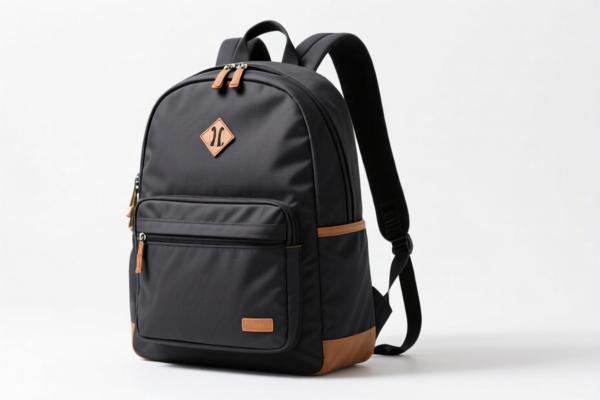
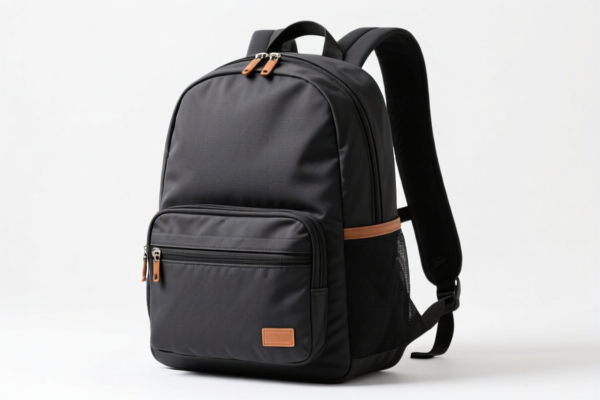
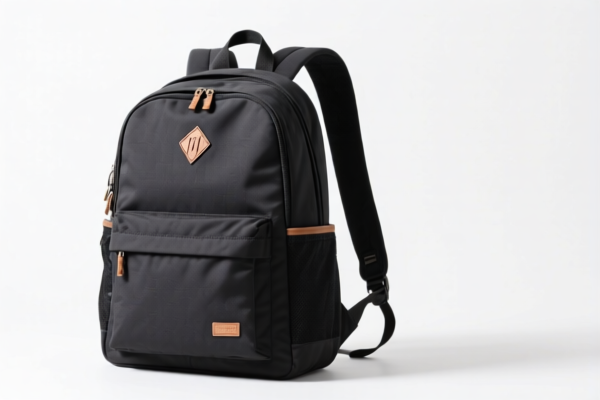
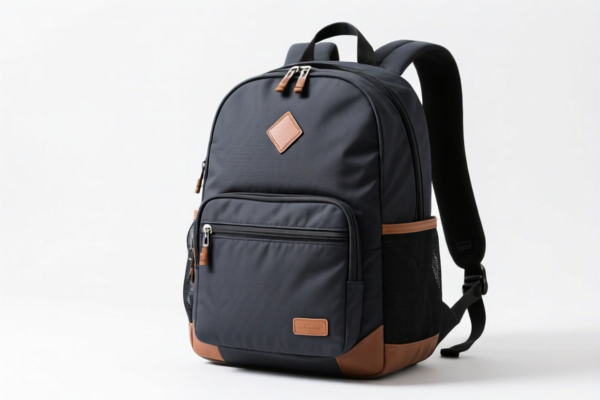
AI分析
🎒 Men's Backpack & Waist Pouches (Apparel Accessories)
🌐 HS Code Reference & Clearance Guide | 2026 Latest Tariff Analysis | Professional Customs Strategy
📌 I. Product Definition & Classification: Do You Know the Difference Between a "Backpack" and a "Waist Pouch"?
In international trade, "Men's Bags" are not a single category. They are strictly divided based on wearability, carrying method, and outer material. Misclassification here can lead to massive tariff discrepancies (e.g., 52.6% vs. 52.6% but different calculation bases, or specific duties vs. ad valorem).
According to the provided data, we are dealing with two distinct sub-categories: 1. Shoulder/Backpacks (Shoulder Bags): Designed to be carried on the shoulder or back. 2. Waist Pouches (Fanny Packs): Designed to be worn around the waist for hands-free carry.
⚠️ Key Distinction Point:
- If the bag is designed to be shoulder-slung or back-worn → It falls under Chapter 42, Heading 4202, typically subheading 4202.92 (Backpacks/Shoulder Bags).
- If the bag is designed to be worn around the waist → It falls under Chapter 42, Heading 4202, typically subheading 4202.32 (Waist Packs).
📦 II. HS Code Classification Details (2026 Latest Tariff Authority Comparison)
| HS Code | Product Description | Applicable Scenario | Total Tax Rate | Tax Detail Breakdown |
|---|---|---|---|---|
4202.92.31.20 |
Men's Backpack / Shoulder Bag: Outer surface made of textile materials (man-made fibers or cotton). Category: Backpack. | Daily commute, travel, student use, casual wear. | 52.6% | Base: 17.6%, Additional (Section 301): 25.0%, Section 122: 10% |
4202.32.93.00 |
Men's Waist Pouch: Outer surface made of textile materials (e.g., nylon, polyester, other man-made fibers). Category: Other - Man-made Fibers. | Gym, running, hiking, hands-free carrying. | 52.6% | Base: 17.6%, Additional (Section 301): 25.0%, Section 122: 10% |
4202.32.10.00 |
Men's Waist Pouch: General classification. Carrying manner fits the definition. Material: Textile or Plastic Sheets. | Generic waist packs, possibly with mixed materials or simpler construction. | 12.1¢/kg + 4.6% + 35.0% | Base: 12.1¢/kg + 4.6%, Additional (Section 301): 25.0%, Section 122: 10% |
🔍 Critical Reminder:
- Both4202.92.31.20(Backpack) and4202.32.93.00(Textile Waist Pouch) carry the same total ad valorem rate of 52.6%. However,4202.32.10.00(General Waist Pouch) has a complex mixed duty structure (Specific + Ad Valorem + Additional), which can result in different effective rates depending on the weight-to-value ratio. - Do not mix up "Backpack" (4202.92) with "Waist Pouch" (4202.32). While the final % might look similar in some cases, the legal definition and specific duty components differ significantly.
💰 III. 2026 Latest Tariff Rate Breakdown (Including Additional Duties & Policy Surcharges)
✅ Applicable Country: United States (US)
✅ Origin: China (CN)
✅ Effective Time: Including imports from 2025 onwards (current policy context)
🎯 1. 4202.92.31.20 —— Men's Backpack (Textile Outer Surface)
| Item | Content |
|---|---|
| Base Tariff | 17.6% (Ad Valorem) |
| Section 301 Additional Tariff | +25.0% (USITC Footnote 9903.88.01 context) |
| Section 122 Tariff | +10.0% (Targeted import restriction surcharge) |
| Total Effective Rate | 52.6% |
| Tax Calculation | CIF Value × 52.6% |
| De Minimis Exemption | ❌ Not Eligible (Section 301 and 122 duties generally deny de minimis for this classification) |
| Legal Basis Path | HTSUS:4202.92.31.20 → Section 301:9903.88.01 → Section 122: 10% surcharge |
📌 Explanation:
- The 17.6% is the standard Most Favored Nation (MFN) rate for textile-backed backpacks. - The 25.0% is the punitive tariff imposed under Section 301 of the Trade Act of 1974 on Chinese goods. - The 10.0% is a specific additional duty under Section 122 (often related to specific trade remedies or emergency tariffs). - Total: 52.6%. This is a high-cost entry point. Profit margins must account for this.
🎯 2. 4202.32.93.00 —— Men's Waist Pouch (Textile: Nylon/Polyester)
| Item | Content |
|---|---|
| Base Tariff | 17.6% (Ad Valorem) |
| Section 301 Additional Tariff | +25.0% |
| Section 122 Tariff | +10.0% |
| Total Effective Rate | 52.6% |
| Tax Calculation | CIF Value × 52.6% |
| De Minimis Exemption | ❌ Not Eligible |
| Legal Basis Path | HTSUS:4202.32.93.00 → Section 301 → Section 122 |
📌 Note:
- Despite being a "Waist Pouch," if the outer material is specified as textile (man-made fibers like nylon/polyester), it falls into the same high-tax bracket as backpacks. - Do not assume waist pouches are cheaper; material composition drives this rate.
🎯 3. 4202.32.10.00 —— Men's Waist Pouch (General/Mixed)
| Item | Content |
|---|---|
| Base Tariff | 12.1 ¢/kg + 4.6% (Mixed Specific/Ad Valorem) |
| Section 301 Additional Tariff | +25.0% (Ad Valorem equivalent applied to base) |
| Section 122 Tariff | +10.0% |
| Total Effective Rate | Complex: 12.1¢/kg + 4.6% + 25% + 10% |
| Tax Calculation | (Weight × 12.1¢) + (CIF × 4.6%) + (CIF × 25%) + (CIF × 10%) |
| De Minimis Exemption | ❌ Not Eligible (Due to 301/122 components) |
| Legal Basis Path | HTSUS:4202.32.10.00 → Section 301 → Section 122 |
📌 Warning:
- This code is dangerous for calculation. If the bag is heavy but low-value (e.g., thick canvas, heavy hardware), the 12.1¢/kg specific duty can explode the total cost. - Example: A $10 bag weighing 1kg would incur $0.12 specific + $4.60 ad val + $2.50 (301) + $1.00 (122) = ~$8.22 tax. Effective rate > 80%. - If the bag is light and high-value, the ad valorem components dominate, potentially aligning closer to the 40-50% range.
🛠️ IV. Customs Clearance Practical Advice (Real-World Pitfall Guide)
✅ 1. Required Documentation Checklist (Non-Negotiable)
| Document | Mandatory? | Description |
|---|---|---|
| ✅ Product Specifications | ✔️ | Must specify Outer Material (e.g., "100% Nylon," "Cotton Canvas"). This determines if it's 4202.32.93 vs 4202.32.10. |
| ✅ Material Composition Certificate | ✔️ | Detailed breakdown of lining, zippers, and outer shell. Crucial for proving "Man-made Fibers" vs. "Other." |
| ✅ Product Photos | ✔️ | Clear images showing how it is worn (Shoulder strap vs. Waist belt). Proves classification as Backpack vs. Waist Pouch. |
| ✅ Commercial Invoice | ✔️ | Must clearly state "Men's Backpack" or "Men's Waist Pouch" and unit price. |
| ✅ Packing List | ✔️ | Must include Net Weight and Gross Weight. Critical for 4202.32.10.00 specific duty calculation. |
| ✅ Country of Origin Cert | ✔️ | If not China, to check for FTA benefits (though Section 301/122 may still apply depending on source). |
✅ 2. Declaration Tips (Key Mantras)
🔥 “Material Defines Base, Carrying Style Defines Heading, Weight Matters for Mixed Duties!”
| Situation | Correct Declaration | Wrong Approach |
|---|---|---|
| Nylon Backpack | 4202.92.31.20Desc: "Men's Nylon Backpack" |
Misdeclare as Waist Pouch → Audit risk |
| Polyester Waist Pouch | 4202.32.93.00Desc: "Men's Poly Waist Pouch" |
Misdeclare as General Waist Pouch (4202.32.10.00) → May trigger specific duty scrutiny |
| Mixed Material Waist Pouch | 4202.32.10.00Desc: "Men's Waist Pouch, Textile/Plastic" |
Hide material composition → Seizure |
| Lightweight High-Value Pouch | 4202.32.10.00Ensure Weight is Accurate |
Overstate weight → Higher specific duty cost |
✅ 3. Special Circumstance Handling
| Situation | Handling Advice |
|---|---|
| OEM Custom Bags | Provide design specs proving the intended use (e.g., strap length for waist vs. shoulder). |
| Seasonal Items | Ensure classification doesn't change with accessories (e.g., adding a detachable shoulder strap doesn't turn a waist pouch into a backpack for customs purposes if primary design is waist). |
| Weight Discrepancy | For 4202.32.10.00, accurate weighing is critical. A 10% weight error can lead to significant duty adjustment penalties. |
🌍 V. Global Market Comparison (2026 Latest)
| Country/Region | Recommended HS Code | Tariff Impact | Certification | Notes |
|---|---|---|---|---|
| 🇺🇸 USA | 4202.92.31.20 / 4202.32.93.00 |
52.6% Total | None (General) | High barrier due to Section 301 & 122 |
| 🇪🇺 EU | 4202.92 / 4202.32 |
4% - 12% | CE (if safety gear) | No Section 301/122 equivalent |
| 🇨🇳 China | 4202.92 / 4202.32 |
15% - 20% | CCC (if applicable) | Import duty only |
| 🇬🇧 UK | 4202.92 / 4202.32 |
12% | None | Post-Brexit standard rates |
📌 Conclusion:
- The US market is significantly more expensive for textile-backed bags due to multiple layered tariffs (Base + 301 + 122). - European markets are far more competitive for this category. - Consider supply chain diversification (e.g., Vietnam, Bangladesh) to avoid Section 301/122 if targeting the US market.
📌 VI. Common Mistakes & Pitfalls (Lessons Learned)
❌ Mistake 1: Assuming all bags have the same tax rate.
👉 Result: Using 4202.32.10.00 for a heavy nylon pouch leads to specific duty spikes.
👉 Fix: Always calculate effective rate based on weight/value ratio for code 4202.32.10.00.
❌ Mistake 2: Misclassifying Waist Pouch as Backpack to avoid specific duties.
👉 Result: Customs audit finds the belt/waist design → Penalty + Back Taxes.
👉 Fix: Classify based on primary design intent and wearing style.
❌ Mistake 3: Ignoring Section 122.
👉 Result: Underquoting by 10% on CIF value.
👉 Fix: Factor in 10% Section 122 on ALL imports from China for these codes.
❌ Mistake 4: Vague Material Description.
👉 Result: Customs cannot determine if it's "Textile" (17.6%) or "Leather/Plastic" (different rate).
👉 Fix: Specify "Outer Surface: 100% Nylon" or "Cotton Canvas".
✅ Correct Declaration Example:
"Men's Backpack, Outer Material: 100% Polyester, Lining: Nylon, Zipper Closure, Model XYZ.
HS: 4202.92.31.20 | Tax: 52.6%."
🎯 VII. Conclusion: Professional Declaration, Cost Control, Efficiency!
🎯 Remember the Mantra:
🔹 "Backpack & Textile Waist Pouch = 52.6% Flat."
🔹 "General Waist Pouch = Watch Your Weight!"
🔹 "Section 301 + 122 = No De Minimis!"
📌 Pro Tip:
If you are exporting to the USA, consider:
1. Supplier Verification: Ensure no dual-use violations.
2. Pre-Ruling: Apply for a Binding Ruling with CBP if your product is on the borderline between 4202.32.93 and 4202.32.10.
3. Cost Modeling: Always model the 12.1¢/kg scenario for code 4202.32.10.00.
📣 Take Action:
📞 Contact a licensed customs broker.
📦 Provide material specs and photos immediately.
🚀 Clear the customs hurdle, protect your margin, and expand your market!
✨ Professional Clearance Starts with Precise Classification!
💼 Every percent of tax matters in the global supply chain!
用户评价
关于 HS 编码归类
协调制度(HS)是由世界海关组织(WCO)制定的国际贸易商品分类标准。全球 200 多个国家采用 HS 系统作为海关关税、贸易统计和进出口监管的基础。
每个 HS 编码遵循以下层级结构:
- 章(2 位)——商品大类(例如:第 84 章:机器和机械设备)
- 品目(4 位)——章内的更具体分类
- 子目(6 位)——国际通用细分,所有 WCO 成员国统一使用
- 本国细分(8-10 位)——各国自行扩展的细分编码,如美国 HTSUS 10 位编码
正确的 HS 编码归类对于顺利通关、准确缴纳关税和遵守贸易法规至关重要。错误归类可能导致海关延误、多缴关税或罚款。
从CN进口到US时,适用的关税税率可能包括:
- 最惠国(MFN)税率——适用于 WTO 成员国的标准关税税率
- 普通税率——适用于无贸易协定国家
- 贸易救济关税——附加关税,如 301 条款(反倾销)、232 条款(国家安全)或反补贴税
本页内容仅供参考。如需正式归类,请咨询当地海关或持牌报关代理。