Men's Imitation Leather Leatherwear
CN → US| HS编码 | 关税税率 | 原产国 | 目的国 | 文档 |
|---|---|---|---|---|
| 4203104030 | 41.0% | CN | US | 官方文档 |
| 6101302020 | 45.7% | CN | US | 官方文档 |
| 6201405021 | 45.2% | CN | US | 官方文档 |
| 4203104085 | 41.0% | CN | US | 官方文档 |
| 6101301000 | 23.1% | CN | US | 官方文档 |
| 6201407521 | 45.2% | CN | US | 官方文档 |
商品图片
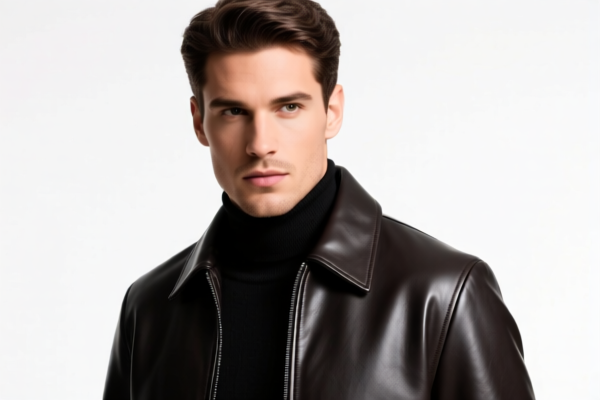

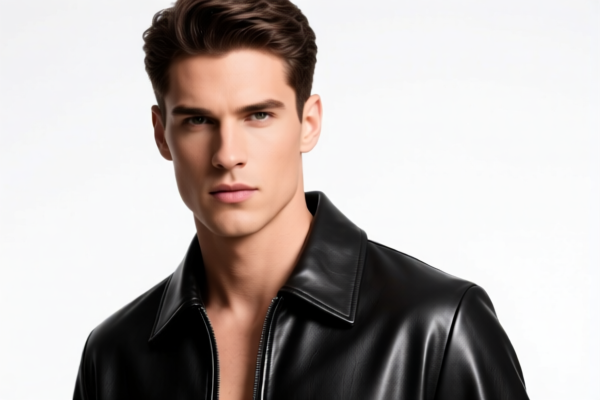
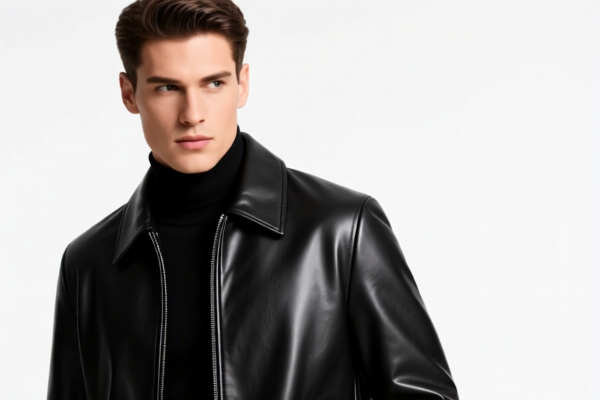
AI分析
🧥 Men's Imitation Leather Outerwear (The "Faux Leather" Maze)
🌐 HS Code Reference & Customs Clearance Guide | 2026 Latest Tariff Analysis | Professional Clearance Strategy
📌 Part 1: Product Definition & Classification: Do You Really Understand "Imitation Leather"?
Men's imitation leather jackets are a complex category in international trade because "Imitation Leather" is not a single material. Customs classification depends entirely on the base fabric (Knitted vs. Woven) and the surface composition (PU, PVC, or Leather-coated).
In the US import data provided, we see a stark divergence in tax rates (23.1% vs. 45.7%) based on subtle structural differences.
⚠️ Key Distinction Point:
- If the base is Knitted/Net (like fleece or jersey) → Likely Chapter 61
- If the base is Woven (like cotton twill or synthetic weave) → Likely Chapter 62
- If the material is Solid Plastic/Vinyl without fabric backing → Likely Chapter 42
📦 Part 2: HS Code Classification Details (2026 Latest Tariff Authority对照)
Based on the provided <DATA>, here is the breakdown for Men's Imitation Leather Jackets.
| HS Code | Product Description | Material/Structure Key | Total Tax | Base Tariff | Add-on Tariff (Section 301) | Section 122 Tax |
|---|---|---|---|---|---|---|
| 6101.30.10.00 | Men's imitation leather coat; contains leather components; synthetic fiber based. | Knitted/Net + Leather traces | 23.1% | 5.6% | 7.5% | 10% |
| 6101.30.20.20 | Men's imitation leather coat; synthetic/man-made fiber base. | Knitted/Net + Synthetic | 45.7% | 28.2% | 7.5% | 10% |
| 6201.40.50.21 | Men's imitation leather coat; synthetic/man-made fiber base; woven structure. | Woven + Synthetic | 45.2% | 27.7% | 7.5% | 10% |
| 6201.40.75.21 | Men's imitation leather coat; synthetic/man-made fiber base; woven structure. | Woven + Synthetic | 45.2% | 27.7% | 7.5% | 10% |
| 4203.10.40.30 | Men's imitation leather coat; material is imitation leather (leather or recycled leather). | Solid Immitation Leather (Non-knitted/non-woven standard) | 41.0% | 6.0% | 25.0% | 10% |
| 4203.10.40.85 | Men's imitation leather coat; material is synthetic leather. | Solid Synthetic Leather | 41.0% | 6.0% | 25.0% | 10% |
🔍 Critical Observation:
- Cheapest Option:6101.30.10.00at 23.1% total tax. Why? Lower base tariff (5.6%) despite the 7.5% Section 301 tax.
- Most Expensive Option:6101.30.20.20at 45.7% total tax. Why? High base tariff (28.2%) plus Section 301 tax.
- Mid-Range Options: Chapter 42 codes (4203...) have a low base (6%) but a massive 25% Section 301 surcharge, totaling 41%.
💰 Part 3: 2026 Latest Tariff Rate Breakdown (With Surcharges & Policy Add-ons)
✅ Applicable Country: United States (US)
✅ Origin: China (CN)
✅ Effective Time: Current Trade War Tariffs Applied
🎯 1. 6101.30.10.00 — The "Low-Tax" Hero (Knitted + Leather Traces)
| Item | Content |
|---|---|
| Base Tariff | 5.6% |
| Section 301 Tax | +7.5% (Note: Lower than Chapter 42) |
| Section 122 Tax | +10% |
| Total Rate | 23.1% |
| Tax Calculation | CIF Value × 23.1% |
| De Minimis Eligibility | ❌ No (High value items usually exceed $800 threshold, but even if under, these codes often face strict scrutiny for "textile" items). |
| Legal Basis | Standard HTSUS Chapter 61 + Section 301 Footnotes + Section 122 (Trade Expansion Act) |
📌 Explanation:
- This code is likely for knitted jackets where the "imitation leather" effect is achieved by coating a knit fabric with small amounts of leather or PU.
- Crucial: The base tariff is very low (5.6%), making this the most cost-effective classification if your product physically qualifies.
🎯 2. 6101.30.20.20 & 6201.40.xx.xx — The "High-Base" Trap
| Item | Content |
|---|---|
| Base Tariff | 27.7% - 28.2% |
| Section 301 Tax | +7.5% |
| Section 122 Tax | +10% |
| Total Rate | 45.2% - 45.7% |
| Tax Calculation | CIF Value × ~45.5% |
| De Minimis Eligibility | ❌ No |
📌 Explanation:
- These codes apply to standard synthetic imitation leathers (PU/PVC) on knit (Ch 61) or woven (Ch 62) bases.
- The Base Tariff is HIGH (nearly 30%). Even with only 7.5% Section 301 tax, the total hits ~45%.
- Danger: Do not assume all "synthetic leather" falls here. Check if it can be classified under Ch 42 for a potentially better rate.
🎯 3. 4203.10.40.xx — The "Section 301 Heavyweight"
| Item | Content |
|---|---|
| Base Tariff | 6.0% |
| Section 301 Tax | +25.0% (Very High!) |
| Section 122 Tax | +10% |
| Total Rate | 41.0% |
| Tax Calculation | CIF Value × 41.0% |
| De Minimis Eligibility | ❌ No |
📌 Explanation:
- Chapter 42 covers "Articles of leather." If the jacket is considered "solid" imitation leather (not just coated fabric), it goes here.
- The Trap: Although the base tariff is low (6%), the Section 301 tax is 25% (vs. 7.5% for textiles).
- Comparison: 41% (Ch 42) is cheaper than 45% (Ch 61/62) in this specific dataset, but more expensive than6101.30.10.00(23.1%).
🛠️ Part 4: Customs Clearance Practical Advice (Real-World Pitfall Guide)
✅ 1. Preparation Checklist (Non-negotiable)
| Document | Required? | Description |
|---|---|---|
| ✅ Material Breakdown Sheet | ✔️ | Must specify: Base Fabric (Knit vs. Woven) and Coating Material (PU, PVC, Leather). |
| ✅ Product Photos (Internal/External) | ✔️ | Show the back of the lining and the cut edge to prove knit vs. woven structure. |
| ✅ Commercial Invoice | ✔️ | Must clearly state "Men's Imitation Leather Jacket" AND material composition (e.g., "100% Polyester Knit with PU Coating"). |
| ✅ Label/Tag Photos | ✔️ | "Made in China" label is mandatory. |
| ✅ Structure Diagram | ✔️ | If claiming 6101.30.10.00, prove it is Knitted. If claiming 4203, prove it is Leather Article. |
✅ 2. Declaration Strategy (Key Mantras)
🔥 "Knit Low Base, Woven High Base, Solid Medium Base! Structure is King!"
| Scenario | Correct HS Code | Why? | Risk if Wrong |
|---|---|---|---|
| Knitted Base + Leather Traces | 6101.30.10.00 |
Lowest Total Tax (23.1%). | If you declare as generic knit, you might get 6101.30.20.20 (45.7%). |
| Knitted Base + Pure Synthetic | 6101.30.20.20 |
Standard synthetic knit jacket. | High tax (45.7%). |
| Woven Base + Synthetic | 6201.40.50.21 |
Standard woven jacket. | High tax (45.2%). |
| Solid PU/Vinyl (No Fabric Back) | 4203.10.40.xx |
Treated as "Leather Article". | Medium Tax (41.0%). |
📌 Pro Tip:
- If your jacket is Knitted (like a hoodie fabric) but looks like leather, FIGHT for6101.30.10.00if there is any leather content or specific construction that allows it.
- If it is Woven (like denim or twill texture), you are stuck with6201codes (~45%).
- If it is Solid Plastic/Vinyl (no fabric), use4203(41%).
✅ 3. Special Cases
| Situation | Handling Advice |
|---|---|
| Mixed Materials | If 90% Polyester + 10% Leather, ensure the description highlights "Leather Components" to aim for 6101.30.10.00. |
| OEM/Private Label | Ensure the invoice matches the product exactly. "Men's Faux Leather Jacket" is vague. Use "Men's Knitted Polyurethane-Coated Jacket". |
| Section 122 Exemption | Note: The data shows 10% Section 122 tax on ALL items. This is a recent US trade policy (Trade Expansion Act of 1962) targeting specific countries. There is no exemption shown in the data. Budget for this 10% everywhere. |
| De Minimis (Section 321) | ❌ NOT ELIGIBLE. These items are textiles/leatherwear from China. They cannot enter duty-free under $800. They must undergo formal entry. |
🌍 Part 5: Global Market Comparison (Contextual)
| Market | Recommended HS Approach | Approx. Tariff Impact | Notes |
|---|---|---|---|
| 🇺🇸 USA | 6101.30.10.00 (Best Case) |
23.1% | Must prove Knitted + Leather traces. Avoid 6201 if possible. |
| 🇪🇺 EU | 6201.93 (Woven) or 6101.30 (Knit) |
12% - 16% | No Section 301/122. VAT varies (19-27%). |
| 🇨🇳 China | 6101.30 / 6201.40 |
5% - 20% | Import duties apply. No trade war tariffs. |
| 🇬🇧 UK | 6201.93 |
12% | Post-Brexit tariffs similar to EU. |
📌 Conclusion for US Exporters:
- The US market is the most expensive due to Section 301 (7.5% or 25%) and Section 122 (10%).
- Strategy: If your jacket is knitted, try to qualify for6101.30.10.00(23.1%) rather than the generic6101.30.20.20(45.7%). The difference is over $20 per jacket on a $100 item.
📌 Part 6: Common Mistakes & Pitfalls (Blood Lessons)
❌ Mistake 1: Declaring "Faux Leather Jacket" without specifying Knit vs. Woven.
👉 Consequence: Customs will pick the highest duty code automatically (likely 45%).
❌ Mistake 2: Assuming "Imitation Leather" always means Chapter 42.
👉 Consequence: Missing the 23.1% tax rate available for 6101.30.10.00. Chapter 42 has a 25% Section 301 tax, which is higher than the 7.5% for textiles.
❌ Mistake 3: Ignoring Section 122 Tax (10%).
👉 Consequence: Budgeting only for Section 301 (7.5% or 25%) leads to unexpected 10% additional cost. All items in the data have this 10% surcharge.
✅ Correct Approach:
"Men's Knitted Jacket, Polyamide Knit Base, Polyurethane Coating to Imitate Leather, with YKK Zippers, Lined."
→ Aim for6101.30.10.00if leather traces exist.
🎯 Part 7: Conclusion: Precision Classification Saves Money!
🎯 Remember the Mantras:
🔹 "Knit with Leather Trace = 23.1% (Win!)"
🔹 "Solid Synthetics/Knits = 45% (Ouch!)"
🔹 "Solid Leather/PU Articles = 41% (Middle Ground)"
🔹 "Section 122 is 10% on EVERYTHING. Don't forget it!"
📌 Actionable Tip:
- If you are manufacturing in China, audit your material composition.
- Can you add a small percentage of leather or modify the knit structure to qualify for
6101.30.10.00? The tax savings are massive.- Always request a Binding Ruling from CBP if the classification is ambiguous between Chapter 61 and 42.
📣 Immediate Action:
📞 Contact your Freight Forwarder with the Material Breakdown Sheet.
🚀 Declare accurately. One wrong digit turns $100,000 into $145,000 in costs.
✨ Professional Clearance Starts with Accurate Classification!
💼 Every Percentage Point Counts!
用户评价
关于 HS 编码归类
协调制度(HS)是由世界海关组织(WCO)制定的国际贸易商品分类标准。全球 200 多个国家采用 HS 系统作为海关关税、贸易统计和进出口监管的基础。
每个 HS 编码遵循以下层级结构:
- 章(2 位)——商品大类(例如:第 84 章:机器和机械设备)
- 品目(4 位)——章内的更具体分类
- 子目(6 位)——国际通用细分,所有 WCO 成员国统一使用
- 本国细分(8-10 位)——各国自行扩展的细分编码,如美国 HTSUS 10 位编码
正确的 HS 编码归类对于顺利通关、准确缴纳关税和遵守贸易法规至关重要。错误归类可能导致海关延误、多缴关税或罚款。
从CN进口到US时,适用的关税税率可能包括:
- 最惠国(MFN)税率——适用于 WTO 成员国的标准关税税率
- 普通税率——适用于无贸易协定国家
- 贸易救济关税——附加关税,如 301 条款(反倾销)、232 条款(国家安全)或反补贴税
本页内容仅供参考。如需正式归类,请咨询当地海关或持牌报关代理。