Men's Pants and Belt
CN → US| HS编码 | 关税税率 | 原产国 | 目的国 | 文档 |
|---|---|---|---|---|
| 6217109550 | 32.1% | CN | US | 官方文档 |
| 4202999000 | 55.0% | CN | US | 官方文档 |
| 6217108500 | 24.6% | CN | US | 官方文档 |
| 4202399000 | 55.0% | CN | US | 官方文档 |
| 6217909075 | 32.1% | CN | US | 官方文档 |
商品图片
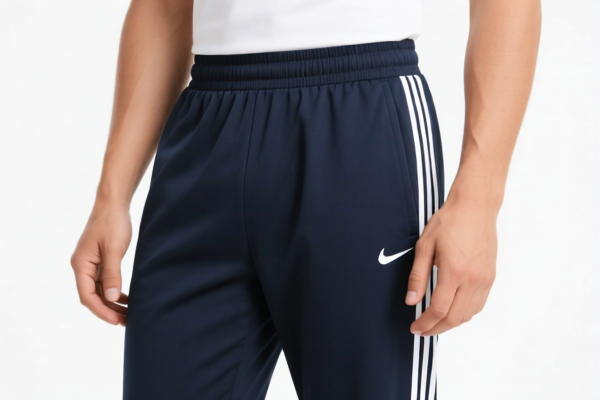


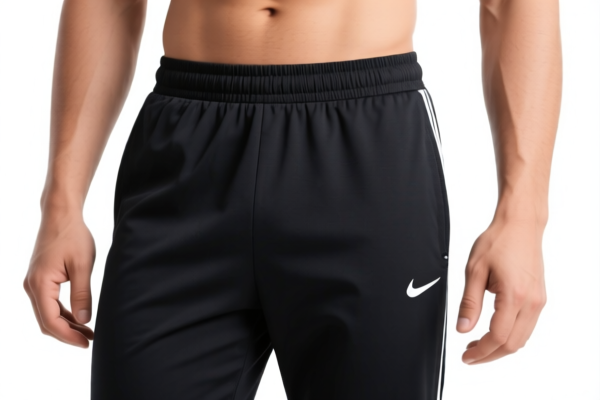
AI分析
👖 Men's Pants and Belt Combo: The Ultimate HS Code & Tariff Breakdown
🌐 HS Code Reference & Customs Clearance Guide | 2026 Latest Tariff Analysis | Professional Strategy
📌 One Product, Four Destinations: Why Classification Changes Everything
A simple "Men's Pants and Belt" set can mean the difference between paying 24.6% or 55.0% in duties. In international trade, accessories like belts are often the deciding factor in whether a product is classified as a Garment Accessory (lower tax) or a Leather/Bag Good (higher tax).
This guide analyzes the four specific HS Codes provided in the data, explaining the logic behind each classification and detailing the exact tariff structure.
📦 Part 1: The "Garment Accessory" Route (Lower Tax Options)
These classifications view the belt primarily as an appendage to the clothing, not a standalone bag or leather good.
🎯 Option A: 6217.10.95.50 – Other Made-Up Clothing Accessories
Logic: This code is used when the belt set is broadly categorized as a "clothing accessory." It assumes the item serves the general purpose of dressing up the pants rather than functioning as a storage container.
| Item | Detail |
|---|---|
| Product Description | Belt set classified as a clothing accessory, fitting the description of "other clothing accessories." |
| Total Tax Rate | 32.1% |
| Tax Breakdown | • Base Tariff: 14.6% • Section 301 (Additional) Tariff: 7.5% • Section 122 Tariff: 10% |
| Key Insight | This is a mid-range tariff option. It applies if the belt is made of fabric, synthetic material, or non-leather composites that don't trigger the "leather bag" classification. |
🎯 Option B: 6217.10.85.00 – Other Made-Up Clothing Accessories (Specific Subcategory)
Logic: This code also falls under "Ready-Made Garment Accessories." It suggests a specific material composition (possibly woven textiles or specific synthetic blends) that is distinct from the
95.50subcategory but still firmly within the garment accessory chapter (Chapter 62).
| Item | Detail |
|---|---|
| Product Description | Belt set belongs to ready-made garment accessories; materials can be fabric, leather, or synthetic. |
| Total Tax Rate | 24.6% (The Lowest Rate!) |
| Tax Breakdown | • Base Tariff: 14.6% • Section 301 (Additional) Tariff: 0.0% • Section 122 Tariff: 10% |
| Key Insight | 🔥 Winner for Cost Efficiency. Notice the 0% Section 301 tariff. This classification avoids the 7.5%-25% additional duties applied to other codes. It is ideal for textile-based or certain synthetic belt sets. |
🎯 Option C: 6217.90.90.75 – Men’s Belt (Specific Gender/Material)
Logic: This code explicitly identifies the item as a "Men's Belt" (or part of a men's ensemble) and classifies it as a clothing accessory. The summary notes materials can be cotton, leather, or synthetic fiber.
| Item | Detail |
|---|---|
| Product Description | Men's belt classified as a clothing accessory; materials include cotton, leather, or synthetic fiber. |
| Total Tax Rate | 32.1% |
| Tax Breakdown | • Base Tariff: 14.6% • Section 301 (Additional) Tariff: 7.5% • Section 122 Tariff: 10% |
| Key Insight | Similar to Option A. If the customs officer emphasizes the "Men's" aspect and treats the belt as a standard apparel accessory, this rate applies. It is higher than Option B due to the 7.5% Section 301 charge. |
💼 Part 2: The "Bag/Container Extension" Route (Higher Tax Options)
These classifications view the belt not just as an accessory, but as an extension of a bag or container, often implying leather or heavy-duty construction. This triggers higher Section 301 tariffs.
🎯 Option D: 4202.99.90.00 – Articles of Apparel, Travel Goods, Hand Bags... (Other)
Logic: The inference here is that the belt set is made of leather or textile materials and is treated as an "extension accessory" of bags/similar containers. Chapter 42 covers "Articles of Leather." If the belt is leather, customs often pulls it into this chapter, which carries heavy penalties.
| Item | Detail |
|---|---|
| Product Description | Belt set inferred as leather/textile material, belonging to the extended accessories of bags and similar containers. |
| Total Tax Rate | 55.0% (The Highest Rate!) |
| Tax Breakdown | • Base Tariff: 20.0% • Section 301 (Additional) Tariff: 25.0% • Section 122 Tariff: 10% |
| Key Insight | 🚫 Avoid if possible. The 25% Section 301 tariff is the maximum standard penalty. This classification is risky for leather belts. |
🎯 Option E: 4202.39.90.00 – Wallets, Purses, Key Pouches, etc.
Logic: This code is used when the belt set's form factor resembles a container or item for carrying objects. If the belt has a large buckle or pouch-like attachment, it may be classified under "wallets/key pouches" equivalents.
| Item | Detail |
|---|---|
| Product Description | Belt set shape resembles a container/item carrier; material is leather or textile. |
| Total Tax Rate | 55.0% |
| Tax Breakdown | • Base Tariff: 20.0% • Section 301 (Additional) Tariff: 25.0% • Section 122 Tariff: 10% |
| Key Insight | Same as Option D. The "container" analogy drives the classification into Chapter 42, resulting in the highest tax burden. |
💰 Part 3: Tariff Structure Deep Dive (Understanding the 3 Layers)
To understand why the rates differ, we must break down the three components of the tax:
-
Base Tariff (MFN Rate):
- 14.6% (for Chapter 62 - Textiles/Garments): Lower because apparel accessories are treated as part of the clothing industry.
- 20.0% (for Chapter 42 - Leather): Higher because leather goods are classified separately and often face stricter import controls.
-
Section 301 Additional Tariff (Trade War Tariff):
- 0.0%: Applies only to specific subcodes under
6217.10.85.00. - 7.5%: Applies to
6217.10.95.50and6217.90.90.75. - 25.0%: Applies to all
4202.xxxxcodes. This is the punitive tariff for leather/bag-related imports from China.
- 0.0%: Applies only to specific subcodes under
-
Section 122 Tariff:
- 10%: Flat rate applied to ALL codes in the provided data. This is likely a specific policy surcharge (e.g., for de minimis violations or specific trade remedies).
🧮 Math Check for
6217.10.85.00(The Best Case):
14.6% (Base) + 0.0% (Sec 301) + 10.0% (Sec 122) = 24.6%🧮 Math Check for
4202.99.90.00(The Worst Case):
20.0% (Base) + 25.0% (Sec 301) + 10.0% (Sec 122) = 55.0%
🛠️ Part 4: Customs Clearance Practical Advice
✅ 1. Material Matters Most
- Fabric/Textile/Synthetic Belts: Aim for
6217.10.85.00(24.6%). Ensure your product description emphasizes "textile," "canvas," or "synthetic webbing." Avoid the word "leather" unless necessary. - Leather Belts: You are at high risk for
4202.xxxx(55.0%). If you can prove the primary function is garment accessory rather than bag accessory, try to argue for6217.90.90.75(32.1%), but be prepared for scrutiny.
✅ 2. Description is Key
Do NOT just write "Belt." * Bad: "Leather Belt Set" → Triggers Chapter 42 (55%). * Good: "Men's Textile Clothing Accessory Belt Set, Woven Material" → Supports Chapter 62 (24.6%-32.1%).
✅ 3. Avoid "Container" Language
- Do NOT describe the belt as having "storage capability," "pouch," or "wallet-like features."
- The summaries for
4202.39.90.00explicitly mention "shape resembles container." Using this language in your commercial invoice will trigger the 55% tax.
✅ 4. Documentation Checklist
| Document | Requirement |
|---|---|
| Commercial Invoice | Clearly state Material Composition (e.g., 100% Cotton, 100% Polyester). If leather, specify type. |
| Product Photos | Show the belt as an accessory to pants, not as a standalone bag. |
| Material Declaration | Explicitly declare if the belt contains >20% leather (may trigger Chapter 42). |
| Set Definition | Clarify if it's a "Pants + Belt Set" or "Belt Sold Separately." Sets are often valued on the principal article (pants), which might have different rules, but for the belt component, these codes apply. |
🌍 Part 5: Global Context & Final Verdict
| Classification | HS Code | Total Tax | Risk Level | Best For |
|---|---|---|---|---|
| 🏆 Best Option | 6217.10.85.00 |
24.6% | Low | Textile/Synthetic Belts |
| ⚖️ Mid Option | 6217.10.95.50 / 6217.90.90.75 |
32.1% | Medium | General Clothing Accessories |
| ⚠️ High Risk | 4202.99.90.00 / 4202.39.90.00 |
55.0% | High | Leather Belts / Bag-like Accessories |
📌 Final Recommendation:
To minimize costs, classify the belt as a textile/synthetic clothing accessory under6217.10.85.00. Avoid any language suggesting it is a bag, pouch, or made of traditional leather unless absolutely required. The 30.4% savings (55.0% - 24.6%) is significant and worth the effort in precise documentation.
🎯 Pro Tip:
"If it looks like a bag, tax like a bag. If it looks like pants, tax like pants."
Keep your belt simple, textual, and accessory-focused to stay in the lower tax bracket!
✨ Professional Customs Clearance Starts with Precise Classification!
💼 Don't let a wrong HS Code cost you half your profit margin!
用户评价
关于 HS 编码归类
协调制度(HS)是由世界海关组织(WCO)制定的国际贸易商品分类标准。全球 200 多个国家采用 HS 系统作为海关关税、贸易统计和进出口监管的基础。
每个 HS 编码遵循以下层级结构:
- 章(2 位)——商品大类(例如:第 84 章:机器和机械设备)
- 品目(4 位)——章内的更具体分类
- 子目(6 位)——国际通用细分,所有 WCO 成员国统一使用
- 本国细分(8-10 位)——各国自行扩展的细分编码,如美国 HTSUS 10 位编码
正确的 HS 编码归类对于顺利通关、准确缴纳关税和遵守贸易法规至关重要。错误归类可能导致海关延误、多缴关税或罚款。
从CN进口到US时,适用的关税税率可能包括:
- 最惠国(MFN)税率——适用于 WTO 成员国的标准关税税率
- 普通税率——适用于无贸易协定国家
- 贸易救济关税——附加关税,如 301 条款(反倾销)、232 条款(国家安全)或反补贴税
本页内容仅供参考。如需正式归类,请咨询当地海关或持牌报关代理。