Tailor's Tracing Paper
CN → US| HS编码 | 关税税率 | 原产国 | 目的国 | 文档 |
|---|---|---|---|---|
| 4911911500 | 17.5% | CN | US | 官方文档 |
| 4802562000 | 35.0% | CN | US | 官方文档 |
| 4802546100 | 35.0% | CN | US | 官方文档 |
| 4806300000 | 35.0% | CN | US | 官方文档 |
| 4806200000 | 35.0% | CN | US | 官方文档 |
| 4911998000 | 17.5% | CN | US | 官方文档 |
商品图片
AI分析
✂️ Tailor's Tracing Paper: The Art of Precision Cutting
🌐 HS Code Reference & Customs Clearance Guide | 2026 Latest Tariff Analysis | Professional Strategy for Textile Imports
📌 I. Product Definition: What is "Tailor's Tracing Paper"?
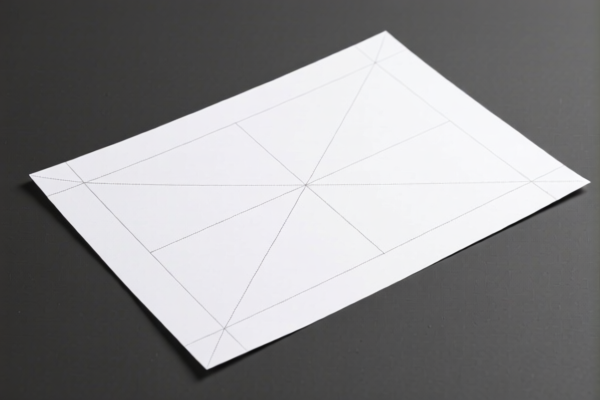
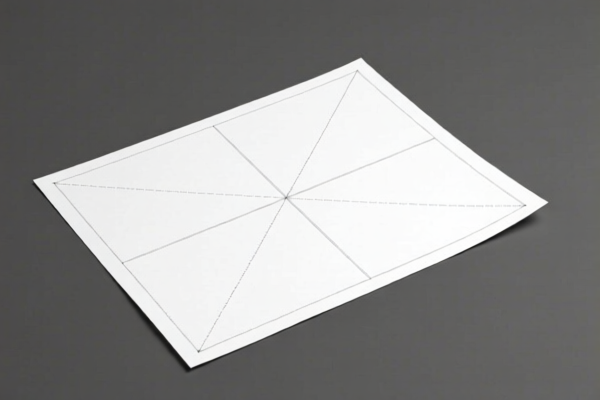
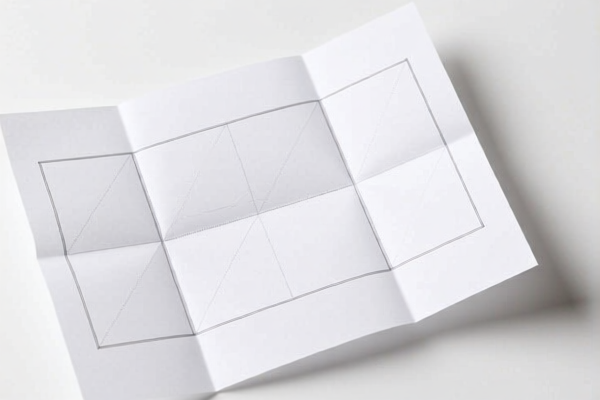
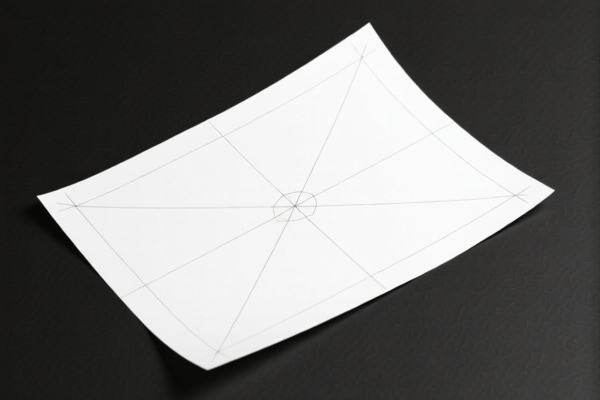
Tailor's Tracing Paper (also known as Pattern Tracing Paper, Dressmaker’s Carbon, or Dressmaker’s Carbon Paper) is a specialized translucent or semi-transparent paper used in the fashion and textile industry. It is placed between a fabric pattern and the fabric itself. By tracing over the pattern lines with a pen or stylus, the lines are transferred onto the fabric for cutting and sewing.
Key Characteristics: * Material: High-quality, thin, translucent paper (often coated with carbon or wax for transfer). * Function: Graphic transfer tool for tailoring patterns. * Form: Sheets or rolls.
⚠️ Critical Distinction for Classification:
The classification depends heavily on whether the product is considered a printing product (if pre-printed with specific graphics/designs) or a raw paper product (plain or carbon-coated sheet for general use). This distinction significantly impacts the HS Code and, consequently, the tariff rate.
📦 II. HS Code Classification Details (2026 Latest Tariff Authority)
Based on the product nature, there are two primary classification pathways. The choice determines whether you pay ~17.5% or ~35%.
| HS Code | Product Description | Application Scenario | Reason for Classification |
|---|---|---|---|
4911.91.15.00 |
Tracing Paper as Printed Product | Pre-printed patterns, branded designs, or specific graphic sheets | Classified as "Pictures, designs and photographs" (Printing Product). The summary states: "Tracing paper belongs to printed products/drawings form, fits the attribute of 'pictures, designs and photos', inferred as paper printing product." |
4802.56.20.00 |
Tracing Paper as Drawing Paper | Plain or carbon-coated sheets used for drafting/drawing | Classified as "Drawing paper". The summary states: "The product name 'Tracing Paper' directly corresponds to the classification explanation of 'Drawing Paper' usage, and the material belongs to the paper category." |
4802.54.61.00 |
Tracing Paper for Graphic Purposes | Paper used specifically for graphic purposes | Classified as paper suitable "for graphic purposes". The summary states: "'Tracing Paper' falls under 'used for graphic purposes' in function, and 'paper' in material, fitting the definition of this code regarding function and material." |
4806.30.00.00 |
Specific Tracing Paper Category | Clear match with specific tracing paper category | Exact Match. The summary states: "Product name completely consistent with classification usage, belonging to the clear Tracing Paper category." |
4806.20.00.00 |
Specific Tracing Paper (Material) | Direct match to "Tracing Paper" specific usage/material category | Direct Match. The summary states: "Product name 'Tracing Paper' directly matches the classification explanation of 'Tracing Paper' this specific usage/material category." |
4911.99.80.00 |
Other Printed Products | Other printed paper items not specifically listed | Classified as "Other printed products". The summary states: "Tracing paper belongs to printed/paper products, fitting the reasonable inference of 'other printed products' regarding paper carrier." |
🔍 Key Takeaway:
- If the tracing paper is plain or standard carbon-coated for general use, it falls under Chapter 48 (Paper), specifically codes like4802.56.20.00or4806.20.00.00.
- If the tracing paper is pre-printed with specific designs or considered a "drawing/graphic" product in a broader sense, it may fall under Chapter 49 (Printed Matter), such as4911.91.15.00.
- Note: Most standard tailoring tracing papers (carbon paper sheets) are classified under Chapter 48 due to their raw material nature, leading to higher tariffs compared to Chapter 49.
💰 III. 2026 Latest Tariff Rate Breakdown (Including Additional Taxes & Policy Surcharges)
✅ Applicable Country: United States (US)
✅ Origin: China (CN)
✅ Effective Date: From November 10, 2025 (and subsequent imports)
🎯 1. Chapter 49 Classifications (Lower Tariff Path)
Codes: 4911.91.15.00, 4911.99.80.00
| Item | Detail |
|---|---|
| Base Tariff | 0.0% |
| Section 301 Surcharge (China) | 7.5% (Add-on tariff) |
| 122 Clause Surcharge | 10% |
| Total Effective Rate | 17.5% |
| Tax Calculation | CIF Value × 17.5% |
| De Minimis Eligibility | ❌ No (Denied for Section 301 goods) |
| Legal Basis Path | USITC:4911.91.15.00 → SECTION301:7.5% → CLAUSE122:10% |
📌 Explanation:
- If your tracing paper is classified as a printed product (e.g., pre-printed pattern sheets), you benefit from a lower total tariff of 17.5%.
- This classification is less common for standard plain carbon paper but valid for designer/pre-printed tracing papers.
🎯 2. Chapter 48 Classifications (Higher Tariff Path - Most Common)
Codes: 4802.56.20.00, 4802.54.61.00, 4806.30.00.00, 4806.20.00.00
| Item | Detail |
|---|---|
| Base Tariff | 0.0% |
| Section 301 Surcharge (China) | 25.0% (Major Additional Tariff) |
| 122 Clause Surcharge | 10% |
| Total Effective Rate | 35.0% |
| Tax Calculation | CIF Value × 35.0% |
| De Minimis Eligibility | ❌ No (Denied for Section 301 goods) |
| Legal Basis Path | USITC:4802.xxxx.xxxx → SECTION301:25% → CLAUSE122:10% |
📌 Explanation:
- This is the most likely classification for standard Tailor's Tracing Paper (carbon/drawing paper).
- The "Section 301" additional tariff of 25% applies to most paper products from China.
- Combined with the 10% Clause 122 tariff, the total burden is 35%.
- Warning: This is a high tariff rate. Importers must budget accordingly or consider supply chain adjustments.
🛠️ IV. Customs Clearance Practical Advice (Expert Pitfall Avoidance)
✅ 1. Required Documentation Checklist (Non-Negotiable)
| Document | Required | Notes |
|---|---|---|
| ✅ Product Specification Sheet | ✔️ | Must clearly state: "Tracing Paper," "Carbon-Coated," "Translucent Paper," thickness, size. |
| ✅ Photos (Front/Back/Sheet) | ✔️ | Show the paper texture, coating, and any branding. |
| ✅ Commercial Invoice | ✔️ | Description must match HS Code rationale (e.g., "Dressmaker's Carbon Paper for Pattern Transfer"). |
| ✅ Packing List | ✔️ | Weight and dimensions of rolls/sheets. |
| ✅ Certificate of Origin (CO) | ✔️ | Required to prove origin (China) for tariff calculation. |
✅ 2. Declaration Strategy (Key Rules)
🔥 "Specify Material, Declare Usage, Avoid Ambiguity!"
| Scenario | Recommended Declaration | Avoid |
|---|---|---|
| Standard Carbon Paper | "Tailor's Tracing Paper, Carbon-Coated, for Pattern Transfer, HS Code 4806.20.00.00" | "Printed Paper" (if not pre-printed) |
| Pre-Printed Pattern Sheets | "Pre-Printed Tracing Paper with Design, HS Code 4911.91.15.00" | "Raw Paper" |
| Mixed Shipment | Separate invoices for Chapter 48 and Chapter 49 items | Blending different HS Codes in one line item |
✅ 3. Special Considerations
| Situation | Handling Advice |
|---|---|
| OEM Branding | If the paper has a brand logo, it is still considered "plain" if no graphic design is present. Stick to Chapter 48. |
| Rolls vs. Sheets | No change in HS Code, but ensure packaging description matches. |
| Sample Shipments | Even for samples, the 35% tariff may apply if not declared as "samples not for sale" (though de minimis is denied, small value shipments may still incur duty). |
🌍 V. Global Market Comparison (2026 Latest)
| Country/Region | Recommended HS Code | Tariff Rate | Certification | Notes |
|---|---|---|---|---|
| 🇺🇸 USA | 4806.20.00.00 |
35% (China Origin) | None specific | High tariff due to Section 301. |
| 🇨🇳 China | 4806.20.00.00 |
0% - 5% | CCC (if applicable) | Domestic trade benefits. |
| 🇪🇺 EU | 4802.54 |
0% - 2% | CE (if packaging claims) | Low tariffs for paper products. |
| 🇬🇧 UK | 4802.54 |
0% - 2% | UKCA | Post-Brexit alignment with EU. |
| 🇨🇦 Canada | 4802.54 |
0% (MFN) | NONE | Favorable tariff for paper. |
📌 Conclusion:
- The USA imposes the highest tariffs on Tailor's Tracing Paper from China (35%).
- EU and Canada offer much lower rates (0-2%), making them more attractive if sourcing from China or third-party countries.
- If you are importing into the US, consider supplier diversification (e.g., from Vietnam or India) to mitigate the 25% Section 301 tariff.
📌 VI. Common Mistakes & Pitfalls (Lessons Learned)
❌ Mistake 1: Declaring as "Printed Paper" to get the 17.5% rate when it is actually plain carbon paper.
👉 Consequence: Customs audit leads to reclassification, back taxes (17.5% vs 35% difference), and penalties.
❌ Mistake 2: Failing to declare the "122 Clause" surcharge.
👉 Consequence: Underpayment of duty, leading to delays and interest charges.
❌ Mistake 3: Using generic terms like "Craft Paper" or "Art Paper."
👉 Consequence: Customs may assign a wrong HS Code, leading to incorrect tariff application.
✅ Correct Approach:
"Tailor's Tracing Paper, Carbon-Coated, Roll/Sample, HS Code 4806.20.00.00, Origin China, Subject to Section 301 (25%) and Clause 122 (10%)."
🎯 VII. Conclusion: Professional Declaration, Cost Control, Efficiency!
🎯 Remember the Key Point:
🔹 "Plain Carbon Paper = 35% (US), Pre-Printed = 17.5% (US). Clarify the product to save cost!"
🔹 "HS Code determines destiny; 17.5% vs 35% is a huge difference. Declare accurately!"
📌 Pro Tip:
If you are importing into the US, consider applying for an Exclusion under Section 301 if your product qualifies, or explore foreign trade zones (FTZ) to defer duties.
For other markets like the EU, tariffs are minimal, making them a viable alternative.
📣 Take Action Now:
📞 Contact a professional customs broker + Provide product samples + Apply for Advance Ruling
🚀 Let your Tailor's Tracing Paper pass customs smoothly, efficiently export, and maximize profit!
✨ Professional Customs Clearance Starts with Accurate Classification!
💼 Every cent of your cost deserves to be calculated precisely!
用户评价
关于 HS 编码归类
协调制度(HS)是由世界海关组织(WCO)制定的国际贸易商品分类标准。全球 200 多个国家采用 HS 系统作为海关关税、贸易统计和进出口监管的基础。
每个 HS 编码遵循以下层级结构:
- 章(2 位)——商品大类(例如:第 84 章:机器和机械设备)
- 品目(4 位)——章内的更具体分类
- 子目(6 位)——国际通用细分,所有 WCO 成员国统一使用
- 本国细分(8-10 位)——各国自行扩展的细分编码,如美国 HTSUS 10 位编码
正确的 HS 编码归类对于顺利通关、准确缴纳关税和遵守贸易法规至关重要。错误归类可能导致海关延误、多缴关税或罚款。
从CN进口到US时,适用的关税税率可能包括:
- 最惠国(MFN)税率——适用于 WTO 成员国的标准关税税率
- 普通税率——适用于无贸易协定国家
- 贸易救济关税——附加关税,如 301 条款(反倾销)、232 条款(国家安全)或反补贴税
本页内容仅供参考。如需正式归类,请咨询当地海关或持牌报关代理。