Women's Bag
CN → US商品图片
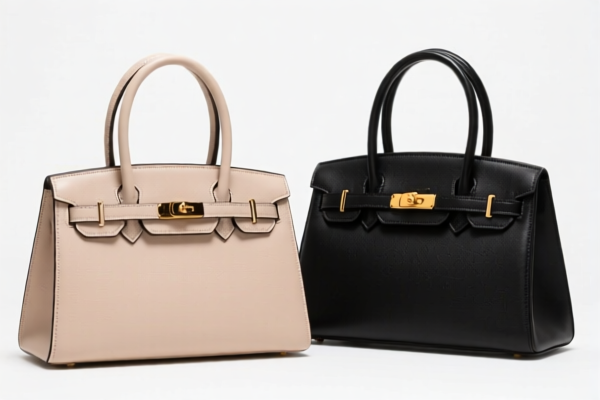
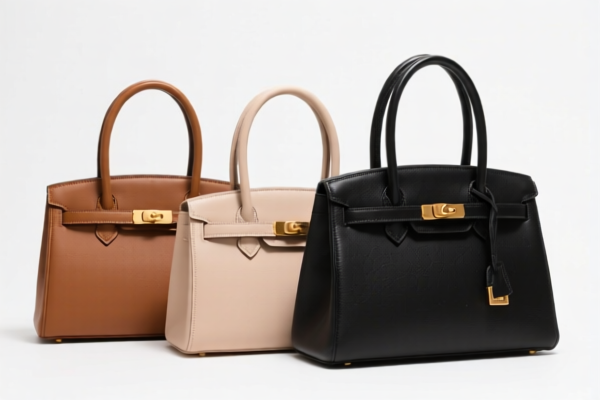
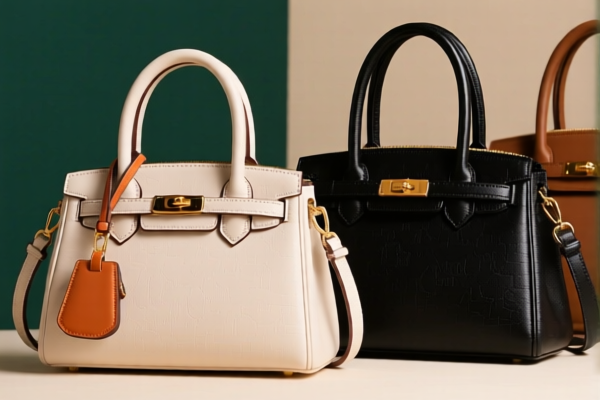
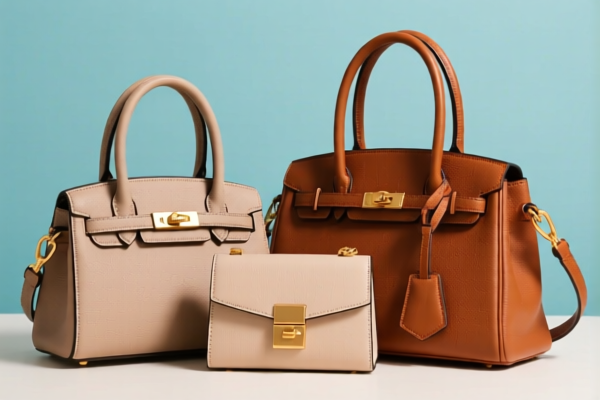
AI分析
👜 Women's Bag (Handbags, Totes, Clutches, & Shoulder Bags)
🌐 HS Code Reference & Customs Clearance Guide | 2026 Tariff Analysis | Strategic Entry Strategy
📌 Part 1: Product Definition & Classification: Do You Really Understand "Women's Bags"?
Women's bags are the cornerstone of fashion accessories, ranging from everyday totes to luxury clutch bags. In international trade, they are NOT all classified the same. The critical differentiator is material (Leather vs. Textile vs. Other) and construction.
Two Primary Categories:
- Leather Bags: Made primarily of natural leather or patent leather (e.g., cowhide, goat, sheep).
- Textile/Other Bags: Made of nylon, canvas, polyester, or synthetic materials (e.g., handbags made of "man-made fibers").
⚠️ The Golden Rule of Classification:
- If the bag is >50% Leather (by surface area or value) → Chapter 42 (Leather Goods)
- If the bag is Textile/Plastic → Chapter 42 (Other) or Chapter 63 (Textiles)
- Crucial: A "leather-looking" bag made of PVC or PU (synthetic leather) is NOT leather and falls under different HS codes!
📦 Part 2: 2026 HS Code Breakdown (Authoritative Tariff对照)
| HS Code | Product Description | Material Composition | Applicable Scenario |
|---|---|---|---|
| 4202.21.00 | Leather or Patent Leather Handbags, purses, clutch bags | Natural Leather (Cowhide, Goat, Sheep, etc.) | Luxury handbags, genuine leather totes |
| 4202.22.00 | Textile Handbags, purses, clutch bags | Textiles (Canvas, Nylon, Polyester, Cotton, Silk) | Fashion bags, canvas totes, woven bags |
| 4202.29.00 | Other Materials Handbags, purses | Plastic, Rubber, Paper, Metal | PVC/PU bags, hard cases, novelty bags |
| 4202.32.00 | Textile Pocketbooks, cosmetic cases, cigarette cases | Small textile pouches | Cosmetic bags, clutch-style small cases |
| 4202.39.00 | Other Materials Small Cases | Leather/Plastic small cases | Leather wallet-purses, hard plastic cases |
| 9006.51.00 | Camera Cases (if applicable) | Leather/Textile/Plastic | Specialized camera bags (distinct from fashion bags) |
🔍 Critical Distinction:
- 4202.21.00 vs. 4202.29.00: If a bag is made of PU (Polyurethane) "fake leather", it MUST go to 4202.29.00, NOT 4202.21.00. Misclassifying PU as real leather is a top cause of customs seizures. - 4202.22.00: Covers all textile-based bags, even if they have leather trim (if trim is <50% of surface area).
💰 Part 3: 2026 Tariff Rate Deep Dive (Including Additional Duties)
✅ Target Market: United States (US)
✅ Origin: China (CN)
✅ Effective Date: November 2025 - 2026 (Section 301 & IEEPA Tariffs)
🎯 1. 4202.21.00 — Leather or Patent Leather Handbags
| Item | Details |
|---|---|
| Base Duty Rate | 12.4% (General Ad Valorem) |
| USITC Section 301 Tariff | +25% (List 4A - Footnote 9903.88.01) |
| IEEPA Additional Tariff | +10% (China-specific, effective Nov 2025) |
| Total Effective Duty | 47.4% |
| De Minimis Exemption | ❌ NO (De Minimis does not apply to leather goods) |
| Legal Pathway | HTSUS:4202.21.00 → Section 301:Footnote 9903.88.01 → IEEPA:9903.01.24 |
📌 Explanation:
- 12.4% is the standard Most Favored Nation (MFN) rate. - 25% is the Section 301 punitive tariff on "Leather Articles" due to trade tensions. - 10% is the IEEPA surcharge specifically for goods of Chinese origin. - Total: 47.4%. This is EXTREMELY HIGH and may render low-margin leather bag exports unprofitable without pricing adjustments or supply chain relocation.
🎯 2. 4202.22.00 — Textile Handbags (Canvas, Nylon, Polyester)
| Item | Details |
|---|---|
| Base Duty Rate | 18.4% (General Ad Valorem) |
| USITC Section 301 Tariff | +25% (List 4A) |
| IEEPA Additional Tariff | +10% |
| Total Effective Duty | 53.4% |
| De Minimis Exemption | ❌ NO |
| Legal Pathway | HTSUS:4202.22.00 → Section 301:Footnote 9903.88.01 → IEEPA:9903.01.24 |
📌 Note:
- Textile bags are HEAVIERLY taxed (53.4%) because the base rate (18.4%) is already higher than leather. - Even "canvas tote bags" (4202.22.00) face these high rates.
🎯 3. 4202.29.00 — Other Materials (PVC, PU, Plastic)
| Item | Details |
|---|---|
| Base Duty Rate | 20.2% (General Ad Valorem) |
| USITC Section 301 Tariff | +25% |
| IEEPA Additional Tariff | +10% |
| Total Effective Duty | 55.2% |
| De Minimis Exemption | ❌ NO |
| Legal Pathway | HTSUS:4202.29.00 → Section 301:Footnote 9903.88.01 → IEEPA:9903.01.24 |
📌 Critical:
- Synthetic Leather (PU/PVC) bags are the most taxed category (55.2%). - Many brands try to hide as "Textile" but if the outer layer is PVC/PU, they must use 4202.29.00.
🛠️ Part 4: Customs Clearance Practical Advice (Avoid the Pitfalls)
✅ 1. Mandatory Documentation Checklist
| Document | Requirement | Why It Matters |
|---|---|---|
| ✅ Detailed Composition Label | ✔️ | Must explicitly state: "100% Cowhide", "100% Nylon", or "PU Leather". Do not write "Synthetic Leather" if it's PVC. |
| ✅ Material Safety Certificates | ✔️ | REACH (EU), Prop 65 (CA), or TSCA (US) for leather treatments and dyes. |
| ✅ Photographs of Stitching & Lining | ✔️ | To prove material composition (e.g., is the trim real leather or faux?). |
| ✅ Commercial Invoice | ✔️ | Must specify "Women's Handbag" + HS Code + Material %. |
| ✅ Country of Origin Certificate | ✔️ | Required to prove non-Chinese origin if sourcing from Vietnam/Mexico to avoid IEEPA/301 tariffs. |
✅ 2. Declaration Strategy (The "Golden Rules")
🔥 Mantra: "Material First, Function Second, No Hidden Trims!"
| Scenario | Correct Declaration | Wrong Approach |
|---|---|---|
| Genuine Leather Bag | HS 4202.21.00 | Calling it "Leather-Look" → Audit trigger |
| PU/Vinyl Bag | HS 4202.29.00 | Calling it "Leather" → Seizure + Fraud Penalty |
| Canvas Bag with Leather Trim | HS 4202.22.00 (if trim <50%) | Over-classifying as leather → 12.4% vs 18.4% error |
| Bag + Strap Separately | Do Not Split! | Splitting straps (textiles) from bags (leather) → Double Taxation + Penalties |
✅ 3. Special Scenarios & Workarounds
| Situation | Strategy |
|---|---|
| OEM Custom Bags | Provide Material Spec Sheet (MSDS) and BOM (Bill of Materials) to prove % of leather. |
| "Leather-Look" (PU/PVC) | Honest Declaration: Use 4202.29.00. Do not try to sneak into 4202.21.00. Penalties are severe. |
| Sourcing from Vietnam | CRITICAL: Ensure Certificate of Origin (Form V) is valid. If proven Vietnamese-made, IEEPA 10% is waived, reducing total tax from 47.4% to 37.4% (Leather) or 43.4% (Textile). |
| Luxury Brand Counterfeit | Zero Tolerance: If suspected counterfeit, goods are seized, destroyed, and fines imposed. |
🌍 Part 5: Global Market Comparison (2026)
| Country/Region | Recommended HS Code | Duty Rate (China Origin) | Key Certification | Note |
|---|---|---|---|---|
| 🇺🇸 USA | 4202.21/22/29 | 47.4% – 55.2% | Prop 65, TSCA | Highest tariffs globally; consider Vietnam sourcing. |
| 🇪🇺 EU | 4202.21/22/29 | 12% - 16% | REACH, CE | Lower base tax, but strict REACH chemical regulations. |
| 🇨🇦 Canada | 4202.21/22/29 | 5% - 8% | Canada E-Catalogue | Moderate tariffs; no Section 301 equivalent. |
| 🇦🇺 Australia | 4202.21/22/29 | 5% | RCM | Low tariff, strict labeling laws. |
| 🇯🇵 Japan | 4202.21/22/29 | 8% - 10% | PSE (if electronic) | Moderate tariffs, high quality standards. |
📌 Conclusion:
- USA is the most hostile market for Chinese-made women's bags (due to 301 + IEEPA).
- EU is more forgiving but strict on chemicals.
- Vietnam/Mexico sourcing is the ONLY viable strategy to survive US tariffs (saving ~10-25% instantly).
📌 Part 6: Common Mistakes & Lessons Learned (Blood & Tears)
❌ Mistake 1: Calling a PU Bag a "Leather Bag" to save on tax.
👉 Consequence: US Customs (CBP) will seize goods, fine up to $10k per shipment, and place you on blacklist.
👉 Reality: CBP uses spectroscopy and chemical testing to distinguish real vs. fake leather.
❌ Mistake 2: Splitting a bag + strap + dust bag into separate shipments.
👉 Consequence: Straps (textile) taxed at 18.4% vs Bag (leather) at 12.4% → Higher total tax + administrative cost.
👉 Solution: Ship as one unit ("Set of Handbag with Strap").
❌ Mistake 3: Ignoring the IEEPA 10% surcharge in cost calculations.
👉 Consequence: Profit margin disappears overnight.
👉 Solution: Recalculate FOB prices to include ~55% total tax for US entry.
✅ Correct Practice:
"Women's Tote Bag, 100% Genuine Cowhide, 4202.21.00, Origin: Vietnam, REACH Compliant."
🎯 Part 7: Conclusion: Precision is Profit!
🎯 Remember the Mantra:
🔹 "Material is King: Leather=4202.21, Textile=4202.22, PU=4202.29."
🔹 "China Tax = ~50%+; Vietnam Tax = ~35-40% (Save 15-20%!)".
🔹 "Fake Leather = Fraud. Real Declaration = Survival."
📌 Pro Tip:
If you are exporting to the US, ALWAYS check if your supplier can provide a Form V (Vietnam) or Form M (Mexico). Even a 10% reduction in tariffs can save hundreds of thousands of dollars on a large shipment.
📣 Action Now:
📞 Contact a Licensed Customs Broker immediately for Advance Ruling (Ruling Request).
🚀 Audit your material specs. If your "leather" is actually PU, switch HS Code to 4202.29.00 NOW to avoid seizure.
📦 Optimize your supply chain: Move production to Vietnam/Mexico if US tariffs are killing your margins.
✨ Customs Compliance Starts with the Right HS Code!
💼 Every dollar saved on tax is pure profit!
用户评价
关于 HS 编码归类
协调制度(HS)是由世界海关组织(WCO)制定的国际贸易商品分类标准。全球 200 多个国家采用 HS 系统作为海关关税、贸易统计和进出口监管的基础。
每个 HS 编码遵循以下层级结构:
- 章(2 位)——商品大类(例如:第 84 章:机器和机械设备)
- 品目(4 位)——章内的更具体分类
- 子目(6 位)——国际通用细分,所有 WCO 成员国统一使用
- 本国细分(8-10 位)——各国自行扩展的细分编码,如美国 HTSUS 10 位编码
正确的 HS 编码归类对于顺利通关、准确缴纳关税和遵守贸易法规至关重要。错误归类可能导致海关延误、多缴关税或罚款。
从CN进口到US时,适用的关税税率可能包括:
- 最惠国(MFN)税率——适用于 WTO 成员国的标准关税税率
- 普通税率——适用于无贸易协定国家
- 贸易救济关税——附加关税,如 301 条款(反倾销)、232 条款(国家安全)或反补贴税
本页内容仅供参考。如需正式归类,请咨询当地海关或持牌报关代理。