Women's Cardigan Sweater
CN → US| HS编码 | 关税税率 | 原产国 | 目的国 | 文档 |
|---|---|---|---|---|
| 6104230040 | 0.0% | CN | US | 官方文档 |
| 6114200010 | 20.8% | CN | US | 官方文档 |
| 6114301020 | 45.7% | CN | US | 官方文档 |
| 6103292074 | 0.0% | CN | US | 官方文档 |
| 6103230070 | 0.0% | CN | US | 官方文档 |
商品图片

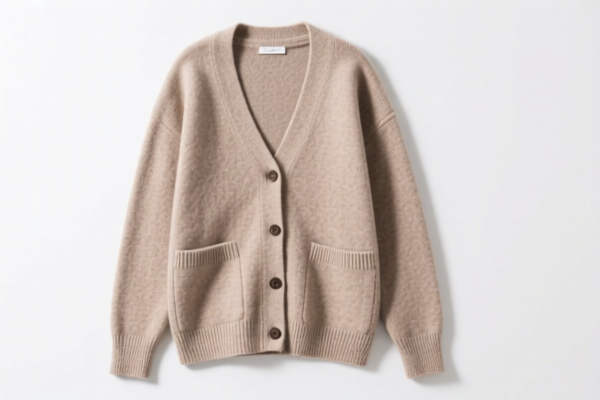
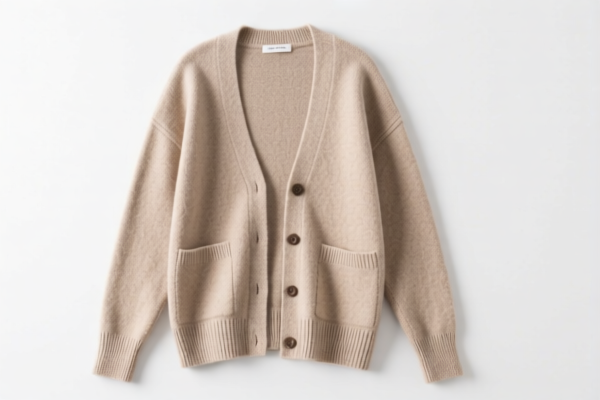
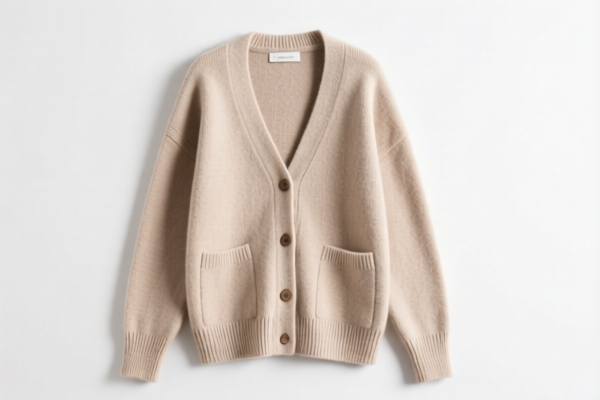
AI分析
🧥 Women's Cardigan Sweater (Knitted)
🌐 HS Code Reference & Customs Clearance Guide | 2026 Latest Tariff Analysis | Professional Clearance Strategy
📌 I. Product Definition & Classification: Are You Classifying "Cardigans" Correctly?
A Women's Cardigan Sweater is a knitted outer garment, typically open-front, fastened with buttons, zippers, or left unfastened. In international trade, the classification hinges on two critical factors: 1. Material Composition: Wool, Cotton, Synthetic Fibers, or Blends. 2. Structure & Use: Is it a simple sweater (knitted) or a coat? Is it an ensemble (set)?
⚠️ Key Classification Criteria:
- Knitted vs. Woven: Must be knitted (usually chapter 61).
- Material: Determines the specific subheading (00, 20, 23, 30).
- Gender: Explicitly "Women's" or "Girls'".
- Type: "Cardigan" implies an open front, distinguishing it from a pullover/sweater (though often grouped under "sweaters" in HS).
📦 II. HS Code Classification Details (2026 Latest Tariff Reference)
Based on the provided data, here are the potential HS Codes for Women's Knitted Cardigans. Note that Material is the primary driver for selection.
| HS Code | Product Description | Material Inference | Key Characteristics |
|---|---|---|---|
6104.23.00.40 |
Women's knitted cardigan | Non-Wool (Likely Synthetic or Blend) | Matches form/function. Specific non-wool category. |
6114.20.00.10 |
Women's knitted cardigan | Cotton or Fiber | Matches knitted form & women's top use. |
6114.30.10.20 |
Women's knitted cardigan | Synthetic Fiber | Matches women's & knitted form. Specific synthetic category. |
6103.29.20.74 |
Cardigan sweater | Non-Cotton, Non-Wool, Non-Silk | "Cardigan sweater". Excludes common natural fibers. |
6103.23.00.70 |
Cardigan sweater | Synthetic Fiber | Matches knitted sweater form. Specific synthetic category. |
🔍 Critical Note:
-6104vs.6103: Usually,6104is for women's coats, suit-type, or tailored knitwear, while6110is for sweaters, pullovers, cardigans. However, the provided data lists6104and6103codes for "cardigans/sweaters." Always verify if the item is considered a "suit-type" coat vs. a simple "sweater" in your local customs interpretation. The data provided uses these specific codes, so we will analyze them as given.
-6114is a "catch-all" for other knitted garments if the specific material codes (00, 20, 23, 30) don't fit perfectly, or for special fabrics.
💰 III. 2026 Latest Tariff Rate Breakdown (Including Additional Duties & Policies)
✅ Applicable Country: United States (US)
✅ Origin: China (CN)
✅ Effective Date: 2025/2026 (Current Trade War Context)
⚠️ Warning: All rates below include Section 301 (7.5%) and Section 122 (10%) additional duties.
🎯 1. 6104.23.00.40 — Women's Knitted Cardigan (Non-Wool)
| Item | Detail |
|---|---|
| Base Tariff | Variable ("The rate applicable to each garment...") |
| Additional Duty (301) | +7.5% |
| Section 122 Duty | +10% |
| Total Tax Estimate | Variable Base + 17.5% |
| Legal Basis | Section 301 + Section 122 |
📌 Explanation:
- The base rate is variable depending on the specific non-wool composition.
- Total Surcharge: 17.5% (7.5% Section 301 + 10% Section 122).
- High Risk: Section 122 applies to certain apparel imports from specific countries.
🎯 2. 6114.20.00.10 — Women's Knitted Cardigan (Cotton/Fiber)
| Item | Detail |
|---|---|
| Base Tariff | 10.8% |
| Additional Duty (301) | 0.0% |
| Section 122 Duty | +10% |
| Total Tax Rate | 20.8% |
| Legal Basis | Section 122 |
📌 Explanation:
- Lowest Additional Duty: No Section 301 tariff (0.0%) applies to this specific cotton/fiber code in this dataset.
- Total: 20.8% (10.8% Base + 10% Section 122).
- Advantage: This is the most tariff-efficient option IF the garment is indeed cotton/fiber.
🎯 3. 6114.30.10.20 — Women's Knitted Cardigan (Synthetic Fiber)
| Item | Detail |
|---|---|
| Base Tariff | 28.2% |
| Additional Duty (301) | +7.5% |
| Section 122 Duty | +10% |
| Total Tax Rate | 45.7% |
| Legal Basis | Section 301 + Section 122 |
📌 Explanation:
- Highest Total Rate: 45.7% is extremely high.
- Base Cost: High base tariff (28.2%) + 17.5% surcharges.
- Recommendation: Avoid this code if possible unless the product is strictly synthetic and no other classification applies.
🎯 4. 6103.29.20.74 — Cardigan Sweater (Non-Cotton/Wool/Silk)
| Item | Detail |
|---|---|
| Base Tariff | Variable ("The rate applicable to each garment...") |
| Additional Duty (301) | +7.5% |
| Section 122 Duty | +10% |
| Total Tax Estimate | Variable Base + 17.5% |
| Legal Basis | Section 301 + Section 122 |
📌 Explanation:
- Similar to6104.23.00.40. The base rate is variable.
- Total Surcharge: 17.5%.
- Applicable for materials other than cotton, wool, or silk (e.g., rayon, polyester blends).
🎯 5. 6103.23.00.70 — Cardigan Sweater (Synthetic Fiber)
| Item | Detail |
|---|---|
| Base Tariff | Variable ("The rate applicable to each garment...") |
| Additional Duty (301) | +7.5% |
| Section 122 Duty | +10% |
| Total Tax Estimate | Variable Base + 17.5% |
| Legal Basis | Section 301 + Section 122 |
📌 Explanation:
- Similar to6103.29.20.74.
- Total Surcharge: 17.5%.
- Specifically for synthetic fiber sweaters.
🛠️ IV. Customs Clearance Practical Advice (实战避坑指南)
✅ 1. Document Checklist (Essential for Clearance)
| Document | Required? | Purpose |
|---|---|---|
| ✅ Product Specification Sheet | ✔️ | Must detail: Material %, Construction (Knitted), Closure (Buttons/Zipper), Gender (Women's). |
| ✅ Material Test Report | ✔️ | CRITICAL: Proof of fiber content (e.g., 100% Cotton, 80% Polyester/20% Wool). Customs will verify if it matches the HS code (Cotton vs. Synthetic). |
| ✅ Commercial Invoice | ✔️ | Must clearly state "Women's Knitted Cardigan". Avoid vague terms like "Sweater Top". |
| ✅ Packing List | ✔️ | Details of quantity, weight, and packaging. |
| ✅ Photos of Garment | ✔️ | Show labels, tags, and overall structure (open front vs. pullover). |
| ✅ Section 122 Eligibility Check | ✔️ | Confirm if the product is subject to Section 122 (10% duty). Some exclusions may exist. |
✅ 2. Declaration Tips (Key Mnemonics)
🔥 "Material is King, Knitting is Queen, Section 122 is the Fee!"
| Scenario | Correct Declaration | Risk of Misclassification |
|---|---|---|
| 100% Cotton Cardigan | 6114.20.00.10 (20.8% Total) |
If misclassified as Synthetic (6114.30), rate jumps to 45.7%! |
| Synthetic Blend Cardigan | 6114.30.10.20 or 6103.23 (45.7% or Var+17.5%) |
High duty. Try to argue for a different classification if eligible. |
| "Cardigan" vs. "Sweater" | Specify "Open Front Cardigan" | If classified as a "Coat" (6104), base rate may differ. Ensure it's not a heavy winter coat. |
| Section 122 Exclusion | Check if product qualifies | Some apparel items may be excluded. If excluded, save 10% instantly. |
✅ 3. Special Considerations for Section 122 & 301
| Policy | Impact | Mitigation Strategy |
|---|---|---|
| Section 122 (10%) | Applies to most apparel from China. | Strategy: Check if any recent exclusions apply. Verify if the product is considered "footwear" or "accessory" (unlikely for cardigans). |
| Section 301 (7.5%) | Applies to most textile/apparel. | Strategy: Ensure accurate material declaration. Some specific synthetic fibers may have different rates, but generally, it applies. |
| De Minimis (Section 321) | ❌ NOT APPLICABLE | Textiles/Apparel from China are excluded from $800 de minimis duty-free entry into the US. Must file formal entry. |
🌍 V. Global Market Comparison (2026)
| Market | Recommended HS Code | Est. Total Duty (China Origin) | Notes |
|---|---|---|---|
| 🇺🇸 USA | 6114.20.00.10 (Cotton) |
20.8% | Best option if cotton. Synthetic is ~45.7%. |
| 🇨🇳 China | 6114.20.00.10 |
~5-10% | Lower import duty, but focus is on export from China. |
| 🇪🇺 EU | 6110.20.00.00 |
~12% | Different HS structure (Chapter 61, Heading 6110 for knitted sweaters). No Section 122/301. |
| 🇬🇧 UK | 6110.20.00.00 |
~12% | Post-Brexit tariffs apply. |
| 🇯🇵 Japan | 6110.20.00.00 |
~14% | JETRO guidelines apply. |
📌 Conclusion:
- The US market is the most challenging due to Section 301 and 122 tariffs.
- Cotton-based cardigans (6114.20.00.10) are the most tariff-efficient option in the US dataset provided.
- Synthetic fibers incur the highest burden (~45.7%).
📌 VI. Common Errors & Pitfalls (Lessons Learned)
❌ Error 1: Misdeclaring Material Composition
👉 Consequence: If you declare "Cotton" but it's 50% Polyester, Customs will reclassify to Synthetic (6114.30), triggering a 24.9% increase in duty (from 20.8% to 45.7%) + penalties.
❌ Error 2: Ignoring Section 122
👉 Consequence: Forgetting the 10% surcharge leads to underpayment, resulting in interest and fines.
❌ Error 3: Confusing "Cardigan" with "Coat"
👉 Consequence: Classifying a light cardigan as a "Coat" (6104) may lead to incorrect base rates. Ensure the garment matches the description (knitted, open front, not heavy outerwear).
❌ Error 4: Assuming De Minimis Exemption
👉 Consequence: Shipping small parcels via Section 321 (under $800) without paying duties will result in seizure or return, as textiles from China are excluded.
✅ Correct Approach:
"Women's Knitted Cardigan, 100% Cotton, Open Front, Button Closure, Model XYZ, Material Report Attached."
🎯 VII. Conclusion: Professional Declaration, Cost Control!
🎯 Key Takeaway:
🔹 "Cotton is King in the US: 20.8% vs. 45.7% for Synthetic!"
🔹 "Always include a Material Test Report to prove fiber content."
🔹 "Section 122 (10%) is unavoidable for most apparel from China."
📌 Pro Tip:
If your product is blended (e.g., 50% Cotton, 50% Polyester), the classification may vary by local customs interpretation. Consult a licensed customs broker to determine if it falls under the cotton heading (6114.20) or synthetic (6114.30). The difference is $2,000+ per $10,000 in value.
📣 Immediate Action:
📞 Contact a Customs Broker + Provide Material Test Report + Confirm HS Code with Section 122 Status
🚀 Optimize your supply chain by focusing on Cotton-based products to minimize US import duties.
✨ Accurate Classification Starts with Precise Materials!
💼 Your Profit Margin Depends on Your HS Code Choice!
用户评价
关于 HS 编码归类
协调制度(HS)是由世界海关组织(WCO)制定的国际贸易商品分类标准。全球 200 多个国家采用 HS 系统作为海关关税、贸易统计和进出口监管的基础。
每个 HS 编码遵循以下层级结构:
- 章(2 位)——商品大类(例如:第 84 章:机器和机械设备)
- 品目(4 位)——章内的更具体分类
- 子目(6 位)——国际通用细分,所有 WCO 成员国统一使用
- 本国细分(8-10 位)——各国自行扩展的细分编码,如美国 HTSUS 10 位编码
正确的 HS 编码归类对于顺利通关、准确缴纳关税和遵守贸易法规至关重要。错误归类可能导致海关延误、多缴关税或罚款。
从CN进口到US时,适用的关税税率可能包括:
- 最惠国(MFN)税率——适用于 WTO 成员国的标准关税税率
- 普通税率——适用于无贸易协定国家
- 贸易救济关税——附加关税,如 301 条款(反倾销)、232 条款(国家安全)或反补贴税
本页内容仅供参考。如需正式归类,请咨询当地海关或持牌报关代理。