Women's Leather Coat
CN → US| HS编码 | 关税税率 | 原产国 | 目的国 | 文档 |
|---|---|---|---|---|
| 4203104030 | 41.0% | CN | US | 官方文档 |
| 4203104060 | 41.0% | CN | US | 官方文档 |
| 4107117040 | 15.0% | CN | US | 官方文档 |
| 4107127040 | 15.0% | CN | US | 官方文档 |
商品图片
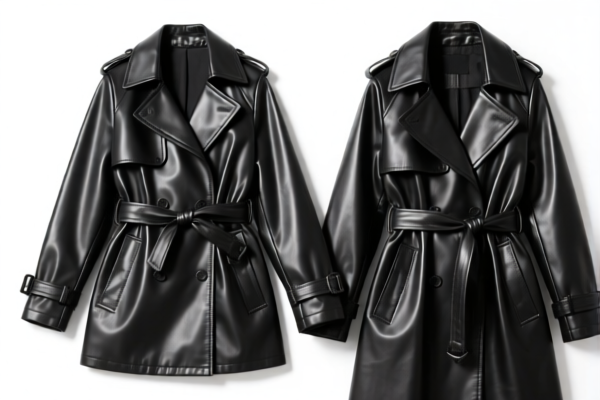



AI分析
👜 Women's Leather Coat (Outerwear)
🌐 HS Code Reference & Customs Clearance Guide | 2026 Latest Tariff Analysis | Professional Entry Strategies
📌 I. Product Definition & Classification: What Defines a "Leather Coat"?
A Women's Leather Coat is a garment made primarily of leather (tanned animal hide), designed specifically as outerwear. In international trade, the classification hinges on two critical factors: Material Composition and Garment Structure.
The key distinction lies between: 1. Finished Outerwear (Coats/Jackets): Finished garments with sleeves, closures, and lining, typically falling under Chapter 42 or 41 depending on specific national interpretations, but often treated as "Articles of Apparel" in broader tariff schedules. 2. Leather Clothing: General leather garments that may include coats but are distinguished by their specific heading under Chapter 41 (prepared leather) vs. Chapter 42 (articles of leather).
⚠️ Critical Classification Logic:
- If classified under Chapter 42 (4203.10): It is viewed as "Clothing Accessories or Apparel of Leather," often attracting higher "Section 301" or "122 Section" punitive tariffs.
- If classified under Chapter 41 (4107.1x): It is viewed as "Leather Clothing" derived directly from the hide classification, sometimes benefiting from lower base duties but still subject to specific trade remedies.
📦 II. HS Code Classification Details (2026 Latest Tariff Authority Comparison)
Based on the provided data, there are four possible classifications for Women's Leather Coats, split into two distinct tariff regimes.
| HS Code | Product Description | Classification Logic | Applicable Context |
|---|---|---|---|
4203.10.40.30 |
Leather Coat | Classified as "Leather Apparel" specifically for coats. Fits standard classification requirements for finished outerwear. | Standard Imported Coats |
4203.10.40.60 |
Leather Coat (Fallback) | Classified as "Leather Apparel" based on the "Other" fallback principle. Used when no more specific code exists. | Ambiguous/Custom Designs |
4107.11.70.40 |
Leather Clothing | Classified under Chapter 41 as "Leather Clothing." Focuses on the material (leather) and use (garment). | Lower Duty Regime |
4107.12.70.40 |
Leather Clothing (Definition) | Classified under Chapter 41, strictly adhering to the definition of "Leather Clothing" in the tariff schedule. | Strict Material Compliance |
🔍 Key Takeaway:
- Codes ending in .40.30/.60 (Chapter 42) carry a Total Tax of 41.0%.
- Codes ending in .70.40 (Chapter 41) carry a Total Tax of 15.0%.
- The difference is 26%, driven largely by the Additional Tariff (加征关税) component.
💰 III. 2026 Latest Tariff Rate Breakdown (Including Surtaxes & Policy Add-ons)
✅ Target Market: United States (US)
✅ Origin: China (CN)
✅ Valid From: Current Trade Policy Era
🎯 1. Chapter 42 Classification (4203.10.40.30 / 4203.10.40.60)
"High-Cost Importer Category"
| Item | Detail |
|---|---|
| Product Description | Leather Coat (Outerwear) |
| Base Duty (MFN) | 6.0% |
| Additional Surcharge (加征关税) | 25.0% |
| Section 122 Tariff (122条款关税) | 10.0% |
| Total Effective Tax Rate | 41.0% |
| Calculation Basis | CIF Value × 41% |
| De Minimis Exemption? | ❌ No (Strict enforcement on leather goods) |
| Legal Pathway | USMCA/Trade Act → Section 301 (25%) → Section 122 (10%) |
📌 Explanation:
- Base Duty (6%): Standard Most Favored Nation (MFN) rate for leather apparel.
- Additional Surcharge (25%): Applied under Section 301 of the Trade Act against Chinese goods.
- Section 122 Tariff (10%): A specific anti-dumping/countervailing measure or trade remedy applied to certain leather categories.
- Result: A 41% total tax burden significantly impacts profit margins.
🎯 2. Chapter 41 Classification (4107.11.70.40 / 4107.12.70.40)
"Low-Cost Importer Category"
| Item | Detail |
|---|---|
| Product Description | Leather Clothing (General) |
| Base Duty (MFN) | 5.0% |
| Additional Surcharge (加征关税) | 0.0% |
| Section 122 Tariff (122条款关税) | 10.0% |
| Total Effective Tax Rate | 15.0% |
| Calculation Basis | CIF Value × 15% |
| De Minimis Exemption? | ❌ No |
| Legal Pathway | HTSUS Chapter 41 → Section 122 (10%) |
📌 Explanation:
- Base Duty (5%): Slightly lower than Chapter 42.
- Additional Surcharge (0%): Crucially, the 25% Section 301 surcharge does NOT apply to these specific sub-headings under current interpretations.
- Section 122 Tariff (10%): Still applies, likely due to broader trade remedy measures on leather products.
- Result: A 15% total tax burden, saving 26% in taxes compared to Chapter 42 codes.
🛠️ IV. Customs Clearance Practical Advice (Real-World Pitfall Avoidance)
✅ 1. Documentation Checklist (Mandatory)
| Document | Required? | Purpose |
|---|---|---|
| ✅ Product Specification Sheet | ✔️ | Must detail: Material (e.g., "Goat Skin," "Cowhide"), Lining, Closure Type. |
| ✅ Composition Statement | ✔️ | Critical for distinguishing Chapter 41 vs. 42. Confirm % of leather vs. other materials. |
| ✅ Technical Diagrams | ✔️ | Shows structure (sleeves, collar, pockets) to prove it is an "Outerwear Coat." |
| ✅ Commercial Invoice | ✔️ | Must clearly state "Women's Leather Coat" and HS Code. |
| ✅ Origin Certificate | ✔️ | Essential to verify Chinese origin and apply (or avoid) surcharges. |
| ✅ Photos (Front/Back/Inside) | ✔️ | To verify no metal/plastic dominance that might shift classification. |
✅ 2. Classification Strategy: How to Choose?
🔥 "Strategic Classification Tip:
Not all leather coats are created equal in the eyes of Customs. The difference between 41% and 15% is massive."
| Scenario | Recommended HS Code | Tax Rate | Why? |
|---|---|---|---|
| Standard Retail Leather Coat | 4203.10.40.30 |
41% | If imported as "Apparel" under Chapter 42, this is the default. High risk. |
| Ambiguous/Custom Leather Coat | 4203.10.40.60 |
41% | Fallback code. Still hits the 25% surcharge. Avoid if possible. |
| Pure Leather Garment (High Content) | 4107.11.70.40 |
15% | Best Option. If the coat is defined as "Leather Clothing" under Chapter 41, it avoids the 25% surcharge. |
| Strictly Defined Leather Clothing | 4107.12.70.40 |
15% | Best Option. Use if the garment fits the precise legal definition of Chapter 41 clothing. |
📌 Warning:
- You cannot simply choose the 15% rate. You must justify the classification under Chapter 41 (4107) rather than Chapter 42 (4203).
- Chapter 41 generally applies to goods that are primarily leather and defined as clothing in a way that aligns with the specific notes of Chapter 41.
- Chapter 42 often applies to finished articles of leather where the leather is a component, or specific apparel categories listed in the 4203 heading.
✅ 3. Special Handling Tips
| Situation | Action Required |
|---|---|
| Mixed Material (e.g., Leather + Fabric Lining) | Provide detailed material breakdown. If leather >50% by weight, argue for Chapter 41. |
| Decorative Elements (Zippers, Buttons) | Ensure non-leather materials do not exceed 50% of total weight, or clarify they are minor accessories. |
| OEM/Contract Manufacturing | Provide the purchase order and design specs to prove the product meets the "Leather Clothing" definition. |
| Audits/Post-Clearance | Be prepared to show technical specifications proving the garment is "Clothing" (Chapter 41) and not just an "Article of Leather" (Chapter 42). |
🌍 V. Global Market Comparison (2026 Latest)
| Country/Region | Recommended HS Code | Total Tax Rate (China Origin) | Key Requirement |
|---|---|---|---|
| 🇺🇸 USA | 4107.11.70.40 |
15% | Must prove Chapter 41 eligibility to avoid 25% surcharge. |
| 🇺🇸 USA | 4203.10.40.30 |
41% | Default for many leather apparel imports. |
| 🇪🇺 EU | 4203.21.00 |
~4% + VAT | No Section 122 or 301 surcharges. |
| 🇨🇳 China | 4203.21.00 |
~5-10% | Import duty applies, no punitive surcharges. |
📌 Conclusion:
- USA is the only market with severe punitive tariffs (25% + 10%) on leather coats.
- Strategic classification under Chapter 41 (4107.11.70.40) can save 26% in taxes.
- European and Chinese markets have stable, lower tariffs.
📌 VI. Common Mistakes & Pitfalls (Lessons Learned)
❌ Mistake 1: Automatically using 4203.10.40.30 for all leather coats.
👉 Consequence: Paying 41% tax when 15% was available. Loss of Profit!
❌ Mistake 2: Classifying under 4107.11.70.40 without sufficient documentation.
👉 Consequence: Customs reclassifies to 4203, demands back taxes + penalties. Compliance Risk!
❌ Mistake 3: Ignoring the Section 122 Tariff (10%).
👉 Consequence: Even with Chapter 41, 10% still applies. Underestimating costs. Budget Overrun!
✅ Correct Approach:
"Leather Coat, Women's, 100% Goat Leather, Fully Lined. Classification: 4107.11.70.40 (Leather Clothing). Base Duty: 5%, Section 122: 10%. Total: 15%."
🎯 VII. Conclusion: Strategic Classification Saves Money!
🎯 Remember:
🔹 "Chapter 42 = 41% Tax (High Risk)"
🔹 "Chapter 41 = 15% Tax (Low Risk, High Savings)"
🔹 "Documentation is Key to Proving Chapter 41 Eligibility"
📌 Pro Tip:
If your leather coat is imported from Vietnam, Mexico, or Bangladesh, you may qualify for lower base duties and avoid Section 301 surcharges entirely. Always check Free Trade Agreement (FTA) eligibility.
📣 Immediate Action:
📞 Consult a Customs Broker: Verify if your specific leather coat design qualifies for
4107.11.70.40.
🚀 Optimize Your Supply Chain: Use the 15% rate classification to maintain competitive pricing in the US market.
✨ Professional Clearance Starts with Accurate Classification!
💼 Every Percentage Point Matters in Global Trade!
用户评价
关于 HS 编码归类
协调制度(HS)是由世界海关组织(WCO)制定的国际贸易商品分类标准。全球 200 多个国家采用 HS 系统作为海关关税、贸易统计和进出口监管的基础。
每个 HS 编码遵循以下层级结构:
- 章(2 位)——商品大类(例如:第 84 章:机器和机械设备)
- 品目(4 位)——章内的更具体分类
- 子目(6 位)——国际通用细分,所有 WCO 成员国统一使用
- 本国细分(8-10 位)——各国自行扩展的细分编码,如美国 HTSUS 10 位编码
正确的 HS 编码归类对于顺利通关、准确缴纳关税和遵守贸易法规至关重要。错误归类可能导致海关延误、多缴关税或罚款。
从CN进口到US时,适用的关税税率可能包括:
- 最惠国(MFN)税率——适用于 WTO 成员国的标准关税税率
- 普通税率——适用于无贸易协定国家
- 贸易救济关税——附加关税,如 301 条款(反倾销)、232 条款(国家安全)或反补贴税
本页内容仅供参考。如需正式归类,请咨询当地海关或持牌报关代理。