Women's Suit Vest
CN → US| HS编码 | 关税税率 | 原产国 | 目的国 | 文档 |
|---|---|---|---|---|
| 4203104095 | 41.0% | CN | US | 官方文档 |
| 6211492570 | 24.8% | CN | US | 官方文档 |
| 6114303070 | 32.4% | CN | US | 官方文档 |
| 6211431076 | 33.5% | CN | US | 官方文档 |
| 6211498070 | 24.8% | CN | US | 官方文档 |
商品图片


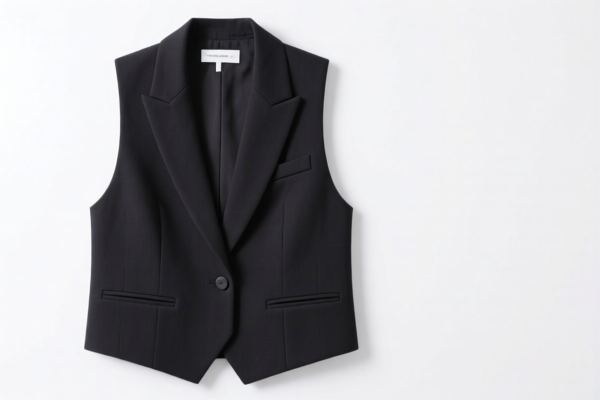
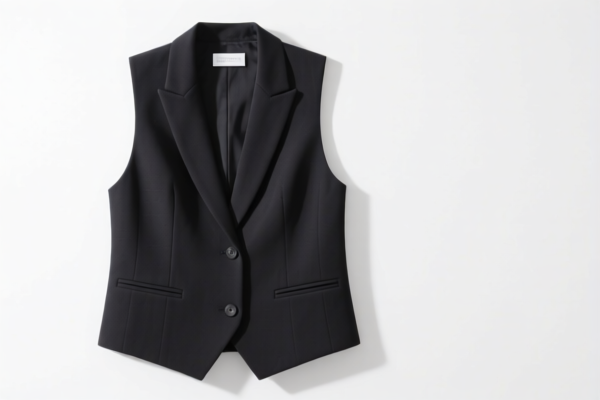
AI分析
👗 Women's Suit Vest (Synthetic Leather/Woven)
🌐 HS Code Reference & Customs Clearance Guide | 2026 Latest Tariff Analysis | Strategic通关 Strategy for Synthetic Leather Garments
📌 One: Product Definition & Classification: Do You Really Know "Women's Suit Vest"?
A Women's Suit Vest, specifically those made of synthetic leather (PU/PVC) or woven/knitted synthetic fabrics, sits at the intersection of apparel and accessories classification. In international trade, the classification depends heavily on: 1. Material Composition: Is it solid synthetic leather, woven fabric, or knitted fabric? 2. Construction Method: Is it woven (sewn) or knitted (looped)? 3. Usage: Is it part of a suit set or a standalone outerwear/innerwear item?
⚠️ Key Distinction Point:
- If it is Solid Synthetic Leather cut and sewn like a coat/vest → Often falls under Chapter 42 or Chapter 62 (depending on specific national interpretations of "leather" vs "textile"). - If it is Woven Textile (non-knitted) with synthetic lining or surface → Falls under Chapter 62. - If it is Knitted/Hooked synthetic fabric → Falls under Chapter 61.
📦 Two: Detailed HS Code Breakdown (Based on Provided Data)
| HS Code | Product Description | Classification Logic | Tax Rate (Total) |
|---|---|---|---|
4203.10.40.95 |
Women's Synthetic Leather Vest, "Other" Category | Material: Solid Synthetic Leather. Classified as Articles of Leather (Ch. 42) rather than Textile. | 41.0% |
6211.49.25.70 |
Women's Synthetic Leather Vest, Vest Category, Textile | Material: Synthetic Leather considered as "Other Textile Material". Form: Vest. | 24.8% |
6114.30.30.70 |
Women's Synthetic Leather Vest, Knitted/Hooked | Material: Artificial/Synthetic Fiber. Form: Knitted or Hooked Garment. | 32.4% |
6211.43.10.76 |
Women's Vest, Artificial Fiber/Other Category | Material: Synthetic Leather treated as Artificial Fiber/Other. Logic: Consistent with "Other" in "Artificial Fiber". | 33.5% |
6211.49.80.70 |
Vest, Vest Form, Other Textile Material | Material: Synthetic Leather categorized under "Other Textile Materials". | 24.8% |
🔍 Important Note:
- The classification varies significantly based on whether customs authorities view "synthetic leather" as a leather article (Ch. 42) or a textile article (Ch. 61/62). - Ch. 42 typically attracts higher duties due to "Section X" restrictions. - Ch. 62 (Woven) is generally preferred for lower base duties but is subject to Section 301 and IEEPA tariffs.
💰 Three: 2026 Latest Tariff Rate Breakdown (Including Additional Taxes)
✅ Applicable Country: United States (US)
✅ Origin: China (CN)
✅ Effective Date: Post-November 2025 (Post-IEEPA Implementation)
🎯 1. 4203.10.40.95 – Women's Artificial Leather Garments (Ch. 42)
| Item | Details |
|---|---|
| Base Tariff | 6.0% |
| Section 301 Additional Tariff | 25.0% |
| IEEPA Additional Tariff (Section 122) | 10.0% |
| Total Tariff Rate | 41.0% |
| Tax Calculation | CIF Value × 41.0% |
| De Minimis Eligibility | ❌ Not Eligible (Section 301/IEEPA goods excluded from $800 exemption) |
| Legal Basis Path | HTSUS:4203.10.40.95 → Section 301: Footnote 9903.88.03 → IEEPA:9903.01.25 |
📌 Explanation:
- Classifying under Chapter 42 triggers the 6% base duty. - Plus 25% Section 301 duty (on leather-like articles). - Plus 10% IEEPA surcharge. - Result: High total duty (41%). This is often the "default" for solid PU leather vests if not carefully argued as textile.
🎯 2. 6211.49.25.70 & 6211.49.80.70 – Woven Synthetic Leather Vests (Ch. 62)
| Item | Details |
|---|---|
| Base Tariff | 7.3% |
| Section 301 Additional Tariff | 7.5% |
| IEEPA Additional Tariff (Section 122) | 10.0% |
| Total Tariff Rate | 24.8% |
| Tax Calculation | CIF Value × 24.8% |
| De Minimis Eligibility | ❌ Not Eligible |
| Legal Basis Path | HTSUS:6211.49.25.70 → Section 301: Footnote 9903.88.03 → IEEPA:9903.01.25 |
📌 Explanation:
- This classification assumes the synthetic leather is treated as a woven textile. - Base duty is lower (7.3% vs 6.0%? Actually 7.3% vs 6.0% is slightly higher base, but Section 301 is much lower: 7.5% vs 25%). - Savings: Significant savings compared to Ch. 42 due to lower Section 301 rate (7.5% vs 25%). - Strategy: Argue that the product is a "Vest made of textile material" where the synthetic leather is just the outer surface fabric.
🎯 3. 6114.30.30.70 – Knitted Synthetic Leather Vest (Ch. 61)
| Item | Details |
|---|---|
| Base Tariff | 14.9% |
| Section 301 Additional Tariff | 7.5% |
| IEEPA Additional Tariff (Section 122) | 10.0% |
| Total Tariff Rate | 32.4% |
| Tax Calculation | CIF Value × 32.4% |
| De Minimis Eligibility | ❌ Not Eligible |
| Legal Basis Path | HTSUS:6114.30.30.70 → Section 301: Footnote 9903.88.03 → IEEPA:9903.01.25 |
📌 Explanation:
- If the vest is knitted (looped construction), it falls under Chapter 61. - Base duty is higher (14.9%), but Section 301 is lower (7.5%). - Total: 32.4%. Higher than the woven option (24.8%) but lower than Ch. 42 (41%).
🎯 4. 6211.43.10.76 – Women's Vest, Artificial Fiber, Other
| Item | Details |
|---|---|
| Base Tariff | 16.0% |
| Section 301 Additional Tariff | 7.5% |
| IEEPA Additional Tariff (Section 122) | 10.0% |
| Total Tariff Rate | 33.5% |
| Tax Calculation | CIF Value × 33.5% |
| De Minimis Eligibility | ❌ Not Eligible |
| Legal Basis Path | HTSUS:6211.43.10.76 → Section 301: Footnote 9903.88.03 → IEEPA:9903.01.25 |
📌 Explanation:
- This code is used when the vest is categorized under "Other" in the "Artificial Fiber" woven sub-category. - Higher base duty (16.0%) makes it less competitive than6211.49codes.
🛠️ Four: Customs Clearance Practical Advice (Real-World Pitfall Guide)
✅ 1. Preparation Checklist (Non-negotiable)
| Document | Required? | Description |
|---|---|---|
| ✅ Product Specification Sheet | ✔️ | Must detail: Material % (e.g., 100% Polyester with PU coating), Woven vs Knitted, Lining details. |
| ✅ Technical Diagram | ✔️ | Show stitching lines. If it's a simple vest, emphasize "Vest" not "Jacket". |
| ✅ Sample Photo | ✔️ | Front, back, and fabric close-up to prove texture (woven/knitted vs solid leather sheet). |
| ✅ Commercial Invoice | ✔️ | Clearly state: "Women's Synthetic Leather Vest, Woven/Knitted, HS Code: [Correct Code]". |
| ✅ Origin Certificate | ✔️ | Essential for proving CN origin to apply Section 301/IEEPA correctly. |
| ✅ Packaging List | ✔️ | Ensure items are packed as complete vests, not disassembled parts. |
✅ 2. Classification Strategy (Key Mantra)
🔥 "Woven Textile, Lower Duty! Knitted, Higher Base! Solid Leather, Highest Duty!"
| Scenario | Recommended HS Code | Why? |
|---|---|---|
| Synthetic Leather Vest, Woven Fabric Base | 6211.49.25.70 or 6211.49.80.70 |
Lowest Total Tax (24.8%). Treat synthetic leather as a textile fabric. |
| Synthetic Leather Vest, Knitted Fabric | 6114.30.30.70 |
Moderate Tax (32.4%). Must prove knitted construction. |
| Solid PU Leather Sheet Cut into Vest | 4203.10.40.95 |
Highest Tax (41.0%). Only use if no textile backing or if legally mandated as "Articles of Leather". |
| Other Synthetic Fiber Vest | 6211.43.10.76 |
Higher Tax (33.5%). Use only if it doesn't fit the "Other" textile categories. |
✅ 3. Special Cases & Handling
| Case | Handling Advice |
|---|---|
| Dual Material (Textile + Synthetic Leather) | If the main feature is the synthetic leather panel, customs may lean towards Ch. 42. Argue that the textile structure dominates to stay in Ch. 62. |
| Lined Vests | If lined with cotton, does it change classification? Usually no, the outer material dictates Chapter. |
| Samples vs Production | Ensure samples match production exactly. Discrepancies in material weight/thickness can lead to reclassification. |
| Section 122 (IEEPA) Impact | Remember, all these codes are subject to the 10% IEEPA surcharge. Do not assume "low duty" codes are exempt. |
🌍 Five: Global Market Comparison (2026 Update)
| Country/Region | Recommended HS Code | Tariff (China Origin) | Notes |
|---|---|---|---|
| 🇺🇸 USA | 6211.49.25.70 |
24.8% | Best option. Includes 7.5% Sec 301 + 10% IEEPA + 7.3% Base. |
| 🇺🇸 USA | 4203.10.40.95 |
41.0% | Avoid if possible. High Sec 301 (25%). |
| 🇪🇺 EU | 6211.43 |
~12% | No Section 301/IEEPA. Lower overall cost. |
| 🇨🇳 China | 6211.49 |
10-12% | Import duty into China. |
| 🇬🇧 UK | 6211.43 |
~12% | Post-Brexit tariff structure similar to EU. |
📌 Conclusion:
- USA Market is the most complex due to Section 301 and IEEPA. - Optimization Goal: Successfully classify under 6211.49 (Woven Textile) to save 16.2% compared to Ch. 42.
📌 Six: Common Mistakes & Pitfalls (Blood & Tears Lessons)
❌ Mistake 1: Calling it "Leather Jacket" when it's a Vest.
👉 Consequence: Misclassification, potential penalty, or forced reclassification to a higher duty code.
❌ Mistake 2: Ignoring "Knitted vs Woven".
👉 Consequence: If you declare 6211 (Woven) but the vest is knitted, customs will shift to 6114, applying different duty calculations and potentially delaying shipment.
❌ Mistake 3: Assuming Synthetic Leather is always Ch. 42.
👉 Consequence: Paying 41% instead of 24.8%. Always argue for Ch. 62 if the construction is textile-based.
❌ Mistake 4: Forgetting IEEPA Section 122.
👉 Consequence: Under-declaring taxes by 10%. All these codes are subject to the 10% surcharge.
✅ Correct Practice:
"Women's Synthetic Leather Vest, Woven Polyester with PU Coating, No Lining, Model XYZ, HS Code: 6211.49.25.70"
🎯 Seven: Conclusion: Precision Classification Saves Money!
🎯 Remember the Mantra:
🔹 "Woven Textile = 24.8% | Knitted = 32.4% | Solid Leather = 41.0%"
🔹 "Argue for Textile Structure to Avoid Ch. 42 Penalty!"
🔹 "IEEPA 10% is Universal for All!"
📌 Tips:
- If your vest has textile backing, explicitly state "Textile-based Construction" in documents.
- Consider Advance Ruling from US Customs if the product is high-volume.
- For Section 301 exclusions, check if synthetic leather vests are currently excluded (often they are not, but verify current lists).
📣 Immediate Action:
📞 Consult a licensed customs broker with fabric construction details.
🚀 Maximize Profit by Minimizing Duty Classifications!
✨ Professional Clearance Starts with Accurate Classification!
💼 Every Percent Saved is Pure Profit!
用户评价
关于 HS 编码归类
协调制度(HS)是由世界海关组织(WCO)制定的国际贸易商品分类标准。全球 200 多个国家采用 HS 系统作为海关关税、贸易统计和进出口监管的基础。
每个 HS 编码遵循以下层级结构:
- 章(2 位)——商品大类(例如:第 84 章:机器和机械设备)
- 品目(4 位)——章内的更具体分类
- 子目(6 位)——国际通用细分,所有 WCO 成员国统一使用
- 本国细分(8-10 位)——各国自行扩展的细分编码,如美国 HTSUS 10 位编码
正确的 HS 编码归类对于顺利通关、准确缴纳关税和遵守贸易法规至关重要。错误归类可能导致海关延误、多缴关税或罚款。
从CN进口到US时,适用的关税税率可能包括:
- 最惠国(MFN)税率——适用于 WTO 成员国的标准关税税率
- 普通税率——适用于无贸易协定国家
- 贸易救济关税——附加关税,如 301 条款(反倾销)、232 条款(国家安全)或反补贴税
本页内容仅供参考。如需正式归类,请咨询当地海关或持牌报关代理。