baby's socks
CN → US| HS编码 | 关税税率 | 原产国 | 目的国 | 文档 |
|---|---|---|---|---|
| 6111305050 | 26.0% | CN | US | 官方文档 |
| 6111206050 | 25.6% | CN | US | 官方文档 |
| 6115966010 | 36.3% | CN | US | 官方文档 |
| 6115940000 | 28.8% | CN | US | 官方文档 |
商品图片
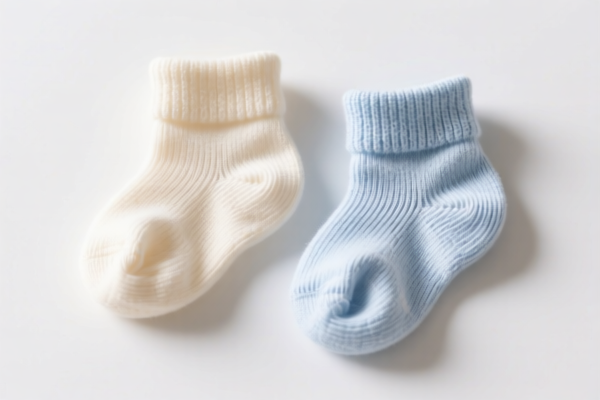
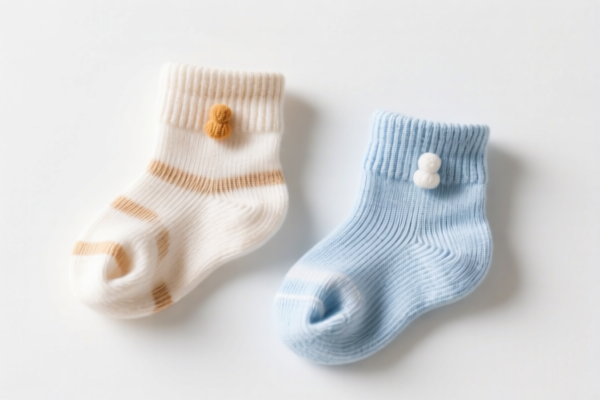
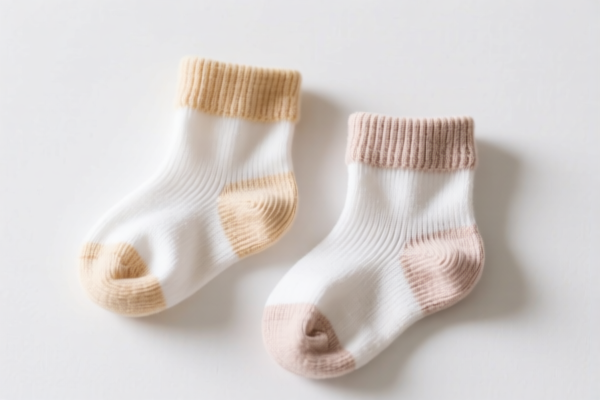

AI分析
🧦 Baby’s Socks: HS Code Classification & Customs Clearance Strategy
🌐 HS Code Reference & Customs Guide | 2026 Tariff Analysis | Professional Clearance Strategy
📌 Part 1: Product Definition & Classification Strategy
Baby socks are not a single standardized commodity in international trade; their classification depends entirely on material composition and product structure. Misclassification leads to significant tariff disparities.
In the context of US-China trade relations (2026), there are two distinct paths: 1. Knitted/Cuffed Socks (Baby Specific): Usually fall under Chapter 61 (Knitted), specifically subheading 6111. These are often softer, made of cotton or synthetic blends, and designed for infants. 2. General Hosiery (Socks): If the item is not explicitly "baby" size or style, or if it falls under different knitting techniques, it may be classified under Chapter 61 (Hosiery) subheadings 6115.
⚠️ Critical Distinction:
- 6111.20 / 6111.30: Specifically for infants. Material is either Cotton (20) or Synthetic Fibers (30).
- 6115.96 / 6115.94: General hosiery/socks classification. Used when "baby" designation is ambiguous or when the item is a general sock.
- Key Factor: Material (Cotton vs. Synthetic) and Knitting Type.
📦 Part 2: HS Code Breakdown & Tariff Detail (2026 US-China Trade)
Below is the precise mapping based on the provided data. All items are subject to Section 122 Tariffs (10%) and additional USITC/China-specific duties.
1. 🧶 Cotton Baby Socks (Knitted)
| HS Code | Product Description | Material | Total Tariff Rate | Tax Breakdown |
|---|---|---|---|---|
6111.20.60.50 |
Baby Socks, Knitted | Cotton | 25.6% | Base: 8.1% + Add'l: 7.5% + Sec 122: 10% |
Explanation:
- Base Duty (8.1%): Standard MFN rate for knitted cotton infant garments/hosiery.
- Add'l Duty (7.5%): Likely related to Section 301 or specific trade remedy duties on textile goods.
- Section 122 Duty (10%): A specific recent tariff applied to certain textile/apparel imports.
- Total: 8.1 + 7.5 + 10 = 25.6%.
2. 🧵 Synthetic Fiber Baby Socks (Knitted)
| HS Code | Product Description | Material | Total Tariff Rate | Tax Breakdown |
|---|---|---|---|---|
6111.30.50.50 |
Baby Socks, Knitted | Synthetic Fibers | 26.0% | Base: 16.0% + Add'l: 0.0% + Sec 122: 10% |
Explanation:
- Base Duty (16.0%): Higher base rate for synthetic infant hosiery compared to cotton.
- Add'l Duty (0.0%): No additional Section 301/Remedy duty applies specifically to this sub-heading in this dataset.
- Section 122 Duty (10%): Still applies.
- Total: 16.0 + 0 + 10 = 26.0%.
3. 👟 General Socks (Unspecified Material, No Conflict) - Type A
| HS Code | Product Description | Material | Total Tariff Rate | Tax Breakdown |
|---|---|---|---|---|
6115.96.60.10 |
Socks, Unspecified Material | Mixed/Other | 36.3% | Base: 18.8% + Add'l: 7.5% + Sec 122: 10% |
Explanation:
- Base Duty (18.8%): Higher base rate for general hosiery (6115 series) compared to baby-specific (6111).
- Add'l Duty (7.5%): Applies here, unlike the synthetic baby sock.
- Section 122 Duty (10%): Applies.
- Total: 18.8 + 7.5 + 10 = 36.3%.
- Risk: This is the highest tax bracket. Avoid using this code for baby socks if a 6111 code is applicable.
4. 👟 General Socks (Unspecified Material, No Conflict) - Type B
| HS Code | Product Description | Material | Total Tariff Rate | Tax Breakdown |
|---|---|---|---|---|
6115.94.00.00 |
Socks, Unspecified Material | Mixed/Other | 28.8% | Base: 11.3% + Add'l: 7.5% + Sec 122: 10% |
Explanation:
- Base Duty (11.3%): Lower base rate than Type A, but still higher than baby-specific codes.
- Add'l Duty (7.5%): Applies.
- Section 122 Duty (10%): Applies.
- Total: 11.3 + 7.5 + 10 = 28.8%.
💰 Part 3: Tariff Clause Detailed Analysis
🔑 Key Tariff Components Explained
-
Base Tariff (MFN Rate):
- Determined by the Harmonized Tariff Schedule (HTSUS).
- 6111 (Infants) generally has lower base rates than 6115 (Hosiery) to encourage import of baby care items.
- Cotton (
6111.20) has a lower base (8.1%) than Synthetic (6111.30) at 16.0%.
-
Add'l Duty (7.5%):
- This appears to be a Section 301 or similar trade remedy duty applied to Chinese textiles.
- Crucial Note: It applies to
6111.20,6115.96, and6115.94, but NOT to6111.30. This makes synthetic baby socks slightly more competitive than cotton baby socks in terms of add'l duty, though the base rate is higher.
-
Section 122 Tariff (10%):
- A flat 10% ad valorem duty applied to ALL four HS codes listed.
- This is a new/policy-specific levy, likely related to recent trade enforcement or specific category quotas.
- Impact: Increases the cost burden across the board by 10 percentage points.
🛠️ Part 4: Customs Clearance Practical Advice
✅ 1. Documentation Requirements
To ensure smooth clearance and accurate classification, provide:
- Product Description: Must explicitly state "Baby Socks" if claiming 6111 codes.
- Material Composition: Clearly declare % of Cotton vs. Synthetic Fiber.
- Age Range: Specify intended age group (e.g., "0-12 months").
- Construction: "Knitted" is mandatory for Chapter 61. If woven, they fall under Chapter 62 (higher tariffs).
- Labeling: Ensure physical labels on socks state material content and country of origin.
✅ 2. Classification Strategy & Cost Optimization
| Scenario | Recommended HS Code | Total Tariff | Why? |
|---|---|---|---|
| Pure Cotton Baby Socks | 6111.20.60.50 |
25.6% | Lowest total duty. Best for 100% cotton items. |
| Polyester/Acrylic Baby Socks | 6111.30.50.50 |
26.0% | Slightly higher than cotton, but avoids the 7.5% add'l duty. Good if cotton is scarce/expensive. |
| General "Socks" (Not explicitly Baby) | 6115.94.00.00 |
28.8% | Use only if product is not clearly infant-sized. Avoid if possible due to higher tax than baby codes. |
| Mixed Material/Unknown | 6115.96.60.10 |
36.3% | AVOID. Highest tax. Only use if no other classification fits. |
📌 Pro Tip:
If your product is 100% Cotton, choose6111.20.60.50(25.6%).
If your product is 100% Synthetic, choose6111.30.50.50(26.0%).
Difference: Only 0.4% difference in total tax, but6111.30saves the 7.5% add'l duty, while6111.20saves on base duty. Choose based on which duty component is more volatile or subject to change.
✅ 3. Common Pitfalls & Avoidance
-
❌ Mistake: Classifying baby socks as
6115(General Hosiery) without justification.
👉 Result: Higher tariffs (28.8% - 36.3%).
👉 Fix: Prove they are for infants (size, packaging, marketing). -
❌ Mistake: Misdeclaring material (e.g., claiming 100% cotton when it's 80% cotton/20% polyester).
👉 Result: Customs audit, penalties, retroactive duties.
👉 Fix: Provide lab test reports for material composition. -
❌ Mistake: Ignoring Section 122 Tariff.
👉 Result: Underpayment of 10%.
👉 Fix: Always include 10% in cost calculations for all four codes. -
❌ Mistake: Assuming "Socks" means "Hosiery" (
6115).
👉 Result: Classification error.
👉 Fix: Use Chapter 61, Heading 6111 for infants. Chapter 61, Heading 6115 for older children/adults.
🌍 Part 5: Global Market Comparison (2026)
| Market | Recommended HS Code (Baby) | Est. Total Duty | Notes |
|---|---|---|---|
| 🇺🇸 USA | 6111.20.60.50 (Cotton) |
25.6% | High due to Sec 122 + Add'l duties. |
| 🇺🇸 USA | 6111.30.50.50 (Synth) |
26.0% | Slightly higher, but no add'l duty. |
| 🇪🇺 EU | 6111.30.00.00 |
~9-10% | Lower base rates, no Section 122 equivalent. |
| 🇨🇳 China | 6111.30.00.00 |
~10-15% | Varies by trade agreement. |
| 🇬🇧 UK | 6111.30.00.00 |
~10-12% | Post-Brexit tariffs. |
📌 Conclusion:
The US market is the most challenging due to the Section 122 (10%) and Add'l (7.5%) duties.
For US exports, Cotton Baby Socks (6111.20.60.50) offer the lowest total tariff (25.6%).
Always verify material composition to avoid misclassification penalties.
📌 Part 6: Final Checklist for Clearance
- Confirm Material: Is it 100% Cotton? →
6111.20.60.50. Is it Synthetic? →6111.30.50.50. - Confirm Audience: Are they for babies? → Yes, use
6111. No, use6115(Higher Tax). - Check Packaging: Does packaging say "Baby"? → Helps justify
6111. - Calculate Landed Cost: Include CIF + 25.6% (Cotton) or 26.0% (Synthetic).
- Document: Keep lab reports, product specs, and invoice descriptions clear.
🎯 Conclusion: Smart Sourcing, Smarter Classification
🎯 Remember the Rule:
"Baby + Cotton = 25.6% | Baby + Synthetic = 26.0% | General Socks = 28.8%-36.3%"
🚀 Action Plan:
- Label Clearly: "Baby Socks, 100% Cotton".
- Use Correct HS:
6111.20.60.50.- Budget for Tariffs: Plan for ~25.6% duty.
- Avoid General Codes: Don't use
6115unless necessary.
✨ Professional Clearance Starts with Precise Classification!
💼 Your Profit Margin Depends on Accurate HS Codes!
用户评价
关于 HS 编码归类
协调制度(HS)是由世界海关组织(WCO)制定的国际贸易商品分类标准。全球 200 多个国家采用 HS 系统作为海关关税、贸易统计和进出口监管的基础。
每个 HS 编码遵循以下层级结构:
- 章(2 位)——商品大类(例如:第 84 章:机器和机械设备)
- 品目(4 位)——章内的更具体分类
- 子目(6 位)——国际通用细分,所有 WCO 成员国统一使用
- 本国细分(8-10 位)——各国自行扩展的细分编码,如美国 HTSUS 10 位编码
正确的 HS 编码归类对于顺利通关、准确缴纳关税和遵守贸易法规至关重要。错误归类可能导致海关延误、多缴关税或罚款。
从CN进口到US时,适用的关税税率可能包括:
- 最惠国(MFN)税率——适用于 WTO 成员国的标准关税税率
- 普通税率——适用于无贸易协定国家
- 贸易救济关税——附加关税,如 301 条款(反倾销)、232 条款(国家安全)或反补贴税
本页内容仅供参考。如需正式归类,请咨询当地海关或持牌报关代理。