baking paper for baking
CN → US| HS编码 | 关税税率 | 原产国 | 目的国 | 文档 |
|---|---|---|---|---|
| 4806100000 | 35.0% | CN | US | 官方文档 |
| 4806200000 | 10.0% | CN | US | 官方文档 |
| 4823908000 | 35.0% | CN | US | 官方文档 |
| 4823908680 | 35.0% | CN | US | 官方文档 |
| 4811596000 | 35.0% | CN | US | 官方文档 |
商品图片
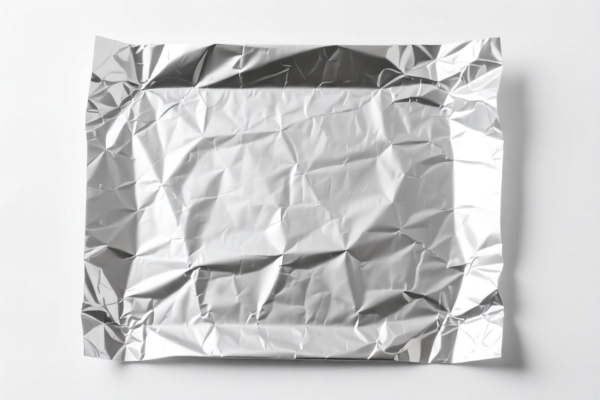
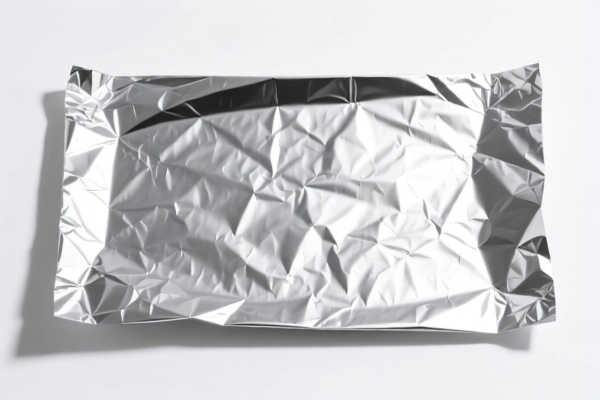
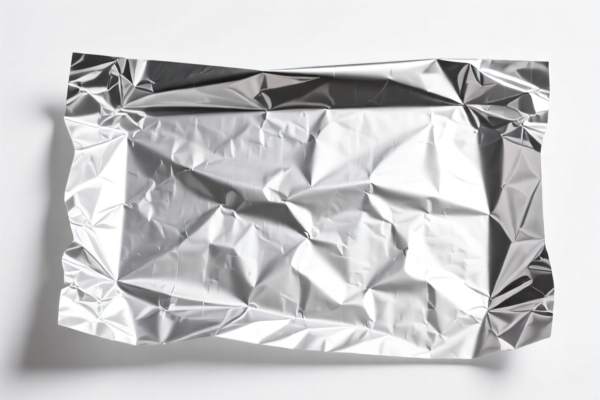
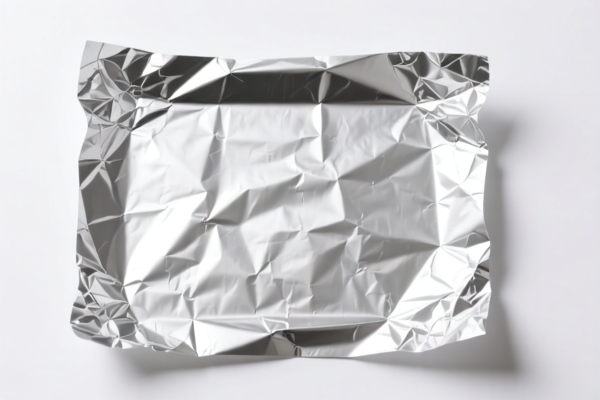
AI分析
🧁 Baking Paper (Parchment Paper) – Customs Classification & Tariff Guide
[2026 Latest HS Code Analysis | US Import Strategy | Tariff Breakdown]
🌐 HS Code Reference & Clearance Guide | 2026 Latest Tariff Analysis | Professional Customs Strategy
📌 Product: Baking Paper for Baking
Material: Paper / Cellulose
Key Feature: Heat-resistant, grease-proof, non-stick coating
In international trade, "Baking Paper" is often misunderstood as a simple consumer good. However, its chemical treatment (silicone/oil resistance) and physical form (rolls, sheets, die-cut) dictate different HS Codes under the Harmonized System. The most critical factor for US imports is the Section 301 / IEEPA surtaxes, which can drastically increase costs depending on the subheading.
📦 Part 1: HS Code Classification & Rationale
Why is it classified this way? Based on the provided data.
1️⃣ 4806.10.00.00 – Greaseproof Paper
- Summary: Baking paper, material is paper, baking use conforms to paper processing forms.
- Rationale: This code typically covers greaseproof paper (often silicone-treated). If the paper is primarily defined by its oil/grease resistance and comes in rolls or simple sheets without complex die-cutting for specific non-standard shapes, it falls here. It is the "standard" classification for high-quality silicone parchment paper rolls.
- Key Identifier: Functional feature = Greaseproofing/Heat resistance; Form = Paper/Rolls.
2️⃣ 4806.20.00.00 – Parchment Paper
- Summary: Baking paper, material is paper, baking use conforms to anti-oil paper functional characteristics.
- Rationale: This is the specific classification for Parchment Paper (chemically treated paper). Unlike greaseproof paper (4806.10), this refers to paper that has undergone sulfuric acid treatment or specific chemical processes to achieve high heat resistance and non-stick properties. If your product is marketed explicitly as "Parchment Paper" with certified heat resistance, this is the precise fit.
- Key Identifier: Functional feature = Anti-oil/Non-stick via chemical treatment; Form = Paper.
3️⃣ 4823.90.80.00 – Cut Paper & Cellulose Products
- Summary: Baking paper, material is paper/cellulose, form is gaskets/pads.
- Rationale: If the baking paper is cut into specific shapes (e.g., muffin liners, cupcake cases, or irregular shapes) and not just rolls or rectangular sheets, it may be classified as "cut paper articles." This is often used for paper baking cups/molds rather than sheet baking paper.
- Key Identifier: Form = Cut/Gasket/Pad; Usage = Specific baking molds.
4️⃣ 4823.90.86.80 – Die-Cut Paper Products
- Summary: Baking paper, material is cellulose/paper, form is die-cut paper products.
- Rationale: Similar to 4823.90.80.00, but specifically for die-cut items. If your baking paper is precision-cut into custom shapes (e.g., specific brand logos or unique baking mats), this code applies. It emphasizes the manufacturing process (die-cutting) over the material property.
- Key Identifier: Manufacturing Process = Die-cut; Material = Cellulose/Paper.
5️⃣ 4811.59.60.00 – Coated Paper Products
- Summary: Baking paper, material is paper, form is sheet-shaped coated paper products.
- Rationale: This code covers coated paper that does not fall under other specific headings. If the baking paper is a sheet (not roll) that has been coated (e.g., silicone coating) and does not meet the specific definition of "parchment" (4806.20), it may fall here. It is a broader category for coated paper sheets.
- Key Identifier: Form = Coated Sheet; Material = Paper.
6️⃣ 4811.51.60.00 – Coated Paperboard
- Summary: Baking paper, material is paper/board, baking use involves coating treatment.
- Rationale: If the "baking paper" is actually made from paperboard (thicker, stiffer) rather than standard paper, and is coated for baking (e.g., baking mats, reusable baking sheets), this code applies. It distinguishes by substrate thickness/stiffness.
- Key Identifier: Substrate = Paperboard (not thin paper); Treatment = Coating.
💰 Part 2: 2026 US Tariff Rate Breakdown
✅ Applicable Country: United States (US)
✅ Origin: China (CN)
✅ Effective Date: 2025/2026 (Current Policy)
🎯 1. High Tariff Codes: 4806.10, 4823.90.80, 4823.90.86.80, 4811.59.60, 4811.51.60
(Total Tax: 35.0%)
| Item | Details |
|---|---|
| Base Tariff | 0.0% (General Ad Valorem) |
| Section 301 Surcharge | +25.0% (USITC Footnote: 9903.88.01 / 301 Action) |
| IEEPA Surcharge | +10.0% (Bipartisan Safer Communities Act / IEEPA: 9903.01.25) |
| Total Effective Rate | 35.0% |
| Calculation | CIF Value × 35% |
| De Minimis Eligibility | ❌ NO (Deny De Minimis for Section 301 Goods) |
| Legal Path | IEEPA:9903.01.25 → USITC:4806.10.00.00 → FOOTNOTE:9903.88.01 |
📌 Explanation:
- 25% Section 301: Applies to most Chinese-origin paper products.
- 10% IEEPA: Newer surcharge on Chinese goods.
- Result: 35% total duty. This is a high-cost item for importers.
- Risk: Customs will aggressively audit if misclassified to avoid these taxes.
🎯 2. Low Tariff Code: 4806.20.00.00 (Parchment Paper)
(Total Tax: 10.0%)
| Item | Details |
|---|---|
| Base Tariff | 0.0% |
| Section 301 Surcharge | 0.0% (Exempt or not applicable to this specific subheading) |
| IEEPA Surcharge | +10.0% (Bipartisan Safer Communities Act / IEEPA: 9903.01.25) |
| Total Effective Rate | 10.0% |
| Calculation | CIF Value × 10% |
| De Minimis Eligibility | ❌ NO (Due to IEEPA 10%) |
| Legal Path | IEEPA:9903.01.25 → USITC:4806.20.00.00 |
📌 Explanation:
- Crucial Distinction: Parchment Paper (4806.20) is treated differently than Greaseproof Paper (4806.10).
- Savings: Only 10% vs 35%. This is a 25% tariff difference.
- Condition: Must be true Parchment (chemically treated), not just silicone-coated greaseproof paper. Misclassification here can lead to penalties + back duties.
🛠️ Part 3: Clearance & Practical Advice
✅ 1. Critical Documentation Checklist
To ensure smooth clearance and correct classification, provide:
| Document | Requirement | Why? |
|---|---|---|
| Product Specification Sheet | ✔️ Mandatory | Must explicitly state: "Parchment Paper" (for 4806.20) vs. "Greaseproof Paper" (for 4806.10). Include chemical treatment details. |
| Material Composition | ✔️ Mandatory | Confirm: Paper vs. Paperboard. If >150gsm, it may be paperboard (4811.51.60). |
| Photos of Product & Packaging | ✔️ Mandatory | Show rolls, sheets, or die-cut shapes. Visual proof of form factor. |
| Technical Data Sheet (TDS) | ✔️ Recommended | Prove heat resistance, silicone coating weight, and FDA/EFSA food safety compliance. |
| Commercial Invoice | ✔️ Mandatory | Clearly describe goods: "Parchment Paper, Chemical Process, Heat Resistant, for Baking." Avoid vague terms like "Baking Paper" alone. |
| Certificate of Origin | ✔️ Mandatory | To prove CN origin and apply correct surtaxes. |
✅ 2. Classification Strategy: How to Save Money
🔥 "Know the Difference: Parchment vs. Greaseproof"
| Scenario | Correct HS Code | Tariff | Strategy |
|---|---|---|---|
| True Parchment (Chemically treated, high heat resistance) | 4806.20.00.00 |
10% | BEST OPTION. Ensure product description matches "Parchment" (not just "greaseproof"). |
| Greaseproof/Silicone-Coated Rolls | 4806.10.00.00 |
35% | Acceptable if product is silicone-coated but not chemically "parchment." |
| Cut Muffin Liners/Cups | 4823.90.80.00 |
35% | High tax. Consider if design allows for "Parchment" classification if reusable mats. |
| Paperboard Baking Mats | 4811.51.60.00 |
35% | High tax. Only if substrate is thick paperboard. |
| Coated Sheets (Non-Parchment) | 4811.59.60.00 |
35% | High tax. Use only if cannot qualify as parchment. |
⚠️ Warning:
- Do NOT mislabel greaseproof paper as parchment to save 25%. US Customs (CBP) performs audits and can demand back taxes + penalties.
- Ensure your product label and technical specs align with the chosen HS Code.
✅ 3. Special Cases & Tips
| Situation | Advice |
|---|---|
| OE/ODM Custom Shapes | If die-cut, use 4823.90.86.80. Ensure specs show "die-cut process." |
| Reusable Baking Mats | If made of silicone-coated fiberglass (not paper), it may fall under 3926.90 (Plastics), which has different tariffs. Not covered in this data. |
| De Minimis (Section 321) | ❌ No De Minimis for Chinese-origin baking paper due to IEEPA 10% and Section 301 25%. All shipments subject to duty. |
| Pre-Ruling | ✅ Highly Recommended. Apply for US CBP Advance Ruling to lock in the 10% rate if you qualify as Parchment. |
🌍 Part 4: Global Market Comparison (2026)
| Market | HS Code | Tariff (China Origin) | Notes |
|---|---|---|---|
| 🇺🇸 USA | 4806.20.00.00 |
10% | Best rate. Must be true parchment. |
| 🇺🇸 USA | 4806.10.00.00 |
35% | Higher rate. Greaseproof/silicone-coated. |
| 🇪🇺 EU | 4806.10/4806.20 | 0% - 5% | No Section 301. Standard MFN rates apply. |
| 🇨🇳 China | 4806.10/4806.20 | 0% - 5% | Import duty low. VAT 13%. |
| 🇬🇧 UK | 4806.10/4806.20 | 0% - 5% | Post-Brexit MFN rates. No US-style surtaxes. |
📌 Key Insight:
- USA is the most expensive market due to Section 301 + IEEPA.
- EU/UK offer significantly lower duties. If possible, consider transshipment or sourcing from non-CN origins (e.g., Vietnam, Thailand) for US market to avoid surtaxes (if applicable rules are met).
📌 Part 5: Common Errors & Pitfalls
❌ Error 1: Calling all "Baking Paper" Parchment
👉 Consequence: CBP may reclassify as Greaseproof (4806.10.00.00) → Back tax + 25% penalty.
👉 Fix: Provide TDS proving chemical parchment process.
❌ Error 2: Ignoring Paperboard vs. Paper
👉 Consequence: Misclassified as paper (4806) when it's paperboard (4811).
👉 Fix: Check weight (gsm). If >150gsm, consider 4811.51.60.00.
❌ Error 3: Using De Minimis for US shipments
👉 Consequence: Shipment seized or delayed. IEEPA 10% applies to all Chinese-origin goods, regardless of value.
👉 Fix: Declare all shipments. Budget for 10-35% duty.
✅ Best Practice:
"Describe Precisely: 'Chemically Treated Parchment Paper, Heat Resistant, Food Grade, Rolls'"
This aligns with 4806.20.00.00 and secures the 10% rate.
🎯 Conclusion: Optimize Your Classification
🎯 Key Takeaway:
🔹 Parchment Paper (4806.20.00.00) = 10% Tariff
🔹 Greaseproof/Cut/Coated (4806.10/4823/4811) = 35% Tariff
🔹 Savings: 25% on CIF Value!
📌 Action Plan:
1. Audit your product specs: Is it true Parchment?
2. Update product descriptions: Use "Parchment Paper" if chemically treated.
3. Apply for CBP Ruling: Lock in the 10% rate.
4. Prepare Docs: TDS, Photos, Invoice with precise description.
📣 Immediate Action Required:
📞 Contact Customs Broker to verify if your product qualifies for
4806.20.00.00.
🚀 Avoid 35% tax by correct classification. Save 25%!
✨ Precision in Classification = Profit in Profit Margin!
💼 Your Bottom Line Depends on the First 6 Digits of HS Code!
用户评价
关于 HS 编码归类
协调制度(HS)是由世界海关组织(WCO)制定的国际贸易商品分类标准。全球 200 多个国家采用 HS 系统作为海关关税、贸易统计和进出口监管的基础。
每个 HS 编码遵循以下层级结构:
- 章(2 位)——商品大类(例如:第 84 章:机器和机械设备)
- 品目(4 位)——章内的更具体分类
- 子目(6 位)——国际通用细分,所有 WCO 成员国统一使用
- 本国细分(8-10 位)——各国自行扩展的细分编码,如美国 HTSUS 10 位编码
正确的 HS 编码归类对于顺利通关、准确缴纳关税和遵守贸易法规至关重要。错误归类可能导致海关延误、多缴关税或罚款。
从CN进口到US时,适用的关税税率可能包括:
- 最惠国(MFN)税率——适用于 WTO 成员国的标准关税税率
- 普通税率——适用于无贸易协定国家
- 贸易救济关税——附加关税,如 301 条款(反倾销)、232 条款(国家安全)或反补贴税
本页内容仅供参考。如需正式归类,请咨询当地海关或持牌报关代理。