bluetooth receiver
CN → US| HS编码 | 关税税率 | 原产国 | 目的国 | 文档 |
|---|---|---|---|---|
| 8518402000 | 35.0% | CN | US | 官方文档 |
| 8518500000 | 35.0% | CN | US | 官方文档 |
| 8517620090 | 35.0% | CN | US | 官方文档 |
| 8517690000 | 35.0% | CN | US | 官方文档 |
| 8527195025 | 10.0% | CN | US | 官方文档 |
商品图片
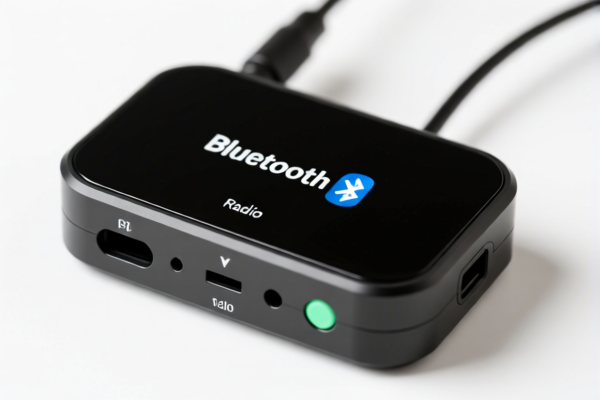
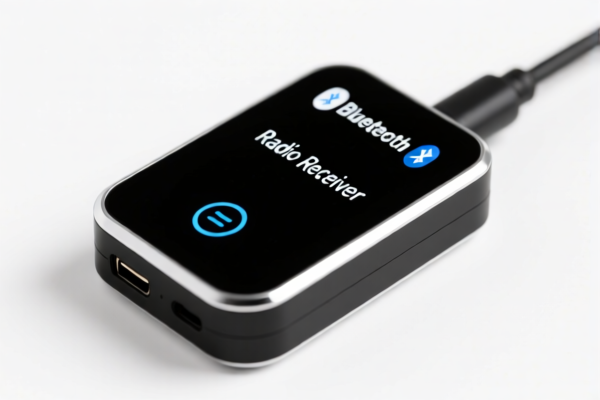
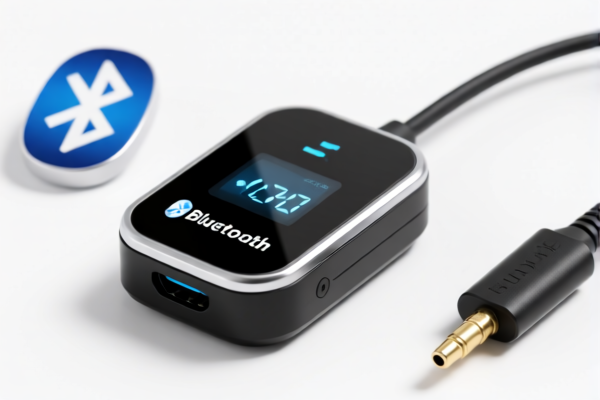
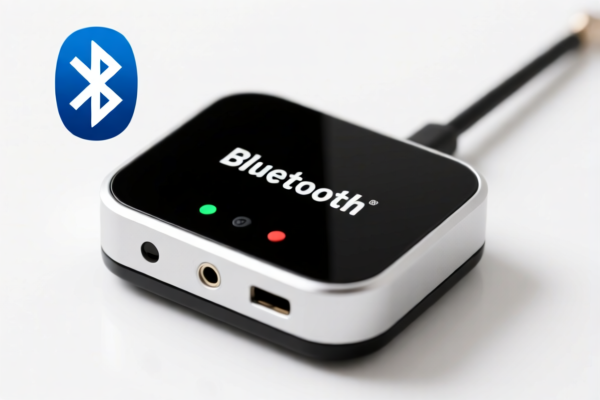
AI分析
🎧 Bluetooth Receiver (Audio Receivers)
🌐 HS Code Reference & Customs Clearance Guide | 2026 Latest Tariff Analysis | Professional-Level Clearance Strategy
📌 1. Product Definition & Classification: Do You Really Understand "Bluetooth Receivers"?
Bluetooth Receivers are audio signal processing devices designed to receive wireless audio signals (typically from smartphones, tablets, or computers) and output them to speakers or headphones. In international trade, their classification depends heavily on whether they are considered audio processing equipment or communication devices.
⚠️ Key Distinction:
- If the device is primarily an audio signal processor/amplifier (converting digital wireless signals to analog audio) → Likely falls under Chapter 85.18 (Audio Equipment).
- If the device is primarily a data/voice communication receiver (interpreting Bluetooth as a data transmission protocol) → Likely falls under Chapter 85.17 (Communication Equipment).
- Rarely, if it fits specific broadcast definitions without external power constraints → Chapter 85.27 (Radio Receivers).
📦 2. HS Code Classification Details (2026 Latest Tariff Authority Comparison)
Based on the provided data, here are the four potential HS Codes with their justification and tax implications:
| HS Code | Product Description | Justification from Data | Total Tax Rate |
|---|---|---|---|
8518.40.20.00 |
Audio Receivers (Signal Processing) | Functionally belongs to audio signal processing equipment; matches category of audio power amplifiers. No material conflict. | 35.0% |
8518.50.00.00 |
Sound Amplifiers & Components | Usage falls under audio signal processing; consistent with logic of electric sound amplifiers and related audio components. No material/form conflict. | 35.0% |
8517.62.00.90 |
Data Transmission Receivers | "Audio Receivers" match the usage description of "receiving voice, image, or other data". As electronic equipment, material attributes conflict with no communication device attributes. | 35.0% |
8517.69.00.00 |
Other Transmission/Reception Equipment | Classified as "other" fallback category. Matches definition of "devices for transmission/reception of voice, image, or other data". No material conflict. | 35.0% |
8527.19.50.25 |
Other Radio Receivers | Matches usage category of "broadcast receiving equipment". Since it’s an "other" category and no obvious conflict with "devices not requiring external power" is found, it is deemed possibly compliant via reasonable inference. | 10.0% |
🔍 Critical Insight:
- The majority of classifications (8518.40, 8518.50, 8517.62, 8517.69) carry a 35% total tax rate.
- Only8527.19.50.25offers a significantly lower 10% rate, but it is marked as "possibly compliant" due to its "broadcast" definition, which may not accurately describe all Bluetooth receivers (which are point-to-point, not broadcast).
- Risk Warning: Misclassification as8527when it should be8518/8517can lead to severe underpayment penalties.
💰 3. Detailed Tariff Breakdown for 2026 (Including Surtaxes & Policy Add-ons)
✅ Applicable Country: United States (US)
✅ Origin: China (CN)
✅ Effective Date: From November 10, 2025 (including subsequent imports)
🎯 Scenario A: High-Tax Classifications (8518.40, 8518.50, 8517.62, 8517.69)
HS Codes: 8518.40.20.00, 8518.50.00.00, 8517.62.00.90, 8517.69.00.00
| Item | Detail |
|---|---|
| Base Tariff | 0.0% (Ad Valorem) |
| USITC Section 301 Surtax | +25.0% (Added tariff on Chinese goods) |
| IEEPA Section 122 Surtax | +10.0% (Additional tariff on Chinese goods) |
| Total Tax Rate | 35.0% |
| Tax Calculation | CIF Value × 35% |
| De Minimis Exemption | ❌ Not Eligible (These codes are subject to surtaxes) |
| Legal Basis Path | USITC:8518/8517 → IEEPA:9903.01.24 → FOOTNOTE:9903.88.01 |
📌 Explanation:
- The 25% USITC tariff is imposed under Section 301 of the Trade Act for Chinese-origin goods.
- The 10% IEEPA tariff is an additional layer under the International Emergency Economic Powers Act.
- Total 35% is a high cost that significantly impacts profit margins. Clearance must be precise to avoid disputes over whether the goods truly fit these categories.
🎯 Scenario B: Low-Tax Classification (8527.19.50.25)
HS Code: 8527.19.50.25
| Item | Detail |
|---|---|
| Base Tariff | 0.0% |
| USITC Section 301 Surtax | 0.0% (Not applied to this specific sub-category or exempted under current rules) |
| IEEPA Section 122 Surtax | +10.0% |
| Total Tax Rate | 10.0% |
| Tax Calculation | CIF Value × 10% |
| De Minimis Exemption | ❌ Not Eligible (Still subject to IEEPA) |
| Legal Basis Path | USITC:8527.19.50.25 → IEEPA:9903.01.24 |
📌 Caution:
- This classification is described as "possibly compliant" because it relies on "reasonable inference" due to the "other" category nature.
- Risk: If Customs determines the device is primarily an audio signal processor rather than a broadcast radio, they may reclassify it to 8518/8517, resulting in a 25% underpayment (35% - 10%) plus penalties.
- Recommendation: Only use this if the device has strong "broadcast" features (e.g., FM/AM tuning) or if legal counsel confirms the "data reception" angle does not override the "audio output" function.
🛠️ 4. Customs Clearance Practical Advice (Battle-Tested Pitfall Avoidance)
✅ 1. Required Documentation Checklist (Non-Negotiable)
| Document | Mandatory? | Notes |
|---|---|---|
| ✅ Product Specifications | ✔️ | Must detail input/output, frequency range, Bluetooth version, power source. |
| ✅ Circuit Diagrams/Schematics | ✔️ | Critical to prove if it's an audio processor (8518) vs. data receiver (8517). |
| ✅ Product Photos (with Label) | ✔️ | Clear view of model number, brand, and input/output ports. |
| ✅ Third-Party Test Reports | ✔️ | FCC ID, CE, RoHS, UL (if applicable). |
| ✅ Commercial Invoice | ✔️ | Must accurately describe the item as "Bluetooth Audio Receiver" or "Wireless Audio Transceiver." |
| ✅ Bill of Lading/Air Waybill | ✔️ | Ensure HS Code is declared correctly. |
| ✅ Certificate of Origin | ✔️ | Required to assess 301/122 tariffs. |
✅ 2. Declaration Tactics (Key Mnemonic)
🔥 "Function First, Audio vs. Data, Name Precise, Tariff Safe!"
| Scenario | Correct Declaration | Wrong Practice |
|---|---|---|
| Primary Function: Audio Output | Use 8518.40.20.00 or 8518.50.00.00 | Misdeclare as "data cable" → Penalty |
| Primary Function: Voice/Data Link | Use 8517.62.00.90 | Misdeclare as "radio" → Risk of reclassification |
| Hybrid Device (FM + BT) | Consult Legal: 8527.19.50.25 (Risky) | Assume all BT devices are radios → High Risk |
| Simple Bluetooth Dongle | Likely 8517.62.00.90 | Under-declare to avoid tariff → Audit Risk |
✅ 3. Special Case Handling
| Situation | Recommendation |
|---|---|
| OEM/White-Label Products | Provide client PO + design specs to prove intended use. |
| Integrated Speakers | If the "receiver" is built into a speaker, it may still be 8518 or 8517 depending on primary function, not just the module. |
| High-Value Industrial Equipment | Apply for Advance Ruling from CBP to lock in the HS Code before shipment. |
| Mixed Shipments | Do NOT mix high-tariff (35%) and low-tariff (10%) items in one line unless clearly separated. |
🌍 5. Global Market Comparison (2026 Latest)
| Country/Region | Recommended HS Code (Typical) | Tariff (China Origin) | Certification | Notes |
|---|---|---|---|---|
| 🇺🇸 USA | 8518.40.20.00 or 8517.62.00.90 |
35% (301+122) | FCC + RoHS | Highest Cost. Avoid 8527 unless legally justified. |
| 🇨🇳 China | 8518.40.20.00 |
0% - 5% | CCC | Lower barrier to entry. |
| 🇪🇺 EU | 8518.40 |
0% | CE + ErP | No Section 301 equivalent. |
| 🇬🇧 UK | 8518.40 |
0% | UKCA | Post-Brexit rules apply. |
| 🇦🇺 Australia | 8518.40 |
5% | RCM | No high surtaxes. |
📌 Conclusion:
- The US market is the most expensive due to the cumulative 35% tariff.
- EU/UK/AU markets offer 0% - 5% tariffs, making them more competitive for Chinese-manufactured Bluetooth receivers.
- Strategy: Consider diversifying supply chains to Vietnam or Mexico if targeting the US to mitigate IEEPA/301 tariffs (subject to rules of origin).
📌 6. Common Errors & Pitfall Guide (Lessons Learned)
❌ Error 1: Declaring a Bluetooth Audio Receiver as "Data Cable" or "Adapter"
👉 Consequence: Customs may reject under "misdeclaration," leading to 100% penalty and shipment hold.
❌ Error 2: Assuming all Bluetooth Devices are "Radio Receivers" (8527)
👉 Consequence: If it’s purely for audio signal processing, misclassification can lead to back-taxes + interest when reclassified to 8518 (35% vs 10%).
❌ Error 3: Ignoring Section 301 & 122 Surtaxes
👉 Consequence: Underestimating landed cost by 25-35%, destroying profit margins.
❌ Error 4: Inconsistent Product Descriptions (Invoice vs. Label vs. Declaration)
👉 Consequence: Delays at border, potential seizure for "inconsistent documentation."
✅ Correct Approach:
"Wireless Bluetooth Audio Receiver, Model XYZ, Receives 2.4GHz Signal, Outputs Analog Audio, FCC ID: ABC123, Origin: China"
🎯 7. Conclusion: Professional Clearance, Cost Control, Efficiency!
🎯 Remember the Mantra:
🔹 "Audio = 8518 (35%), Data = 8517 (35%), Radio = 8527 (10% Risk)"
🔹 "351 Surtax Hits Hard, 10% Looks Good, But Risk is Great!"
📌 Pro Tip:
If your Bluetooth Receiver is manufactured in Vietnam, Mexico, Thailand, or Malaysia, you may be eligible for IEEPA/301 Exemption, reducing the tariff to 0% - 5%.
Recommendation: Apply for an Advance Ruling (CBP Ruling) before shipping to the US to confirm the correct HS Code and mitigate audit risks.
📣 Immediate Action:
📞 Contact a Licensed Customs Broker + Provide Circuit Diagrams + Apply for HS Code Advance Ruling
🚀 Ensure your Bluetooth Receivers pass customs smoothly, control costs, and maximize profits!
✨ Professional Clearance Starts with Accurate Classification!
💼 Every Cent of Tax Matters!
用户评价
关于 HS 编码归类
协调制度(HS)是由世界海关组织(WCO)制定的国际贸易商品分类标准。全球 200 多个国家采用 HS 系统作为海关关税、贸易统计和进出口监管的基础。
每个 HS 编码遵循以下层级结构:
- 章(2 位)——商品大类(例如:第 84 章:机器和机械设备)
- 品目(4 位)——章内的更具体分类
- 子目(6 位)——国际通用细分,所有 WCO 成员国统一使用
- 本国细分(8-10 位)——各国自行扩展的细分编码,如美国 HTSUS 10 位编码
正确的 HS 编码归类对于顺利通关、准确缴纳关税和遵守贸易法规至关重要。错误归类可能导致海关延误、多缴关税或罚款。
从CN进口到US时,适用的关税税率可能包括:
- 最惠国(MFN)税率——适用于 WTO 成员国的标准关税税率
- 普通税率——适用于无贸易协定国家
- 贸易救济关税——附加关税,如 301 条款(反倾销)、232 条款(国家安全)或反补贴税
本页内容仅供参考。如需正式归类,请咨询当地海关或持牌报关代理。