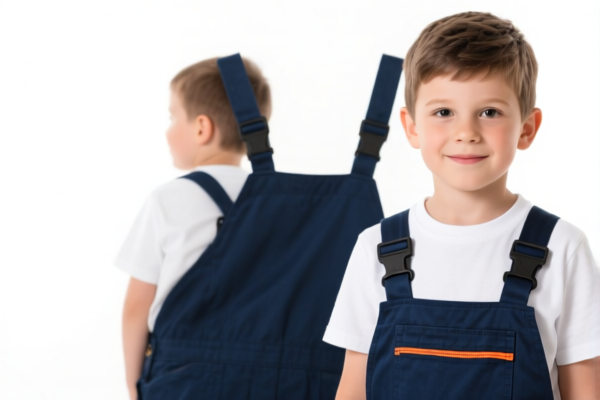
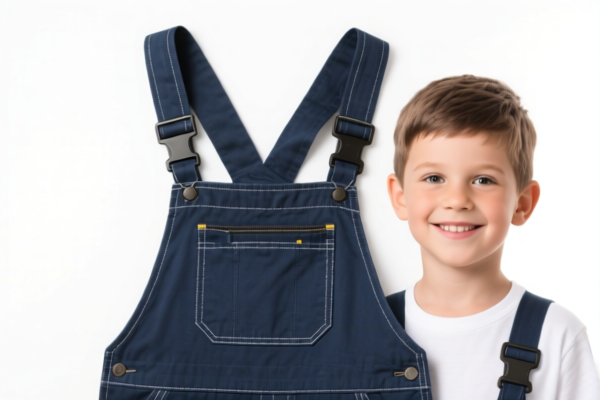
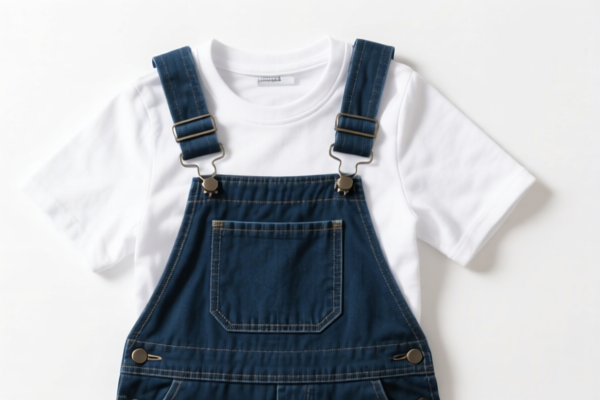
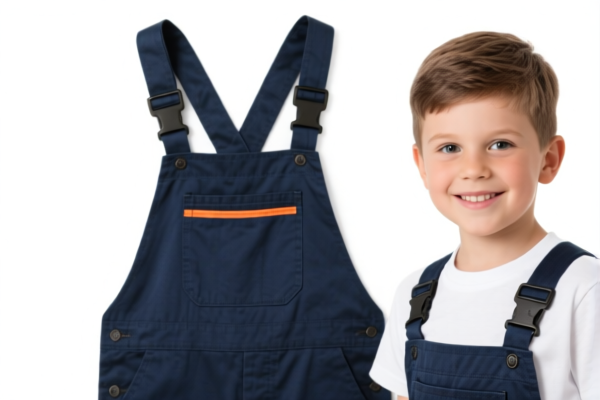
boy's cleaning work uniform
CN → US| HS编码 | 关税税率 | 原产国 | 目的国 | 文档 |
|---|---|---|---|---|
| 6203424514 | 34.1% | CN | US | 官方文档 |
| 6211431088 | 33.5% | CN | US | 官方文档 |
| 6211339010 | 33.5% | CN | US | 官方文档 |
| 6203499045 | 20.3% | CN | US | 官方文档 |
商品图片
AI分析
🧼 Boy’s Cleaning Work Uniform (Men’s/Boys’ Special Purpose Clothing)
🌐 HS Code Reference & Customs Clearance Guide | 2026 Latest Tariff Analysis | Professional Clearance Strategy
📌 I. Product Definition & Classification: What Exactly Is a "Boy’s Cleaning Work Uniform"?
A "Boy’s Cleaning Work Uniform" refers to protective clothing designed for children (typically under 14 years old) to be worn in environments requiring cleanliness, contamination control, or specific industrial hygiene standards. In international trade, these are not generic T-shirts but specialized garments often used in:
- Cleanrooms: Semiconductor manufacturing, pharmaceutical labs, or bio-labs where particulate control is critical.
- Contaminated Areas: Hazardous waste handling, chemical cleaning, or industrial sanitation where protection from spills/splashes is needed.
- Hygiene-Sensitive Zones: Food processing or healthcare support roles (though less common for boys specifically, still relevant).
⚠️ Key Distinction:
- If the garment is woven and made of cotton → Falls under Chapter 62 (Articles of Apparel and Clothing Accessories, Not Knitted or Crocheted).
- If it is knitted or made of synthetic fibers (e.g., polyester/cotton blends, spandex) → Falls under Chapter 61 (but note: most specialized work uniforms in this context are woven for durability and static control, hence Chapter 62 is predominant).
- Crucial Factor: The material composition (Cotton vs. Artificial Fibers vs. Other Textiles) and specific use case (Clean vs. Contaminated) dictate the HS Code.
📦 II. HS Code Classification Details (2026 Latest Tariff Authority Alignment)
Based on the provided data, here are the precise HS Codes, their descriptions, and applicability for a "Boy's Cleaning Work Uniform":
| HS Code | Product Description | Application Scenario | Material Type |
|---|---|---|---|
6203.42.45.14 |
Boys’ work suits, overalls, breeches, and bib & brace overalls, woven, of cotton | High-Contamination/Clean Zone: Used in controlled environments where cotton’s static properties or absorbency are key. | 100% Cotton |
6211.43.10.88 |
Other garments, of synthetic fibers, for boys, designed for medical/lab/clean/contaminated areas | Medical/Lab/Clean Environment: Specialized synthetic blends for sterile or cleanroom settings. | Synthetic Fibers (e.g., Polyester) |
6211.33.90.10 |
Boys’ garments of artificial fibers, specifically jumpsuits/rallies (with slight classification nuance vs. men’s) | General Contaminated/Clean Use: Jumpsuits or coveralls made from artificial fibers (rayon, etc.). | Artificial Fibers |
6203.49.90.45 |
Other boys’ work suits, overalls, etc., of other textile materials (e.g., Cotton/Polyester Blend) | Mixed Material Utility: For environments requiring blended fabrics (durability + comfort). | Other Textiles (e.g., Poly/Cotton Blend) |
🔍 Critical Note:
-6203Series: Generally refers to "Men’s or boys’ suits, ensembles, jackets, blazers, trousers..." However, Subheading 6203.42/49 covers overalls and work suits.
-6211Series: Covers "Other garments." This is often used for specialized jumpsuits or coveralls not strictly classified under "suits" but used for protective purposes (medical/lab).
- Clean vs. Contaminated: The description explicitly mentions "clean areas" or "contaminated areas," which aligns with protective workwear. Ensure your product specification matches the "work suit/overalls" definition.
💰 III. 2026 Latest Tariff Rate Breakdown (Including Add-ons, Policy Add-ons)
✅ Applicable Country: United States (US)
✅ Country of Origin: China (CN)
✅ Effective Date: November 10, 2025 onwards (including subsequent imports)
🎯 1. 6203.42.45.14 —— Cotton Boys’ Work Uniforms (For Clean/Contaminated Areas)
| Item | Detail |
|---|---|
| Base Tariff Rate | 16.6% (Ad Valorem) |
| Section 301 Additional Tariff | +7.5% (List 4B) |
| Section 122 Tariff | +10% (Specific to certain apparel/textiles from China) |
| Total Tariff Rate | 34.1% |
| Tax Calculation | CIF Value × 34.1% |
| De Minimis Exemption Available? | ❌ No (Deny de minimis for Section 122 and certain Section 301 items) |
| Legal Authority Path | HTSUS:6203.42.45.14 → Section 301: Footnote 9903.88.01 → Section 122: 19 USC 1677j |
📌 Explanation:
- 16.6% is the standard Most Favored Nation (MFN) rate for cotton work suits.
- 7.5% is the ongoing Section 301 tariff.
- 10% is the Section 122 tariff, a specific penalty applied to certain textile/apparel imports from China to protect domestic industries.
- Total: 34.1%. This is a high tariff bracket. Do not misdeclare to avoid penalties.
🎯 2. 6211.43.10.88 —— Synthetic Fiber Garments for Medical/Lab/Clean Use
| Item | Detail |
|---|---|
| Base Tariff Rate | 16.0% (Ad Valorem) |
| Section 301 Additional Tariff | +7.5% |
| Section 122 Tariff | +10% |
| Total Tariff Rate | 33.5% |
| Tax Calculation | CIF Value × 33.5% |
| De Minimis Exemption Available? | ❌ No |
| Legal Authority Path | HTSUS:6211.43.10.88 → Section 301 → Section 122 |
📌 Explanation:
- 16.0% is the base rate for other men’s/boys’ garments of synthetic fibers.
- The additional 7.5% + 10% apply uniformly.
- Total: 33.5%. Slightly lower than the cotton version due to a lower base rate, but still significant.
🎯 3. 6211.33.90.10 —— Artificial Fiber Jumpsuits for Boys
| Item | Detail |
|---|---|
| Base Tariff Rate | 16.0% (Ad Valorem) |
| Section 301 Additional Tariff | +7.5% |
| Section 122 Tariff | +10% |
| Total Tariff Rate | 33.5% |
| Tax Calculation | CIF Value × 33.5% |
| De Minimis Exemption Available? | ❌ No |
| Legal Authority Path | HTSUS:6211.33.90.10 → Section 301 → Section 122 |
📌 Explanation:
- Artificial fibers (like rayon) are grouped similarly to synthetics for tariff purposes in this context.
- Total: 33.5%. Same as synthetic.
🎯 4. 6203.49.90.45 —— Other Textile Material Work Uniforms (e.g., Poly/Cotton Blend)
| Item | Detail |
|---|---|
| Base Tariff Rate | 2.8% (Ad Valorem) |
| Section 301 Additional Tariff | +7.5% |
| Section 122 Tariff | +10% |
| Total Tariff Rate | 20.3% |
| Tax Calculation | CIF Value × 20.3% |
| De Minimis Exemption Available? | ❌ No |
| Legal Authority Path | HTSUS:6203.49.90.45 → Section 301 → Section 122 |
📌 Explanation:
- 2.8% is a very low base rate for "other" textile materials (non-cotton, non-synthetic, non-artificial, e.g., wool blends or other natural fibers, or specific mixed classifications).
- Total: 20.3%. This is the most cost-effective option among the four, if the material composition qualifies.
- ⚠️ Warning: Misclassifying a cotton item as "other textiles" to get 2.8% is customs fraud. Ensure the material tag matches6203.49.90.45.
🛠️ IV. Customs Clearance Practical Advice (Battle-Tested Pitfall Guide)
✅ 1. Required Documentation Checklist (Non-Negotiable)
| Document | Required? | Purpose |
|---|---|---|
| ✅ Product Specification Sheet | ✔️ | Must detail fiber composition (e.g., "100% Cotton" vs. "65% Poly/35% Cotton"), weave type, and intended use (cleanroom vs. industrial). |
| ✅ Technical Drawing/Pattern | ✔️ | To prove it is a "work suit/overall" and not a casual jacket or shirt. |
| ✅ Labeled Samples | ✔️ | Clear care labels showing material content. Customs verifies label vs. declaration. |
| ✅ Commercial Invoice | ✔️ | Must state "Boys' Cleaning Work Uniform" and NOT just "Clothes" or "T-Shirts." |
| ✅ Packing List | ✔️ | Quantity, weight, dimensions. |
| ✅ Certificate of Origin | ✔️ | Essential for verifying China origin for Section 301/122 application. |
| ✅ Letter of Use | ✔️ | From the importer/buyer stating the garment is for protective/cleaning work in contaminated/clean areas. This supports the 6211 or 6203.42 classification. |
✅ 2. Declaration Tips (Key Mantra)
🔥 "Material Truth, Use Specific, Section 122 Hits!"
| Scenario | Correct Declaration | Incorrect Declaration |
|---|---|---|
| 100% Cotton Overalls | 6203.42.45.14 |
Misdeclare as 6103 (knitted) → Audit Risk |
| Polyester Cleanroom Suit | 6211.43.10.88 |
Misdeclare as 6203.49 (low tariff) → Seizure + Penalty |
| Poly/Cotton Blend | 6203.49.90.45 |
Declare as "Cotton" → Discrepancy Fine |
| Casual Boy’s Shirt | 6203.43 |
Misdeclare as "Work Uniform" to get lower rate? → Fraud |
✅ 3. Special Case Handling
| Situation | Handling Advice |
|---|---|
| OEM Custom Uniforms | Provide design specs and client order proving it is not general retail apparel. |
| "Unisex" Labels | If labeled "Unisex" but intended for boys, ensure the cut/style is distinctly boys’ to fit 6203 (boys’) rather than 6104/6204 (girls’) or general. |
| Antistatic Treatment | If garments have antistatic coatings, declare chemical treatment on invoice. May require additional chemical compliance data. |
| High-Volume Shipments | Consider Section 301 Exclusion Requests (if applicable) or bonded warehouse storage to defer duty payment. |
🌍 V. Global Market Comparison (2026 Latest)
| Country/Region | Recommended HS Code | Tariff Rate (China Origin) | Certification | Notes |
|---|---|---|---|---|
| 🇺🇸 USA | 6203.42.45.14 / 6211.43.10.88 |
33.5% - 34.1% | None specific (but label laws apply) | High Tariff due to Section 122 + 301. |
| 🇨🇳 China | 6203.42 / 6211.43 |
~16% - 20% | CCC (if for industrial safety) | Lower base rate. |
| 🇪🇺 EU | 6203.42 / 6211.43 |
12% - 17% | CE (if PPE) | No Section 122. |
| 🇯🇵 Japan | 6203.42 / 6211.43 |
16% - 22% | None | Standard MFN rates. |
| 🇲🇽 Mexico | 6203.42 |
15% - 20% | NOM | USMCA may apply if made in Mexico. |
📌 Conclusion:
- USA is the most expensive market for these items due to Section 122 and 301.
- EU and Japan have moderate tariffs but no punitive "Section 122" tax.
- Strategy: If targeting the US, optimize material composition (e.g., using6203.49.90.45if eligible) to reduce from 34.1% to 20.3%.
📌 VI. Common Errors & Pitfalls (Blood-Lesson Guide)
❌ Error 1: Declaring "Boy’s Clothing" without specifying "Work Uniform" or "Overalls"
👉 Consequence: Customs may reclassify to general apparel, leading to higher duty or delay.
❌ Error 2: Misstating Fiber Content (e.g., saying 100% Cotton when it’s 65/35 Poly/Cotton)
👉 Consequence: Section 122 may not apply correctly, or you may be liable for underpayment penalties.
❌ Error 3: Using "Clean Room Suit" for non-specialized garments
👉 Consequence: If it doesn’t meet technical specs for 6211.43.10.88, customs may reclassify to general 6203 with different rates.
✅ Correct Declaration Example:
"Boys' Cotton Woven Overalls for Industrial Cleaning Use, 100% Cotton, Model XYZ, HS 6203.42.45.14"
🎯 VII. Conclusion: Precision Classification, Cost Efficiency!
🎯 Remember the Mantra:
🔹 "Cotton 34.1%, Synthetic 33.5%, Blend 20.3% - Truth in Material!"
🔹 "Section 122 is a Trap for Apparel - Classify Correctly or Pay the Price!"
🔹 "HS Code is King, Tariff is Queen - Declare Both Accurately!"
📌 Pro Tip:
If your "Boy’s Cleaning Work Uniform" is made in Vietnam, Thailand, or Bangladesh, you may avoid Section 301 and 122 entirely.
👉 Action: Consider supply chain diversification if US tariffs exceed your profit margin.
📣 Immediate Action:
📞 Consult a Customs Broker + Verify Fiber Content + Apply for Advance Ruling if volume is high.
🚀 Clear Customs Smoothly, Maximize Profits, Minimize Risk!
✨ Professional Clearance Starts with Accurate Classification!
💼 Every Percent of Duty Saved is Pure Profit!
用户评价
关于 HS 编码归类
协调制度(HS)是由世界海关组织(WCO)制定的国际贸易商品分类标准。全球 200 多个国家采用 HS 系统作为海关关税、贸易统计和进出口监管的基础。
每个 HS 编码遵循以下层级结构:
- 章(2 位)——商品大类(例如:第 84 章:机器和机械设备)
- 品目(4 位)——章内的更具体分类
- 子目(6 位)——国际通用细分,所有 WCO 成员国统一使用
- 本国细分(8-10 位)——各国自行扩展的细分编码,如美国 HTSUS 10 位编码
正确的 HS 编码归类对于顺利通关、准确缴纳关税和遵守贸易法规至关重要。错误归类可能导致海关延误、多缴关税或罚款。
从CN进口到US时,适用的关税税率可能包括:
- 最惠国(MFN)税率——适用于 WTO 成员国的标准关税税率
- 普通税率——适用于无贸易协定国家
- 贸易救济关税——附加关税,如 301 条款(反倾销)、232 条款(国家安全)或反补贴税
本页内容仅供参考。如需正式归类,请咨询当地海关或持牌报关代理。