boy's simple robe
CN → US| HS编码 | 关税税率 | 原产国 | 目的国 | 文档 |
|---|---|---|---|---|
| 6107220025 | 33.5% | CN | US | 官方文档 |
| 6207210040 | 26.4% | CN | US | 官方文档 |
| 6107210020 | 26.4% | CN | US | 官方文档 |
| 6207210020 | 26.4% | CN | US | 官方文档 |
| 6207997520 | 24.9% | CN | US | 官方文档 |
| 6207911000 | 25.9% | CN | US | 官方文档 |
商品图片
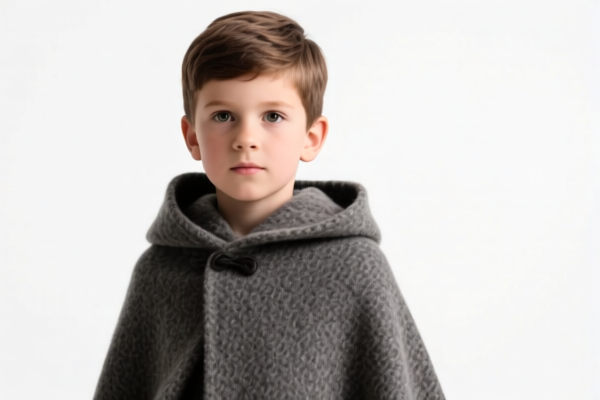
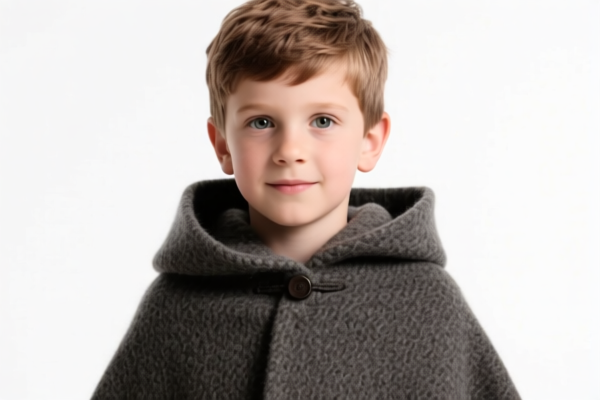
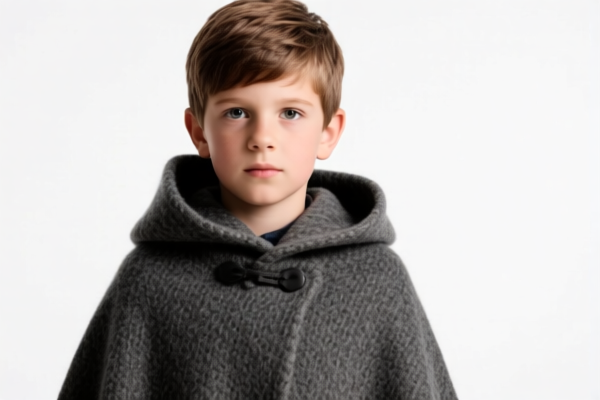

AI分析
👘 Boy's Simple Robe (Men's/Boy's Nightwear)
🌐 HS Code Reference & Customs Clearance Guide | 2026 Latest Tariff Analysis | Professional Clearance Strategy
📌 I. Product Definition & Classification: Do You Really Understand "Simple Robes"?
A "Boy's Simple Robe" typically refers to a loose-fitting outer garment worn over nightwear or as sleepwear itself, designed for young males. In international trade, the classification heavily depends on two critical factors: 1. Material Composition: Is it made of cotton, synthetic fibers (polyester, etc.), or other fabrics? 2. Manufacturing Process: Is it knitted/crocheted (Chapter 61) or woven (Chapter 62)?
⚠️ Key Distinction Point: - Knitted/Crocheted (Chapter 61): Flexible fabric, often jersey or fleece. Common for casual, soft robes. → Look for codes starting with 6107. - Woven (Chapter 62): Structured fabric, often cotton broadcloth or flannel. Common for more formal or traditional bathrobes. → Look for codes starting with 6207.
📦 II. HS Code Classification Details (2026 Latest Tariff Authority Comparison)
Based on the provided data, here are the specific HS Codes for "Boy's Simple Robe" categorized by material and construction:
| HS Code | Product Description Summary | Material / Construction | Target Audience |
|---|---|---|---|
6107.22.00.25 |
Boy's simple robe, knitted/crocheted | Non-cotton or Synthetic (Inferred) | Boys |
6207.21.00.40 |
Boy's simple robe | Cotton, Woven | Boys |
6107.21.00.20 |
Boy's simple robe, knitted/crocheted | Cotton (Inferred) | Boys |
6207.21.00.20 |
Boy's simple robe | Cotton, Woven | Boys |
6207.99.75.20 |
Boys' robe | Non-wool synthetic fiber or Cotton (Other category) | Boys |
6207.91.10.00 |
Boys' robe | Cotton (Inferred) | Boys |
🔍 Key Reminder: - Cotton vs. Synthetic: If the robe is made of polyester or nylon, it falls under
6107.22.00.25(if knitted) or potentially6207.99.75.20(if woven and not meeting specific cotton sub-headers). - Knitted vs. Woven: This is the most common customs verification point. If the fabric has elastic stretch and loops (like a t-shirt), it is likely Knitted (61). If it is stiff and woven like a button-down shirt, it is Woven (62). - Specific vs. General: Codes like6107.21and6207.21are specific to "Robes." Codes like6207.99are catch-alls for "Other." Always prioritize specific codes (21) if the material matches.
💰 III. 2026 Latest Tariff Rate Breakdown (Including Surcharges & Policy Add-ons)
✅ Applicable Country: United States (US)
✅ Origin: China (CN)
✅ Effective Time: Ongoing (Based on current 301/IEEPA tariffs)
🎯 1. 6107.22.00.25 – Knitted/Crocheted Robe (Non-Cotton/Synthetic)
| Item | Content |
|---|---|
| Base Tariff | 16.0% (General Ad Valorem) |
| Section 301 Surcharge | +7.5% (Trade Remedy Tariff) |
| Section 122 Tariff | +10.0% (Specific Policy Levy) |
| Total Tariff Rate | 33.5% |
| Calculation Basis | CIF Value × 33.5% |
| De Minimis Exemption | ❌ Not Applicable (Subject to high tariffs) |
| Legal Authority Path | HTSUS:6107.22.00.25 → Section 301: 7.5% → Section 122: 10% |
📌 Explanation: - This is the highest tariff option among the listed codes. - Synthetic fibers (polyester, acrylic) often carry higher base duties than cotton in certain categories due to domestic industry protections. - The 33.5% total rate significantly impacts profit margins. Consider cost-pass-through or sourcing alternatives.
🎯 2. 6207.21.00.40 & 6107.21.00.20 – Robe, Cotton (Woven/Knitted)
| Item | Content |
|---|---|
| Base Tariff | 8.9% |
| Section 301 Surcharge | +7.5% |
| Section 122 Tariff | +10.0% |
| Total Tariff Rate | 26.4% |
| Calculation Basis | CIF Value × 26.4% |
| De Minimis Exemption | ❌ Not Applicable |
| Legal Authority Path | HTSUS:6107.21.00.20 / 6207.21.00.40 → Section 301: 7.5% → Section 122: 10% |
📌 Explanation: - Cotton robes benefit from a lower base tariff (8.9% vs. 16.0%). - Whether Knitted (
6107.21) or Woven (6207.21), the total rate remains 26.4% because the surcharges are applied at the country/origin level or specific duty schedules. - Recommendation: If the robe can be made of 100% cotton, choose this classification to save 7.1% in duties compared to synthetic knitted robes.
🎯 3. 6207.21.00.20 – Robe, Cotton (Woven)
| Item | Content |
|---|---|
| Base Tariff | 8.9% |
| Section 301 Surcharge | +7.5% |
| Section 122 Tariff | +10.0% |
| Total Tariff Rate | 26.4% |
| Calculation Basis | CIF Value × 26.4% |
| De Minimis Exemption | ❌ Not Applicable |
📌 Note: - Functionally identical in tax rate to
6207.21.00.40. The difference lies in the specific sub-heading detail required by customs for precise classification (e.g., specific cotton weave types). Ensure your customs broker selects the most accurate sub-code to avoid audits.
🎯 4. 6207.99.75.20 – Boys' Robe (Other/Synthetic/Cotton Mix)
| Item | Content |
|---|---|
| Base Tariff | 14.9% |
| Section 301 Surcharge | 0.0% (Exempt or Not Applicable for this specific "Other" code?) |
| Section 122 Tariff | +10.0% |
| Total Tariff Rate | 24.9% |
| Calculation Basis | CIF Value × 24.9% |
| De Minimis Exemption | ❌ Not Applicable |
| Legal Authority Path | HTSUS:6207.99.75.20 → Section 122: 10% |
📌 Explanation: - This code falls under "Other men's/boys' nightwear." - Crucial Advantage: It appears to have 0% Section 301 Surcharge (based on the provided data). This makes it the most cost-effective option at 24.9% total. - Risk: Customs may scrutinize this code heavily to ensure it doesn't actually fit into the more specific
6207.21(Robes) category. If it is clearly a "robe," customs may force reclassification to6207.21, resulting in back taxes. - Strategy: Only use if the product is not clearly a "robe" (e.g., a loose tunic or wrap) or if the specific cotton/synthetic blend qualifies for this "Other" category under local legal interpretations.
🎯 5. 6207.91.10.00 – Boys' Robe (Cotton)
| Item | Content |
|---|---|
| Base Tariff | 8.4% |
| Section 301 Surcharge | +7.5% |
| Section 122 Tariff | +10.0% |
| Total Tariff Rate | 25.9% |
| Calculation Basis | CIF Value × 25.9% |
| De Minimis Exemption | ❌ Not Applicable |
📌 Note: - Another cotton option with a slightly lower base tariff (8.4%) than
6207.21(8.9%). - Total rate: 25.9%. Slightly cheaper than the standard cotton robe codes (26.4%). - Verify if this code applies to "Robes" or if it's a broader "Other" category. If it applies, this is a very competitive tariff rate.
🛠️ IV. Customs Clearance Practical Advice (Real-World Pitfall Avoidance)
✅ 1. Documentation Checklist (Non-negotiable)
| Document | Mandatory | Description |
|---|---|---|
| ✅ Product Specification Sheet | ✔️ | Must explicitly state: "Robe," "Sleepwear," "For Boys," and Fabric Composition (e.g., 100% Cotton, 95% Poly/5% Spandex). |
| ✅ Fabric Swatch or Test Report | ✔️ | Critical for Classification. Customs may require proof of whether it is knitted (61) or woven (62). A lab report confirming "Knitted Jersey" vs. "Woven Broadcloth" is invaluable. |
| ✅ Product Photos | ✔️ | Show the front, back, and inner lining. Highlight any buttons, belts, or hoods to confirm it fits the definition of a "robe." |
| ✅ Commercial Invoice | ✔️ | Description must match HS Code logic. E.g., "Boys' Cotton Knitted Robe" for 6107.21.00.20. |
| ✅ Packing List | ✔️ | Ensure weight and dimensions are accurate. |
✅ 2. Classification Strategy (Key Mnemonics)
🔥 “Cotton Saves Money, Synthetics Cost More, Knit vs. Weave Decides the Chapter!”
| Scenario | Recommended HS Code | Total Tariff | Why? |
|---|---|---|---|
| 100% Cotton, Woven | 6207.21.00.40 or 6207.21.00.20 |
26.4% | Standard cotton robe. Safe, common classification. |
| 100% Cotton, Knitted | 6107.21.00.20 |
26.4% | Same tax as woven cotton. |
| Synthetic/Polyester, Knitted | 6107.22.00.25 |
33.5% | Expensive. High base duty. Try to avoid if possible. |
| Unclear "Other" Robe | 6207.99.75.20 |
24.9% | Lowest Rate. But high audit risk. Use only if product structure is ambiguous. |
| Cotton, Specific Sub-code | 6207.91.10.00 |
25.9% | Competitive alternative to 6207.21. Verify eligibility. |
✅ 3. Special Handling & Pitfalls
| Issue | Handling Suggestion |
|---|---|
| Misclassification: Knitted vs. Woven | If you declare "Woven" but customs finds it "Knitted," they will reclassify to Chapter 61, potentially changing the code and duty rate. Solution: Provide a fabric analysis report. |
| Material Composition Errors | If you say "Cotton" but it's 90% Polyester, you risk penalties for false declaration. Solution: Ensure fiber content on label matches invoice and HS code logic. |
| Section 122 & 301 Liability | These are mandatory additions for Chinese goods. Solution: Budget for these in your landed cost calculation. Do not assume they can be negotiated away. |
| "Simple Robe" Ambiguity | If the item is more of a "kimono" or "tunic," it might fall under "Other" (6207.99). Solution: If it has a belt, lapels, and is long enough to be a robe, stick to 6207.21 or 6107.21 to be safe, unless you are confident in the 99 classification. |
🌍 V. Global Market Comparison (2026 Latest)
| Country/Region | Recommended HS Code (Cotton Woven) | Estimated Tariff | Certification | Notes |
|---|---|---|---|---|
| 🇺🇸 USA | 6207.21.00.40 / 6207.91.10.00 |
25.9% - 26.4% | None specific for textile | High tariffs due to Section 301 & 122. |
| 🇨🇳 China | 6207.21.00.00 |
9.0% - 10.0% | CCC (if applicable) | Lower base rates. No Section 301. |
| 🇪🇺 EU | 6207.21.00 |
12.0% | CE (if functional apparel) | No Section 301/122 equivalents. |
| 🇬🇧 UK | 6207.21.00 |
12.0% | UKCA | Post-Brexit rules apply. |
| 🇦🇺 Australia | 6207.21.00 |
5.0% | None | Preferential rates may apply. |
📌 Conclusion: - USA is the most expensive market for this product due to layered tariffs (Base + 301 + 122). - China, EU, and Asia-Pacific markets are significantly cheaper. - Optimization Strategy: For US shipments, prioritize Cotton over Synthetic to save ~7%. Consider if
6207.99.75.20(24.9%) is a defensible alternative to reduce costs by another 1.5-1.5% compared to standard cotton robe codes.
📌 VI. Common Errors & Pitfall Guide (Lessons Learned)
❌ Error 1: Declaring a Polyester Robe as Cotton to get the 26.4% rate. 👉 Consequence: Customs inspection reveals polyester. Repossession, fines, and forced payment of 33.5% + penalties.
❌ Error 2: Using 6107.22.00.25 (33.5%) when a 6207.99.75.20 (24.9%) might be applicable.
👉 Consequence: Overpayment of duties. If the product is not strictly "knitted" or fits the "Other" category, you can save nearly 9%.
❌ Error 3: Ignoring Section 122 in cost calculations. 👉 Consequence: Unexpected 10% charge at clearance. Always include it in your landed cost model.
❌ Error 4: Vague Description: "Boy's Clothes." 👉 Consequence: Customs delays for classification. Always use "Robe" and specify "Knitted/Woven" and "Material."
✅ Correct Action:
"Boys' Cotton Woven Bathrobe, Belted, Full Length. HS Code: 6207.21.00.40. Origin: China."
🎯 VII. Conclusion: Professional Clearance, Cost Optimization!
🎯 Remember the Mantra:
🔹 “Cotton is King, Synthetics are Expensive.” 🔹 “Check Knit vs. Wove, Check Base Rate, Check Surcharge.” 🔹 “26.4% is Safe, 33.5% is Pain, 24.9% is Ambitious but Savvy.”
📌 Tips:
- If your robe is Made in Vietnam or India, you may avoid Section 301/122 tariffs entirely, reducing rates to base levels (e.g., ~5-12% in the US).
- Pre-Ruling: For large shipments, consider applying for an Advance Ruling with US CBP to confirm if 6207.99.75.20 is acceptable for your specific robe design.
📣 Immediate Action:
📞 Consult your customs broker with a fabric swatch and product photo. 🚀 Classify accurately, declare fully, and clear smoothly!
✨ Professional Clearance Starts with Precise Classification! 💼 Every percentage point matters in global trade!
用户评价
关于 HS 编码归类
协调制度(HS)是由世界海关组织(WCO)制定的国际贸易商品分类标准。全球 200 多个国家采用 HS 系统作为海关关税、贸易统计和进出口监管的基础。
每个 HS 编码遵循以下层级结构:
- 章(2 位)——商品大类(例如:第 84 章:机器和机械设备)
- 品目(4 位)——章内的更具体分类
- 子目(6 位)——国际通用细分,所有 WCO 成员国统一使用
- 本国细分(8-10 位)——各国自行扩展的细分编码,如美国 HTSUS 10 位编码
正确的 HS 编码归类对于顺利通关、准确缴纳关税和遵守贸易法规至关重要。错误归类可能导致海关延误、多缴关税或罚款。
从CN进口到US时,适用的关税税率可能包括:
- 最惠国(MFN)税率——适用于 WTO 成员国的标准关税税率
- 普通税率——适用于无贸易协定国家
- 贸易救济关税——附加关税,如 301 条款(反倾销)、232 条款(国家安全)或反补贴税
本页内容仅供参考。如需正式归类,请咨询当地海关或持牌报关代理。