braided storage baskets
CN → US| HS编码 | 关税税率 | 原产国 | 目的国 | 文档 |
|---|---|---|---|---|
| 4602110700 | 35.0% | CN | US | 官方文档 |
| 4602110900 | 45.0% | CN | US | 官方文档 |
| 4601920500 | 37.7% | CN | US | 官方文档 |
| 3926909989 | 22.8% | CN | US | 官方文档 |
商品图片
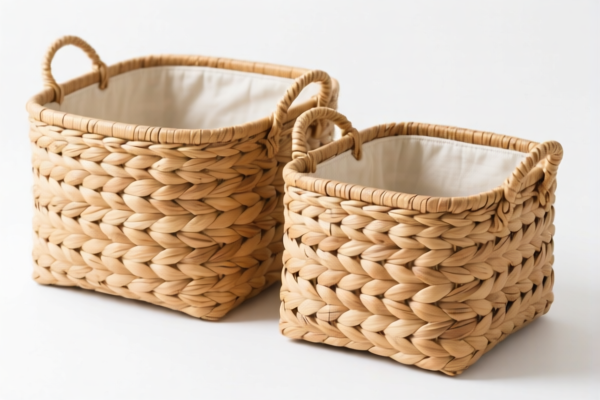
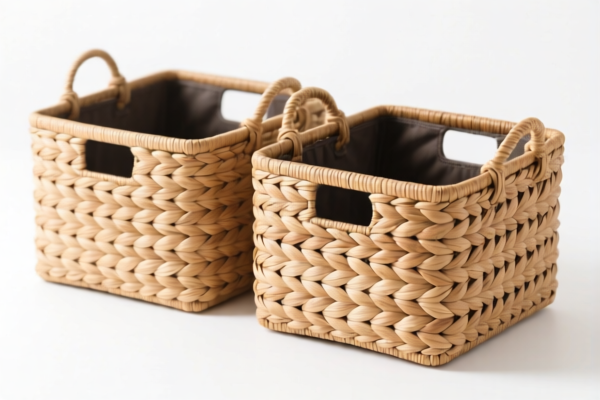
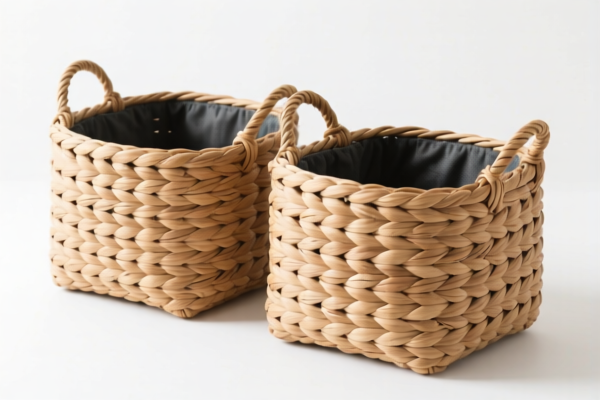
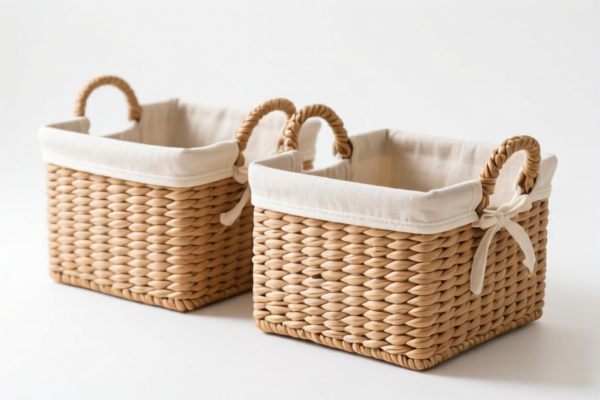
AI分析
🧺 Braided Storage Baskets (Woven Household Containers)
🌐 HS Code Reference & Customs Clearance Guide | 2026 Latest Tariff Analysis | Strategic Clearance for Exporters
📌 1. Product Definition: What Exactly is a "Braided Storage Basket"?
Braided storage baskets are versatile household or industrial containers used for organizing, storing, or displaying goods. In international trade, their classification depends heavily on material composition and manufacturing process.
The key distinction lies in whether the material is: * Vegetable Materials (Natural Fibers): Bamboo, rattan, wicker, straw, etc. (Chapter 46). * Plastics/Synthetics: Plastic fibers, woven synthetic mats, or composite materials (Chapter 39).
⚠️ Critical Identification Point:
- If the basket is made of natural plant fibers (bamboo, rattan) and woven → Chapter 46.
- If the basket is made of plastic fibers or appears to be a plastic imitation → Chapter 39.
- Do not guess: Customs officers will inspect the material. Misclassifying plastic as natural (or vice versa) can lead to severe penalties and delays.
📦 2. HS Code Classification Matrix (2026 Latest Tariff Data)
Based on the provided dataset, here are the three possible HS Codes depending on the material and specific form. Note that all listed codes attract significant tariffs due to US-China trade tensions.
| HS Code | Product Description | Material Inference | Key Characteristics |
|---|---|---|---|
4602.11.07.00 |
Basketry of Bamboo | Bamboo or similar plant fiber | Specifically matches "braided basket" form; typically lower base duty. |
4602.11.09.00 |
Basketry of Other Vegetable Materials | Rattan, wicker, other plants | Matches general "basket" form; higher base duty than bamboo. |
4601.92.05.00 |
Plaited Materials (Bamboo) | Bamboo weaving (matting/panels) | Matches "woven material" form; often used if the basket is made of pre-woven mats rather than traditional weaving. |
3926.90.99.89 |
Other Articles of Plastics | Plastic/Synthetic Fiber | If the basket is made of plastic fibers or looks like plastic. Classified as a general plastic article. |
🔍 Detailed Breakdown: 1.
4602.11.07.00: Best fit for Bamboo Baskets. The summary explicitly mentions "braided basket" and infers "bamboo/wool/plant fiber." 2.4602.11.09.00: Best fit for Non-Bamboo Vegetable Fiber Baskets (e.g., Rattan, Willow). Summary mentions "basket" and "plant materials like bamboo/rattan." 3.4601.92.05.00: Best fit for Bamboo Woven Products/Mats used as baskets. Summary mentions "woven materials" and "bamboo weaving craftsmanship." 4.3926.90.99.89: Best fit for Plastic Baskets. Summary infers "plastic fibers or synthetic materials."
💰 3. Tariff Rate Breakdown (2026 US Market Import)
✅ Applicable Country: United States (US)
✅ Origin: China (CN)
✅ Effective Date: Ongoing (Subject to Section 301 and IEEPA)
🎯 A. Vegetable Fiber Baskets (HS Codes 4602.11.07.00 & 4602.11.09.00)
These codes fall under Section 301 Tariffs and IEEPA Tariffs.
1. 4602.11.07.00 (Bamboo Basket)
- Base Duty: 0.0%
- Section 301 (Additional) Duty: 25.0%
- IEEPA (Section 122) Duty: 10.0%
- Total Effective Tax Rate: 35.0%
- De Minimis Exemption? ❌ NO (Deny De Minimis). Must file formal entry.
2. 4602.11.09.00 (Other Vegetable Basket)
- Base Duty: 10.0%
- Section 301 (Additional) Duty: 25.0%
- IEEPA (Section 122) Duty: 10.0%
- Total Effective Tax Rate: 45.0%
- De Minimis Exemption? ❌ NO (Deny De Minimis).
📌 Explanation:
- The 25% is from USITC Footnotes for Section 301.
- The 10% is from IEEPA (often referred to as the "122 Clause" tariff in recent trade updates).
- Bamboo baskets (4602.11.07.00) are cheaper to import because their base duty is 0%, whereas other vegetable baskets (4602.11.09.00) start at 10% base duty, pushing the total to 45%.
🎯 B. Woven Bamboo Mats/Products (HS Code 4601.92.05.00)
3. 4601.92.05.00 (Plaited Bamboo Materials)
- Base Duty: 2.7%
- Section 301 (Additional) Duty: 25.0%
- IEEPA (Section 122) Duty: 10.0%
- Total Effective Tax Rate: 37.7%
- De Minimis Exemption? ❌ NO (Deny De Minimis).
📌 Note:
This code is often used if the product is considered a "woven mat" or "panel" rather than a "finished basket." However, the 37.7% rate is still high. If the product is clearly a "basket,"4602.11.07.00(35%) is usually the more accurate and cheaper classification.
🎯 C. Plastic/Synthetic Baskets (HS Code 3926.90.99.89)
4. 3926.90.99.89 (Other Plastic Articles)
- Base Duty: 5.3%
- Section 301 (Additional) Duty: 7.5% (Note: Data shows 7.5% here, possibly due to different list category)
- IEEPA (Section 122) Duty: 10.0%
- Total Effective Tax Rate: 22.8%
- De Minimis Exemption? ⚠️ Check Specific List. Generally, Section 301 items are excluded from De Minimis, but plastic articles may have different treatment depending on the specific HTS subheading. However, based on the data, it is likely excluded due to the presence of 301/122 clauses.
📌 Advantage:
This is the most cost-effective option. The total tax rate is 22.8%, significantly lower than natural fiber baskets (35%-45%).
Risk: If the product is not actually plastic but bamboo, misclassification is fraud. You must provide material certification to prove it is synthetic.
🛠️ 4. Customs Clearance Practical Advice (Avoiding Pitfalls)
✅ 1. Documentation Requirements (Mandatory)
| Document | Required? | Purpose |
|---|---|---|
| Product Photos | ✅ YES | Must clearly show the weave pattern and material texture to distinguish bamboo vs. plastic. |
| Material Certificate | ✅ YES | Lab report confirming 100% bamboo, rattan, or plastic composition. Critical for avoiding 3926 vs 4602 disputes. |
| Commercial Invoice | ✅ YES | Must state "Braided Storage Basket" and specify material (e.g., "100% Natural Bamboo"). |
| Packing List | ✅ YES | Detail weight, dimensions, and unit count. |
| US Person Lender ID | ✅ YES | Required for formal entry (since De Minimis is denied). |
✅ 2. Classification Strategy & Cost Optimization
| Strategy | Action | Result |
|---|---|---|
| Opt for Bamboo | Choose 4602.11.07.00 over 4602.11.09.00 |
Save 10% on total tax (35% vs 45%) due to 0% base duty. |
| Switch to Plastic | Use synthetic fibers instead of natural | Save 12.2% on total tax (22.8% vs 35%) if product design allows. |
| Avoid "Woven Mat" Code | Do not use 4601.92.05.00 unless it's a mat |
It’s 37.7%, which is higher than the correct basket code (4602.11.07.00). |
✅ 3. Common Errors & Penalties
❌ Error 1: Declaring Bamboo Baskets as Plastic (3926.90.99.89) to save tax.
👉 Consequence: Customs inspection will reveal natural fibers. You will face penalties, back taxes, and potential fraud charges.
❌ Error 2: Using De Minimis (Section 321) for shipments under $800.
👉 Consequence: Section 301 and IEEPA goods are excluded from De Minimis. Your shipment will be held, and you will owe full duties + storage fees.
❌ Error 3: Vague Description "Storage Basket."
👉 Consequence: Customs cannot determine the material. Shipment will be delayed until you provide photos/material specs.
🌍 5. Global Market Comparison (2026)
| Market | HS Code | Base Duty | Additional Tariffs (China) | Total Est. Rate | Notes |
|---|---|---|---|---|---|
| 🇺🇸 USA | 4602.11.07.00 |
0% | +25% (301) + 10% (122) | 35.0% | High tariff environment. |
| 🇺🇸 USA | 3926.90.99.89 |
5.3% | +7.5% (301) + 10% (122) | 22.8% | Cheapest option if plastic. |
| 🇪🇺 EU | 4602.11.00 |
2.7% | None | 2.7% | No Section 301/IEEPA. |
| 🇨🇳 China | 4602.11.00 |
0% | None | 0% | Import from Vietnam/Malaysia to US recommended for duty avoidance. |
📌 Conclusion for US Importers:
- Natural Fiber (Bamboo): Expect 35% total tax.
- Plastic: Expect 22.8% total tax.
- De Minimis is NOT available.
- Recommendation: If possible, source from non-China countries (Vietnam, Indonesia, Thailand) to avoid Section 301 and IEEPA tariffs entirely. If sourcing from China, ensure accurate HS coding to avoid double taxation or penalties.
🎯 6. Final Recommendations
- Verify Material First: Before shipping, confirm if your "basket" is natural or synthetic. If it's a "bamboo look," it might be plastic, which saves you money.
- Choose
4602.11.07.00: If it is natural, this is the most efficient code for bamboo baskets (0% base duty). - Prepare for Formal Entry: Budget for customs broker fees and full duty payments. Do not use courier accounts expecting De Minimis clearance.
- Document Everything: Keep material test reports and clear photos ready for customs inspection.
✨ Professional Clearance Starts with Accurate Classification!
💼 Your bottom line depends on the first 6 digits of the HS Code!
用户评价
关于 HS 编码归类
协调制度(HS)是由世界海关组织(WCO)制定的国际贸易商品分类标准。全球 200 多个国家采用 HS 系统作为海关关税、贸易统计和进出口监管的基础。
每个 HS 编码遵循以下层级结构:
- 章(2 位)——商品大类(例如:第 84 章:机器和机械设备)
- 品目(4 位)——章内的更具体分类
- 子目(6 位)——国际通用细分,所有 WCO 成员国统一使用
- 本国细分(8-10 位)——各国自行扩展的细分编码,如美国 HTSUS 10 位编码
正确的 HS 编码归类对于顺利通关、准确缴纳关税和遵守贸易法规至关重要。错误归类可能导致海关延误、多缴关税或罚款。
从CN进口到US时,适用的关税税率可能包括:
- 最惠国(MFN)税率——适用于 WTO 成员国的标准关税税率
- 普通税率——适用于无贸易协定国家
- 贸易救济关税——附加关税,如 301 条款(反倾销)、232 条款(国家安全)或反补贴税
本页内容仅供参考。如需正式归类,请咨询当地海关或持牌报关代理。