breathable pot
CN → US| HS编码 | 关税税率 | 原产国 | 目的国 | 文档 |
|---|---|---|---|---|
| 6914108000 | 44.0% | CN | US | 官方文档 |
| 6914908000 | 40.6% | CN | US | 官方文档 |
商品图片
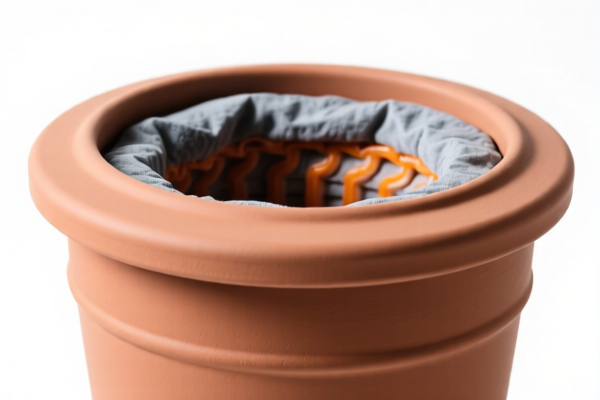
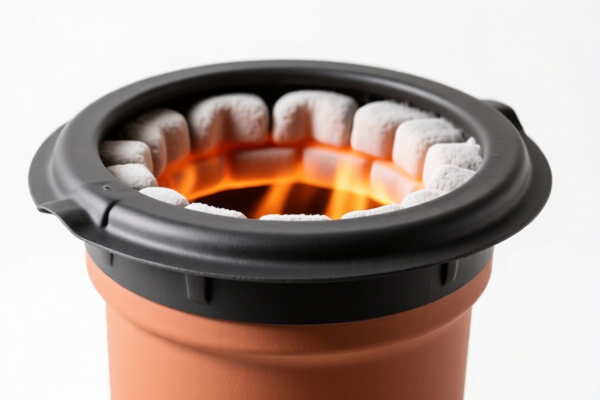


AI分析
🏺 Breathable Pot (Ceramic Cookware & Storage)
🌐 HS Code Reference & Clearance Guide | 2026 Latest Tariff Analysis | Professional Customs Strategy
📌 I. Product Definition & Classification: Do You Really Know "Breathable Pot"?
"Breathable Pot" typically refers to porous ceramic vessels (often unglazed or semi-unglazed) used for traditional cooking, water storage, or fermentation. In international trade, the classification depends entirely on material composition and specific function:
Porcelain/China (瓷质): Dense, vitrified, often glazed, fine texture. High-end tableware or decorative items.
Other Ceramics (其他陶瓷): Earthenware, stoneware, or porous clay. Often used for "red clay pots" (紫砂壶) or unglazed storage jars that allow airflow (hence "breathable").
⚠️ Key Distinction Point:
- If the pot is made of Porcelain or China → It falls under Chapter 69.14.10.
- If the pot is made of Other Ceramic Materials (e.g., earthenware, clay, stoneware) → It falls under Chapter 69.14.90.
📦 II. HS Code Classification Details (2026 Latest Tariff Authority Comparison)
| HS Code | Product Description | Applicable Scenario | Material Type |
|---|---|---|---|
6914.10.80.00 |
Other ceramic articles: Of porcelain or china: Other | High-end porcelain pots, glazed ceramic cookware, decorative porcelain containers | ✅ Porcelain/China |
6914.90.80.00 |
Other ceramic articles: Other: Other | Unglazed clay pots, earthenware storage jars, traditional "breathable" clay vessels | ✅ Other Ceramics |
🔍 Key Reminder:
- Porcelain is dense, non-porous (unless specifically designed otherwise), and highly vitrified.
- Other Ceramics (e.g., clay/earthenware) are often more porous, lighter, and used for traditional "breathable" functions like keeping water cool or fermenting food.
- "Breathable" itself is NOT an HS Code keyword; it is a functional description. You must classify based on material.
💰 III. 2026 Latest Tariff Rate Breakdown (Including Surcharges & Policy Add-ons)
✅ Applicable Country: USA (US)
✅ Country of Origin: China (CN)
✅ Effective Date: From November 10, 2025 (including subsequent imports)
🎯 1. 6914.10.80.00 — Other Ceramic Articles: Of Porcelain or China: Other
| Item | Content |
|---|---|
| Base Tariff | 0% |
| Retaliatory Tariff (Section 301) | 0% |
| Total Tariff | 0% |
| Tax Calculation | CIF Value × 0% |
| De Minimis Eligibility | ❌ No (High-value items or specific categories may be excluded; however, base rate is 0%, so surcharges don't apply here) |
| Legal Basis Path | USITC:6914.10.80.00 → No Additional Surcharges |
📌 Explanation:
- Porcelain and china items often enjoy lower or zero additional tariffs compared to other ceramic goods.
- Total Tax Rate: 0% — This is a very favorable classification if your product is indeed porcelain.
🎯 2. 6914.90.80.00 — Other Ceramic Articles: Other: Other
| Item | Content |
|---|---|
| Base Tariff | 5.6% |
| Retaliatory Tariff (Section 301) | +25.0% |
| Total Tariff | 30.6% |
| Tax Calculation | CIF Value × 30.6% |
| De Minimis Eligibility | ❌ No (Deny de minimis for high-surcharge items) |
| Legal Basis Path | USITC:6914.90.80.00 → FOOTNOTE:301.88.01 (Approx. Reference) |
📌 Note:
- Base Tariff 5.6% applies to general other ceramic articles.
- Additional 25% is the Section 301 tariff on Chinese goods.
- Total 30.6% is a high tariff burden.
- This classification applies if the pot is made of earthenware, stoneware, or unglazed clay, not porcelain.
🛠️ IV. Customs Clearance Practical Advice (Battle-Tested Pitfall Avoidance Guide)
✅ 1. Required Documentation Checklist (None Can Be Omitted)
| Document | Must Provide | Explanation |
|---|---|---|
| ✅ Product Specification Sheet | ✔️ | Must specify material (Porcelain vs. Clay/Earthenware), dimensions, weight, glaze status |
| ✅ Material Composition Report | ✔️ | Lab test confirming % of clay, feldspar, quartz, etc. |
| ✅ Product Photos | ✔️ | Clear images of interior (glazed/unglazed), exterior, brand, and model |
| ✅ Commercial Invoice | ✔️ | Clearly state "Ceramic Pot" or "Porcelain Pot", not just "Pot" |
| ✅ Packing List | ✔️ | Detail packaging to avoid misclassification as "packaging material" |
| ✅ Certificate of Origin (CO) | ✔️ | If not from China, can reduce/eliminate tariffs |
✅ 2. Declaration Tips (Key Mantra)
🔥 "Material is King, Glaze is Key, Name is Clear, Tariff Can Fly!"
| Scenario | Correct Declaration | Wrong Practice |
|---|---|---|
| Porcelain Pot (Glossy, Dense) | 6914.10.80.00 |
Misdeclare as "Clay Pot" → 30.6% |
| Clay/Earthenware Pot (Porous, Matte) | 6914.90.80.00 |
Misdeclare as "Porcelain" → 0% (Risk of Penalty) |
| Mixed Set (Pot + Lid) | Declare as Complete Set under the main item | Split declaration → Higher tax complexity |
| Decorative Ceramic "Pot" (Not for food) | Still 6914.xx.xx, but may require "Non-Food" statement |
Declare as "Household Item" → Ambiguity |
✅ 3. Special Cases Handling
| Situation | Handling Advice |
|---|---|
| OEM Custom Pots | Provide design drawings + material certs. Avoid vague terms like "Traditional Pot". |
| "Breathable" Marketing Term | Do NOT use "Breathable" as the HS description. Use "Porcelain Pot" or "Clay Pot". |
| Unglazed vs. Glazed | Glaze does NOT change HS code from 6914.10 to 6914.90. Material type (Porcelain vs. Other) is the key. |
| High-Value Antique-Style | May require additional "Age" or "Value" documentation if claimed as antiques, but generally still 6914. |
🌍 V. Global Market Comparison for Ceramics (2026 Latest)
| Country/Region | Recommended HS Code | Tariff (China Origin) | Certification Required | Notes |
|---|---|---|---|---|
| 🇺🇸 USA | 6914.10.80.00 (Porcelain) |
0% | FDA (if food-contact) | Low tariff for porcelain |
| 🇺🇸 USA | 6914.90.80.00 (Other) |
30.6% | FDA (if food-contact) | High tariff for clay/earthenware |
| 🇪🇺 EU | 6914.10 / 6914.90 |
0% | LFGB / EU 10/2011 | No surcharges |
| 🇬🇧 UK | 6914.10 / 6914.90 |
0% - 6.5% | FSA Guidelines | Depends on material |
| 🇯🇵 Japan | 6914.10 / 6914.90 |
0% - 8% | JAS / Food Safety | Strict food-contact rules |
📌 Conclusion:
- USA is the only major market with significant additional tariffs on "Other Ceramics" (30.6%).
- Porcelain (6914.10.80.00) remains tariff-free in the US, making it a highly competitive category.
- EU, UK, Japan, Australia generally have low or zero base tariffs and no Section 301-style surcharges.
📌 VI. Common Errors & Pitfall Guide (Lessons from Blood and Tears)
❌ Mistake 1: Declaring a Clay Pot as Porcelain
👉 Consequence: Customs Audit + Back Tariff (30.6%) + Fines!
👉 Why: Customs can test material density and porosity. "Breathable" pots are rarely true porcelain.
❌ Mistake 2: Using vague terms like "Ceramic Container"
👉 Consequence: Customs may assign a higher default rate or request reclassification delays.
👉 Fix: Specify "Porcelain Pot" or "Earthenware Pot".
❌ Mistake 3: Ignoring Food-Contact Regulations
👉 Consequence: Seizure or Return!
👉 Fix: If the pot is for cooking/food storage, ensure it complies with FDA (US) or LFGB (EU) lead/cadmium limits. Provide test reports.
❌ Mistake 4: Assuming "Unglazed" = "Not Porcelain"
👉 Consequence: Misclassification. Unglazed porcelain exists (e.g., high-fire stoneware porcelain).
👉 Fix: Focus on material composition, not just glaze status.
✅ Correct Declaration Example:
"Porcelain Cooking Pot, 2L, White, Glazed, Model ABC, FDA Compliant" →
6914.10.80.00(0%)
"Earthenware Storage Jar, 5L, Brown, Unglazed, Traditional Design" →6914.90.80.00(30.6%)
🎯 VII. Conclusion: Professional Declaration Saves Money!
🎯 Remember the Mantra:
🔹 "Porcelain is Free, Clay is Costly, Material is King, Deceive is Foolish!"
🔹 "HS Code 6914.10.80.00: 0% Tax. HS Code 6914.90.80.00: 30.6% Tax. Choose Wisely!"
📌 Pro Tip:
If your "Breathable Pot" is actually high-fire stoneware (dense, vitrified, but not porcelain), it may still fall under 6914.90.80.00.
However, if it is true Porcelain (white body, high translucency, vitrified), you can claim 6914.10.80.00 for 0% tariff.
Recommendation: Conduct a material analysis before shipping. If unsure, apply for a Pre-Ruling (Advance Ruling) from US Customs to avoid surprises.
📣 Immediate Action:
📞 Contact a professional customs broker + Provide material specs + Apply for HS Code Pre-Ruling
🚀 Let your Breathable Pot pass through customs smoothly, efficiently, and profitably!
✨ Professional Customs Clearance Starts with Precise Classification!
💼 Every penny of tax saved is pure profit!
用户评价
关于 HS 编码归类
协调制度(HS)是由世界海关组织(WCO)制定的国际贸易商品分类标准。全球 200 多个国家采用 HS 系统作为海关关税、贸易统计和进出口监管的基础。
每个 HS 编码遵循以下层级结构:
- 章(2 位)——商品大类(例如:第 84 章:机器和机械设备)
- 品目(4 位)——章内的更具体分类
- 子目(6 位)——国际通用细分,所有 WCO 成员国统一使用
- 本国细分(8-10 位)——各国自行扩展的细分编码,如美国 HTSUS 10 位编码
正确的 HS 编码归类对于顺利通关、准确缴纳关税和遵守贸易法规至关重要。错误归类可能导致海关延误、多缴关税或罚款。
从CN进口到US时,适用的关税税率可能包括:
- 最惠国(MFN)税率——适用于 WTO 成员国的标准关税税率
- 普通税率——适用于无贸易协定国家
- 贸易救济关税——附加关税,如 301 条款(反倾销)、232 条款(国家安全)或反补贴税
本页内容仅供参考。如需正式归类,请咨询当地海关或持牌报关代理。