cellulose acetate composite sheet
CN → US| HS编码 | 关税税率 | 原产国 | 目的国 | 文档 |
|---|---|---|---|---|
| 3912120000 | 40.6% | CN | US | 官方文档 |
| 3920730000 | 37.9% | CN | US | 官方文档 |
| 3920795000 | 38.7% | CN | US | 官方文档 |
| 3921190090 | 41.5% | CN | US | 官方文档 |
| 3921905050 | 39.8% | CN | US | 官方文档 |
商品图片
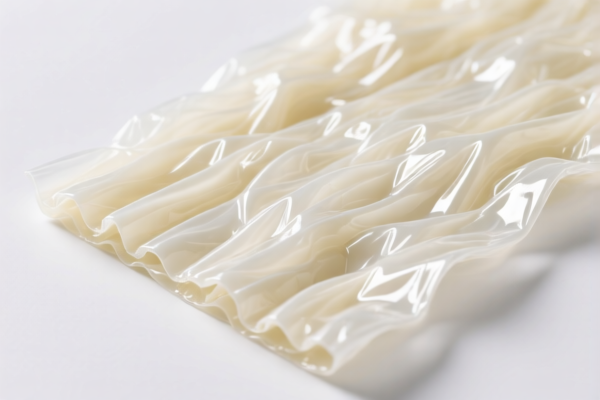
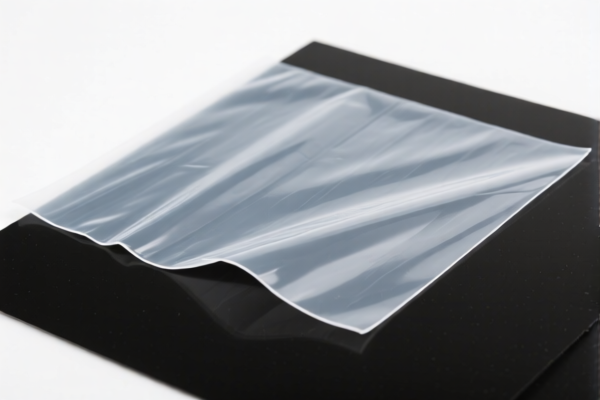
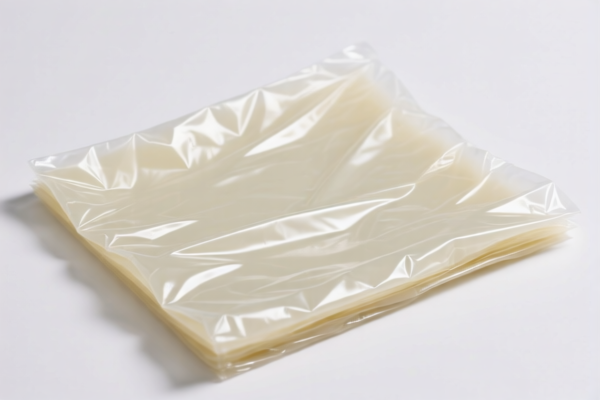
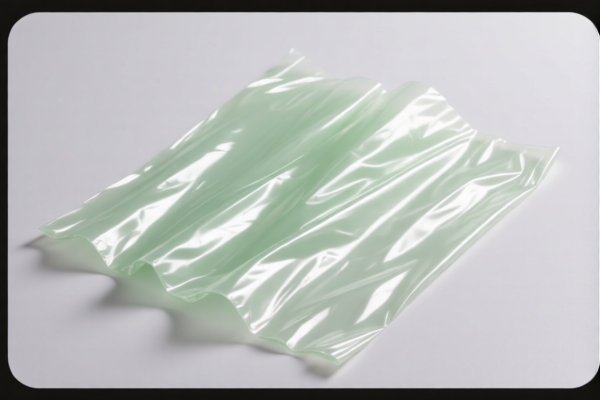
AI分析
🧪 Cellulose Acetate Composite Sheet
🌐 HS Code Reference & Customs Clearance Guide | 2026 Latest Tariff Analysis | Professional-Level Strategy for US Imports from China
📌 Part I: Product Definition & Classification: Do You Really Understand "Cellulose Acetate"?
Cellulose Acetate Composite Sheets are semi-synthetic plastic materials derived from cellulose (usually wood pulp or cotton linter). They are chemically modified by acetylating the hydroxyl groups of cellulose. In international trade, these sheets are categorized based on their chemical derivation status and physical form.
Key Distinction Points: * Primary Forms/Chemical Derivatives (HS 3912): If the material is considered a specific chemical derivative or modified cellulose ether/ester in primary form before becoming a final sheet, it may fall here. * Plastic Sheets/Plates (HS 3920/3921): If the material is fully formed into a solid sheet, plate, or film, it is classified under Chapter 39 (Plastics and Articles Thereof). * HS 3920: Sheets made from specific cellulose derivatives (like cellulose acetate). * HS 3921: Sheets made from other plastics or synthetic polymers if the derivation isn't strictly classified under the specific cellulose derivative codes in 3920.
⚠️ Critical Classification Logic:
- The US HTSUS distinguishes between chemical derivatives (3912) and manufactured plastic articles (3920/3921).
- Most commercial "composite sheets" are considered manufactured plates/shapes, favoring 3920 or 3921.
- However, some interpretations argue that if the "composite" nature implies a specific chemical modification not fully consolidated into a standard plastic polymer, 3912 might be argued (though rare for finished sheets).
- Misclassification Risk: Declaring a finished sheet as a "chemical intermediate" (3912) when it is clearly a "plastic sheet" (3920) can lead to seizures for misdeclaration. Conversely, using the wrong subheading in 3920 can lead to duty discrepancies.
📦 Part II: HS Code Classification Matrix (2026 Latest Tariff Data)
Based on the provided dataset, here are the 5 specific HS Codes applicable to Cellulose Acetate Composite Sheets, with detailed tax breakdowns for imports from China to the USA.
| HS Code | Summary Description | Key Classification Logic | Base Tariff | Section 301 (25%) | Section 122 (10%) | Total Tax Rate |
|---|---|---|---|---|---|---|
3912.12.00.00 |
Modified cellulose acetate plate; Material: Cellulose acetate; Form: Plate. Classified as a primary derivative/chemical derivative. | Chemical Derivative Focus: Viewed as a derivative product rather than a general plastic sheet. | 5.6% | 25.0% | 10.0% | 40.6% |
3920.73.00.00 |
Cellulose acetate derivative plate; Material: Cellulose acetate derivative; Form: Plate. Fits "Plates/Sheets of Cellulose Acetate". | Specific Cellulose Acetate Sheet: The most precise fit for sheets made specifically from cellulose acetate derivatives. | 2.9% | 25.0% | 10.0% | 37.9% |
3920.79.50.00 |
Cellulose derivative plate; Material: Other cellulose derivatives; Form: Plate. Non-foamed plastic sheet. | Other Cellulose Derivatives: Used if the acetate is grouped under "other" derivatives not specifically listed in 3920.73. | 3.7% | 25.0% | 10.0% | 38.7% |
3921.19.00.90 |
Composite plate; Material: Plastic/Synthetic Polymer. Fits logic of "Other Plastic Sheets". | General Plastic Logic: Classified under "Other Plates, Sheets..." of plastic, ignoring the specific cellulose derivation. | 6.5% | 25.0% | 10.0% | 41.5% |
3921.90.50.50 |
Composite plate; Material: Synthetic Resin/Plastic; Form: Plate/Film. Fits general plate requirements. | Other Plastic Plates: A broader category for synthetic resin plates not elsewhere specified. | 4.8% | 25.0% | 10.0% | 39.8% |
🔍 Data Note:
- All codes include Section 301 Tariff (25%) and Section 122 Tariff (10%), totaling an additional 35% on top of the base rate.
- The Base Tariff varies from 2.9% to 6.5% depending on the specificity of the chemical derivation.
- Lowest Total Tax:3920.73.00.00at 37.9%.
💰 Part III: Detailed Tariff Breakdown & Legal Basis
✅ Applicable Market: United States (US)
✅ Origin: China (CN)
✅ Effective Date: Current US Trade Policy (Post-2024 adjustments)
🎯 1. 3912.12.00.00 —— Modified Cellulose Acetate (Primary Derivative)
| Item | Detail |
|---|---|
| Base Tariff | 5.6% |
| Section 301 Tariff | +25.0% (USITC Footnote) |
| Section 122 Tariff | +10.0% (Special Provision for Certain Products) |
| Total Effective Rate | 40.6% |
| De Minimis Exemption | ❌ NOT ELIGIBLE (Value > $800 is taxed; even if < $800, high-risk goods are scrutinized) |
| Legal Path | HTSUS:3912.12.00.00 → USITC:301_Trade_Remedies → Executive_Order:122 |
📌 Explanation:
- This code is chosen if the customs broker argues the product is a chemical derivative rather than a finished plastic article.
- High Base Rate (5.6%) makes it more expensive than the optimal code (3920.73).
- Use this only if the material is clearly a primary derivative sold in bulk, not a finished structural sheet.
🎯 2. 3920.73.00.00 —— Cellulose Acetate Plates/Sheets (✅ RECOMMENDED)
| Item | Detail |
|---|---|
| Base Tariff | 2.9% |
| Section 301 Tariff | +25.0% |
| Section 122 Tariff | +10.0% |
| Total Effective Rate | 37.9% |
| De Minimis Exemption | ❌ NOT ELIGIBLE |
| Legal Path | HTSUS:3920.73.00.00 → USITC:301_Trade_Remedies → Executive_Order:122 |
📌 Explanation:
- Lowest Total Tax (37.9%).
- Specifically targets cellulose acetate sheets/plates.
- Why it’s best: It accurately describes the material (Cellulose Acetate) and form (Plate/Sheet) without over-generalizing.
- Risk: Must ensure the product is indeed cellulose acetate and not a generic "cellulose derivative" or "other plastic."
🎯 3. 3920.79.50.00 —— Other Cellulose Derivative Plates
| Item | Detail |
|---|---|
| Base Tariff | 3.7% |
| Section 301 Tariff | +25.0% |
| Section 122 Tariff | +10.0% |
| Total Effective Rate | 38.7% |
| De Minimis Exemption | ❌ NOT ELIGIBLE |
📌 Explanation:
- Used if the acetate is mixed with other cellulose derivatives or not purely "cellulose acetate" as defined in 3920.73.
- Slightly higher base rate than 3920.73.
🎯 4. 3921.19.00.90 —— Other Plastic Plates/Sheets
| Item | Detail |
|---|---|
| Base Tariff | 6.5% |
| Section 301 Tariff | +25.0% |
| Section 122 Tariff | +10.0% |
| Total Effective Rate | 41.5% |
| De Minimis Exemption | ❌ NOT ELIGIBLE |
📌 Explanation:
- Highest Base Rate (6.5%).
- This is a "catch-all" for plastic sheets if 3920 doesn't apply.
- Avoid if the product is clearly cellulose acetate, as it’s unnecessarily expensive and may trigger scrutiny for misclassification.
🎯 5. 3921.90.50.50 —— Other Plates/Sheets of Plastic
| Item | Detail |
|---|---|
| Base Tariff | 4.8% |
| Section 301 Tariff | +25.0% |
| > Section 122 Tariff | +10.0% |
| Total Effective Rate | 39.8% |
| De Minimis Exemption | ❌ NOT ELIGIBLE |
📌 Explanation:
- General category for synthetic resin plates.
- Mid-range tax. Use only if the material is a blend not fitting 3920.73 or 3920.79.
🛠️ Part IV: Customs Clearance Practical Advice
✅ 1. Documentation Checklist (Essential)
| Document | Required? | Purpose |
|---|---|---|
| Product Specification Sheet | ✅ Yes | Details chemical composition (Cellulose Acetate %), additives, and physical properties. |
| Formula/Material Safety Data Sheet (MSDS) | ✅ Yes | Proves chemical derivation (supports 3912 vs 3920 argument). |
| Commercial Invoice | ✅ Yes | Must clearly state: "Cellulose Acetate Composite Sheet, HS Code 3920.73.00.00" |
| Packing List | ✅ Yes | Itemizes dimensions, weight, and quantity. |
| Certificate of Origin | ✅ Yes | Essential for confirming Chinese origin (triggers Section 301 & 122). |
| Photo of Product & Label | ✅ Yes | Shows form factor (sheet/plate) and any branding. |
| HTSUS Pre-Ruling Request | ✅ Strongly Recommended | Avoids misclassification penalties. |
✅ 2. Declaration Strategy & Keywords
🔥 "Be Specific, Be Accurate, Avoid Generalizations!"
| Scenario | Correct Declaration | Incorrect/High-Risk Declaration |
|---|---|---|
| Pure Cellulose Acetate Sheet | Cellulose Acetate Sheet, 3920.73.00.00 |
"Plastic Sheet" → 3921 (Higher tax, audit risk) |
| Mixed Cellulose Derivative | Cellulose Derivative Sheet, 3920.79.50.00 |
"Chemical Intermediate" → 3912 (If misclassified as primary form) |
| Generic Synthetic Resin Sheet | Synthetic Resin Plate, 3921.90.50.50 |
"Cellulose Sheet" (If not actually cellulose) |
| OEM Custom Composite | Composite Acetate Plate, 3920.73.00.00 |
"Raw Material" (If already formed into sheet) |
📌 Key Tip:
- Do NOT use generic terms like "Plastic Sheet" without specifying the polymer type.
- If the product is a composite (layered), ensure the principal material determines the classification. If cellulose acetate is the core or outer layer, 3920.73 is likely best.
✅ 3. Special Considerations for Section 122 & 301
- Section 301 (25%): Applies to all Chinese-origin goods in Chapter 39, with few exceptions. Cellulose acetate sheets are not exempt.
- Section 122 (10%): This is a newer/additional tariff for certain imports. It applies to all 5 codes listed above. You cannot avoid this by changing the HS Code within the provided data.
- No De Minimis Exemption: These goods cannot be shipped via de minimis (Section 321) under $800 to avoid taxes. They must be formally entered.
🌍 Part V: Global Market Comparison (2026)
| Country/Region | Recommended HS Code | Base Tariff | Section 301/122? | Total Tax (China Origin) |
|---|---|---|---|---|
| 🇺🇸 USA | 3920.73.00.00 |
2.9% | ✅ Yes (35%) | 37.9% |
| 🇨🇳 China | 3920.73.00.00 |
6.5% | ❌ No | 6.5% |
| 🇪🇺 EU | 3920.73.00.00 |
6.5% | ❌ No | 6.5% |
| 🇬🇧 UK | 3920.73.00.00 |
6.5% | ❌ No | 6.5% |
| 🇦🇺 Australia | 3920.73.00.00 |
5.0% | ❌ No | 5.0% |
| 🇯🇵 Japan | 3920.73.00.00 |
6.0% | ❌ No | 6.0% |
📌 Insight:
- The USA is the most expensive market due to the additional 35% in tariffs (301 + 122).
- Other major markets (EU, China, Japan, Australia) only charge the base tariff (6.5% or lower).
- Strategy: If exporting to non-US markets, the cost burden is significantly lower. For US exports, consider supply chain diversification or pricing adjustments.
📌 Part VI: Common Mistakes & Pitfalls (Learn from Others)
❌ Mistake 1: Declaring as 3921.19.00.90 (General Plastic) when it is Cellulose Acetate
👉 Consequence: Higher base tariff (6.5% vs 2.9%) → $3,600 extra tax per $100k shipment.
👉 Risk: May still be audited for misclassification.
❌ Mistake 2: Declaring as 3912.12.00.00 (Chemical Derivative) for a finished sheet
👉 Consequence: Customs may reject it, claiming it’s a manufactured article, not a primary derivative. Leads to delay, penalties, or reclassification to 3920.73.
❌ Mistake 3: Ignoring Section 122 (10%)
👉 Consequence: Underpayment of duties → Seizure, fines, and loss of import privileges.
❌ Mistake 4: Using "De Minimis" for shipments under $800
👉 Consequence: Illegal. These goods are subject to formal entry. Attempting to bypass this can lead to blacklisting.
✅ Correct Practice:
"Cellulose Acetate Composite Sheet, 2mm thick, for industrial lining, HS Code 3920.73.00.00, Origin: China, Value: $X, Tax: 37.9%."
🎯 Part VII: Conclusion & Pro Tips
🎯 Key Takeaways:
1. Best HS Code: 3920.73.00.00 (Lowest total tax: 37.9%).
2. Highest Tax Code: 3921.19.00.90 (Total tax: 41.5%).
3. No Tax Hacks: Section 301 (25%) + Section 122 (10%) are mandatory for Chinese-origin cellulose acetate sheets.
4. Documentation is Key: Provide detailed chemical specs to justify 3920.73.00.00.
📌 Final Advice:
- Apply for an HTSUS Pre-Ruling before shipping. It costs a small fee but saves thousands in potential disputes.
- Work with a licensed customs broker who understands Chapter 39 nuances.
- Consider Supply Chain Strategy: If US margin is thin, explore nearshoring or sourcing from non-China origins to avoid Section 301/122.
📣 Action Plan:
📞 Step 1: Collect chemical composition reports.
📞 Step 2: Confirm product form (Sheet/Plate).
📞 Step 3: Submit HTSUS Ruling Request for3920.73.00.00.
📞 Step 4: Budget for 37.9% total duty in your pricing model.
✨ Professional Clearance Starts with Precise Classification!
💼 Your Cost Control is in Your HS Code Choice!
用户评价
关于 HS 编码归类
协调制度(HS)是由世界海关组织(WCO)制定的国际贸易商品分类标准。全球 200 多个国家采用 HS 系统作为海关关税、贸易统计和进出口监管的基础。
每个 HS 编码遵循以下层级结构:
- 章(2 位)——商品大类(例如:第 84 章:机器和机械设备)
- 品目(4 位)——章内的更具体分类
- 子目(6 位)——国际通用细分,所有 WCO 成员国统一使用
- 本国细分(8-10 位)——各国自行扩展的细分编码,如美国 HTSUS 10 位编码
正确的 HS 编码归类对于顺利通关、准确缴纳关税和遵守贸易法规至关重要。错误归类可能导致海关延误、多缴关税或罚款。
从CN进口到US时,适用的关税税率可能包括:
- 最惠国(MFN)税率——适用于 WTO 成员国的标准关税税率
- 普通税率——适用于无贸易协定国家
- 贸易救济关税——附加关税,如 301 条款(反倾销)、232 条款(国家安全)或反补贴税
本页内容仅供参考。如需正式归类,请咨询当地海关或持牌报关代理。