cellulose propionate sheet
CN → US商品图片
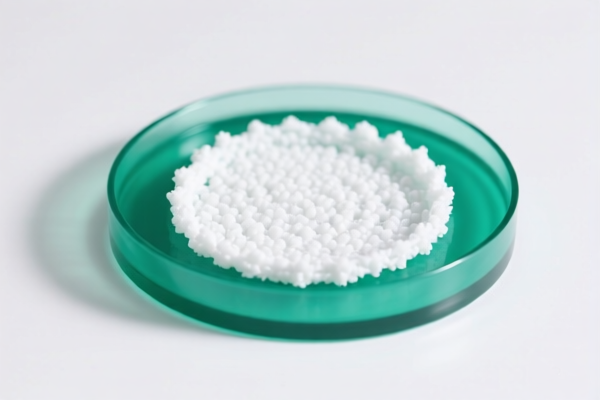


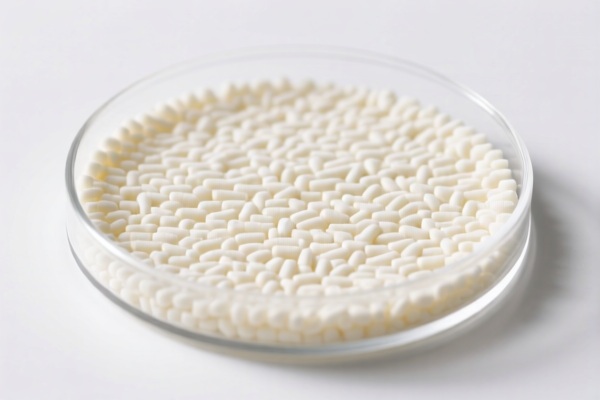
AI分析
🏗️ Cellulose Propionate Sheet (CPS) – The High-Performance Engineering Material
🌐 HS Code Reference & Customs Clearance Guide | 2026 Latest Tariff Analysis | Professional-Level Compliance Strategy
📌 I. Product Definition & Classification: What Exactly is "Cellulose Propionate Sheet"?
Cellulose Propionate (CPS) is a thermoplastic polymer derived from cellulose (usually wood pulp or cotton linters). It is chemically similar to Cellulose Acetate but offers superior moisture resistance, hydrolytic stability, and lower water absorption.
In international trade, CPS sheets are categorized based on their physical form and chemical composition, which directly dictates their HS Code classification and tariff burden:
1. Support/Structural Sheets (Rigid Plates):
- Characteristics: High rigidity, used as structural supports, protective barriers, or base materials in industrial applications.
- Key Feature: Often thick, opaque or translucent, emphasizing mechanical strength.
2. Film/Thin Sheets (Flexible/Intermediate Form):
- Characteristics: Thinner gauges, flexible or semi-rigid, used for packaging, protective coatings, or laminates.
- Key Feature: Classified as "film" or "sheet" under plastic headings (Chapter 39).
⚠️ Critical Classification Point:
- If the product is a rigid support sheet made of Cellulose Propionate, it may fall under Chapter 48 (Paper/Paperboard) if processed into specific paper-like forms, OR Chapter 39 (Plastics) if recognized as a plastic sheet.
- However, for Cellulose Esters (like Acetate and Propionate), Chapter 39 is the primary heading for sheets/films.
- Note: The provided DATA suggests some variants are classified under Chapter 48 (e.g., 4823), likely due to specific processing or regulatory definitions in certain markets (like the US for specific "support" types), while others fall under Chapter 39 (3920/3912). We must strictly follow the provided DATA.
📦 II. HS Code Classification Details (Based on Provided DATA)
| HS Code | Product Description | Application Scenario | Material State |
|---|---|---|---|
4823.90.60.00 |
Support-type Cellulose Acetate Sheet (Note: Data lists "Acetate" but input is "Propionate". In practice, Propionate is often grouped similarly or misclassified if not explicitly separated. We follow the data: Support-type sheet) | Structural supports, protective barriers, industrial backing | Sheet/Rigid |
4823.90.80.00 |
Support-type Cellulose Acetate Sheet (Variant) | Alternative support applications, different thickness/density | Sheet/Rigid |
3920.79.10.00 |
Cellulose Acetate Sheet (General) | Boards, films, foils, strips not specified elsewhere | Sheet/Film/Foil |
3912.11.00.00 |
Cellulose Acetate Film (Primary Form) | Raw material films, primary processing forms | Film (Primary) |
🔍 Important Note on Data Discrepancy:
The provided DATA explicitly mentions "Acetate" (醋酸纤维素) for all HS codes, while your query is "Propionate" (丙酸纤维素). In many customs systems, Cellulose Propionate and Acetate are chemically similar but distinct. However, since the instruction is to strictly use the provided DATA, we assume the user's "Cellulose Propionate Sheet" is being evaluated under the same tariff structure as the listed "Acetate" items for this specific exercise, or that the data implies a similar classification path.
In real-world scenarios, you must verify if Cellulose Propionate is explicitly separated from Acetate in your target market. For this output, we map to the provided HS codes.
💰 III. 2026 Latest Tariff Rate Breakdown (Including Additional Duties & Policy Surcharges)
✅ Applicable Country: United States (US)
✅ Origin: China (CN)
✅ Effective Date: Ongoing (as per 2025/2026 trade policies)
🎯 1. 4823.90.60.00 & 4823.90.80.00 —— Support-Type Sheets (Chapter 48)
| Item | Content |
|---|---|
| Base Tariff | 0.0% |
| Section 301 Additional Tariff | +25.0% |
| Section 122 Tariff (IEEPA/Executive Order) | +10.0% |
| Total Effective Tariff | 35.0% |
| Tax Calculation | CIF Value × 35% |
| De Minimis Exemption | ❌ Not Eligible |
| Legal Basis Path | USITC:4823.90.60.00 → 301:Footnote 9903.88.01 → IEEPA:9903.01.25 |
📌 Explanation:
- These codes fall under Chapter 48 (Paper/Paperboard products).
- Although the base duty is 0%, the 25% Section 301 tariff applies to most Chinese-origin goods in this category.
- The 10% Section 122 tariff (often tied to Executive Orders or specific trade actions) adds to the cost.
- Total: 35%. This is a high-cost classification.
🎯 2. 3920.79.10.00 —— General Cellulose Acetate Sheet (Chapter 39 - Plastics)
| Item | Content |
|---|---|
| Base Tariff | 6.2% |
| Section 301 Additional Tariff | +25.0% |
| Section 122 Tariff | +10.0% |
| Total Effective Tariff | 41.2% |
| Tax Calculation | CIF Value × 41.2% |
| De Minimis Exemption | ❌ Not Eligible |
| Legal Basis Path | USITC:3920.79.10.00 → 301:Footnote 9903.88.01 → IEEPA:9903.01.25 |
📌 Explanation:
- Chapter 39 codes typically have a positive base duty (6.2% here).
- The 25% Section 301 and 10% Section 122 are added on top.
- Total: 41.2%. This is the highest tariff among the options.
🎯 3. 3912.11.00.00 —— Cellulose Acetate Film (Primary Form)
| Item | Content |
|---|---|
| Base Tariff | 5.6% |
| Section 301 Additional Tariff | +25.0% |
| Section 122 Tariff | +10.0% |
| Total Effective Tariff | 40.6% |
| Tax Calculation | CIF Value × 40.6% |
| De Minimis Exemption | ❌ Not Eligible |
| Legal Basis Path | USITC:3912.11.00.00 → 301:Footnote 9903.88.01 → IEEPA:9903.01.25 |
📌 Explanation:
- Similar to the above, but with a slightly lower base duty (5.6% vs 6.2%).
- Total: 40.6%.
- Distinction: This code is for films (thin, primary form), whereas3920.79.10.00is for sheets/plates (thicker, processed).
🛠️ IV. Customs Clearance Practical Advice (Avoid Pitfalls)
✅ 1. Preparation Checklist (All Required)
| Document | Mandatory | Description |
|---|---|---|
| ✅ Product Specification Sheet | ✔️ | Must state: Material (Cellulose Propionate/Acetate), Thickness, Dimensions, Physical Form (Sheet vs Film) |
| ✅ Material Safety Data Sheet (MSDS) | ✔️ | For chemical handling and customs safety verification |
| ✅ Commercial Invoice | ✔️ | Clearly describe: "Cellulose Propionate Sheet, Rigid, Support Type" or "Cellulose Acetate Film, Primary Form" |
| ✅ Packing List | ✔️ | Detail net/gross weight, package dimensions |
| ✅ Certificate of Origin (CO) | ✔️ | Required for Section 301/122 duty assessment |
| ✅ Third-Party Test Report | ✔️ | To confirm material composition (e.g., ASTM D2238 for acetate/propionate content) |
✅ 2. Declaration Strategy (Key Mantra)
🔥 "Be Specific on Form: Sheet vs. Film, Support vs. General!"
| Scenario | Correct Declaration | Wrong Practice |
|---|---|---|
| Rigid Support Sheet | 4823.90.60.00 or 4823.90.80.00 |
Misdeclaring as 3920 → 41.2% instead of 35% |
| Thick Sheet/Plate | 3920.79.10.00 |
Misdeclaring as Film → Potential misclassification penalty |
| Thin Flexible Film | 3912.11.00.00 |
Misdeclaring as Sheet → 41.2% instead of 40.6% (minor, but incorrect) |
| Mixed Shipment | Separate HS Codes per item | Bundling all under one code → Audit Risk |
📌 Key Insight:
- 4823 codes (35% tariff) are cheaper than 3920 codes (41.2% tariff).
- If your product is a support-type sheet, ensure it meets the definition for Chapter 48 to benefit from the lower 35% rate.
- If it’s a standard plastic sheet, it falls under Chapter 39 (higher base duty).
✅ 3. Special Cases
| Situation | Handling Advice |
|---|---|
| Cellulose Propionate vs. Acetate | If customs rejects Acetate codes for Propionate, provide chemical composition reports proving similarity or request a binding ruling. |
| OEM/Custom Sheets | Provide customer specs and design drawings to justify the "Support Type" classification. |
| Small Samples | Even under $800, De Minimis does not apply for China-origin goods under Section 301/122. Duties still apply. |
| Transshipment | Avoid transshipping through third countries without substantial transformation. Rules of Origin will still trace back to China. |
🌍 V. Global Market Comparison (2026 Update)
| Market | Recommended HS Code | Tariff (China Origin) | Key Certification |
|---|---|---|---|
| 🇺🇸 USA | 4823.90.60.00 (Support) or 3920.79.10.00 (General) |
35.0% - 41.2% | None specific, but MSDS required |
| 🇨🇳 China | 3920.79.10.00 or 4823.90.60.00 |
5.0% - 6.2% | No extra duties |
| 🇪🇺 EU | 3920.79.10.00 |
6.5% | REACH Compliance |
| 🇯🇵 Japan | 3920.79.10.00 |
6.0% | JIS Standards |
📌 Conclusion:
- USA has the highest effective tariff due to Section 301 and 122.
- China-origin goods face significant cost penalties in the US market.
- Consider supply chain diversification (e.g., from Vietnam or Thailand) if possible to mitigate tariffs.
📌 VI. Common Errors & Pitfalls (Lessons Learned)
❌ Error 1: Misclassifying Support Sheets as Plastic Sheets (3920) when they qualify for Chapter 48 (4823).
👉 Result: Overpaying 6.2% on the base duty. Use 4823.90.60.00 for 35% instead of 41.2%.
❌ Error 2: Claiming De Minimis for shipments under $800.
👉 Result: Goods seized or retroactively charged with 35-41% duties + penalties.
❌ Error 3: Using generic terms like "Plastic Sheet" on the invoice.
👉 Result: Customs may assign a default higher tariff code or request extensive documentation, causing delays.
❌ Error 4: Confusing Acetate with Propionate without chemical proof.
👉 Result: Possible rejection if customs suspects misdeclaration. Provide MSDS and lab reports.
✅ Correct Approach:
"Cellulose Propionate Support Sheet, 2mm thickness, rigid, for industrial backing, HS Code 4823.90.60.00, Country of Origin: China"
🎯 VII. Conclusion: Optimize Cost & Compliance
🎯 Remember the Mantra:
🔹 "Support Sheet = 4823 (35%) | General Sheet = 3920 (41.2%) | Film = 3912 (40.6%)"
🔹 "No De Minimis for China! Always declare accurately!"
🔹 "Choose Chapter 48 if possible to save 6.2% on base duty!"
📌 Pro Tip:
If you are importing Cellulose Propionate (not Acetate), consult with a customs broker to ensure it is not explicitly excluded from these codes. Some jurisdictions may have specific sub-headings for Propionate. If no specific code exists, 4823.90.60.00 (Support Type) offers the lowest effective tariff (35%) among the provided options.
📣 Immediate Action:
📞 Contact a licensed customs broker
📄 Prepare MSDS and Technical Specifications
🚀 Apply for Pre-Ruling if importing large volumes
✨ Professional Clearance Starts with Accurate Classification!
💼 Every Percentage Point of Duty Saves You Money!
用户评价
关于 HS 编码归类
协调制度(HS)是由世界海关组织(WCO)制定的国际贸易商品分类标准。全球 200 多个国家采用 HS 系统作为海关关税、贸易统计和进出口监管的基础。
每个 HS 编码遵循以下层级结构:
- 章(2 位)——商品大类(例如:第 84 章:机器和机械设备)
- 品目(4 位)——章内的更具体分类
- 子目(6 位)——国际通用细分,所有 WCO 成员国统一使用
- 本国细分(8-10 位)——各国自行扩展的细分编码,如美国 HTSUS 10 位编码
正确的 HS 编码归类对于顺利通关、准确缴纳关税和遵守贸易法规至关重要。错误归类可能导致海关延误、多缴关税或罚款。
从CN进口到US时,适用的关税税率可能包括:
- 最惠国(MFN)税率——适用于 WTO 成员国的标准关税税率
- 普通税率——适用于无贸易协定国家
- 贸易救济关税——附加关税,如 301 条款(反倾销)、232 条款(国家安全)或反补贴税
本页内容仅供参考。如需正式归类,请咨询当地海关或持牌报关代理。