cleaning bottle
CN → US| HS编码 | 关税税率 | 原产国 | 目的国 | 文档 |
|---|---|---|---|---|
| 8543709860 | 37.6% | CN | US | 官方文档 |
| 8509805095 | 14.2% | CN | US | 官方文档 |
| 8421210000 | 35.0% | CN | US | 官方文档 |
| 8421990140 | 35.0% | CN | US | 官方文档 |
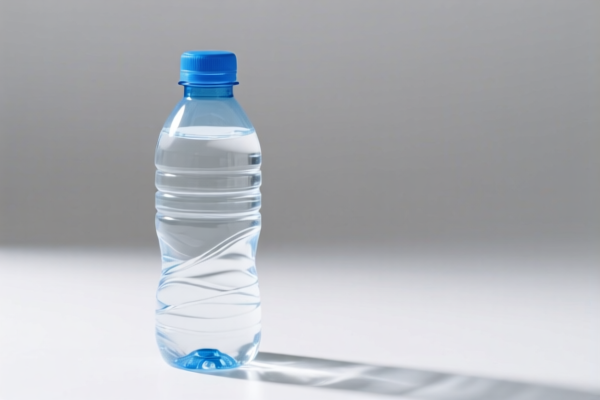
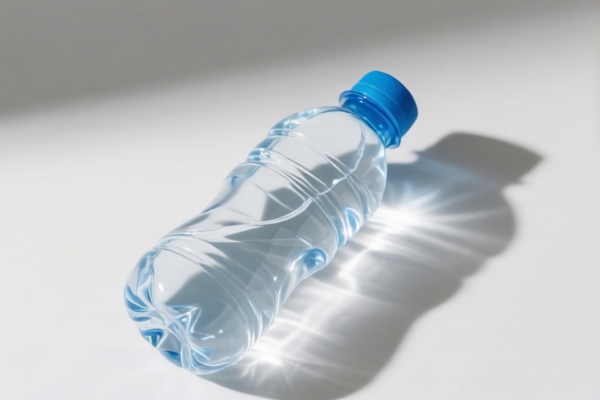
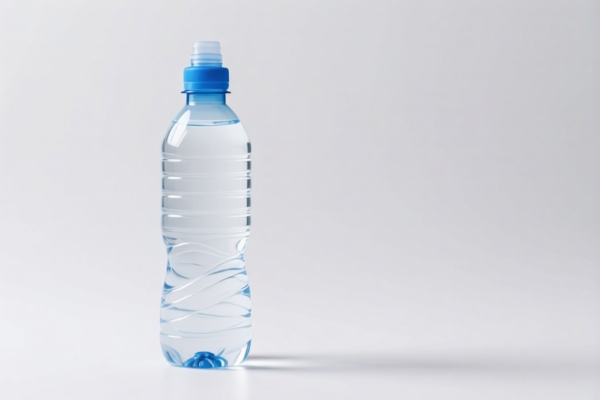
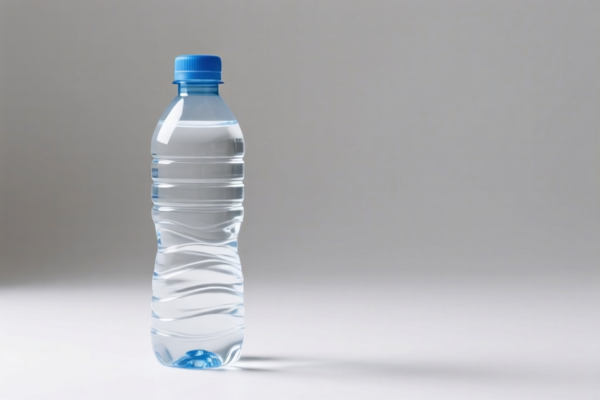
商品图片
AI分析
💧 Cleaning Bottles (Water Purification/Filtering Devices)
🌐 HS Code Reference & Clearance Guide | 2026 Latest Tariff Analysis | Professional Clearance Strategy
📌 I. Product Definition & Classification: What Exactly is a "Cleaning Bottle"?
In the context of international trade and tariff classification, "Cleaning Bottles" (often referred to as water purifiers, filtration devices, or water treatment units) are categorized based on their function and technical nature. The classification varies significantly depending on whether the device is viewed as a mechanical filtration unit or an electrical appliance.
⚠️ Key Distinction Point:
- If the device relies on mechanical filtration (e.g., reverse osmosis, ultrafiltration, sediment filters) without independent electrical processing logic beyond pumping → It may fall under Chapter 84 (Machinery).
- If the device is an electrical household appliance with its own power source and control system for water treatment → It falls under Chapter 85 (Electrical Machinery).
- Critical Warning: US tariffs (Section 301 & IEEPA) apply heavily to these categories. Misclassification can lead to massive duty discrepancies (e.g., 14.2% vs. 37.6%).
📦 II. HS Code Classification Details (2026 Latest Tariff Authority Comparison)
Based on the provided data, there are four potential HS Codes for "Cleaning Bottles" (Water Purification Devices). Below is the detailed breakdown:
| HS Code | Product Description & Summary | Application Scenario | Functionality Focus |
|---|---|---|---|
8543.70.98.60 |
Electrical Apparatus: "Cleaning bottles belong to independent-function electrical appliances/devices, fitting the residual category for other machines and apparatus." | Portable water purifiers with complex electronic controls, UV sterilization, or smart monitoring. | Independent Electrical Function |
8509.80.50.95 |
Household Electric Appliances: "Cleaning bottles belong to water treatment equipment within household electric appliances, fitting the residual category for other appliances." | Standard household water filter pitchers, countertop electric water dispensers/purifiers. | Household Appliance |
8421.21.00.00 |
Machinery for Filtration: "Cleaning bottles are used for filtering or purifying water, matching mechanical apparatus for water filtration/purification." | Mechanical water filters (RO systems, UF systems) where the core function is the filtration process itself. | Water Filtration/Machinery |
8421.99.01.40 |
Parts/Final Product of Machinery: "Cleaning bottles fit water filtration/purification purposes, belonging to finished products within mechanical apparatus and their parts." | Complete mechanical filtration units that might be viewed as "parts" or "finished mechanical devices" rather than standalone appliances. | Mechanical Parts/Device |
🔍 Key Insight:
- Chapter 84 (8421...) focuses on the mechanical process of filtering water.
- Chapter 85 (8509...&8543...) focuses on the electrical nature of the device.
- Tariff Impact: The difference between8509.80.50.95(14.2% total) and8543.70.98.60/8421.21.00.00(35%-37.6% total) is over 20%. Correct classification is financially critical.
💰 III. 2026 Latest Tariff Rate Details (Including Additional Taxes & Policy Surcharges)
✅ Applicable Country: United States (US)
✅ Origin: China (CN)
✅ Effective Time: 2025 November 10 onwards (including subsequent imports)
🎯 1. 8543.70.98.60 —— Independent Electrical Apparatus (High Tariff)
| Item | Details |
|---|---|
| Base Tariff | 2.6% |
| Section 301 Additional Tariff | +25.0% |
| IEEPA Section 122 Tariff | +10.0% |
| Total Effective Rate | 37.6% |
| Calculation Method | CIF Value × 37.6% |
| De Minimis Exemption | ❌ Not Eligible |
| Legal Basis Path | IEEPA:9903.01.25 → USITC:8543.70.98.60 → FOOTNOTE:301.8543 |
📌 Explanation:
- This code classifies the bottle as a complex electrical device not specifically listed elsewhere.
- The 37.6% rate is extremely high due to the叠加 (stacking) of the 25% Section 301 duty and the 10% IEEPA tariff.
- Risk: High cost of entry; requires strong margin buffer.
🎯 2. 8509.80.50.95 —— Household Electric Appliance (Optimal Tariff)
| Item | Details |
|---|---|
| Base Tariff | 4.2% |
| Section 301 Additional Tariff | +0.0% |
| IEEPA Section 122 Tariff | +10.0% |
| Total Effective Rate | 14.2% |
| Calculation Method | CIF Value × 14.2% |
| De Minimis Exemption | ❌ Not Eligible |
| Legal Basis Path | IEEPA:9901.25 → USITC:8509.80.50.95 → FOOTNOTE:301.8509 |
📌 Explanation:
- This is the most favorable classification among the options, assuming the product qualifies as a "household electric appliance."
- Key Advantage: No Section 301 additional tariff (0%), only Base (4.2%) + IEEPA (10%).
- Strategy: If your product is a standard household water purifier/dispenser, argue for this classification to save ~23.4% in duties compared to8543...or8421....
🎯 3. 8421.21.00.00 —— Machinery for Water Filtration (High Tariff)
| Item | Details |
|---|---|
| Base Tariff | 0.0% |
| Section 301 Additional Tariff | +25.0% |
| IEEPA Section 122 Tariff | +10.0% |
| Total Effective Rate | 35.0% |
| Calculation Method | CIF Value × 35.0% |
| De Minimis Exemption | ❌ Not Eligible |
| Legal Basis Path | IEEPA:9903.01.25 → USITC:8421.21.00.00 → FOOTNOTE:301.8421 |
📌 Explanation:
- Although the base tariff is 0%, the 35% total rate makes it expensive.
- The 25% Section 301 tariff applies heavily to mechanical water treatment equipment.
- Comparison: Slightly better than8543...(37.6%) but worse than8509...(14.2%).
🎯 4. 8421.99.01.40 —— Parts/Finished Mechanical Device (High Tariff)
| Item | Details |
|---|---|
| Base Tariff | 0.0% |
| Section 301 Additional Tariff | +25.0% |
| IEEPA Section 122 Tariff | +10.0% |
| Total Effective Rate | 35.0% |
| Calculation Method | CIF Value × 35.0% |
| De Minimis Exemption | ❌ Not Eligible |
| Legal Basis Path | IEEPA:9903.01.25 → USITC:8421.99.01.40 → FOOTNOTE:301.8421 |
📌 Explanation:
- Similar to8421.21.00.00, this code captures the mechanical aspect but may be used if the device is considered a "part" of a larger system or a generic mechanical device.
- Risk: High duty burden (35%). Not recommended unless8509.80.50.95is legally inapplicable.
🛠️ IV. Clearance Practical Advice (Battle-Tested Pitfall Guide)
✅ 1. Preparation Checklist (Mandatory Documents)
| Document | Must Provide | Description |
|---|---|---|
| ✅ Product Specifications | ✔️ | Include voltage, wattage, filter type, flow rate, capacity. |
| ✅ Circuit Diagram / Schematic | ✔️ | Critical to prove whether it has independent electrical control (supports 8509 or 8543). |
| ✅ Product Photos (with Label) | ✔️ | Clear view of nameplate, model, input/output specs. |
| ✅ Third-Party Test Reports | ✔️ | NSF/ANSI standards, FCC (for electrical), RoHS, UL. |
| ✅ Commercial Invoice | ✔️ | Accurately describe as "Household Water Purifier" or "Electric Water Treatment Appliance." |
| ✅ Origin Certificate (CO) | ✔️ | If not from China, may qualify for exemptions. |
| ✅ Packing List | ✔️ | Clarify relationship between main unit and accessories (filters, tubes). |
✅ 2. Declaration Strategy (Key Mantras)
🔥 "Electrical Nature Rules, Household Use Wins, Mechanical Base is High!"
| Scenario | Correct Declaration | Incorrect Approach |
|---|---|---|
| Standard Household Water Purifier/Dispenser | 8509.80.50.95 (14.2%) |
Misdeclare as "Mechanical Filter" → 35% |
| Smart Purifier with UV/Electronic Controls | 8543.70.98.60 (37.6%) |
Misdeclare as "Appliance" → Risk of 14.2% but potential penalty |
| Purely Mechanical Filter (No Electricity) | 8421.21.00.00 (35.0%) |
N/A (Base rate 0%, but +35% total) |
| Filter Cartridges Only | 8421.29.00.00 (Check specific code) |
Declare as "Complete Bottle" → Wrong |
📌 Crucial Tip:
- If your product is electric and used in households, aggressively pursue8509.80.50.95. The 23%+ savings are significant.
- Ensure your marketing materials and manuals emphasize "Household Use" and "Electric Appliance" to support this classification.
✅ 3. Special Case Handling
| Situation | Handling Advice |
|---|---|
| OEM Custom Purifiers | Provide client design specs. If it's a standard household model, stick to 8509. |
| Portable USB/Rechargeable Purifiers | Still likely 8509 if for household/consumer use. Avoid 8421 unless purely mechanical. |
| Industrial Water Treatment Units | Must use 8421.21.00.00. Household codes will be rejected. |
| Parts (Filters, Tubes) | Declare separately. Do not mix with main unit if it complicates classification. |
🌍 V. Global Market Clearance Comparison (2026 Latest)
| Country/Region | Recommended HS Code | Tariff Rate | Certification | Notes |
|---|---|---|---|---|
| 🇺🇸 USA | 8509.80.50.95 |
14.2% | FCC + NSF | Best Option: Avoid 8421 (35%) and 8543 (37.6%) if possible. |
| 🇨🇳 China | 8509.80.50.95 |
~5-8% | CCC + RoHS | Lower tariffs, focus on domestic compliance. |
| 🇪🇺 EU | 8421.21.00.00 or 8509... |
0-4% | CE + WEEE | EU often prefers mechanical codes for filters, but tariffs are low. |
| 🇦🇺 Australia | 8509.80.50.95 |
5% | RCM | Low tariff, focus on electrical safety. |
| 🇯🇵 Japan | 8421.21.00.00 |
0-5% | PSE/JIS | Varies by function; mechanical filters often enjoy 0% base rate. |
📌 Conclusion:
- USA is the most critical market for tariff optimization.
- Target8509.80.50.95for electric household units to minimize the 10% IEEPA burden and avoid the 25% Section 301.
- Avoid8421and8543unless your product is industrial or lacks household appliance characteristics.
📌 VI. Common Errors & Pitfall Guide (Blood-Swept Lessons)
❌ Error 1: Declaring an electric household purifier as a mechanical filter (8421).
👉 Consequence: Pay 35% instead of 14.2%. Overpayment of ~20.8%.
❌ Error 2: Declaring a complex smart purifier as a simple appliance (8509) when it has specialized industrial functions.
👉 Consequence: Customs audit, classification dispute, potential fines and back taxes.
❌ Error 3: Splitting shipment (Main unit + filters) to avoid high duties.
👉 Consequence: Customs may reassess the main unit at 35%+ and fine you for undervaluation.
❌ Error 4: Incorrect Product Name ("Cleaning Bottle" vs. "Water Purifier").
👉 Consequence: Vague descriptions lead to customs hesitation, delays, or default to worst-case classification.
✅ Correct Practice:
"Household Electric Water Purifier, Countertop, 120V, with Reverse Osmosis Filter, Model XYZ, NSF/ANSI 58 Certified, FCC Approved"
🎯 VII. Conclusion: Professional Declaration, Save Money, Smooth Clearance!
🎯 Remember the Mantra:
🔹 "Electric Household = 14.2% (Gold Standard)"
🔹 "Mechanical/Smart = 35%+ (Silver Lead)"
🔹 "Name It Right, Save Big Time!"
📌 Pro Tip:
- If your product is originating from Vietnam, Mexico, Thailand, or Malaysia, you may qualify for IEEPA Exemptions or lower Section 301 rates.
- Apply for Advance Ruling (Ruling Request) with US Customs (CBP) before shipping if your product is on the borderline between 8509 and 8421.
📣 Immediate Action Required:
📞 Contact a Professional Customs Broker
📸 Provide Clear Product Images & Circuit Diagrams
📄 Apply for HS Code Advance Ruling
🚀 Ensure Smooth Clearance, Maximize Profit, and Avoid Customs Nightmares!
✨ Professional Clearance Starts with Precise Classification!
💼 Every Dollar Saved in Duties is Pure Profit!
用户评价
关于 HS 编码归类
协调制度(HS)是由世界海关组织(WCO)制定的国际贸易商品分类标准。全球 200 多个国家采用 HS 系统作为海关关税、贸易统计和进出口监管的基础。
每个 HS 编码遵循以下层级结构:
- 章(2 位)——商品大类(例如:第 84 章:机器和机械设备)
- 品目(4 位)——章内的更具体分类
- 子目(6 位)——国际通用细分,所有 WCO 成员国统一使用
- 本国细分(8-10 位)——各国自行扩展的细分编码,如美国 HTSUS 10 位编码
正确的 HS 编码归类对于顺利通关、准确缴纳关税和遵守贸易法规至关重要。错误归类可能导致海关延误、多缴关税或罚款。
从CN进口到US时,适用的关税税率可能包括:
- 最惠国(MFN)税率——适用于 WTO 成员国的标准关税税率
- 普通税率——适用于无贸易协定国家
- 贸易救济关税——附加关税,如 301 条款(反倾销)、232 条款(国家安全)或反补贴税
本页内容仅供参考。如需正式归类,请咨询当地海关或持牌报关代理。