coniferous timber
CN → US| HS编码 | 关税税率 | 原产国 | 目的国 | 文档 |
|---|---|---|---|---|
| 4401410000 | 35.0% | CN | US | 官方文档 |
| 4401110000 | 35.0% | CN | US | 官方文档 |
| 4407190066 | 35.0% | CN | US | 官方文档 |
| 4403210130 | 35.0% | CN | US | 官方文档 |
| 4407190092 | 35.0% | CN | US | 官方文档 |
商品图片
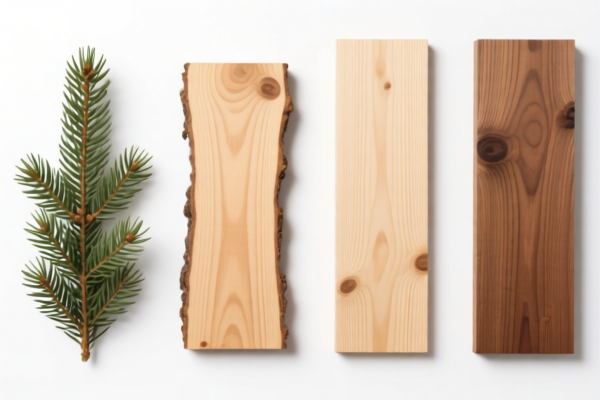
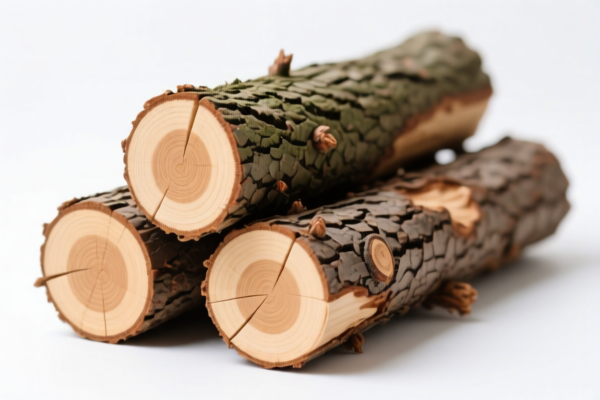
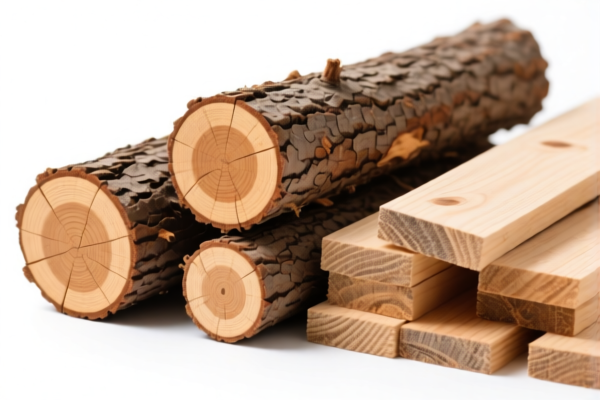
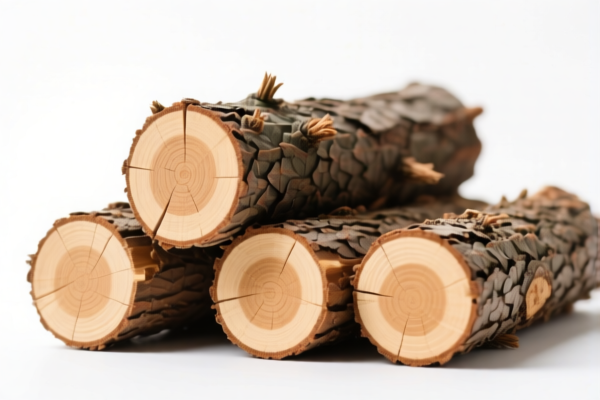
AI分析
🌲 Coniferous Timber (Softwood Logs & Wood Chips)
🌐 HS Code Reference & Customs Clearance Guide | 2024/2025 Latest Tariff Analysis | Professional Entry Strategy
📌 I. Product Definition & Classification: What Exactly Is "Coniferous Timber"?
Coniferous timber (commonly known as softwood, e.g., pine, spruce, fir) is a primary raw material for construction, furniture, and paper production. In international trade, it is strictly categorized based on its physical state and processing level:
Wood Chips/Wood Waste (Sawdust/Logs for Fuel):
- Includes sawdust, wood chips, and small logs intended primarily for fuel or fiber.
- Defined by形态 (shape) as fragmented or small-sized fuel wood.
Construction Logs (Sawn Wood/Rough Wood):
- Includes rough sawn timber, logs, and lumber intended for structural use.
- Defined by形态 (shape) as solid wood, even if roughly squared or bark-covered.
⚠️ Key Distinction Point:
- If the product is "Sawdust" or "Small Fuel Logs" → It falls under Chapter 44.01 or 44.01.11/44.01.41.
- If the product is "Construction Logs/Sawn Timber" → It falls under Chapter 44.03 or 44.07.
- Misclassification Risk: Declaring "Construction Logs" as "Sawdust" (or vice versa) leads to severe customs penalties due to the significant tariff differences and regulatory scrutiny.
📦 II. HS Code Classification Details (Authoritative 2026 Tariff Mapping)
| HS Code | Product Description | Application Scenario | State/Form |
|---|---|---|---|
4401.41.00.00 |
Coniferous wood in the form of chips or particles | Fuel wood, biomass energy, pulp | ✅ Wood Chips/Waste |
4401.11.00.00 |
Coniferous wood, in the form of logs or similar | Small logs for fuel, firewood | ✅ Fuel Logs |
4407.19.00.66 |
Coniferous wood, sawn or chipped lengthwise | Rough sawn timber, construction grade | ✅ Sawn/Rough Wood |
4403.21.01.30 |
Coniferous wood, treated or not (rough logs) | Unprocessed construction logs | ✅ Rough Logs |
4407.19.00.92 |
Other coniferous wood, sawn or chipped | General rough timber, non-specific use | ✅ Sawn/Rough Wood |
🔍 Critical Reminder:
- All items listed above attract a Total Tax Rate of 35.0% for exports to the USA from China.
- The classification depends heavily on whether the wood is "in the form of chips/loose fuel" vs. "sawn/structured timber".
- DO NOT confuse4401(Fuel/Chips) with4403/4407(Construction Timber), even if the physical product looks similar. Customs relies on documentation and precise description.
💰 III. 2024/2025 Latest Tariff Rate Breakdown (Including Surcharges & Policy Add-ons)
✅ Applicable Country: United States (US)
✅ Country of Origin: China (CN)
✅ Effective Time: Ongoing (Post-Section 301 & IEEPA Measures)
🎯 1. General Tariff Structure for All Listed HS Codes
| Item | Content |
|---|---|
| Basic Tariff (MFN) | 0.0% (Most Coniferous wood has 0% base duty) |
| Section 301 Surcharge | +25.0% (USITC Footnote: China-origin goods) |
| 122-Clause Tariff (IEEPA) | +10.0% (Targeting specific Chinese goods) |
| Total Tariff Rate | 35.0% |
| Tax Calculation | CIF Value × 35% |
| De Minimis Exemption? | ❌ NO (Not eligible for Section 321 de minimis if value > $800, or if specifically restricted) |
| Legal Basis Path | Section 301 → IEEPA Section 122 → HS Code Specific |
📌 Explanation:
- "0% Base Tariff": Under normal MFN rates, wood has no duty.
- "+25% Section 301": This is the major trade war tariff affecting almost all Chinese industrial goods, including wood products.
- "+10% 122-Clause Tariff": This is an additional surcharge under the International Emergency Economic Powers Act (IEEPA), specifically targeting certain Chinese imports.
- Total 35%: This is a high-cost barrier. Importers must plan margins accordingly.
- No De Minimis: Wood products are often scrutinized for origin and quality, making low-value exemptions risky or inapplicable if misclassified.
🛠️ IV. Customs Clearance Practical Advice (Pitfall Avoidance Guide)
✅ 1. Required Documentation Checklist (Non-Negotiable)
| Document | Must Provide | Notes |
|---|---|---|
| ✅ Packing List | ✔️ | Must specify weight, volume, and number of bundles/logs. |
| ✅ Commercial Invoice | ✔️ | Must clearly state "Coniferous Timber" and HS Code. |
| ✅ Phytosanitary Certificate | ✔️ | CRITICAL: Issued by the exporting country's plant protection agency. Must confirm no pests/diseases. |
| ✅ Fumigation Certificate | ✔️ | Required for wood packaging material and often for raw timber. |
| ✅ Certificate of Origin | ✔️ | To prove origin (China). |
| ✅ Species Declaration | ✔️ | Must specify exact species (e.g., Spruce, Pine, Fir). "Coniferous" is too vague for some customs checks. |
| ✅ Treatment Certificate | ✔️ | If heat-treated (HT) or methyl bromide (MB) treated, must be clearly marked on logs/pallets. |
✅ 2. Declaration Tips (Key Principles)
🔥 "Accuracy First, State Clear, Cert Complete!"
| Scenario | Correct Declaration | Wrong Practice |
|---|---|---|
| Sawdust/Wood Chips | HS: 4401.41.00.00Description: "Coniferous Wood Chips, for Fuel" |
Declaring as "Logs" → 35% Duty + Inspection Delay |
| Small Fuel Logs | HS: 4401.11.00.00Description: "Coniferous Fuel Logs" |
Declaring as "Construction Timber" → Unnecessary Documentation |
| Construction Logs | HS: 4407.19.00.66 / 4403.21.01.30Description: "Coniferous Sawn Timber / Rough Logs" |
Declaring as "Chips" → Fraud Risk, Heavy Penalties |
| Mixed Shipment | Split by HS Code | Mixed declaration → Total Shipment Rejected |
✅ 3. Special Handling Instructions
| Situation | Handling Advice |
|---|---|
| Bark Presence | If >50% bark, may be classified as "Unprocessed Logs" (4403). If debarked, "Sawn Timber" (4407). Be consistent. |
| Heat Treatment (HT) | Ensure IPPC mark is visible on all wood packaging and timber. Missing mark = Rejection/Re-export. |
| Pest Inspection | Customs may require random sampling. Ensure wood is dry and free of visible insects/borers. |
| Value Declaration | Declare accurate CIF value. 35% duty is significant; under-declaration leads to audits and fines. |
🌍 V. Global Market Comparison (2024/2025)
| Country/Region | Recommended HS Code | Tariff (China Origin) | Key Requirements | Remarks |
|---|---|---|---|---|
| 🇺🇸 USA | 4401.41.00.004407.19.00.66 |
35.0% (Total) | Phytosanitary + Fumigation | High duty, strict biosecurity |
| 🇨🇳 China | 4401.41.00.004407.19.00.66 |
0%~5% | Phytosanitary | Low duty, major importer |
| 🇪🇺 EU | 4401.41.00.004407.19.00.66 |
0% (FSC/PEFC often required) | ISPM 15 + Timber Regulation | Strict deforestation regulations |
| 🇯🇵 Japan | 4401.41.00.004407.19.00.66 |
0%~5% | Phytosanitary + Quality Check | High quality standards |
📌 Conclusion:
- USA is the most expensive market due to the 35% combined tariff.
- EU has no tariff but strict sustainability rules (EUTR).
- Asia offers lower tariffs but varies in biosecurity strictness.
📌 VI. Common Mistakes & Pitfall Guide (Lessons Learned)
❌ Mistake 1: Declaring "Sawn Timber" as "Wood Chips" to avoid scrutiny
👉 Consequence: Customs inspection reveals solid logs → Penalty, Seizure, and Back-dated Duties!
❌ Mistake 2: Missing Phytosanitary Certificate
👉 Consequence: Rejection/Return at port. Wood is a high-biosecurity risk. No exceptions.
❌ Mistake 3: Vague Description ("Wood Pieces")
👉 Consequence: Customs assigns highest possible duty or flags for manual inspection → Delay of Weeks.
❌ Mistake 4: Ignoring IPPC Marks on Pallets
👉 Consequence: Entire shipment held for fumigation or rejection if pallets are non-compliant.
✅ Correct Approach:
"Coniferous Sawdust, Dry, No Bark, For Biomass Fuel, HS 4401.41.00.00, Phytosanitary Cert Attached"
OR
"Coniferous Rough Sawn Timber, Spruce Species, Heat Treated, HS 4407.19.00.66, IPPC Pallets"
🎯 VII. Conclusion: Precision Pays Off
🎯 Remember the Mantra:
🔹 "Chips are Chips, Logs are Logs. Don't Mix, Don't Guess."
🔹 "35% Duty is Real. Certs are Key. Biosecurity First."
📌 Pro Tip:
- If shipping to the USA, consider pre-clearance consultations with a customs broker.
- Ensure all wood packaging has valid IPPC markings.
- For high-volume shipments, apply for a Binding Ruling from Customs to lock in the HS Code classification.
📣 Immediate Action:
📞 Contact a licensed customs broker.
📄 Prepare Phytosanitary & Fumigation certificates before shipment.
🚀 Ensure Compliance, Avoid Delays, Protect Your Margins!
✨ Professional Clearance Starts with Accurate Classification!
💼 Your Wood, Your Profit, Your Responsibility.
用户评价
关于 HS 编码归类
协调制度(HS)是由世界海关组织(WCO)制定的国际贸易商品分类标准。全球 200 多个国家采用 HS 系统作为海关关税、贸易统计和进出口监管的基础。
每个 HS 编码遵循以下层级结构:
- 章(2 位)——商品大类(例如:第 84 章:机器和机械设备)
- 品目(4 位)——章内的更具体分类
- 子目(6 位)——国际通用细分,所有 WCO 成员国统一使用
- 本国细分(8-10 位)——各国自行扩展的细分编码,如美国 HTSUS 10 位编码
正确的 HS 编码归类对于顺利通关、准确缴纳关税和遵守贸易法规至关重要。错误归类可能导致海关延误、多缴关税或罚款。
从CN进口到US时,适用的关税税率可能包括:
- 最惠国(MFN)税率——适用于 WTO 成员国的标准关税税率
- 普通税率——适用于无贸易协定国家
- 贸易救济关税——附加关税,如 301 条款(反倾销)、232 条款(国家安全)或反补贴税
本页内容仅供参考。如需正式归类,请咨询当地海关或持牌报关代理。