fiber optic connector
CN → US| HS编码 | 关税税率 | 原产国 | 目的国 | 文档 |
|---|---|---|---|---|
| 8536700000 | 35.0% | CN | US | 官方文档 |
| 9001100085 | 41.7% | CN | US | 官方文档 |
| 8544429090 | 87.6% | CN | US | 官方文档 |
| 9001100070 | 41.7% | CN | US | 官方文档 |
| 8536694010 | 35.0% | CN | US | 官方文档 |
商品图片
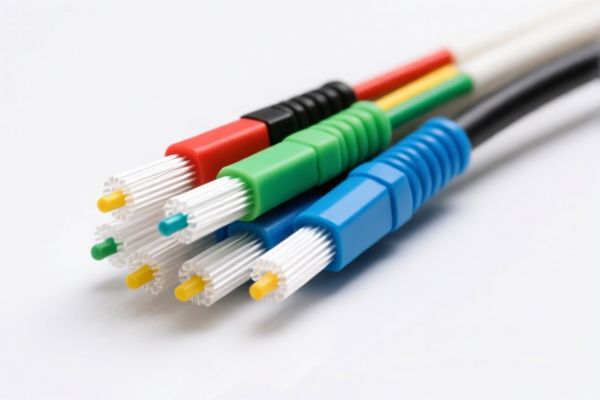
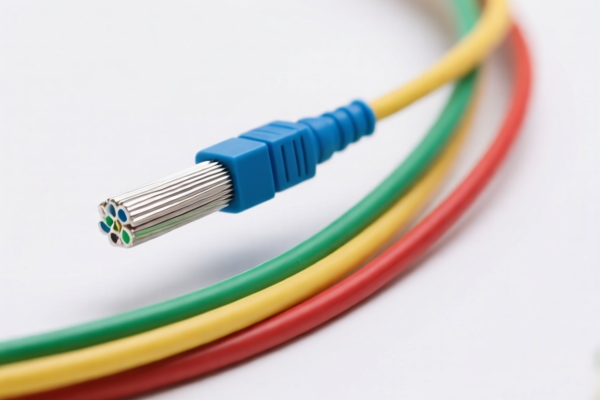
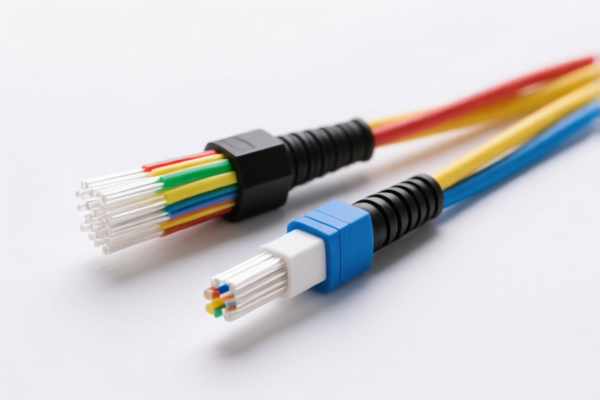
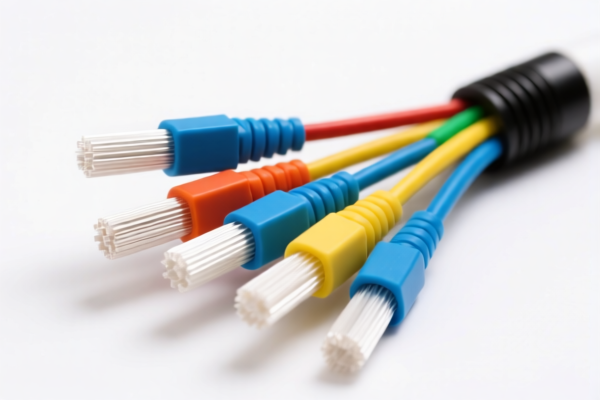
AI分析
🔌 Fiber Optic Connectors (FOCs)
🌐 HS Code Reference & Customs Clearance Guide | 2026 Latest Tariff Analysis | Strategic Compliance for High-Value Electronics
📌 I. Product Definition & Classification: Are You Classifying Your "Optical Link" Correctly?
Fiber Optic Connectors are the critical termination points of fiber optic cables, enabling the connection between fibers and other optical components. In international trade, they are often misclassified due to ambiguity between "optical goods" and "electrical connectors."
The Critical Distinction: * As Optical Components (Chapter 90): If the connector is primarily defined by its optical function (transmitting light via glass/plastic fibers) and fits specific optical subheadings. * As Electrical/General Connectors (Chapter 85): If the connector is viewed broadly as a terminal for an insulated electric conductor (fiber is dielectric, but often grouped with electrical terminations in broader customs interpretations depending on structure) or specific connector types.
⚠️ Key Classification Risk: - Misclassification can lead to massive tariff spikes (e.g., from 0% base to 87.6% total). - The presence of metal parts (steel, aluminum, copper) can trigger additional Section 122 or 301 duties, significantly increasing the tax burden.
📦 II. HS Code Classification Matrix (2026 Data)
| HS Code | Product Description & Rationale | Total Tax Rate | Tax Breakdown (China Origin to US) |
|---|---|---|---|
| 8536.70.00.00 | Fiber Optic Connectors: Matched purpose as connectors; Material/Form: Fiber optic. (Viewed as general connectors for insulated conductors) |
35.0% | Base: 0.0% +25% (Section 301) +10% (Section 122) |
| 9001.10.00.85 | Fiber Optic Connectors: Component of fiber bundles/cables; Classified under "Other" optical items. (Viewed as an optical component/module) |
41.7% | Base: 6.7% +25% (Section 301) +10% (Section 122) |
| 8544.42.90.90 | Fiber Optic Cords/Connectors: With connectors, classified as insulated electric conductors. ⚠️ High Risk: Contains Steel/Aluminum/Copper. |
87.6% | Base: 2.6% +25% (Section 301) +10% (Section 122) +50% (Section 122 on Metals) |
| 9001.10.00.70 | Fiber Optic Accessories: Involves optical fiber material; Classified under "Other" optical items. (Similar to 9001.10.00.85) |
41.7% | Base: 6.7% +25% (Section 301) +10% (Section 122) |
| 8536.69.40.10 | Connectors: Coaxial connectors (generic name match); No material conflict. (Viewed as a coaxial/electrical connector) |
35.0% | Base: 0.0% +25% (Section 301) +10% (Section 122) |
🔍 Deep Dive Analysis: * The 8536 vs. 9001 Debate: Customs often struggles here. If the connector is sold alone as a terminal, 8536 is often preferred (lower base rate). If sold as part of a cable assembly or defined strictly by its optical transmission capability, 9001 is used (higher base rate). * The 8544 Trap: This code is for cords/cables with connectors. If you are shipping just the connector heads (without the cable), this code is likely incorrect and carries the highest penalty due to metal content surcharges.
💰 III. 2026 Tariff Structure Explained (Detailed Breakdown)
✅ Scope: Import from China to United States
✅ Effective Date: 2025-2026 (Current Enforcement)
🎯 1. The "Low Base" Strategy: 8536.70.00.00 & 8536.69.40.10
- Base Tariff: 0%
- Why it’s better: These codes fall under Chapter 85 (Electrical Machinery), which historically has low base duties for connectors.
- Add-ons:
- +25% (Section 301): Trump-era tariffs still in effect for most tech components.
- +10% (Section 122/IEEPA): Additional surcharge on Chinese goods.
- Total: 35%
- Verdict: Optimal for standalone connectors with no significant metal housing costs that trigger Section 122 metal surcharges.
🎯 2. The "Optical Component" Route: 9001.10.00.85 & 9001.10.00.70
- Base Tariff: 6.7%
- Why it’s risky: Chapter 90 (Optical/Medical) has a higher base rate.
- Add-ons: Same as above (+25% +10%).
- Total: 41.7%
- Verdict: Use only if the product is definitively classified as an optical instrument part rather than a generic connector. Higher cost, but may be required if the connector is integral to a specific optical device.
🎯 3. The "Metal Penalty" Zone: 8544.42.90.90
- Base Tariff: 2.6%
- The Shock: +50% on Steel/Aluminum/Copper products (Section 122 or specific metal tariffs).
- Add-ons: +25% (301) +10% (122).
- Total: 87.6%
- Verdict: AVOID unless you are shipping complete fiber optic cords/cables and the metal content justification is unavoidable. For standalone connectors, this is a catastrophic classification error.
🛠️ IV. Customs Clearance Operational Advice (Best Practices)
✅ 1. Documentation Strategy
| Document | Requirement | Pro Tip |
|---|---|---|
| Commercial Invoice | Must specify "Fiber Optic Connector" | Avoid vague terms like "Adapter" or "Coupler" without context. |
| Product Specifications | Detail Material Composition | Explicitly state if the connector body is Plastic, Ceramic, or Metal. If metal, specify type (e.g., "Stainless Steel Housing") to defend against 8544 classification. |
| Photo/Render | Show Connector Interface | Highlight the optical ferrule (ceramic/plastic) vs. the metal shell. |
| Country of Origin | Clearly mark Made in China | Required for Section 301 and 122 applicability. |
✅ 2. Classification Defense Logic
🔥 Core Argument:
"These are standalone connectors used to join fiber optic cables. They are not 'insulated electric conductors' (Chapter 85/8544) because fiber is dielectric. They are not 'optical instruments' (Chapter 90) as they do not measure or analyze light but merely transmit it. Therefore, they should be classified as General Connectors (8536) or Optical Components (9001) depending on exact marketing description, but NEVER as Cords (8544) if shipped separately."
✅ 3. Red Flags & Penalties
| Scenario | Risk | Consequence |
|---|---|---|
| Shipping Cables + Connectors Together | High | Likely classified as 8544 (Cords). Tax jumps to 87.6%. |
| Vague Description "Optical Parts" | Medium | Customs may assign 9001 (41.7%) or audit for 8544. |
| Metal Housing Heavy Connectors | High | Risk of Section 122 Metal Surcharge if misclassified. |
🌍 V. Market Comparison (2026 Outlook)
| Market | Likely HS Code | Est. Total Duty (China) | Notes |
|---|---|---|---|
| 🇺🇸 USA | 8536.70.00.00 |
35.0% | Best outcome. Avoid 8544. |
| 🇪🇺 EU | 9001.10 |
~0-2% | Generally lower base duties. No Section 301 equivalent. |
| 🇨🇳 China (Export) | Varies | Export Rebate Applies | Focus on accurate HS for export declaration. |
| 🇯🇵 Japan | 9001.10 |
0-8% | Prefer optical classification. |
📌 Global Insight: The US is the only major market currently applying aggressive additive tariffs (301/122) on Chinese electronic/optical components. Diversifying supply chain to Vietnam/Mexico may reduce this burden significantly (check for de minimis and transshipment rules).
📌 VI. Common Errors & Pitfalls (Lessons Learned)
❌ Error 1: Classifying standalone connectors as 8544.42 (Cords).
👉 Result: Paying 87.6% instead of 35%.
👉 Fix: Separate shipments of connectors and cables. Use 8536 for standalone parts.
❌ Error 2: Using "Cable Assembly" for a simple connector.
👉 Result: Customs may reject it as incomplete or misdescribed.
👉 Fix: Be precise. "LC/UPC Fiber Optic Connector, Metal Housing, Ceramic Ferrule."
❌ Error 3: Ignoring the metal content in the housing.
👉 Result: Unexpected 50% surcharge under specific metal tariffs.
👉 Fix: If using plastic or ceramic bodies, emphasize this in specs to argue against metal-heavy classifications.
✅ Pro Tip:
"Separate the Parts, Separate the Cords! Connectors go to 8536, Cords go to 8544. Don't mix them, or the tax bill mixes up!"
🎯 VII. Conclusion: Optimize Your HS Code
🎯 Final Recommendation:
For standalone Fiber Optic Connectors, the most defensible and cost-effective classification under current US trade policy is 8536.70.00.00.
- Total Duty: 35%
- Avoid:
8544.42.90.90(87.6%) unless shipping complete cables with metal content. - Backup:
9001.10.00.85(41.7%) if customs insists on optical component classification.
📢 Action Plan:
1. Review your Bill of Lading: Ensure items are listed as "Connectors," not "Cables."
2. Check Material Specs: Highlight non-metal components if possible.
3. Apply for Advance Ruling: If volume is high, seek a CBP Ruling to lock in 8536.70.00.00.
✨ Precision in Classification = Precision in Profit.
💼 Don't let a 50% surcharge kill your margin!
用户评价
关于 HS 编码归类
协调制度(HS)是由世界海关组织(WCO)制定的国际贸易商品分类标准。全球 200 多个国家采用 HS 系统作为海关关税、贸易统计和进出口监管的基础。
每个 HS 编码遵循以下层级结构:
- 章(2 位)——商品大类(例如:第 84 章:机器和机械设备)
- 品目(4 位)——章内的更具体分类
- 子目(6 位)——国际通用细分,所有 WCO 成员国统一使用
- 本国细分(8-10 位)——各国自行扩展的细分编码,如美国 HTSUS 10 位编码
正确的 HS 编码归类对于顺利通关、准确缴纳关税和遵守贸易法规至关重要。错误归类可能导致海关延误、多缴关税或罚款。
从CN进口到US时,适用的关税税率可能包括:
- 最惠国(MFN)税率——适用于 WTO 成员国的标准关税税率
- 普通税率——适用于无贸易协定国家
- 贸易救济关税——附加关税,如 301 条款(反倾销)、232 条款(国家安全)或反补贴税
本页内容仅供参考。如需正式归类,请咨询当地海关或持牌报关代理。