fixed wireless terminal
CN → US| HS编码 | 关税税率 | 原产国 | 目的国 | 文档 |
|---|---|---|---|---|
| 8517140080 | 10.0% | CN | US | 官方文档 |
| 8543709860 | 37.6% | CN | US | 官方文档 |
| 8517620090 | 35.0% | CN | US | 官方文档 |
| 8543706000 | 35.0% | CN | US | 官方文档 |
| 8525602000 | 35.0% | CN | US | 官方文档 |
商品图片
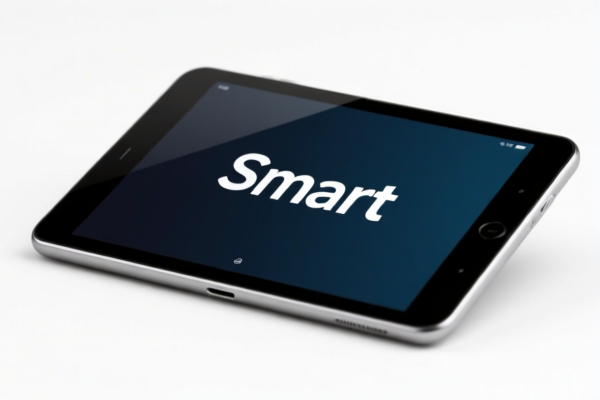

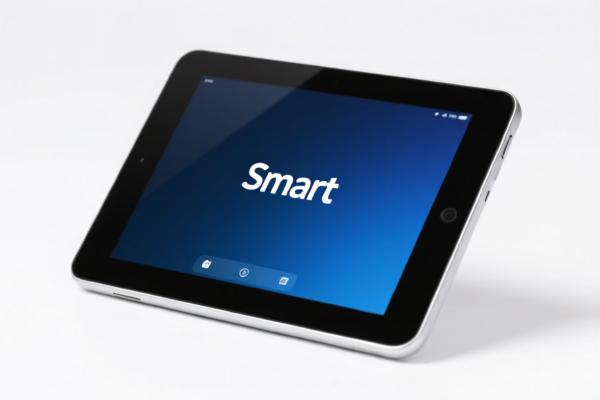
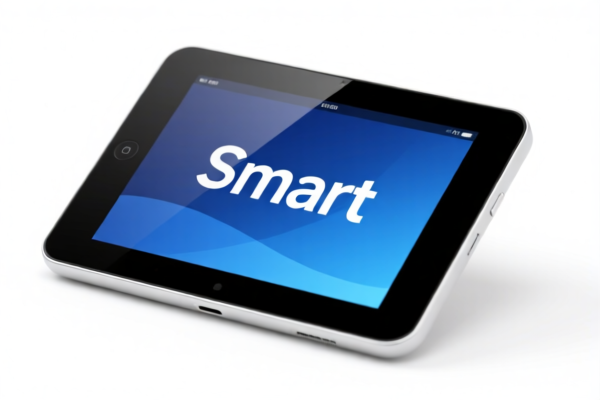
AI分析
📡 Fixed Wireless Terminal (FWT) Classification Guide
🌐 HS Code Reference & Customs Clearance Guide | 2026 Latest Tariff Analysis | Professional Entry Strategy
📌 1. Product Definition & Classification: What is a "Fixed Wireless Terminal"?
A Fixed Wireless Terminal (FWT), often referred to as a Wireless Local Loop (WLL) device or 4G/5G CPE (Customer Premises Equipment), is a stationary device that receives wireless signals from a cellular network and converts them into wired connections (Ethernet, Wi-Fi) for end-users (homes or businesses). It bridges the gap between mobile network infrastructure and fixed local networks.
⚠️ Critical Distinction for Classification:
- If the device is primarily viewed as a telephone/communication terminal connecting directly to a telecom network → Chapter 85 (8517/8543)
- If the device is viewed primarily as a data transmission/reception unit → Chapter 85 (8517)
- If the device is viewed as a general electronic apparatus with independent function (generic) → Chapter 85 (8543)
📦 2. HS Code Classification Matrix (Based on Provided Data)
Below are the five potential HS Codes derived from the specific logic provided in your data source. Each code carries a different tax implication.
| HS Code | Summary / Logic for Classification | Total Tax Rate | Tax Detail Breakdown |
|---|---|---|---|
| 8517.14.00.80 | Primary Match: The name "Fixed Wireless Terminal" aligns with "Wireless Telephones for Wireless Networks." No material conflict; defaults to "Other" category. | 10.0% | Base: 0.0% Additional (Sec 301): 0.0% IEEPA (Sec 122): 10% |
| 8543.70.60.00 | Network Connection Logic: Infers the device is designed to connect to telegraph/telephone networks. Fits the description of electronic apparatus for network connection. | 35.0% | Base: 0.0% Additional (Sec 301): 25.0% IEEPA (Sec 122): 10% |
| 8517.62.00.90 | Data Transmission Logic: "Terminal" implies data reception/transmission. Classified as hardware for receiving/converting/transmitting voice, image, or data. No material conflict. | 35.0% | Base: 0.0% Additional (Sec 301): 25.0% IEEPA (Sec 122): 10% |
| 8525.60.20.00 | Transmission Device Logic: "Wireless Terminal" falls under wireless transmission/reception equipment. No conflict with "Transmission equipment comprising reception devices." | 35.0% | Base: 0.0% Additional (Sec 301): 25.0% IEEPA (Sec 122): 10% |
| 8543.70.98.60 | Generic Electronic Apparatus Logic: Classified as an independent electronic device. Fits the residual category "Other machines and apparatus (not amplifiers/pedals)" due to lack of specific material definition. | 37.6% | Base: 2.6% Additional (Sec 301): 25.0% IEEPA (Sec 122): 10% |
🔍 Key Insight:
The lowest tax rate (10%) applies to 8517.14.00.80. This classification hinges on interpreting the FWT specifically as a "Wireless Telephone" or network connection terminal. The higher rates (35-37.6%) apply if customs views it as a generic data transmitter or other electronic apparatus.
💰 3. Tariff Rate Breakdown & Legal Basis (2026 Context)
✅ Applicable Country: United States (US)
✅ Origin: China (CN) (Implied by "Section 122" and 25% Sec 301 tariffs)
✅ Effective Date: Current regulations apply.
🎯 Scenario A: The "Best Case" – HS Code 8517.14.00.80
- Total Duty: 10.0%
- Breakdown:
- Base Rate: 0.0%
- Section 301 (Additional Duty): 0.0% (Note: This is unusually low for China-origin goods; verify if specific exclusions apply or if the data source assumes a non-Section 301 category).
- IEEPA (Section 122/China Specific): 10.0%
- Legal Path:
8517.14(Wireless telephone sets) →8517.14.00.80→ IEEPA 10%. - Strategy: Argue that the device functions identically to a wireless phone/base station component for the local loop, avoiding the "data terminal" classification which attracts higher duties.
🎯 Scenario B: The "Standard Case" – HS Codes 8543.70.60.00, 8517.62.00.90, 8525.60.20.00
- Total Duty: 35.0%
- Breakdown:
- Base Rate: 0.0%
- Section 301 (Additional Duty): 25.0% (Standard punitive tariff for Chinese electronics)
- IEEPA (Section 122/China Specific): 10.0%
- Legal Path: Various subheadings in Chapter 85 → Section 301 Footnotes → IEEPA 10%.
- Risk: High duty burden. Likely to be assessed if the product is described vaguely as "Electronic Communication Device" without emphasizing the "telephone/network terminal" function.
🎯 Scenario C: The "Worst Case" – HS Code 8543.70.98.60
- Total Duty: 37.6%
- Breakdown:
- Base Rate: 2.6% (Unlike the others, this "Other" category has a positive base rate)
- Section 301 (Additional Duty): 25.0%
- IEEPA (Section 122/China Specific): 10.0%
- Legal Path:
8543.70.98(Other machines/apparatus) → Base 2.6% + 25% Sec 301 + 10% IEEPA. - Risk: This is the "residual" category. Avoid this by providing specific technical specifications that align it with telecommunication equipment (8517) rather than generic machinery.
🛠️ 4. Customs Clearance Actionable Advice
✅ 1. Documentation & Technical Specs
To justify the 10% tariff (8517.14.00.80) over the 35%+ rates, your documentation must be precise: * Product Name: Use "Fixed Wireless Terminal" or "Wireless Local Loop (WLL) Terminal." Avoid generic terms like "Wi-Fi Router" if possible, as routers may fall under data transmission (8517.62) or other categories. * Technical Description: Explicitly state: "Designed for connection to electrical telegraph or telephone networks. Receives wireless signals and provides wired connection for voice/data communications." * Functionality Diagram: Show the signal flow: Cellular Antenna → Modem → Ethernet/Wi-Fi Output. Emphasize the "network termination" aspect. * Certifications: FCC ID (USA) is mandatory. CE/RoHS for reference.
✅ 2. Declaration Strategy
- Best Declaration: "Fixed Wireless Terminal, Model XYZ, for connecting cellular network to local LAN/WAN, Class 1 Radio Equipment."
- Avoid: "Electronics," "Gadget," "Communication Device" (too vague).
- Avoid: "Wi-Fi Extender" (may be classified differently).
✅ 3. Risk Mitigation
- Pre-Ruling: If the shipment value is high, consider applying for a Binding Ruling from US Customs and Border Protection (CBP) for HS Code
8517.14.00.80. This locks in the 10% rate legally. - Material Proof: Since the data mentions "no material conflict," ensure the device’s casing and internal components do not include prohibited materials or unusual metals that might trigger scrutiny under Chapter 85 notes.
- Origin Verification: Ensure the Country of Origin is clearly China to trigger the correct IEEPA/Section 301 calculations. If parts are sourced from Vietnam/Mexico, check for substantial transformation rules, though FWT assembly usually retains Chinese origin.
🌍 5. Quick Comparison of Tariff Outcomes
| HS Code | Description | Total Tax | Recommendation |
|---|---|---|---|
| 8517.14.00.80 | Wireless Telephone/Network Terminal | 10% | 🏆 BEST - Argue for "Telephone/Network" function. |
| 8543.70.60.00 | Other Network Apparatus | 35% | ⚠️ MEDIUM - Generic classification. |
| 8517.62.00.90 | Data Reception/Transmission | 35% | ⚠️ MEDIUM - Focuses on data, not voice/network. |
| 8525.60.20.00 | Transmission Equipment | 35% | ⚠️ MEDIUM - Focuses on transmission hardware. |
| 8543.70.98.60 | Other Electronic Apparatus | 37.6% | ❌ WORST - Residual category with base duty. |
📌 6. Conclusion & Final Tip
The Fixed Wireless Terminal presents a classic classification challenge between Telecommunications Equipment (8517) and Generic Electronic Apparatus (8543/8525).
💡 Pro Tip:
The 10% tariff under 8517.14.00.80 is significantly lower than the 35-37.6% rates.
Action: Frame the product explicitly as a "Wireless Terminal for Telephone/Telegraph Networks" in your commercial invoice and technical specs. Avoid describing it merely as a "Data Router" or "Wireless Access Point," which may push it into the higher-tariff data transmission or generic electronic categories.
📞 Immediate Next Step:
Confirm the FCC classification with your manufacturer. If FCC lists it as "Consumer Premises Equipment" for wireless networks, use that language to support the 8517 classification. Always consult a licensed customs broker for final entry filing.
✨ Precision in Classification Saves Money!
💼 10% vs 35% is a 25% margin difference. Don't leave it to chance.
用户评价
关于 HS 编码归类
协调制度(HS)是由世界海关组织(WCO)制定的国际贸易商品分类标准。全球 200 多个国家采用 HS 系统作为海关关税、贸易统计和进出口监管的基础。
每个 HS 编码遵循以下层级结构:
- 章(2 位)——商品大类(例如:第 84 章:机器和机械设备)
- 品目(4 位)——章内的更具体分类
- 子目(6 位)——国际通用细分,所有 WCO 成员国统一使用
- 本国细分(8-10 位)——各国自行扩展的细分编码,如美国 HTSUS 10 位编码
正确的 HS 编码归类对于顺利通关、准确缴纳关税和遵守贸易法规至关重要。错误归类可能导致海关延误、多缴关税或罚款。
从CN进口到US时,适用的关税税率可能包括:
- 最惠国(MFN)税率——适用于 WTO 成员国的标准关税税率
- 普通税率——适用于无贸易协定国家
- 贸易救济关税——附加关税,如 301 条款(反倾销)、232 条款(国家安全)或反补贴税
本页内容仅供参考。如需正式归类,请咨询当地海关或持牌报关代理。