food processing machine
CN → US| HS编码 | 关税税率 | 原产国 | 目的国 | 文档 |
|---|---|---|---|---|
| 8438800000 | 35.0% | CN | US | 官方文档 |
| 8438100090 | 17.5% | CN | US | 官方文档 |
| 8509400040 | 14.2% | CN | US | 官方文档 |
| 8509400015 | 14.2% | CN | US | 官方文档 |
| 8210000000 | 38.7% | CN | US | 官方文档 |
商品图片
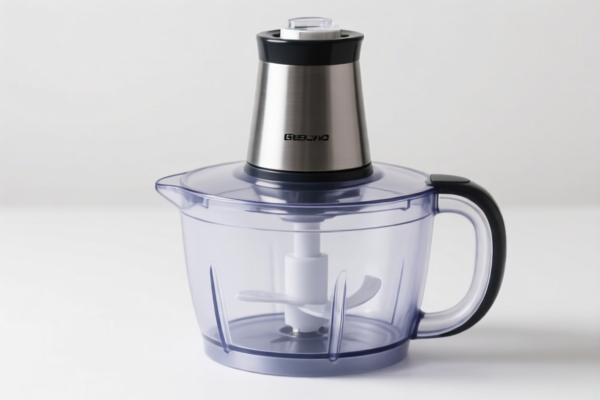
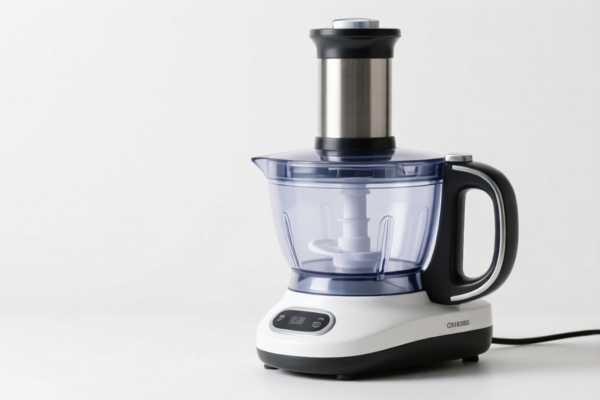
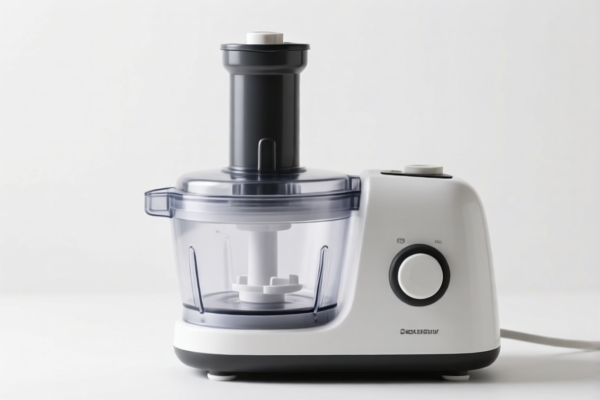
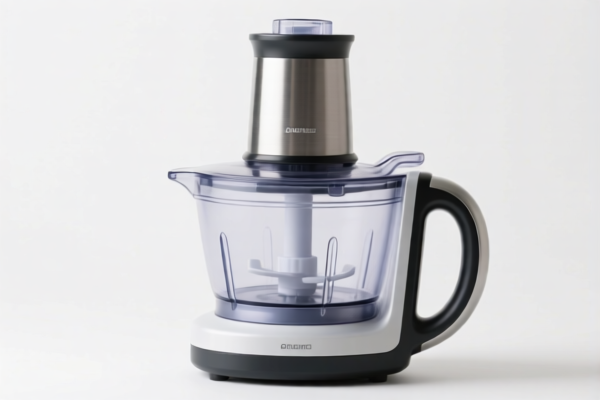
AI分析
🍽️ Food Processing Machine: HS Code Classification & US Customs Clearance Guide 2026
🌐 HS Code Reference & Customs Strategy | 2026 Latest Tariff Analysis | Professional Clearance Protocol
📌 I. Product Definition: What is a "Food Processing Machine"?
In international trade, "Food Processing Machine" is a broad category encompassing equipment used for the industrial preparation, manufacturing, or processing of food and beverages. The correct HS Code classification depends heavily on: 1. Scale: Industrial vs. Household/Small-scale. 2. Function: Mixing, grinding, heating, or general preparation. 3. Mechanism: Manual, electric, or automated.
⚠️ Key Distinction:
- Industrial Machinery: Large-scale, automated, or dedicated line equipment → Generally falls under Chapter 84.
- Household/Small Appliances: Hand-held, countertop, or simple electric devices → Generally falls under Chapter 85 or 82.
📦 II. HS Code Classification Details (2026 Latest Tariff Authority Comparison)
Based on the provided data, here are the applicable HS Codes for Food Processing Machines, ranked by potential tax efficiency.
| HS Code | Product Description | Application Scenario | Match Level |
|---|---|---|---|
| 8509.40.00.40 | Food Grinders and Mixers; Food Squeezers | Food Processors specifically designed for blending/mixing. Perfect match for standard food processors. | ✅ High Match |
| 8509.40.00.15 | Other Household Electric Appliances: Processors & Blenders | Household or semi-professional mixers/blenders. Highly matched for small-scale processing. | ✅ High Match |
| 8438.80.00.00 | Machinery for the Industrial Preparation of Food/Drinks | Industrial Use. Large-scale, dedicated food manufacturing lines. | ⚠️ General Match |
| 8438.10.00.90 | Machinery for Industrial Food/Drink Prep (Other) | Industrial Use. Used as a "catch-all" for industrial machines not listed elsewhere. | ⚠️ Fallback Match |
| 8210.00.00.00 | Hand Cranks or Hand Operated Machinery | Small, manual, or hand-operated food prep tools. | ⚠️ Partial Match |
🔍 Critical Note:
- 8509.40.00 is typically for electric household/small-scale appliances.
- 8438 series is for industrial/commercial machinery.
- 8210 is for manual/hand-operated devices.
- Misclassification (e.g., declaring an industrial machine as a household one) can lead to severe penalties.
💰 III. 2026 US Tariff Rate Detailed Breakdown (Including Surcharges & Policy Add-ons)
✅ Applicable Country: United States (US)
✅ Origin: China (CN)
✅ Effective Date: Post-2025 (Including subsequent imports)
🎯 1. 8509.40.00.40 & 8509.40.00.15 —— Food Processors / Blenders (Household/Small Scale)
| Item | Content |
|---|---|
| Base Tariff Rate | 4.2% (Ad Valorem) |
| Section 301 Surcharge | 0.0% (Exempted for this specific sub-heading) |
| IEEPA / Section 122 Surcharge | +10.0% (Targeting Chinese Origin) |
| Total Tariff Rate | 14.2% |
| Tax Calculation | CIF Value × 14.2% |
| De Minimis Exemption? | ❌ No (Denied for Section 122/IEEPA goods) |
| Legal Path | USITC:8509.40.00 → IEEPA:9903.01.24 (10% surcharge) |
📌 Explanation:
- This is the most tax-efficient classification for food processors if they fit the "household/electric appliance" definition.
- The 0% Section 301 rate is a significant advantage compared to industrial machinery.
- Only the 10% IEEPA surcharge applies.
🎯 2. 8438.10.00.90 —— Industrial Food Machinery (Catch-all)
| Item | Content |
|---|---|
| Base Tariff Rate | 0.0% |
| Section 301 Surcharge | +7.5% (Partial exemption or reduced rate for specific industrial items) |
| IEEPA / Section 122 Surcharge | +10.0% (Targeting Chinese Origin) |
| Total Tariff Rate | 17.5% |
| Tax Calculation | CIF Value × 17.5% |
| De Minimis Exemption? | ❌ No |
| Legal Path | USITC:8438.10.00 → USITC:9903.88.01 (7.5% surcharge) + IEEPA:9903.01.24 |
📌 Note:
- Although the base rate is 0%, the 7.5% Section 301 surcharge applies, making it more expensive than8509.40.
- This is the "fallback" category for industrial machines that don’t fit the specific 8438.80 heading.
🎯 3. 8438.80.00.00 —— Industrial Food Machinery (General)
| Item | Content |
|---|---|
| Base Tariff Rate | 0.0% |
| Section 301 Surcharge | +25.0% (Full Section 301 rate) |
| IEEPA / Section 122 Surcharge | +10.0% (Targeting Chinese Origin) |
| Total Tariff Rate | 35.0% |
| Tax Calculation | CIF Value × 35.0% |
| De Minimis Exemption? | ❌ No |
| Legal Path | USITC:8438.80.00 → USITC:9903.88.01 (25% surcharge) + IEEPA:9903.01.24 |
📌 Warning:
- This is a high-tax category.
- Full 25% Section 301 surcharge applies.
- Only use this if the machine is clearly industrial and cannot be classified under 8438.10.
🎯 4. 8210.00.00.00 —— Hand-Cranked Food Machinery
| Item | Content |
|---|---|
| Base Tariff Rate | 3.7% |
| Section 301 Surcharge | +25.0% (Full Section 301 rate) |
| IEEPA / Section 122 Surcharge | +10.0% (Targeting Chinese Origin) |
| Total Tariff Rate | 38.7% |
| Tax Calculation | CIF Value × 38.7% |
| De Minimis Exemption? | ❌ No |
| Legal Path | USITC:8210.00.00 → USITC:9903.88.01 (25% surcharge) + IEEPA:9903.01.24 |
📌 Caution:
- Highest tariff rate in the dataset.
- Applies only to manual/hand-operated devices. Electric food processors should NOT be classified here.
🛠️ IV. Customs Clearance Practical Advice (Pitfall Avoidance Guide)
✅ 1. Documentation Checklist (Mandatory)
| Document | Required | Description |
|---|---|---|
| ✅ Product Specification Sheet | ✔️ | Must detail power, capacity, voltage, and application (household vs. industrial). |
| ✅ Circuit Diagram / Structure Chart | ✔️ | Critical for distinguishing between 8509 (electric appliance) and 8438 (industrial machine). |
| ✅ Product Photos (with Nameplate) | ✔️ | Show model number, brand, and input/output parameters. |
| ✅ Third-Party Test Report | ✔️ | FCC (if electric), UL, or other safety certifications. |
| ✅ Commercial Invoice | ✔️ | Clearly state "Food Processor" or "Industrial Food Machinery", not just "Machine". |
| ✅ Packing List | ✔️ | List all accessories to avoid "missing parts" claims. |
✅ 2. Declaration Tips (Key Mnemonic)
🔥 “Household Electric? Go 8509! Industrial Line? Check 8438! Manual? 8210!”
| Scenario | Correct HS Code | Wrong Approach | Consequence |
|---|---|---|---|
| Countertop Electric Food Processor | 8509.40.00.40 |
Declare as Industrial Machinery (8438) |
Pay 35% instead of 14.2%! |
| Industrial Mixer (Large Scale) | 8438.80.00.00 or 8438.10.00.90 |
Declare as Household (8509) |
Audit Risk + Penalties |
| Manual Vegetable Chopper | 8210.00.00.00 |
Declare as Electric (8509) |
Classification Error |
| Blender + Stand + Cable | Declare as One Unit | Split into parts | Complex Declaration + Delay |
✅ 3. Special Cases Handling
| Scenario | Handling Advice |
|---|---|
| OEM Custom Food Processor | Provide customer order + design drawings. Proving it’s a "household appliance" can save 20%+ in taxes. |
| Commercial Kitchen Equipment | If used in a restaurant but is a "small appliance" (e.g., personal blender), it may still qualify for 8509. If it’s a "commercial mixer", it’s 8438. |
| Hybrid Machines | If a machine has both industrial and household features, declare based on primary function and design intent. |
| Parts vs. Whole | Do not separate the motor from the base. Declare as a complete unit. |
🌍 V. Global Market Comparison (2026 Latest)
| Country/Region | Recommended HS Code | Tariff (CN Origin) | Certification | Notes |
|---|---|---|---|---|
| 🇺🇸 USA | 8509.40.00.40 |
14.2% | FCC + UL | Cheapest option if eligible. |
| 🇺🇸 USA | 8438.80.00.00 |
35.0% | N/A | High tax. Avoid if possible. |
| 🇨🇳 China | 8509.40.00.40 |
4.2% | CCC | Low import duty in China. |
| 🇪🇺 EU | 8509.40.00.40 |
1.5% - 4.2% | CE + RoHS | No Section 301/IEEPA surcharges. |
| 🇬🇧 UK | 8509.40.00.40 |
4.0% | UKCA | Post-Brexit rules apply. |
📌 Conclusion:
- USA is the highest-tax market due to Section 301 and IEEPA surcharges.
- Classifying as8509.40(Household/Electric) saves ~20% in taxes compared to8438(Industrial).
- Ensure product design and marketing materials support "household" classification if possible.
📌 VI. Common Mistakes & Pitfall Guide (Lessons Learned)
❌ Mistake 1: Declaring an industrial mixer as a household food processor.
👉 Consequence: Customs audit, penalty, and forced re-classification. High risk.
❌ Mistake 2: Declaring an electric food processor as hand-cranked (8210).
👉 Consequence: Tariff jumps to 38.7%. Incorrect description leads to delays.
❌ Mistake 3: Ignoring the IEEPA 10% Surcharge.
👉 Consequence: Underpayment of duty. IEEPA surcharges apply to all Chinese-origin goods in these categories, regardless of Section 301 status.
❌ Mistake 4: Splitting Motor + Base + Bowl into separate line items.
👉 Consequence: Customs may reject "parts" declaration for a complete machine, leading to higher combined tariffs.
✅ Correct Action:
"Electric Food Processor, 1000W, 2L Capacity, Model XYZ, FCC Certified, For Household Use Only"
🎯 VII. Conclusion: Professional Declaration, Cost Optimization!
🎯 Remember the Mnemonic:
🔹 "Household 8509: 14.2%! Industrial 8438: 17.5% - 35%! Manual 8210: 38.7%!"
🔹 "IEEPA 10% applies to ALL! Check Section 301 carefully!"
🔹 "Classify correctly to save thousands!"
📌 Pro Tip:
- If your product is exported from Vietnam, Mexico, or Thailand, you may qualify for IEEPA Exemptions or lower Section 301 rates.
- Apply for an Advance Ruling from US Customs (CBP) if your product is borderline between household and industrial.
📣 Immediate Action:
📞 Contact a licensed customs broker.
📸 Provide clear product images and specs.
🚀 Ensure your HS Code is pre-approved to avoid costly delays!
✨ Professional Clearance Starts with Accurate Classification!
💼 Every Percent Matters in Global Trade!
用户评价
关于 HS 编码归类
协调制度(HS)是由世界海关组织(WCO)制定的国际贸易商品分类标准。全球 200 多个国家采用 HS 系统作为海关关税、贸易统计和进出口监管的基础。
每个 HS 编码遵循以下层级结构:
- 章(2 位)——商品大类(例如:第 84 章:机器和机械设备)
- 品目(4 位)——章内的更具体分类
- 子目(6 位)——国际通用细分,所有 WCO 成员国统一使用
- 本国细分(8-10 位)——各国自行扩展的细分编码,如美国 HTSUS 10 位编码
正确的 HS 编码归类对于顺利通关、准确缴纳关税和遵守贸易法规至关重要。错误归类可能导致海关延误、多缴关税或罚款。
从CN进口到US时,适用的关税税率可能包括:
- 最惠国(MFN)税率——适用于 WTO 成员国的标准关税税率
- 普通税率——适用于无贸易协定国家
- 贸易救济关税——附加关税,如 301 条款(反倾销)、232 条款(国家安全)或反补贴税
本页内容仅供参考。如需正式归类,请咨询当地海关或持牌报关代理。