hard plastic briefcase
CN → US| HS编码 | 关税税率 | 原产国 | 目的国 | 文档 |
|---|---|---|---|---|
| 3926909989 | 22.8% | CN | US | 官方文档 |
| 4202122910 | 55.0% | CN | US | 官方文档 |
| 4202122120 | 55.0% | CN | US | 官方文档 |
商品图片
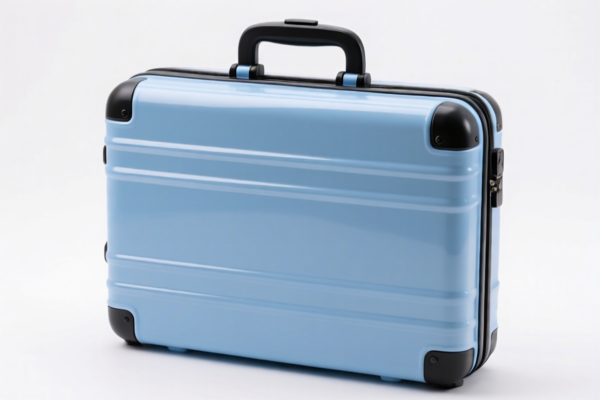
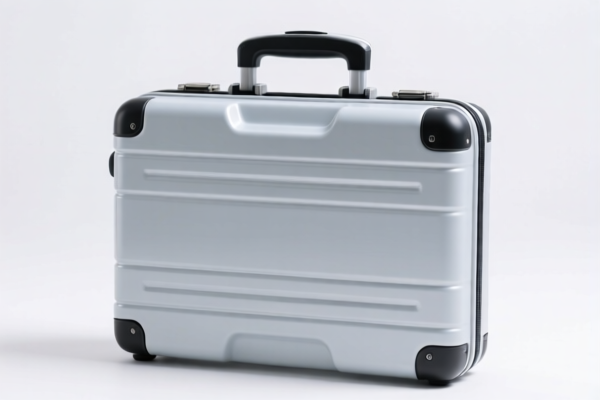
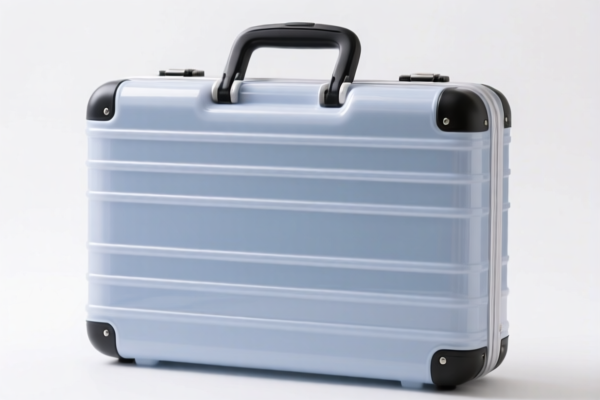
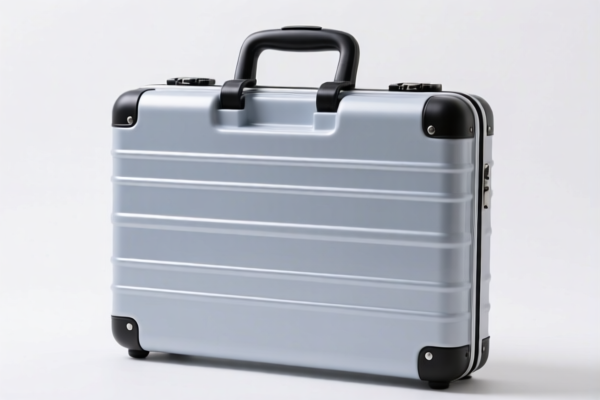
AI分析
💼 Hard Plastic Briefcase (Rigid Plastic Satchels)
🌐 HS Code Reference & Customs Clearance Guide | 2024 Latest Tariff Analysis | Strategic Classification Strategy
📌 I. Product Definition & Classification: What Exactly Is a "Hard Plastic Briefcase"?
A Hard Plastic Briefcase is a rigid container used for carrying documents, laptops, and professional essentials. In international trade, the classification hinges on two critical factors: 1. Material Composition: Is it primarily plastic or a composite? 2. Structure & Purpose: Is it a finished article of heading 4202 (articles of leather, plastic sheeting, etc.) or a generic plastic article (heading 3926)?
⚠️ Key Distinction: - If the briefcase is structured, shaped, and designed specifically for carrying items (like a hard-shell laptop case or office satchel), it generally falls under Heading 4202 (Articles of travel, sports bags, etc.). - If it is considered a generic molded plastic item without specific "bag" characteristics or structural rigidity defined under 4202, it may fall under Heading 3926 (Other articles of plastic).
📦 II. HS Code Classification Details (Based on Provided Data)
| HS Code | Product Description | Key Characteristics | Total Tax Rate (China to US) | Tax Breakdown |
|---|---|---|---|---|
| 3926.90.99.89 | Hard Plastic Briefcase (Generic Plastic Article) | Material: Plastic. Classified as "Other articles of plastics." | 22.8% | Base Tariff: 5.3% Section 301 (Additional): 7.5% Section 122 Tariff: 10% |
| 4202.12.29.10 | Hard Plastic Briefcase (Specific Plastic Sheet) | Material: Plastic. Form: Rigid. Purpose: Briefcase/Satchel. | 55.0% | Base Tariff: 20.0% Section 301 (Additional): 25.0% Section 122 Tariff: 10% |
| 4202.12.21.20 | Hard Plastic Briefcase (Shaped/Rigid Structure) | Material: Plastic. Form: Rigid, molded, structured. Purpose: Briefcase. | 55.0% | Base Tariff: 20.0% Section 301 (Additional): 25.0% Section 122 Tariff: 10% |
🔍 Critical Insight: - The majority tariff rate is 55.0% for items classified under Heading 4202. - Only one specific classification (3926.90.99.89) offers a significantly lower rate (22.8%), but it relies on arguing the item is a generic "other plastic article" rather than a specific "article of plastics" (like a bag). - Risk: Misclassifying a 4202 item as 3926 can lead to severe penalties, back taxes, and shipment delays.
💰 III. Detailed Tariff Rate Analysis (China Origin to US)
✅ Applicable Country: United States (US)
✅ Country of Origin: China (CN)
✅ Relevant Sections: Section 301 (Trade Act of 1974) & Section 122 (Trade Facilitation and Trade Enforcement Act)
🎯 1. 3926.90.99.89 – The "Lower Rate" Classification
| Item | Detail |
|---|---|
| Base Tariff | 5.3% |
| Section 301 (Addtl.) | +7.5% |
| Section 122 Tariff | +10.0% |
| Total Effective Rate | 22.8% |
| Calculation | CIF Value × 22.8% |
| De Minimis Exemption? | ❌ No (Deny de minimis for Section 301 items) |
| Legal Path | USITC:3926.90.99.89 → Section 301 Footnote → Section 122 |
📌 Explanation: - This rate is significantly lower than the 55% rate for Heading 4202. - However, it applies only if the briefcase is not considered a "bag" or "satchel" under Chapter 42. This is a risky classification for standard briefcases.
🎯 2. 4202.12.29.10 & 4202.12.21.20 – The "Standard" Classification
| Item | Detail |
|---|---|
| Base Tariff | 20.0% |
| Section 301 (Addtl.) | +25.0% |
| Section 122 Tariff | +10.0% |
| Total Effective Rate | 55.0% |
| Calculation | CIF Value × 55.0% |
| De Minimis Exemption? | ❌ No |
| Legal Path | USITC:4202.12.xxxxx → Section 301 Footnote → Section 122 |
📌 Explanation: - Heading 4202 covers "Articles of travel, suitcases, handbags, sample cases, wallet cases, and similar containers." - Subheading 4202.12 specifies "With outer surface of plastics or of textile materials." - Both 4202.12.29.10 and 4202.12.21.20 incur the 25% Section 301 tariff, which is the highest standard rate for many Chinese goods. - Difference between the two: -
4202.12.29.10: Generic "other" plastic briefcases. -4202.12.21.20: Specifically "rigid, molded, shaped" briefcases. - Both carry the same 55% total tax burden.
🛠️ IV. Customs Clearance Practical Advice
✅ 1. Documentation Checklist
| Document | Required | Purpose |
|---|---|---|
| Commercial Invoice | ✔️ | Must clearly state "Hard Plastic Briefcase," material, and HS Code. |
| Product Photos | ✔️ | Show structure, rigidity, and any branding. |
| Material Declaration | ✔️ | Confirm 100% plastic composition (no leather/metal dominant parts). |
| Structure Diagram | ✔️ | Prove it is a "bag-like" article (4202) vs. a generic container (3926). |
| FCC/CE Certificates | ✔️ | If electronic components are embedded (e.g., GPS tracker). |
✅ 2. Classification Strategy & Tips
🔥 "Rigid ≠ Generic" – The Golden Rule
Scenario Recommended HS Code Tax Rate Reason Standard hard-shell briefcase (laptop/office) 4202.12.29.10 or 4202.12.21.20 55.0% Clearly a "briefcase" under Chapter 42. Unstructured plastic box/container 3926.90.99.89 22.8% Only if it lacks bag-like features (handles, zippers, specific shaping). Mixed Material (Plastic + Leather) 4202.12.29.10 55.0% If plastic is the outer surface, 4202 applies. ⚠️ Warning: - Do NOT attempt to classify a standard briefcase as 3926.90.99.89 to save taxes unless it truly lacks the characteristics of a "bag" (e.g., it’s just a plastic shell without interior lining, handles, or closure mechanisms typical of a briefcase). - CBP (Customs and Border Protection) frequently audits these classifications. If they deem it a "briefcase," they will reclassify to 4202 and assess back taxes + penalties.
✅ 3. Cost Optimization Suggestions
- Pre-Ruling: Apply for a Binding Tariff Information (BTI) or US CBP Ruling before shipment to confirm the correct HS Code. This provides legal protection against penalties.
- Supply Chain Diversification: Consider sourcing from non-China countries (e.g., Vietnam, Mexico) if the 55% tariff is prohibitive, as Section 301 duties may not apply or be lower.
- Product Design Modification: If possible, design the case to include non-plastic dominant materials (e.g., fabric exterior with plastic frame) to potentially shift classification, though this is complex and requires expert analysis.
🌍 V. Global Market Comparison (2024)
| Market | Recommended HS Code | Est. Total Tariff (China) | Notes |
|---|---|---|---|
| 🇺🇸 United States | 4202.12.29.10 / 4202.12.21.20 |
55.0% | Highest duty due to Section 301 + Section 122. |
| 🇨🇳 China (Import) | 4202.12.29.10 |
~5-10% | Lower base duty, no Section 301. |
| 🇪🇺 European Union | 4202.12.00 |
~4.5% | No Section 301 equivalent, but subject to EU anti-dumping if applicable. |
| 🇬🇧 United Kingdom | 4202.12.00 |
~4.5% | Similar to EU post-Brexit. |
📌 Conclusion: - The US market is the most expensive for Chinese-made plastic briefcases due to the 55% total tariff. - The 22.8% rate (3926.90.99.89) is a potential loophole but high-risk for standard briefcases. - For legitimate compliance, expect to pay 55% unless you can prove the item is not a "bag" under Chapter 42.
📌 VI. Common Mistakes & Pitfalls (Learn from Others' Errors)
❌ Mistake 1: Classifying all plastic cases as 3926.90.99.89 to save 32.2% in tariffs.
👉 Consequence: CBP reclassification, seizure of goods, and heavy penalties.
❌ Mistake 2: Ignoring Section 122 Tariffs. 👉 Consequence: Underestimating total landed cost by 10%.
❌ Mistake 3: Mixing "Plastic Shell" with "Leather Interior" and misdeclaring material. 👉 Consequence: Misclassification under 4202 vs. 4203, leading to additional duties.
✅ Best Practice:
"Always declare as 4202.12.xxxxx for structured briefcases. Verify with CBP if the item truly lacks 'bag-like' features before attempting the 3926 classification."
🎯 VII. Final Verdict & Action Plan
🎯 Summary:
- Most Likely HS Code: 4202.12.29.10 or 4202.12.21.20
- Total Tax Rate: 55.0%
- Risk Level: High (due to high tariff and strict classification rules)
🚀 Immediate Actions: 1. Audit Product Design: Does it have handles, zippers, and interior lining? If yes, it’s a 4202 item. 2. Apply for Pre-Ruling: Submit product images and specs to CBP for a binding ruling. 3. Factor into Pricing: Include 55% duty in your landed cost calculation for the US market. 4. Consider Alternatives: Explore sourcing from non-China origins if the 55% tariff erodes margins.
📌 Pro Tip:
"In the world of customs, structure is king. If it looks like a bag, acts like a bag, and has handles, CBP will tax it as a bag (4202). Don’t fight the classification—plan for the tariff."
📣 Need Help?
📞 Contact a licensed customs broker for a Free HS Code Consultation. 📄 Download the CBP Classification Checklist for plastic articles.
✨ Precision in Classification = Profit in Your Pocket! 💼 Stay Compliant, Stay Competitive!
用户评价
关于 HS 编码归类
协调制度(HS)是由世界海关组织(WCO)制定的国际贸易商品分类标准。全球 200 多个国家采用 HS 系统作为海关关税、贸易统计和进出口监管的基础。
每个 HS 编码遵循以下层级结构:
- 章(2 位)——商品大类(例如:第 84 章:机器和机械设备)
- 品目(4 位)——章内的更具体分类
- 子目(6 位)——国际通用细分,所有 WCO 成员国统一使用
- 本国细分(8-10 位)——各国自行扩展的细分编码,如美国 HTSUS 10 位编码
正确的 HS 编码归类对于顺利通关、准确缴纳关税和遵守贸易法规至关重要。错误归类可能导致海关延误、多缴关税或罚款。
从CN进口到US时,适用的关税税率可能包括:
- 最惠国(MFN)税率——适用于 WTO 成员国的标准关税税率
- 普通税率——适用于无贸易协定国家
- 贸易救济关税——附加关税,如 301 条款(反倾销)、232 条款(国家安全)或反补贴税
本页内容仅供参考。如需正式归类,请咨询当地海关或持牌报关代理。