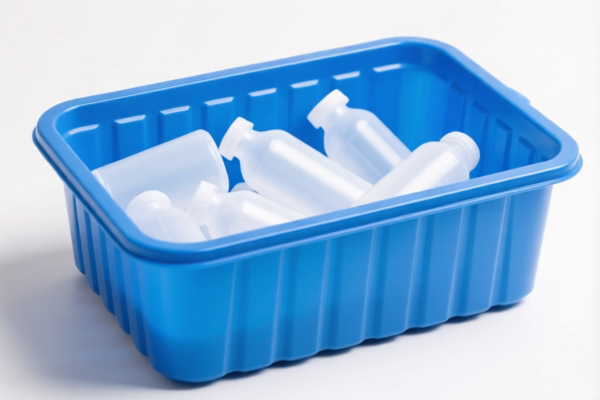
high density polyethylene container
CN → US| HS编码 | 关税税率 | 原产国 | 目的国 | 文档 |
|---|---|---|---|---|
| 3923900014 | 38.0% | CN | US | 官方文档 |
| 3923900016 | 38.0% | CN | US | 官方文档 |
| 3917210000 | 38.1% | CN | US | 官方文档 |
| 3917290090 | 38.1% | CN | US | 官方文档 |
| 3901201000 | 41.5% | CN | US | 官方文档 |
商品图片

AI分析
🛢️ High Density Polyethylene (HDPE) Containers & Components
🌐 HS Code Reference & Customs Clearance Guide | 2026 Tariff Landscape | Professional Strategy for HDPE Products
📌 One: Product Definition & Classification: What Exactly Is "HDPE"?
High Density Polyethylene (HDPE) is a thermoplastic polymer made from petroleum. It is renowned for its high strength-to-density ratio, chemical resistance, and durability. In international trade, HDPE products are categorized based on their physical form: Resins (Raw Materials), Tubes/Pipes, and Containers/Buckets.
Key Distinction: * Resin (3901): The raw plastic pellets or beads used for manufacturing. * Tubes/Pipes (3917): Hollow cylindrical products for conveying fluids/gases, whether rigid or flexible. * Containers/Buckets (3923): Vessels for storage, transport, or processing of goods (e.g., drums, buckets, jerricans).
⚠️ Critical Classification Point:
- If it is a raw material (pellets/beads) → 3901.20.10.00
- If it is a hollow tube/pipe (even if flexible) → 3917.21.00.00 or 3917.29.00.90
- If it is a container/vessel (bucket, drum, jar) → 3923.90.00.14 or 3923.90.00.16
📦 Two: HS Code Classification Details (2026 Latest Tariff Alignment)
| HS Code | Product Description | Application Scenario | Form Factor |
|---|---|---|---|
3901.20.10.00 |
Polyethylene, Primary Forms, High Density | Raw HDPE resin pellets for injection molding or extrusion | 🧱 Resin/Pellets |
3917.21.00.00 |
Tubes, Pipes, Hoses, HDPE | Rigid HDPE pipes for water/gas supply | 🚰 Rigid Tube/Pipe |
3917.29.00.90 |
Other Tubes, Pipes, Hoses, HDPE | Flexible HDPE tubing or specialized profiles | 🌀 Flexible Tube/Pipe |
3923.90.00.14 |
HDPE Drums, Plastic Material | Storage drums, large industrial buckets, barrels | 🛢️ Large Container/Drum |
3923.90.00.16 |
HDPE Buckets, High Density Polyethylene | Smaller buckets, jerricans, household/industrial containers | 🪣 Bucket/Small Container |
🔍 Key Reminder:
- Shape Dictates Code: A "tube" is classified under 3917 regardless of whether it holds liquid, while a "bucket" is 3923. Do not confuse rigid piping with storage tanks. - Material Specification: All items in the provided dataset are specified as High Density Polyethylene. Ensure your commercial invoice explicitly states "HDPE" to avoid misclassification under general plastics (3926).
💰 Three: 2026 Latest Tariff Rate Breakdown (Including Surcharges & Policy Add-ons)
✅ Applicable Country: United States (US)
✅ Origin: China (CN)
✅ Effective Date: 2025/2026 (Current Trade Environment)
🎯 1. 3901.20.10.00 – High Density Polyethylene Resin (Raw Material)
| Item | Content |
|---|---|
| Base Tariff | 6.5% |
| Section 301 Surcharge | +25.0% |
| Section 122 Surcharge | +10.0% |
| Total Tariff Rate | 41.5% |
| Tax Calculation | CIF Value × 41.5% |
| De Minimis Eligibility | ❌ Not Eligible (High value/raw material threshold applies) |
| Legal Basis Path | Base: 6.5% → 301: 25% → 122: 10% → Total: 41.5% |
📌 Explanation:
- Raw materials like HDPE resin are heavily taxed due to US protection of domestic petrochemical industries. - The 10% Section 122 and 25% Section 301 are additive. - Total 41.5% is a significant cost driver for manufacturers importing raw plastic.
🎯 2. 3917.21.00.00 & 3917.29.00.90 – HDPE Tubes & Pipes
| Item | Content |
|---|---|
| Base Tariff | 3.1% |
| Section 301 Surcharge | +25.0% |
| Section 122 Surcharge | +10.0% |
| Total Tariff Rate | 38.1% |
| Tax Calculation | CIF Value × 38.1% |
| De Minimis Eligibility | ❌ Not Eligible |
| Legal Basis Path | Base: 3.1% → 301: 25% → 122: 10% → Total: 38.1% |
📌 Note:
- Both rigid (3917.21) and flexible (3917.29) HDPE pipes carry the same total rate. - Infrastructure projects using HDPE piping must budget for nearly 40% tariff on import costs.
🎯 3. 3923.90.00.14 & 3923.90.00.16 – HDPE Containers (Drums/Buckets)
| Item | Content |
|---|---|
| Base Tariff | 3.0% |
| Section 301 Surcharge | +25.0% |
| Section 122 Surcharge | +10.0% |
| Total Tariff Rate | 38.0% |
| Tax Calculation | CIF Value × 38.0% |
| De Minimis Eligibility | ❌ Not Eligible |
| Legal Basis Path | Base: 3.0% → 301: 25% → 122: 10% → Total: 38.0% |
📌 Important:
- Whether it is a large drum (...14) or a smaller bucket (...16), the tariff structure is identical in this dataset. - These containers are often used in chemical, food, and industrial logistics. Ensure the material is clearly stated as HDPE to justify the 3923 classification.
🛠️ Four: Customs Clearance Practical Advice (Avoid Pitfalls)
✅ 1. Documentation Checklist (Mandatory)
| Document | Required | Description |
|---|---|---|
| ✅ Commercial Invoice | ✔️ | Must specify "High Density Polyethylene (HDPE)" and product form (Resin/Pipe/Container). |
| ✅ Packing List | ✔️ | Detail net/gross weight. Containers must be stacked/secured for transport. |
| ✅ Product Specification Sheet | ✔️ | For resins: Melt Flow Index (MFI), Density. For pipes: Diameter, Pressure Rating. For containers: Capacity, Wall Thickness. |
| ✅ Certificate of Origin (CO) | ✔️ | Essential for proving Chinese origin (and thus applying the 301/122 tariffs correctly). |
| ✅ Declaration of Material | ✔️ | Explicitly state "100% HDPE" to avoid classification under mixed plastics. |
✅ 2. Declaration Tips (Key Mnemonics)
🔥 “Form Defines Code, Material Defines Tax!”
| Scenario | Correct Classification | Wrong Practice |
|---|---|---|
| Raw Plastic Pellets | 3901.20.10.00 (41.5%) |
Misdeclared as "Plastic Parts" → Risk of penalty |
| Rigid Water Pipes | 3917.21.00.00 (38.1%) |
Misdeclared as "Containers" → Delay & Re-inspection |
| HDPE Drum (55 gal) | 3923.90.00.14 (38.0%) |
Misdeclared as "Metal Drum" → Wrong HS Code |
| HDPE Bucket (5 gal) | 3923.90.00.16 (38.0%) |
Misdeclared as "General Plastic Box" → 3926.90 risk |
📌 Clearance Tip:
- Do not omit the material type. If you just say "Plastic Bucket," customs may assign a general code with different rules. - Do not underestimate the 38-41% total tax burden. Factor this into your landed cost immediately.
✅ 3. Special Circumstances
| Situation | Handling Advice |
|---|---|
| OEM/White Label Containers | Ensure the supplier provides a declaration that the plastic is virgin HDPE, not recycled, if specified in your contract. |
| Containers for Hazardous Goods | May require UN Certification documentation. Customs will inspect for labeling compliance (UN symbol, class, etc.). |
| Mixed Containers (Pipe + Bucket) | Split the shipment or declare separately. Mixing 3917 and 3923 in one HS Code entry is not allowed. |
| Transshipment | If goods pass through Vietnam/Malaysia, ensure No Substantial Transformation occurs. Otherwise, you may claim different origin, but beware of 301 evasion audits. |
🌍 Five: Global Market Comparison (2026 Overview)
| Country/Region | Recommended HS Code | Tariff (China Origin) | Certification | Note |
|---|---|---|---|---|
| 🇺🇸 USA | 3923.90.00.14 / ...16 / ...00 |
38.0% - 41.5% | None specific | High Tariff: 301 + 122 apply |
| 🇨🇳 China | Same | 3-6% | CCC (if applicable) | Low base tariff, no US surcharges |
| 🇪🇺 EU | 3917 / 3923 |
0% - 6% | REACH Compliance | No Section 301 equivalent |
| 🇯🇵 Japan | 3917 / 3923 |
0% - 5% | JIS Standards | FTA opportunities |
📌 Conclusion:
- The US market is the most expensive for HDPE imports from China due to the cumulative 38-41% tariff. - EU and Japan offer significantly lower tariff barriers, making them attractive alternative markets or consolidation points (subject to strict origin rules).
📌 Six: Common Errors & Pitfall Avoidance (Lessons Learned)
❌ Error 1: Declaring HDPE Pipes as "Plastic Fittings"
👉 Consequence: Wrong HS Code, potential duty evasion finding, fines.
❌ Error 2: Ignoring the "122 Clause"
👉 Consequence: Underpayment of 10%. Customs will demand back taxes + interest.
❌ Error 3: Confusing "HDPE" with "LDPE" (Low Density)
👉 Consequence: 3901.20 is for HDPE. 3901.10 or others for LDPE. Different tax bases.
❌ Error 4: Failing to Declare Material in Invoice
👉 Consequence: Customs may detain shipment for material verification, causing demurrage charges.
✅ Correct Approach:
"High Density Polyethylene (HDPE) Resin, Pellets, Virgin, UN3171 (if hazardous), CIF Los Angeles"
"HDPE Rigid Pipe, 4-inch Diameter, Pressure Rated, for Water Conveyance"
🎯 Seven: Conclusion: Precision Classification for Cost Efficiency
🎯 Remember the Formula:
🔹 Resin = 41.5% | Pipes = 38.1% | Containers = 38.0%
🔹 Total Tax = Base + 25% (301) + 10% (122)
🔹 Do Not Guess: Form Matters!
📌 Pro Tip:
- For large volume imports, consider Advance Rulings from CBP to confirm classification and tariff applicability.
- If using HDPE containers for food contact, ensure compliance with FDA 21 CFR standards, though this doesn't change the HS Code, it is critical for clearance speed.
📣 Take Action Now:
📞 Consult a Customs Broker with your specific product specs.
📦 Mark Your Invoices Clearly with "HDPE" and correct Product Form.
🚀 Plan Your Landed Cost including the ~38-41% tariff buffer.
✨ Smart Customs, Smarter Profits!
💼 Every percentage point of tariff affects your bottom line.
用户评价
关于 HS 编码归类
协调制度(HS)是由世界海关组织(WCO)制定的国际贸易商品分类标准。全球 200 多个国家采用 HS 系统作为海关关税、贸易统计和进出口监管的基础。
每个 HS 编码遵循以下层级结构:
- 章(2 位)——商品大类(例如:第 84 章:机器和机械设备)
- 品目(4 位)——章内的更具体分类
- 子目(6 位)——国际通用细分,所有 WCO 成员国统一使用
- 本国细分(8-10 位)——各国自行扩展的细分编码,如美国 HTSUS 10 位编码
正确的 HS 编码归类对于顺利通关、准确缴纳关税和遵守贸易法规至关重要。错误归类可能导致海关延误、多缴关税或罚款。
从CN进口到US时,适用的关税税率可能包括:
- 最惠国(MFN)税率——适用于 WTO 成员国的标准关税税率
- 普通税率——适用于无贸易协定国家
- 贸易救济关税——附加关税,如 301 条款(反倾销)、232 条款(国家安全)或反补贴税
本页内容仅供参考。如需正式归类,请咨询当地海关或持牌报关代理。