industrial wire
CN → US| HS编码 | 关税税率 | 原产国 | 目的国 | 文档 |
|---|---|---|---|---|
| 5606000010 | 43.0% | CN | US | 官方文档 |
| 5404191000 | 37.7% | CN | US | 官方文档 |
| 5404198040 | 41.9% | CN | US | 官方文档 |
| 5606000090 | 43.0% | CN | US | 官方文档 |
| 7413001000 | 88.0% | CN | US | 官方文档 |
商品图片
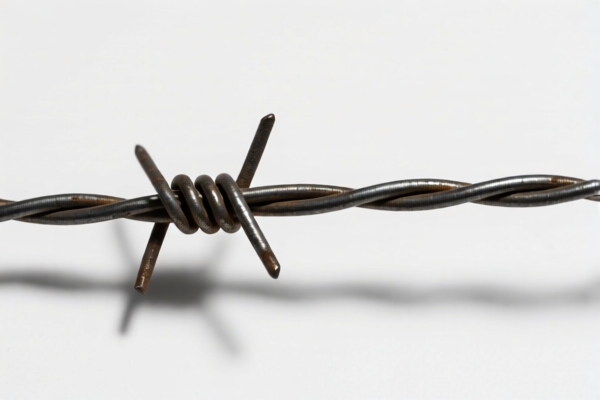
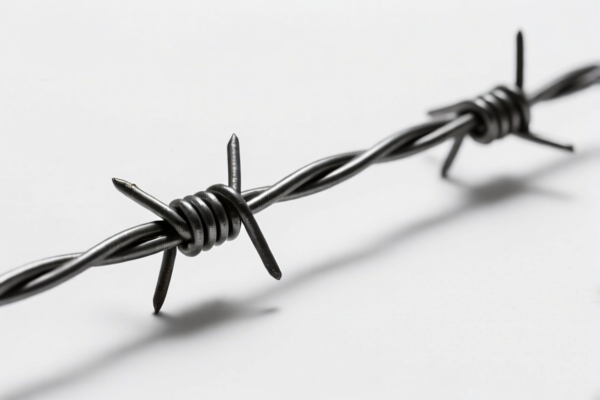
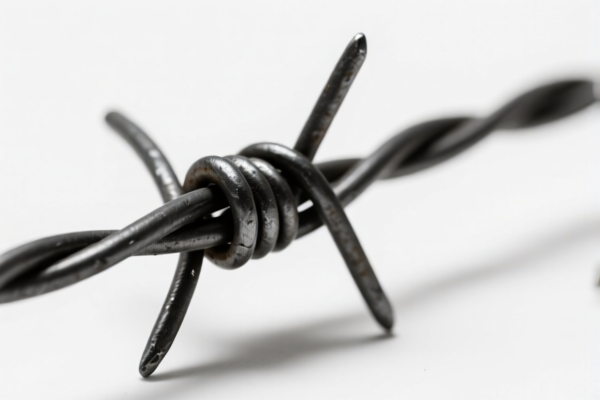
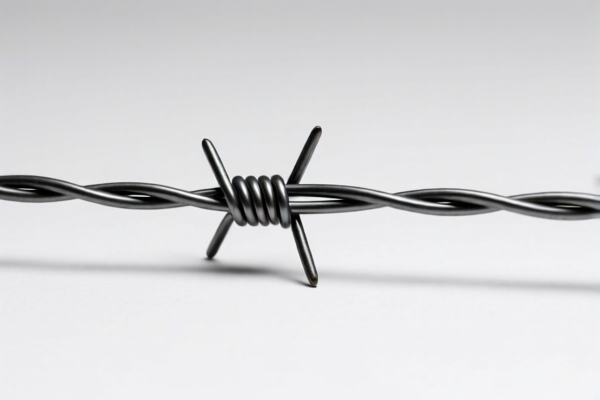
AI分析
🧵 Industrial Wire (工业线/工业用线材)
🌐 HS Code Reference & Customs Clearance Guide | 2026 Latest Tariff Analysis | Professional Level Clearance Strategy
📌 1. Product Definition & Classification: Do You Really Know "Industrial Wire"?
"Industrial Wire" is a broad trade term that generally refers to wire products used in manufacturing, construction, or specific industrial applications. In international trade, precise classification is critical because material (metal vs. synthetic fiber) and processing method (twisted vs. untwisted) drastically change the HS Code and tariff burden.
It is primarily divided into two categories based on material nature:
1. Textile/Fiber Wires (Synthetic/Natural): - Includes twisted yarns, strands, strips, and similar synthetic filaments. - Common materials: Nylon, Polyester, Polypropylene. - Key characteristic: Often twisted or processed into strands for strength.
2. Metal Wires (Copper/Metallic): - Includes copper wires, cables, and twisted metallic strands. - Common materials: Copper, Aluminum, Steel. - Key characteristic: Conductive or structural metallic properties.
⚠️ Key Distinction Point:
- If the wire is textile-based (synthetic fibers) and twisted/processed → Belongs to Chapter 56 (Twisted Yarns/Strands).
- If the wire is textile-based (synthetic fibers) but untwisted/monofilament → Belongs to Chapter 54 (Synthetic Filament Yarn).
- If the wire is metallic (specifically Copper) → Belongs to Chapter 74 (Copper and Articles Thereof).
📦 2. HS Code Classification Details (2026 Latest Tariff Authority Comparison)
Based on the provided data, here are the possible HS Codes for "Industrial Wire" depending on its specific material and structure:
| HS Code | Product Description | Applicable Scenario | Material/Structure |
|---|---|---|---|
5606.00.00.10 |
Twisted Yarns, Strands, and Similar Products | Industrial textile cords, twisted synthetic ropes | ✅ Synthetic/Natural Fiber, Twisted |
5606.00.00.90 |
Other Twisted Yarns, Strands, and Similar Products | Generic industrial twisted wires, non-specified fibers | ✅ Any Fiber, Twisted |
5404.19.10.00 |
Synthetic Filament Yarn (Other Than Sewing Thread) | Single filament wires, untwisted synthetic threads | ✅ Synthetic Fiber, Untwisted/Single |
5404.19.80.40 |
Other Synthetic Monofilaments/Long Fibers | "Catch-all" for other synthetic single wires without material conflict | ✅ Synthetic Fiber, Monofilament/Other |
7413.00.10.00 |
Copper Wire and Strands (Twisted/Stranded) | Copper industrial wires, cables, or twisted metallic strands | ✅ Copper, Metallic |
🔍 Critical Reminder:
- "Industrial Wire" made of Copper is heavily taxed due to Section 301 and IEEPA rules. It falls under 7413.00.10.00. - "Industrial Wire" made of Synthetic Fiber depends on whether it is twisted (Ch. 56, ~43% total) or untwisted/single (Ch. 54, ~37.7%-41.9% total). - Misclassification between Textile (Ch. 54/56) and Metal (Ch. 74) leads to severe penalties and retroactive duty payments.
💰 3. 2026 Latest Tariff Rate Breakdown (Including Surtaxes & Policy Add-ons)
✅ Applicable Country: United States (US)
✅ Origin: China (CN)
✅ Effective Time: From November 10, 2025 (including subsequent imports)
🎯 1. 5606.00.00.10 & 5606.00.00.90 —— Twisted Yarns/Strands (Textile)
| Item | Content |
|---|---|
| Base Tariff | 8.0% (ad valorem) |
| Section 301 Surtax | +25.0% |
| IEEPA Surtax | +10.0% (For China/HK products, effective Nov 10, 2025) |
| Total Tariff | 43.0% |
| Tax Calculation | CIF Value × 43% |
| De Minimis Exemption? | ❌ No (deny_de_minimis) |
| Legal Basis Path | IEEPA:9903.01.25 → IEEPA:9903.01.24 → USITC:5606.00.00.10 → FOOTNOTE:9903.88.01 |
📌 Explanation:
- The 8% base rate is for twisted yarns/strands. - The 25% Section 301 surtax applies to Chinese-origin goods. - The 10% IEEPA surtax is the additional penalty for Chinese imports. - Total 43% is extremely high for textile-related industrial wires.
🎯 2. 5404.19.10.00 —— Synthetic Filament Yarn (Single/Untwisted)
| Item | Content |
|---|---|
| Base Tariff | 2.7% |
| Section 301 Surtax | +25.0% |
| IEEPA Surtax | +10.0% |
| Total Tariff | 37.7% |
| Tax Calculation | CIF Value × 37.7% |
| De Minimis Exemption? | ❌ No |
| Legal Basis Path | IEEPA:9903.01.25 → IEEPA:9903.01.24 → USITC:5404.19.10.00 → FOOTNOTE:9903.88.01 |
📌 Note:
- This category applies if the wire is a single filament (not twisted). - Slightly lower than twisted yarns due to a lower base rate (2.7% vs 8.0%), but still very high.
🎯 3. 5404.19.80.40 —— Other Synthetic Monofilaments/Long Fibers (Catch-all)
| Item | Content |
|---|---|
| Base Tariff | 6.9% |
| Section 301 Surtax | +25.0% |
| IEEPA Surtax | +10.0% |
| Total Tariff | 41.9% |
| Tax Calculation | CIF Value × 41.9% |
| De Minimis Exemption? | ❌ No |
| Legal Basis Path | IEEPA:9903.01.25 → IEEPA:9903.01.24 → USITC:5404.19.80.40 → FOOTNOTE:9903.88.01 |
📌 Note:
- Used when the specific synthetic filament type doesn't fit other precise subheadings. - Higher base rate (6.9%) makes it more expensive than5404.19.10.00.
🎯 4. 7413.00.10.00 —— Copper Wire and Strands (Metallic)
| Item | Content |
|---|---|
| Base Tariff | 3.0% |
| Section 301 Surtax | +25.0% |
| IEEPA Surtax | +10.0% |
| Additional Metal Tariff | +50.0% (Specific for Steel, Aluminum, Copper products under Section 232/301 expansions) |
| Total Tariff | 88.0% |
| Tax Calculation | CIF Value × 88.0% |
| De Minimis Exemption? | ❌ No |
| Legal Basis Path | IEEPA:9903.01.25 → IEEPA:9903.01.24 → USITC:7413.00.10.00 → FOOTNOTE:9903.88.01 → Section 232/301 Metal Add-on |
📌 CRITICAL WARNING:
- Copper Industrial Wire is the MOST EXPENSIVE to import into the US from China. - The 88% total rate includes: Base (3%) + Section 301 (25%) + IEEPA (10%) + Metal Add-on (50%). - This is a prohibitive tariff. Importing copper wires from China is currently highly disadvantageous financially.
🛠️ 4. Customs Clearance Practical Advice (Battle-Tested Pitfall Guide)
✅ 1. Required Documentation Checklist (Non-negotiable)
| Document | Must Provide | Description |
|---|---|---|
| ✅ Product Specification Sheet | ✔️ | Must specify: Material (Copper vs. Nylon/Polyester), Diameter, Twist Direction, Strength. |
| ✅ Material Certificate | ✔️ | Crucial to prove it is not copper if claiming textile codes, or is copper. |
| ✅ Product Photos (Clear) | ✔️ | Show texture, cross-section (twisted vs. single), and any markings. |
| ✅ Commercial Invoice | ✔️ | Clearly state "Industrial Wire, [Material], [HS Code]". Avoid vague terms like "General Wire". |
| ✅ Packing List | ✔️ | Weight and dimensions. Ensure net/gross weight matches customs calculations. |
| ✅ Origin Certificate (CO) | ✔️ | Proof of China origin triggers surtaxes. If re-exported from Vietnam, may apply for exemption (if rules of origin met). |
✅ 2. Declaration Strategy (Key Mantra)
🔥 "Material First, Structure Second, Name Precise, Tax Saves!"
| Scenario | Correct Declaration | Wrong Practice |
|---|---|---|
| Twisted Synthetic Wire | 5606.00.00.10 or .90 |
Misclassify as metal → 88% penalty! |
| Single Synthetic Wire | 5404.19.10.00 |
Misclassify as twisted → Higher base rate (43% vs 37.7%) |
| Copper Wire | 7413.00.10.00 |
Try to declare as textile → Customs audit, seizure, fine |
| Mixed Bundle | Split by material | Bundle copper + nylon → Confusion, likely highest rate applied to all |
✅ 3. Special Circumstances Handling
| Situation | Handling Advice |
|---|---|
| OEM Custom Wire | Provide customer order + technical drawings. Prove exact material composition. |
| Copper Wire for Automotive | Still 7413.00.10.00 with 88% tariff. No exemption for end-use in standard trade. |
| Wire from Vietnam/Malaysia | If processed sufficiently in Vietnam/Malaysia, may qualify for IEEPA Exemption. Must provide full supply chain proof. |
| Small Sample Shipments | No De Minimis Exemption. Even small values are subject to full 37%-88% tariffs. |
🌍 5. Global Market Clearance Comparison (2026 Latest)
| Country/Region | Recommended HS Code | Tariff (China Origin) | Certification | Notes |
|---|---|---|---|---|
| 🇺🇸 USA | 7413.00.10.00 (Copper) |
88.0% | None specific | Highest rate due to metal add-on |
| 🇺🇸 USA | 5606.00.00.10 (Textile) |
43.0% | None specific | High due to IEEPA + 301 |
| 🇨🇳 China | 7413.00.10.00 |
3.0% | CCC (if applicable) | Low base rate, no surtax |
| 🇪🇺 EU | 7413.00.10.00 |
~5-10% | CE/RoHS | No Section 301/IEEPA |
| 🇦🇺 Australia | 7413.00.10.00 |
~5-10% | RCM | No surtax |
📌 Conclusion:
- USA is the most punitive market for industrial wires from China. - Copper wires face an 88% tariff, making China-origin copper wire imports nearly impossible commercially. - Synthetic wires face 37.7%-43%, which is still high but manageable for high-margin goods.
📌 6. Common Errors & Pitfall Guide (Blood & Tears Lessons)
❌ Error 1: Declaring Copper Wire as "Synthetic Fiber Wire"
👉 Consequence: Customs audit, 88% tariff applied retroactively, plus fines and potential seizure.
❌ Error 2: Declaring Twisted Yarn as Single Filament
👉 Consequence: Base rate jumps from 2.7% to 8.0% → Total tax increases from 37.7% to 43.0%.
❌ Error 3: Using vague name "Industrial Wire" without material specification
👉 Consequence: CBP (Customs and Border Protection) will classify based on worst-case scenario or request expensive classification ruling.
❌ Error 4: Assuming "De Minimis" ($800) applies to wires
👉 Consequence: Denied. Wires are subject to specific surtaxes and are excluded from de minimis exemptions for Chinese goods.
✅ Correct Practice:
"Industrial Wire, Copper Stranded, 10mm Diameter, for Electrical Use, HS Code 7413.00.10.00"
OR
"Industrial Twisted Nylon Yarn, 500 Denier, HS Code 5606.00.00.10"
🎯 7. Conclusion: Precision Classification Saves Millions!
🎯 Remember the Mantra:
🔹 "Copper is 88%, Nylon is 43%. Don't Mix Them!"
🔹 "Twisted vs. Single Changes Base Rate. Know Your Structure!"
🔹 "No De Minimis for Wires. Every Dollar is Taxed!"
📌 Pro Tip:
If your industrial wire is essential for your business, consider supply chain diversification:
- Source copper wires from Vietnam, Thailand, or Mexico to potentially avoid IEEPA/301 surtaxes (if rules of origin are met).
- Apply for an Advance Ruling from US CBP if the product classification is ambiguous.
📣 Immediate Action:
📞 Contact a professional customs broker + Provide Material Safety Data Sheet (MSDS) + Confirm Origin Country.
🚀 Avoid the 88% Copper Tax Trap by declaring correctly or diversifying sources!
✨ Professional Clearance Starts with Accurate Classification!
💼 Your Supply Chain Cost Deserves Exact Calculation!
用户评价
关于 HS 编码归类
协调制度(HS)是由世界海关组织(WCO)制定的国际贸易商品分类标准。全球 200 多个国家采用 HS 系统作为海关关税、贸易统计和进出口监管的基础。
每个 HS 编码遵循以下层级结构:
- 章(2 位)——商品大类(例如:第 84 章:机器和机械设备)
- 品目(4 位)——章内的更具体分类
- 子目(6 位)——国际通用细分,所有 WCO 成员国统一使用
- 本国细分(8-10 位)——各国自行扩展的细分编码,如美国 HTSUS 10 位编码
正确的 HS 编码归类对于顺利通关、准确缴纳关税和遵守贸易法规至关重要。错误归类可能导致海关延误、多缴关税或罚款。
从CN进口到US时,适用的关税税率可能包括:
- 最惠国(MFN)税率——适用于 WTO 成员国的标准关税税率
- 普通税率——适用于无贸易协定国家
- 贸易救济关税——附加关税,如 301 条款(反倾销)、232 条款(国家安全)或反补贴税
本页内容仅供参考。如需正式归类,请咨询当地海关或持牌报关代理。