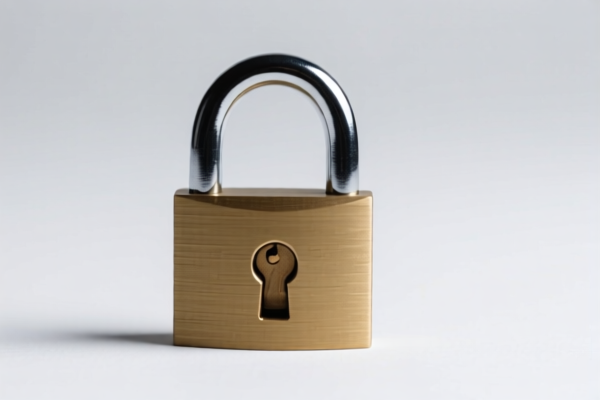
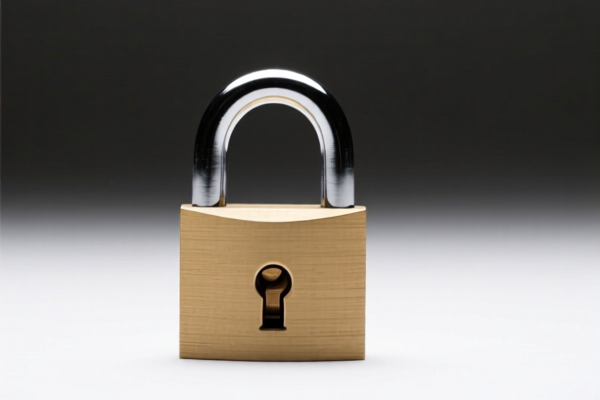
magnetic lock
CN → US| HS编码 | 关税税率 | 原产国 | 目的国 | 文档 |
|---|---|---|---|---|
| 8505110090 | 37.1% | CN | US | 官方文档 |
| 8505907501 | 36.3% | CN | US | 官方文档 |
| 8301406030 | 23.2% | CN | US | 官方文档 |
| 8301406060 | 23.2% | CN | US | 官方文档 |
商品图片


AI分析
🔒 Magnetic Locks (Maglocks) – Precision Classification & US Import Strategy
🌐 HS Code Reference & Customs Clearance Guide | 2026 Latest Tariff Analysis | Professional Level Compliance
📌 I. Product Definition: Are You Buying a "Lock" or a "Magnet"?
Magnetic locks (Maglocks) are electromechanical locking devices that use an electric current to create a strong magnetic field, holding a metal plate (armature plate) in place. In international trade, the classification depends entirely on how the device functions and what it is primarily designed to do.
Two Distinct Categories: 1. Electromagnetic Security Components: Devices primarily designed as lifting heads or holding devices under Chapter 85 (Electrical machinery). 2. Base Metal Locks: Devices primarily designed as padlocks/locks of base metal under Chapter 83 (Articles of base metal).
⚠️ Critical Distinction:
- If the product is marketed as a "Lock" (with a key, combination, or electrically operated locking mechanism for securing doors/cabinets) → It likely falls under Chapter 83 (Base Metal Locks).
- If the product is marketed as a "Lifting Head" or generic "Electromagnet Holding Device" without specific locking hardware features → It likely falls under Chapter 85 (Electromagnets).
- For "Magnetic Locks" used in door security, customs often scrutinizes whether it is an electromagnetic lock (Chapter 85) or a lock of base metal (Chapter 83). Based on the provided data, specific door locks are classified under 8301.40.60.30, while other locks are under 8301.40.60.60. General electromagnets are under 8505.11.00.90.
📦 II. HS Code Classification Details (Based on Provided Data)
| HS Code | Product Description | Applicable Scenario | Key Features |
|---|---|---|---|
8505.11.00.90 |
Electromagnets; Permanent magnets... Of metal, Other | Industrial electromagnets, lifting heads, generic holding devices | ❌ Not a dedicated door lock; generic electromagnetic holding device |
8301.40.60.30 |
Padlocks and locks... of base metal: Other Door locks... suitable for use with interior or exterior doors | Security Magnetic Door Locks | ✅ Yes; Specific door lock, key/combo/electrically operated, base metal |
8301.40.60.60 |
Padlocks and locks... of base metal: Other | Other base metal locks (not door locks) | ✅ Yes; Locks for cabinets, padlocks, etc., but not specified as door locks |
8505.90.75.01 |
Electromagnets... Other, including parts: Other | Parts of electromagnetic devices | ❌ No; Only for parts, not the main unit |
🔍 Key Insight for Magnetic Locks:
- If your product is a complete magnetic locking system for doors (including electromagnet + armature), and it functions as a lock,8301.40.60.30is often the most accurate and favorable classification for door locks.
- If it is a generic electromagnet not specifically designed as a lock (e.g., for lifting or industrial holding), use8505.11.00.90.
- Never misclassify a door lock as a generic electromagnet if it meets the definition of a "lock" under Chapter 83, as this can lead to misclassification penalties.
💰 III. 2026 Latest Tariff Rate Breakdown (Including Additional Duties)
✅ Applicable Country: United States (US)
✅ Country of Origin: China (CN)
✅ Effective Date: Rates apply to imports from China
🎯 1. 8505.11.00.90 – Electromagnets (Generic Holding Devices)
| Item | Detail |
|---|---|
| Base Duty | 2.1% |
| Section 301 Additional Duty | 25.0% |
| Total Tax Rate | 27.1% |
| Calculation Basis | CIF Value × 27.1% |
| De Minimis Eligibility | ❌ No (Value > $800 triggers full duty) |
| Legal Reference | HTSUS 8505.11.00.90 + Section 301 Footnote |
📌 Explanation:
- This code applies to generic electromagnets or lifting heads.
- High Tariff Alert: The 25% additional duty significantly increases cost.
- Risk: If your "magnetic lock" is actually a door lock, declaring it here to avoid higher lock-specific duties might be challenged if it clearly functions as a lock.
🎯 2. 8301.40.60.30 – Door Locks (Base Metal, Electrically Operated)
| Item | Detail |
|---|---|
| Base Duty | 0.0% |
| Section 301 Additional Duty | 0.0% |
| Total Tax Rate | 0.0% |
| Calculation Basis | CIF Value × 0% |
| De Minimis Eligibility | N/A (0% duty regardless of value) |
| Legal Reference | HTSUS 8301.40.60.30 |
📌 Explanation:
- Best Case Scenario for Magnetic Door Locks!
- If your product is classified as a Door Lock (even if electrically operated/magnetic), the duty is ZERO.
- Condition: Must be suitable for use with interior or exterior doors.
- Strategy: Provide documentation proving it is a door lock (e.g., installation instructions for doors, UL/ULC listing for fire exit devices) to justify this 0% rate.
🎯 3. 8301.40.60.60 – Other Base Metal Locks
| Item | Detail |
|---|---|
| Base Duty | 5.7% |
| Section 301 Additional Duty | 7.5% |
| Total Tax Rate | 13.2% |
| Calculation Basis | CIF Value × 13.2% |
| De Minimis Eligibility | ❌ No |
| Legal Reference | HTSUS 8301.40.60.60 |
📌 Explanation:
- Applies to locks that are not door locks (e.g., padlocks, cabinet locks, locker locks).
- Moderate Tariff: 13.2% is lower than electromagnets (27.1%) but higher than door locks (0%).
- Use Case: If your magnetic lock is for a locker, cabinet, or non-door application, use this code.
🎯 4. 8505.90.75.01 – Parts of Electromagnets
| Item | Detail |
|---|---|
| Base Duty | 1.3% |
| Section 301 Additional Duty | 25.0% |
| Total Tax Rate | 26.3% |
| Calculation Basis | CIF Value × 26.3% |
| De Minimis Eligibility | ❌ No |
| Legal Reference | HTSUS 8505.90.75.01 |
📌 Explanation:
- Only for parts (e.g., replacement coils, brackets) of electromagnetic devices.
- Not for complete magnetic locks.
🛠️ IV. Customs Clearance Practical Advice (Pitfall Avoidance)
✅ 1. Documentation Checklist (Essential for Zero-Liability)
| Document | Required? | Purpose |
|---|---|---|
| ✅ Product Specification Sheet | ✔️ | Must clearly state "Magnetic Door Lock" or "Electromagnetic Lock for Doors" |
| ✅ Installation Manual | ✔️ | Proves intended use (e.g., "Install on exit door") |
| ✅ Certifications (UL/ETL/EN 60947-5-3) | ✔️ | Validates safety and function as a locking device |
| ✅ Commercial Invoice | ✔️ | Must match HS Code description precisely |
| ✅ Photos of Product & Label | ✔️ | Show model number, voltage, and "For Door Use" label |
| ✅ Declaration of Use | ✔️ | Written statement: "This is a magnetic lock for interior/exterior doors, not a generic electromagnet." |
✅ 2. Declaration Strategy (Key Tips)
🔥 “Declare as Lock for Doors, Not Magnet for Lifting!”
| Scenario | Correct HS Code | Risk if Misclassified |
|---|---|---|
| Magnetic Lock for Main Door | 8301.40.60.30 |
0% Duty |
If declared as 8505.11.00.90 → 27.1% Duty (Overpayment) |
||
If declared as 8301.40.60.60 → 13.2% Duty (Overpayment) |
||
| Magnetic Lock for Locker/Cabinet | 8301.40.60.60 |
13.2% Duty |
If declared as 8301.40.60.30 → Risk of rejection (not a door lock) |
||
| Generic Electromagnet (No Lock Function) | 8505.11.00.90 |
27.1% Duty |
If declared as 8301.40.60.30 → Risk of penalty (misleading description) |
📌 Critical Warning:
- Do NOT use "Electromagnet" as the primary description if it is a door lock. CBP (U.S. Customs) may view this as an attempt to avoid higher duties if the lock is classified elsewhere, but in this case, door locks are 0%, so the risk is underpayment if you declare it as an electromagnet. However, if you declare it as a lock but it is not a lock, you face fraud penalties.
- Always align the description with the primary function: Locking vs. Holding.
✅ 3. Special Cases
| Situation | Recommendation |
|---|---|
| Fail-Safe vs. Fail-Secure | Both are locks. Use 8301.40.60.30 if for doors. |
| Integrated with Access Control | Still a lock. Declare as "Magnetic Lock with Integrated Reader." |
| OEM/White Label | Provide manufacturer’s catalog showing "Door Lock" classification. |
| Used for Fire Exit Doors | Highlight compliance with NFPA 101 or local fire codes to prove "Door Lock" status. |
🌍 V. Global Market Comparison (2026 Update)
| Country/Region | Recommended HS Code | Duty Rate (China Origin) | Key Requirement |
|---|---|---|---|
| 🇺🇸 USA | 8301.40.60.30 |
0% | Must be "Door Lock" |
| 🇨🇳 China | 8301.40.60.30 | ~5% (Import Duty) | CCC Certification if applicable |
| 🇪🇺 EU | 8301.10.00.00 | 0-2% | CE Marking, EN 60947-5-3 |
| 🇬🇧 UK | 8301.40.60.30 | 0% | UKCA Marking |
📌 Conclusion:
- USA offers 0% duty for door locks (8301.40.60.30), which is significantly better than the 27.1% for generic electromagnets.
- Prove it’s a door lock with proper documentation to save 27.1% in duties.
📌 VI. Common Mistakes & Pitfalls (Learn from Others’ Errors)
❌ Mistake 1: Declaring a magnetic door lock as "Electromagnet" (8505.11.00.90)
👉 Result: Pay 27.1% instead of 0%. You overpaid!
✅ Fix: Use 8301.40.60.30.
❌ Mistake 2: Declaring a locker lock as "Door Lock" (8301.40.60.30)
👉 Result: CBP may reject or audit, leading to delays. Locker locks are 8301.40.60.60 (13.2%).
✅ Fix: Use correct HS code based on end-use.
❌ Mistake 3: No documentation proving "Door" use
👉 Result: CBP assumes it’s a generic electromagnet → 27.1%.
✅ Fix: Provide installation manuals and marketing materials showing door use.
🎯 VII. Conclusion: Professional Declaration, Maximum Savings!
🎯 Key Takeaway:
🔹 Magnetic Door Locks =
8301.40.60.30= 0% Duty
🔹 Generic Electromagnets =8505.11.00.90= 27.1% Duty
🔹 Locker/Cabinet Locks =8301.40.60.60= 13.2% Duty
📌 Pro Tip:
- Always include "For Doors" in your product title and description.
- Always attach installation manuals showing door mounting.
- Always verify certifications (UL/ETL) for locking devices.
📣 Immediate Action:
📞 Consult your customs broker with installation manuals to confirm
8301.40.60.30classification.
🚀 Save 27.1% in duties by declaring correctly as a Door Lock.
✨ Precision Classification Starts Here!
💼 Your Profit Margin Depends on the Right HS Code!
用户评价
关于 HS 编码归类
协调制度(HS)是由世界海关组织(WCO)制定的国际贸易商品分类标准。全球 200 多个国家采用 HS 系统作为海关关税、贸易统计和进出口监管的基础。
每个 HS 编码遵循以下层级结构:
- 章(2 位)——商品大类(例如:第 84 章:机器和机械设备)
- 品目(4 位)——章内的更具体分类
- 子目(6 位)——国际通用细分,所有 WCO 成员国统一使用
- 本国细分(8-10 位)——各国自行扩展的细分编码,如美国 HTSUS 10 位编码
正确的 HS 编码归类对于顺利通关、准确缴纳关税和遵守贸易法规至关重要。错误归类可能导致海关延误、多缴关税或罚款。
从CN进口到US时,适用的关税税率可能包括:
- 最惠国(MFN)税率——适用于 WTO 成员国的标准关税税率
- 普通税率——适用于无贸易协定国家
- 贸易救济关税——附加关税,如 301 条款(反倾销)、232 条款(国家安全)或反补贴税
本页内容仅供参考。如需正式归类,请咨询当地海关或持牌报关代理。