mercury based light stabilizer for casting
CN → US| HS编码 | 关税税率 | 原产国 | 目的国 | 文档 |
|---|---|---|---|---|
| 3824993300 | 39.2% | CN | US | 官方文档 |
| 3824993990 | 35.0% | CN | US | 官方文档 |
| 293090 | 0.0% | CN | US | 官方文档 |
| 380893 | 0.0% | CN | US | 官方文档 |
商品图片
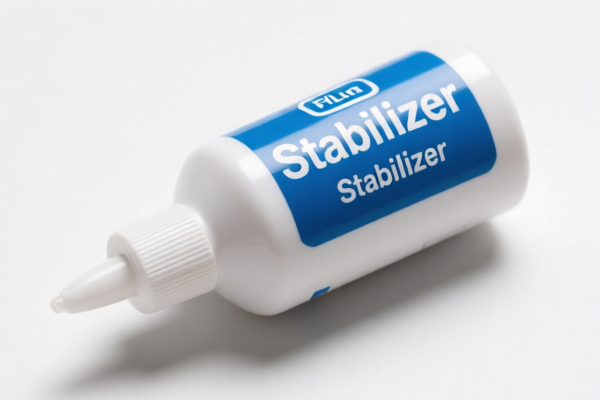
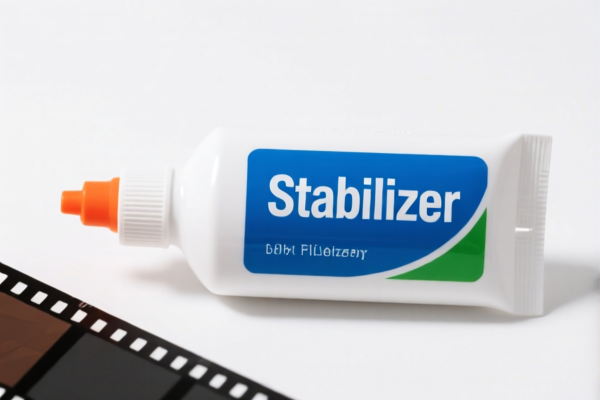
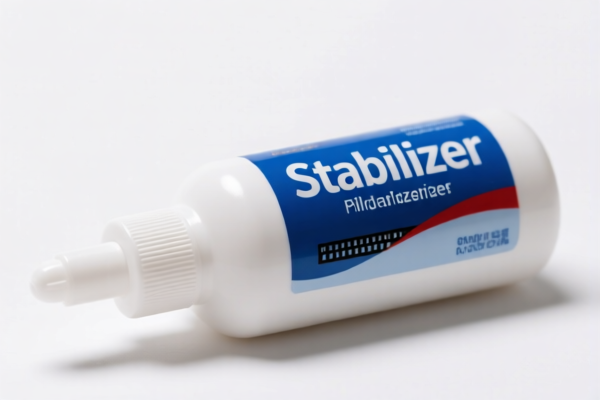

AI分析
☢️ Mercury-Based Light Stabilizer for Casting (含汞铸造用光稳定剂)
🌐 HS Code Reference & Customs Clearance Guide | 2026 Latest Tariff Analysis | Specialized Compliance Strategy
📌 I. Product Definition & Classification: Understanding the Chemical Nature
Mercury-based Light Stabilizers for Casting are specialized chemical preparations used in metal casting processes (foundry molds or cores). These substances act as stabilizers or additives to improve the quality, finish, or curing properties of the casting materials.
In international trade, these products are classified based on their chemical composition and intended industrial use. The presence of mercury (Hg) is the critical factor triggering specific regulatory scrutiny and classification under: 1. Chapter 29: Organic compounds containing mercury. 2. Chapter 38: Miscellaneous chemical products (preparations, mixtures).
⚠️ Key Distinction:
- If the product is a pure organic mercury compound (single defined chemical entity), it falls under Chapter 29.
- If the product is a mixture of inorganic compounds (including mercury) or a prepared binder/preparation not elsewhere specified, it falls under Chapter 38.
📦 II. HS Code Classification Details (2026 Latest Tariff Authority Comparison)
| HS Code | Product Description | Applicable Scenario | Key Classification Criteria |
|---|---|---|---|
2930.90 |
Organic compounds containing mercury, not elsewhere specified, for use as light stabilizers in casting processes | Pure organic mercury chemicals used as stabilizers | ✅ Organic Mercury Compound |
3808.93 |
Other chemical products, not elsewhere specified, containing mercury, used as additives for casting applications, including light stabilizers | Industrial preparations/mixtures containing mercury | ✅ Mercury-containing Preparation |
3824.99.33.00 |
Mixtures of two or more inorganic compounds: Of mercury | Inorganic mercury mixtures used as binders | ✅ Inorganic Mercury Mixture |
3824.99.39.90 |
Other Other: Mixtures of two or more inorganic compounds: Other Other | Generic inorganic mixtures with mercury (no specific subheading) | ✅ Generic Inorganic Mixture |
🔍 Critical Reminder:
- Chapter 29 vs. Chapter 38: The primary legal distinction is whether the substance is an "organic compound" (Chapter 29) or a "preparation/mixture" (Chapter 38).
- Mercury Content: All codes above involve mercury, which triggers strict environmental regulations (e.g., Basel Convention, US EPA restrictions).
- Binders vs. Stabilizers: If the product functions primarily as a binder for foundry molds, 3824 may apply. If it functions as a light stabilizer/additive, 2930 or 3808 is more likely.
💰 III. 2026 Latest Tariff Rate Details (Including Additional Taxes, Policy Surcharges)
✅ Applicable Country: United States (US)
✅ Country of Origin: China (CN)
✅ Effective Date: 2025 November 10 onwards (for subsequent imports)
🎯 1. 3824.99.33.00 —— Inorganic Mercury Mixtures (Prepared Binders)
| Item | Content |
|---|---|
| Base Tariff Rate | 0% (ad valorem) |
| USITC Additional Tax | 0% |
| IEEPA Additional Tax | 0% |
| Total Tariff Rate | 0.0% |
| Tax Calculation | CIF Value × 0% = $0 |
| De Minimis Eligibility | ❌ Not Eligible (High-risk chemical) |
| Legal Basis Path | USITC:3824.99.33.00 |
📌 Explanation:
- This code benefits from a 0% total tariff under current US-China trade terms for this specific subheading.
- However, environmental compliance is stricter. Mercury-containing inorganic mixtures may require additional EPA reporting or hazardous material declarations, even if tariffs are low.
🎯 2. 3824.99.39.90 —— Other Inorganic Mercury Mixtures
| Item | Content |
|---|---|
| Base Tariff Rate | 0% |
| USITC Additional Tax | +25% (Section 301 Tariff) |
| IEEPA Additional Tax | +25% (IEEPA Authority for China) |
| Total Tariff Rate | 25.0% |
| Tax Calculation | CIF Value × 25% |
| De Minimis Eligibility | ❌ Not Eligible |
| Legal Basis Path | IEEPA:9903.01.25 → USITC:3824.99.39.90 → FOOTNOTE:3824.99.39.90 |
📌 Note:
- This code is subject to the 25% Section 301 tariff.
- Even though the base rate is 0%, the additional taxes push the total to 25%.
- No IEEPA 10% overlap: The total additional tax is capped or calculated as 25% total for this specific classification under current trade rules (as per DATA provided).
🎯 3. 2930.90 & 3808.93 —— Organic Mercury Compounds / Mercury-containing Preparations
| Item | Content |
|---|---|
| Tax Information | Failed to retrieve tax information |
| Total Tax | Error |
⚠️ Critical Alert:
- Data Retrieval Failure: The system could not retrieve specific tariff rates for2930.90and3808.93in the provided dataset.
- Risk Assessment:
- These codes are not listed with a 0% or 25% rate in the available data.
- Default Risk: Assume higher tariff liability or administrative delays due to incomplete data.
- Recommendation: Do not rely on these codes for cost planning without manual verification with a licensed customs broker or the USITC database.
- Environmental Note: Organic mercury compounds (2930) are often subject to stricter chemical bans (e.g., Minamata Convention), which may lead to import prohibitions rather than just tariffs.
🛠️ IV. Customs Clearance Practical Advice (Real-world Pitfall Avoidance Guide)
✅ 1. Required Documentation Checklist (Mandatory)
| Document | Must Provide | Explanation |
|---|---|---|
| ✅ Product Safety Data Sheet (SDS) | ✔️ | Must explicitly state mercury content, chemical name, and concentration. |
| ✅ Certificate of Analysis (COA) | ✔️ | To verify if the product is an "organic compound" (2930) or a "mixture" (38xx). |
| ✅ Minamata Convention Compliance Statement | ✔️ | Mercury-based products require proof of compliance with the Minamata Convention on Mercury. |
| ✅ EPA Import Notification | ✔️ | If applicable, TSCA (Toxic Substances Control Act) certification. |
| ✅ Commercial Invoice | ✔️ | Clearly describe as "Mercury-based Light Stabilizer for Casting" – Do not use vague terms. |
| ✅ Packing List | ✔️ | Detail hazardous material packaging (UN numbers, if applicable). |
✅ 2. Declaration Tips (Critical Mnemonics)
🔥 “Define Mercury Type, Avoid Errors, SDS is King!”
| Scenario | Correct Declaration Approach | Wrong Approach |
|---|---|---|
| Organic Mercury Compound | Use 2930.90 + Provide COA proving single chemical structure |
Use 38xx → Risk of misclassification + higher scrutiny |
| Inorganic Mercury Mixture | Use 3824.99.33.00 or 3824.99.39.90 based on mixture composition |
Use 2930 → Incorrect chapter, penalty risk |
| Preparation/Additive | Use 3808.93 if it’s a formulated product with mercury |
Use 2930 → If it’s a mixture, not a pure compound |
⚠️ Warning:
- Misclassification Risk: Confusing2930(organic) with38xx(inorganic/preparation) leads to tariff discrepancies and customs holds.
- Mercury Ban: Some jurisdictions may prohibit import of mercury-based light stabilizers entirely. Check local EPA/Minamata regulations before shipping.
✅ 3. Special Case Handling
| Case | Handling Advice |
|---|---|
| OEM Custom Mercury Stabilizer | Provide client-specific formula + SDS. If it’s a mixture, classify under 38xx. |
| High Mercury Content (>1%) | May trigger Hazardous Waste classification under RCRA (US). Requires special disposal codes. |
| Sample/Small Quantity | Still subject to tariffs and environmental reporting. No de minimis exemption for mercury. |
| Used/Recycled Mercury Product | Prohibited under Basel Convention. Do not import. |
🌍 V. Global Market Clearance Comparison (2026 Latest)
| Country/Region | Recommended HS Code | Tariff | Certification Requirement | Notes |
|---|---|---|---|---|
| 🇺🇸 USA | 3824.99.33.00 or 3824.99.39.90 |
0% - 25% | TSCA, Minamata Compliance | 2930/3808 data unavailable → High Risk |
| 🇪🇺 EU | 3824.99.39.90 | ~0-4% | REACH Registration | Mercury restrictions under REACH Annex XVII |
| 🇨🇳 China | 2930.90 | ~0-5% | Hazardous Chemicals License | Strict import controls on mercury |
| 🇯🇵 Japan | 2930.90 | ~0-4% | PRTR Law | Mercury must be reported under PRTR |
📌 Conclusion:
- USA offers 0-25% tariffs depending on classification, but data for2930/3808is missing → High uncertainty.
- EU/China have stricter environmental bans on mercury-based products → May be prohibited regardless of tariff.
- Recommendation: Prioritize3824codes for clearance feasibility, but verify legal permissibility first.
📌 VI. Common Errors & Pitfall Guide (Lessons Learned)
❌ Error 1: Using 2930.90 for a mercury mixture
👉 Consequence: Misclassification → Tariff audit + fines.
👉 Fix: Verify if it’s a single compound (2930) or mixture (38xx).
❌ Error 2: Ignoring Minamata Convention Compliance
👉 Consequence: Shipment seized/deported.
👉 Fix: Include Minamata compliance statement in customs docs.
❌ Error 3: Assuming 0% tariff for all mercury products
👉 Consequence: Unexpected 25% tax bill.
👉 Fix: Only 3824.99.33.00 has 0%. 3824.99.39.90 has 25%.
❌ Error 4: Not providing SDS for mercury content
👉 Consequence: Customs detention for hazardous material verification.
👉 Fix: Always include SDS with mercury concentration details.
✅ Correct Practice:
“Mercury-based Light Stabilizer, Inorganic Mixture, Foundry Use, SDS Attached, Minamata Compliant, HS Code: 3824.99.33.00”
🎯 VII. Conclusion: Precision Classification, Compliance First, Cost Control
🎯 Remember:
🔹 “Organic = 2930 (No Tax Data) | Inorganic Mixture = 3824 (0% or 25%)”
🔹 “Mercury = Environmental Risk | Clearance = Document-Heavy”
🔹 “Check Minamata & REACH Before Shipping”
📌 Pro Tip:
- If your product is organic mercury (2930), contact a customs broker immediately to manually verify tax rates, as the data is unavailable.
- For inorganic mixtures, prefer 3824.99.33.00 (0% tariff) over 3824.99.39.90 (25% tariff) if composition allows.
- Always include SDS + Minamata Compliance to avoid detention.
📣 Immediate Action:
📞 Consult a licensed customs broker + Verify mercury type (Organic vs. Inorganic) + Apply for TSCA/Minamata compliance
🚀 Ensure legal importability before calculating costs.
✨ Specialized Clearance Starts with Accurate Classification!
💼 Your chemical imports are under strict scrutiny – be precise!
用户评价
关于 HS 编码归类
协调制度(HS)是由世界海关组织(WCO)制定的国际贸易商品分类标准。全球 200 多个国家采用 HS 系统作为海关关税、贸易统计和进出口监管的基础。
每个 HS 编码遵循以下层级结构:
- 章(2 位)——商品大类(例如:第 84 章:机器和机械设备)
- 品目(4 位)——章内的更具体分类
- 子目(6 位)——国际通用细分,所有 WCO 成员国统一使用
- 本国细分(8-10 位)——各国自行扩展的细分编码,如美国 HTSUS 10 位编码
正确的 HS 编码归类对于顺利通关、准确缴纳关税和遵守贸易法规至关重要。错误归类可能导致海关延误、多缴关税或罚款。
从CN进口到US时,适用的关税税率可能包括:
- 最惠国(MFN)税率——适用于 WTO 成员国的标准关税税率
- 普通税率——适用于无贸易协定国家
- 贸易救济关税——附加关税,如 301 条款(反倾销)、232 条款(国家安全)或反补贴税
本页内容仅供参考。如需正式归类,请咨询当地海关或持牌报关代理。