mini sewing machine
CN → US| HS编码 | 关税税率 | 原产国 | 目的国 | 文档 |
|---|---|---|---|---|
| 8452299000 | 35.0% | CN | US | 官方文档 |
| 8452100090 | 17.5% | CN | US | 官方文档 |
| 8509805095 | 14.2% | CN | US | 官方文档 |
| 8467895090 | 17.5% | CN | US | 官方文档 |
商品图片
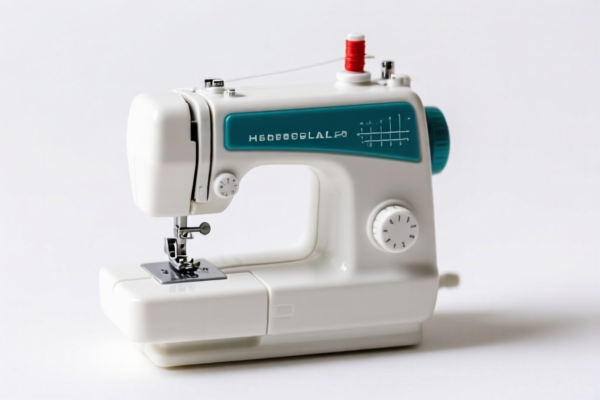
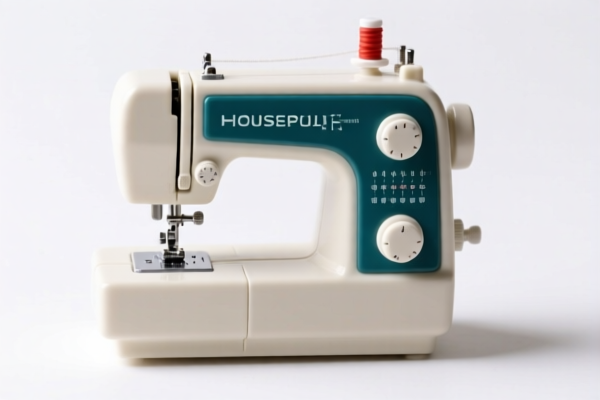
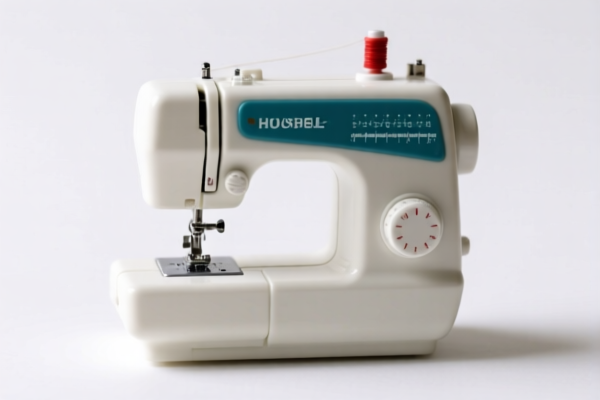
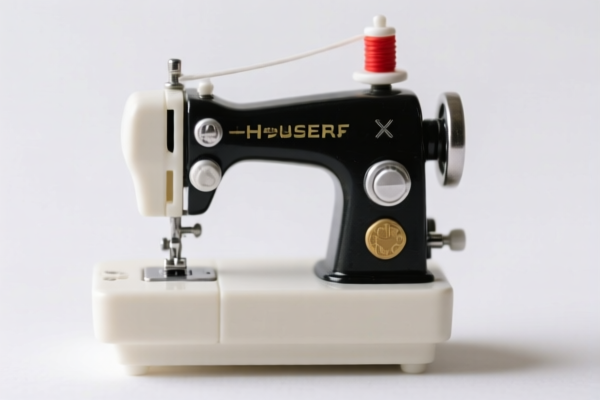
AI分析
🧵 Mini Sewing Machine (Portable Handheld Sewer)
🌐 HS Code Classification & Customs Clearance Guide | 2026 Tax Regime Analysis | Professional Strategy
📌 One, Product Definition & Core Logic: What Exactly Is a "Mini Sewing Machine"?
A Mini Sewing Machine (often marketed as a "Handheld Portable Sewer") is a compact, battery-operated or USB-powered device designed for quick repairs, hemming, and crafting. Unlike traditional floor-standing industrial or household sewing machines, these devices are characterized by their portability, handheld form factor, and often simplified mechanical structures.
In international trade classification, the key debate lies between Chapter 84 (Machinery) and Chapter 85 (Electrical Machinery). The classification depends heavily on whether the device is viewed as a specialized sewing machine (8452) or a general household appliance with a motor (8509).
⚠️ Critical Distinction:
- If classified under 8452, it is treated as a dedicated sewing machine, often attracting high punitive tariffs (Section 301 + IEEPA) due to specific trade war policies on textile machinery.
- If classified under 8509, it may be viewed as a generic electrical household appliance, potentially attracting lower base duties but still subject to general surcharges.
- If classified under 8467, it is viewed as a handheld power tool, which can sometimes offer a different duty structure depending on the "handheld" definition.
📦 Two, HS Code Classification Details (2026 Latest Tariff Data)
Based on the provided data, here are the four potential HS Code classifications for "Mini Sewing Machine," along with their tax implications.
| HS Code | Product Description & Logic | Total Tax Rate | Tax Breakdown |
|---|---|---|---|
8452.29.90.00 |
Sewing Machine (Other than Household) • Logic: Matches "Sewing Machine" core use. "Mini/Handheld" is considered a form factor, not a change in function. Falls under "Other Sewing Machines." |
35.0% | Base: 0.0% Section 301: 25.0% IEEPA 122: 10.0% |
8452.10.00.90 |
Sewing Machine (Household Type) • Logic: Directly matches "Household Sewing Machine" in classification explanations. No material or形态 conflict. |
17.5% | Base: 0.0% Section 301: 7.5% IEEPA 122: 10.0% |
8509.80.50.95 |
Electro-mechanical Household Appliances (Other) • Logic: Classified as a household appliance with its own electric motor. Fits "Other" category in Chapter 85. |
14.2% | Base: 4.2% Section 301: 0.0% IEEPA 122: 10.0% |
8467.89.50.90 |
Handheld Power Tools (Other) • Logic: Product form is "Handheld Tool," function is "Sewing." Falls under "Other" general category for handheld tools. |
17.5% | Base: 0.0% Section 301: 7.5% IEEPA 122: 10.0% |
🔍 Key Insight:
- Cheapest Option:8509.80.50.95at 14.2% (Base 4.2% + IEEPA 10%).
- Most Expensive Option:8452.29.90.00at 35.0% (0% Base + 35% Surcharges).
- Risk: Misclassifying a "Household" machine as "Industrial/Other" under 8452 can double your costs. Misclassifying a "Tool" as a "Machine" can lead to compliance penalties.
💰 Three, 2026 Latest Tariff Rate Detailed Analysis (Includes Surcharges)
✅ Applicable Country: United States (US)
✅ Origin: China (CN)
✅ Effective Time: Post-2025 Trade Policies (Section 301 + IEEPA 122)
🎯 1. 8452.29.90.00 —— Sewing Machines, Other (High Risk)
| Item | Detail |
|---|---|
| Base Duty | 0.0% |
| Section 301 Duty | 25.0% |
| IEEPA Section 122 Duty | 10.0% |
| Total Effective Rate | 35.0% |
| Tax Calculation | CIF Value × 35% |
| De Minimis Exemption | ❌ No (Denied) |
| Legal Basis | USITC Header 8452 → Section 301 Footnote → IEEPA 122 |
📌 Explanation:
- This code treats the mini sewing machine as a generic "Sewing Machine" outside the specific "Household" sub-category.
- It attracts the maximum 301 tariff (25%) plus the IEEPA surcharge (10%).
- Warning: This is the highest-cost scenario. Avoid this unless your product is definitively not for household use and not handheld.
🎯 2. 8452.10.00.90 —— Sewing Machines, Household Type
| Item | Detail |
|---|---|
| Base Duty | 0.0% |
| Section 301 Duty | 7.5% |
| IEEPA Section 122 Duty | 10.0% |
| Total Effective Rate | 17.5% |
| Tax Calculation | CIF Value × 17.5% |
| De Minimis Exemption | ❌ No (Denied) |
| Legal Basis | USITC Header 8452.10 → Section 301 Footnote → IEEPA 122 |
📌 Explanation:
- If the machine is marketed and used primarily for home use (quilting, mending clothes at home), this code is appropriate.
- It benefits from a lower Section 301 rate (7.5%) compared to the "Other" category.
- Savings: 17.5% lower than the "Other" category.
🎯 3. 8509.80.50.95 —— Electro-mechanical Household Appliances (Best Value?)
| Item | Detail |
|---|---|
| Base Duty | 4.2% |
| Section 301 Duty | 0.0% |
| IEEPA Section 122 Duty | 10.0% |
| Total Effective Rate | 14.2% |
| Tax Calculation | CIF Value × 14.2% |
| De Minimis Exemption | ❌ No (Denied) |
| Legal Basis | USITC Header 8509 → IEEPA 122 |
📌 Explanation:
- This code classifies the device as a general household appliance with an electric motor, rather than a specialized sewing machine.
- Crucial Advantage: 0% Section 301 duty. Only the base duty (4.2%) and IEEPA (10%) apply.
- Risk: Customs may challenge this if the product is clearly a "Sewing Machine" by function. However, for miniature, handheld, non-traditional models, this is often defensible as an "electromechanical gadget."
- Savings: Lowest total tax rate at 14.2%.
🎯 4. 8467.89.50.90 —— Handheld Power Tools
| Item | Detail |
|---|---|
| Base Duty | 0.0% |
| Section 301 Duty | 7.5% |
| IEEPA Section 122 Duty | 10.0% |
| Total Effective Rate | 17.5% |
| Tax Calculation | CIF Value × 17.5% |
| De Minimis Exemption | ❌ No (Denied) |
| Legal Basis | USITC Header 8467 → Section 301 → IEEPA 122 |
📌 Explanation:
- Classifies the item as a handheld tool (like a drill or screwdriver) rather than a sewing machine.
- Tax rate is identical to8452.10.00.90(17.5%).
- Use this if the product is marketed more as a "tool" for crafts/DIY rather than a "sewing appliance."
🛠️ Four, Customs Clearance Practical Advice (Avoid Pitfalls)
✅ 1. Documentation Checklist (Non-negotiable)
| Document | Required? | Purpose |
|---|---|---|
| ✅ Product Photos | ✔️ | Must clearly show handheld form, battery/power source, and needle mechanism. |
| ✅ User Manual | ✔️ | Proves intended use (e.g., "Home Mending," "Crafts") to support 8509 or 8452.10 classification. |
| ✅ Technical Specs | ✔️ | Voltage, wattage, weight. Helps justify "Household Appliance" vs. "Industrial Machine." |
| ✅ Commercial Invoice | ✔️ | Description must match HS Code logic (e.g., "Portable Handheld Sewing Tool" vs. "Industrial Sewing Machine"). |
| ✅ Origin Certificate | ✔️ | To verify country of origin (China) for tariff calculation. |
✅ 2. Strategic Classification Tips
🔥 Rule of Thumb:
"Small & Electric = Appliance (8509)? Or Small & Sewing = Machine (8452)? Choose Wisely!"
| Scenario | Recommended HS Code | Reason |
|---|---|---|
| Mini, battery/USB powered, looks like a glue gun | 8509.80.50.95 |
Best tax rate (14.2%). Defend as "electromechanical household appliance." |
| Traditional look, plug-in or large battery, for home quilting | 8452.10.00.90 |
Safe, standard classification for household sewers. Rate 17.5%. |
| Industrial-style, heavy-duty, large table model | 8452.29.90.00 |
High risk/high tax. Only if clearly non-household. Rate 35.0%. |
| Marketed as "DIY Craft Tool" (not explicitly "sewing machine") | 8467.89.50.90 |
Alternative to 8509. Rate 17.5%. |
✅ 3. Special Cases & Red Flags
| Situation | Advice |
|---|---|
| Avoid "Sewing Machine" in Description? | If aiming for 8509, consider descriptive terms like "Portable Fabric Stitching Tool" or "Handheld Sewing Gadget" in marketing, but ensure legal accuracy. |
| Customs Audit Risk | 8509 is the lowest tax but highest audit risk. Be prepared to prove it is not a "Sewing Machine" as defined in Chapter 84 Note 1 or 2. |
| Section 301 Exemptions? | Currently, no exemptions are listed for these codes. Assume 100% surcharge applies. |
| De Minimis ($800) | ❌ Not Applicable. All these codes are excluded from Section 321 (de minimis) relief for Chinese goods. |
🌍 Five, Global Market Comparison (2026)
| Market | Recommended HS Code | Est. Total Tax | Notes |
|---|---|---|---|
| 🇺🇸 USA | 8509.80.50.95 |
14.2% | Best option. Requires strong justification against Chapter 84. |
| 🇨🇳 China | 8452.10.00.00 |
~10% | Standard import duty. No Section 301. |
| 🇪🇺 EU | 8452.29.90 |
~0-2% | Often lower duties for sewing machines. Check local VAT. |
| 🇬🇧 UK | 8452.29.90 |
~0% | Post-Brexit tariffs may vary. |
📌 Conclusion:
The US market is the most challenging due to high surcharges. The best strategy is to argue for8509.80.50.95(Household Appliance) to save 20%+ compared to the standard Sewing Machine codes.
📌 Six, Common Mistakes & Pitfalls (Lessons Learned)
❌ Mistake 1: Using "Sewing Machine" in the commercial invoice but declaring 8509.
👉 Result: Customs flags inconsistency → Delay + Penalties.
✅ Fix: Use consistent terminology: "Handheld Electric Sewing Tool."
❌ Mistake 2: Assuming mini size means "De Minimis" exemption.
👉 Result: Confiscation or back-taxes.
✅ Fix: All these codes are excluded from de minimis. Plan for full duty payment.
❌ Mistake 3: Declaring as 8452.29.90.00 without need.
👉 Result: Overpaying 35% tax when 14.2% or 17.5% was possible.
✅ Fix: Analyze product form. If it looks like a household gadget, use 8509.
🎯 Seven, Conclusion: Professional Classification Saves Money
🎯 Key Takeaway:
🔹 For Mini/Handheld Sewing Machines:
- Best Tax:8509.80.50.95(14.2%) – Defend as "Household Appliance."
- Safe Tax:8452.10.00.90(17.5%) – Defend as "Household Sewing Machine."
- Avoid:8452.29.90.00(35.0%) – Unless truly industrial.
📌 Action Item:
- Prepare technical documentation highlighting the "handheld" and "household" nature.
- Consider Advance Ruling from US Customs if shipment volume is high.
- Always consult a licensed customs broker before declaring, as misclassification can lead to severe penalties.
✨ Smart Classification, Lower Costs, Smoother Customs!
💼 Don't let tariff complexity stitch up your profits!
用户评价
关于 HS 编码归类
协调制度(HS)是由世界海关组织(WCO)制定的国际贸易商品分类标准。全球 200 多个国家采用 HS 系统作为海关关税、贸易统计和进出口监管的基础。
每个 HS 编码遵循以下层级结构:
- 章(2 位)——商品大类(例如:第 84 章:机器和机械设备)
- 品目(4 位)——章内的更具体分类
- 子目(6 位)——国际通用细分,所有 WCO 成员国统一使用
- 本国细分(8-10 位)——各国自行扩展的细分编码,如美国 HTSUS 10 位编码
正确的 HS 编码归类对于顺利通关、准确缴纳关税和遵守贸易法规至关重要。错误归类可能导致海关延误、多缴关税或罚款。
从CN进口到US时,适用的关税税率可能包括:
- 最惠国(MFN)税率——适用于 WTO 成员国的标准关税税率
- 普通税率——适用于无贸易协定国家
- 贸易救济关税——附加关税,如 301 条款(反倾销)、232 条款(国家安全)或反补贴税
本页内容仅供参考。如需正式归类,请咨询当地海关或持牌报关代理。