night vision sight
CN → US| HS编码 | 关税税率 | 原产国 | 目的国 | 文档 |
|---|---|---|---|---|
| 9013105000 | 22.8% | CN | US | 官方文档 |
| 9005804020 | 18.0% | CN | US | 官方文档 |
| 9005100020 | 17.5% | CN | US | 官方文档 |
商品图片
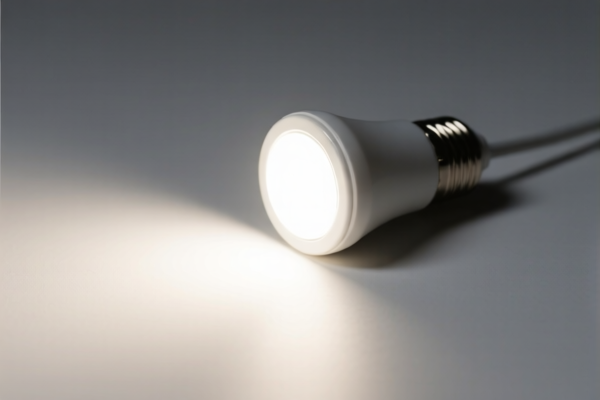
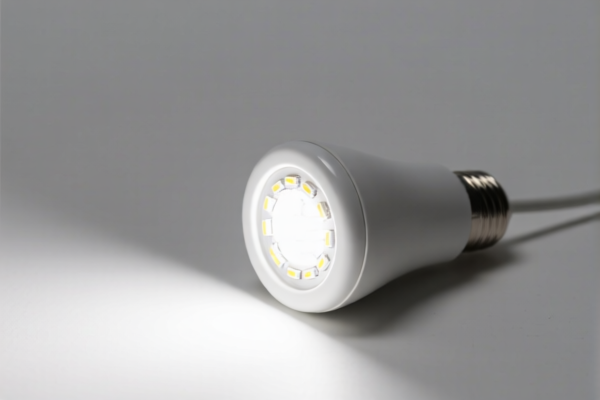
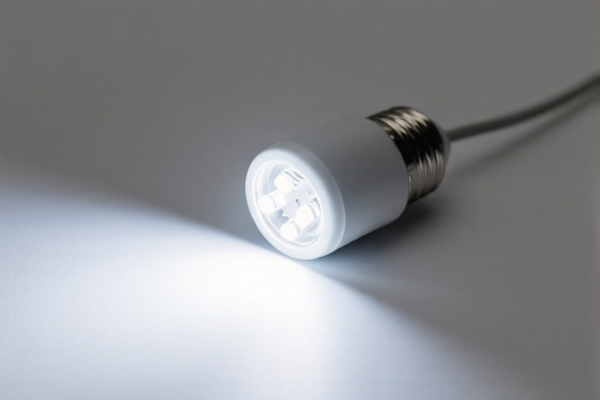
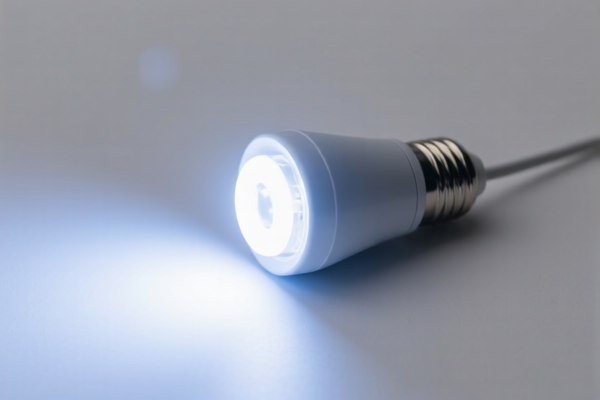
AI分析
🔭 Night Vision Sight (NVS)
🌐 HS Code Reference & Clearance Guide | 2026 Latest Tariff Analysis | Professional Strategy
📌 I. Product Definition & Classification: Do You Really Understand "Night Vision Sight"?
Night Vision Sights are optical instruments designed to enable visibility in low-light or no-light conditions. They are primarily used for surveillance, hunting, military applications, and recreational astronomy. In international trade, they are classified based on their optical principles (thermal vs. image enhancement) and structural form (monocular, binocular, or attached sight).
The core distinction lies in whether the device is considered a general optical instrument, a telescope, or a prism-based device. The classification dictates not only the duty rate but also the compliance requirements (e.g., EAR/ITAR for military-grade equipment).
⚠️ Key Distinction Point:
- If it functions as a general optical apparatus without specific telescope structure → 9013.10.50.00
- If it utilizes infrared detection as a form of telescopic application → 9005.80.40.20
- If it relies on infrared light within a prism-binocular structure → 9005.10.00.20
📦 II. HS Code Classification Details (2026 Latest Tariff Authority Comparison)
| HS Code | Product Description | Application Scenario | Optical Principle |
|---|---|---|---|
9013.10.50.00 |
Other optical appliances and instruments (General Category) | General NVS, non-specific optical tools, generic night vision devices | General Optical Instrument |
9005.80.40.20 |
Other telescopes; other instruments (Specific Application) | NVS based on infrared detection principles; specific telescopic forms | Infrared Telescopic Application |
9005.10.00.20 |
Binoculars, with prisms; other binoculars | NVS utilizing infrared light; prism-based dual-tube structures | Prism + Infrared Light |
🔍 Key Reminder:
-9013.10.50.00is the broadest category for optical devices that do not fit strictly into telescopes or binoculars. -9005.80.40.20applies when the NVS is structurally and functionally a telescope using infrared technology. -9005.10.00.20is specific to binocular NVS units where infrared is integrated into a prism system.
💰 III. 2026 Latest Tariff Rate Breakdown (Including Surcharges & Policy Add-ons)
✅ Applicable Country: United States (US)
✅ Origin: China (CN)
✅ Effective Time: Current (Includes Section 301 & 232 implications)
🎯 1. 9013.10.50.00 —— General Optical Appliances & Instruments
This code covers night vision sights that fall under the "other optical appliances" category, lacking the specific structural definition of a telescope or binocular.
| Item | Content |
|---|---|
| Basic Duty Rate | 5.3% (Base Tariff) |
| Section 301 Surcharge | +7.5% (Trade Remedy Duty) |
| Section 232/Other Clause | +10% (122 Clause Tariff) |
| Total Effective Rate | 22.8% |
| Tax Calculation | CIF Value × 22.8% |
| De Minimis Eligibility | ❌ Not Eligible (High-risk commodity) |
| Legal Basis Path | HTSUS:9013.10.50.00 → Section 301: Footnote 1 → Section 232/Other: Clause 122 |
📌 Explanation:
- The 5.3% is the standard Most Favored Nation (MFN) rate. - The 7.5% is part of the Section 301 tariff list targeting Chinese optical components and instruments. - The 10% refers to the "122 Clause" (often associated with specific trade remedy actions or additional administrative tariffs). - Total 22.8% is significantly higher than standard consumer goods, reflecting the strategic nature of optical technology.
🎯 2. 9005.80.40.20 —— Other Telescopes & Instruments (Infrared Application)
This code is applied when the night vision device is categorized as a telescope utilizing infrared detection principles.
| Item | Content |
|---|---|
| Basic Duty Rate | 8.0% (Base Tariff) |
| Section 301 Surcharge | 0.0% (Exempt or Not Applicable) |
| Section 232/Other Clause | +10% (122 Clause Tariff) |
| Total Effective Rate | 18.0% |
| Tax Calculation | CIF Value × 18.0% |
| De Minimis Eligibility | ❌ Not Eligible |
| Legal Basis Path | HTSUS:9005.80.40.20 → Section 301: Exempt → Section 232/Other: Clause 122 |
📌 Note:
- The base rate is 8.0%, which is higher than the general optical category (5.3%). - However, it enjoys a 0% Section 301 surcharge, which is a significant saving. - The 10% 122 Clause still applies. - Total 18.0% is lower than Code9013.10.50.00, making this a more cost-effective classification if the product legally qualifies as a "telescope."
🎯 3. 9005.10.00.20 —— Binoculars with Prisms (Infrared Feature)
This code is specific to binocular night vision sights that use prisms and incorporate infrared light usage.
| Item | Content |
|---|---|
| Basic Duty Rate | 0.0% (Base Tariff) |
| Section 301 Surcharge | +7.5% (Trade Remedy Duty) |
| Section 232/Other Clause | +10% (122 Clause Tariff) |
| Total Effective Rate | 17.5% |
| Tax Calculation | CIF Value × 17.5% |
| De Minimis Eligibility | ❌ Not Eligible |
| Legal Basis Path | HTSUS:9005.10.00.20 → Section 301: Footnote 1 → Section 232/Other: Clause 122 |
📌 Note:
- The base rate is 0.0%, which is very competitive. - However, the 7.5% Section 301 surcharge applies. - The 10% 122 Clause still applies. - Total 17.5% is the lowest total duty rate among the three options, but it is strictly limited to binocular prism structures with infrared features. Misclassification here can lead to severe penalties.
🛠️ IV. Customs Clearance Practical Advice (Battle-Tested Pitfall Guide)
✅ 1. Required Documentation Checklist (Mandatory)
| Document | Required? | Description |
|---|---|---|
| ✅ Product Specifications | ✔️ | Must detail magnification, field of view, generation (Gen 1/2/3), and power source. |
| ✅ Technical Diagrams | ✔️ | Crucial for distinguishing between "telescope" (9005) and "general optical" (9013). |
| ✅ Product Photos (Labeled) | ✔️ | Clear images of the device, showing prism housing (if binocular) or single tube. |
| ✅ Third-Party Test Reports | ✔️ | IR emission data, brightness levels, and compliance certificates (FCC/CE). |
| ✅ Commercial Invoice | ✔️ | Must explicitly state "Night Vision Sight" and specify the HS Code. |
| ✅ Origin Certificate (CO) | ✔️ | To verify Chinese origin for accurate surcharge calculation. |
| ✅ Packing List | ✔️ | Detailing batteries, chargers, and accessories separately. |
✅ 2. Declaration Tips (Key Mantras)
🔥 "Structure Dictates Code, Infrared Defines Type, Binoculars Win on Tax!"
| Scenario | Correct HS Code | Wrong Practice |
|---|---|---|
| Monocular NVS (Single tube, general optical) | 9013.10.50.00 (22.8%) |
Misdeclaring as "Binocular" → Audit risk |
| NVS structured as Telescope (Long barrel, IR detection) | 9005.80.40.20 (18.0%) |
Misdeclaring as "General Optical" → Higher tax |
| Binocular NVS (Dual tube, prism housing, IR) | 9005.10.00.20 (17.5%) |
Misdeclaring as "Telescope" → Higher tax |
| NVS with Mounting Rails | Declare as Accessory | Splitting declaration incorrectly |
📌 Critical Warning:
- Binocular NVS is the most tax-efficient category (17.5%), but only if it is physically a binocular with prisms. - Monocular NVS often falls into9013.10.50.00(22.8%) unless it can be proven to be a specialized telescope (9005.80.40.20at 18.0%). - Do not misclassify a monocular as a binocular to save 5.3%. Customs will inspect the physical structure.
✅ 3. Special Situation Handling
| Situation | Handling Advice |
|---|---|
| Military-Grade NVS (Gen 3+, ITAR controlled) | Must obtain State Department approval (DSP-5). Standard HS codes may trigger export controls. |
| Civilian/Hunting NVS (Gen 1/2) | Standard HS codes apply. Ensure no military markings. |
| Thermal Imaging VS. Image Enhancement | Thermal devices may fall under different subheadings. Confirm if "Infrared Detection" refers to Thermal (heat) or IR Illumination (light). |
| NVS with Laser Rangefinder | May be classified as a multi-functional instrument. Requires detailed technical specs. |
🌍 V. Global Market Comparison (2026 Latest)
| Country/Region | Recommended HS Code | Total Tariff (China Origin) | Certification | Notes |
|---|---|---|---|---|
| 🇺🇸 USA | 9005.10.00.20 (Binocular) |
17.5% | FCC + CE | Lowest tax if binocular. |
| 🇺🇸 USA | 9013.10.50.00 (General) |
22.8% | FCC + CE | Highest tax for monoculars. |
| 🇪🇺 EU | 9005.10.00 |
0% - 2.5% | CE | No Section 301/232 equivalent. |
| 🇨🇳 China | 9013.10.50.00 |
5.3% | CCC | Import duty only. |
| 🇯🇵 Japan | 9005.10.00 |
0% - 1.4% | PSE | Low tariffs. |
📌 Conclusion:
- The USA imposes the highest duties due to Section 301 and 122 Clause tariffs. - Binocular NVS (9005.10.00.20) is the optimal classification for the US market, offering the lowest total rate (17.5%). - Monocular NVS faces higher rates (18.0% - 22.8%).
📌 VI. Common Mistakes & Pitfalls (Blood-Staining Lessons)
❌ Mistake 1: Declaring a Monocular NVS as Binocular to get 17.5% instead of 22.8%.
👉 Consequence: Customs inspection reveals single-tube structure → Seizure + Heavy Fine.
❌ Mistake 2: Ignoring the 122 Clause (10%) in tariff calculations.
👉 Consequence: Underpayment of duties → Penalty + Interest.
❌ Mistake 3: Not distinguishing between Thermal and Image Enhancement.
👉 Consequence: Incorrect HS code → Clearance Delay + Re-classification.
❌ Mistake 4: Failing to provide Technical Diagrams.
👉 Consequence: Customs cannot verify if it's a "Telescope" → Default to Highest Rate.
✅ Correct Approach:
"Night Vision Binoculars, Prism Type, Infrared Light Integrated, Gen 2, Model XYZ, FCC Certified, 10x50 Magnification"
🎯 VII. Conclusion: Professional Declaration, Save Time, Cut Costs!
🎯 Remember the Mantra:
🔹 "Binocular Prism Wins (17.5%), Telescope Saves (18.0%), General Optical Loses (22.8%)."
🔹 "Structure is King, IR is Context, Don't Misclassify or Pay the Price!"
📌 Pro Tip:
If your night vision sight is originating from Vietnam, Mexico, or Thailand, you may be eligible for IEEPA Exemptions or USMCA Benefits, reducing tariffs to 0% - 5%.
Recommend Advance Ruling application to lock in the correct HS Code before shipment.
📣 Act Now:
📞 Contact a Professional Customs Broker + Provide Product Specs + Apply for HS Code Advance Ruling
🚀 Ensure your Night Vision Sight clears customs smoothly, legally, and profitably!
✨ Professional Clearance Starts with Precise Classification!
💼 Every Cent Saved is a Cent Earned!
用户评价
关于 HS 编码归类
协调制度(HS)是由世界海关组织(WCO)制定的国际贸易商品分类标准。全球 200 多个国家采用 HS 系统作为海关关税、贸易统计和进出口监管的基础。
每个 HS 编码遵循以下层级结构:
- 章(2 位)——商品大类(例如:第 84 章:机器和机械设备)
- 品目(4 位)——章内的更具体分类
- 子目(6 位)——国际通用细分,所有 WCO 成员国统一使用
- 本国细分(8-10 位)——各国自行扩展的细分编码,如美国 HTSUS 10 位编码
正确的 HS 编码归类对于顺利通关、准确缴纳关税和遵守贸易法规至关重要。错误归类可能导致海关延误、多缴关税或罚款。
从CN进口到US时,适用的关税税率可能包括:
- 最惠国(MFN)税率——适用于 WTO 成员国的标准关税税率
- 普通税率——适用于无贸易协定国家
- 贸易救济关税——附加关税,如 301 条款(反倾销)、232 条款(国家安全)或反补贴税
本页内容仅供参考。如需正式归类,请咨询当地海关或持牌报关代理。