paper hs code 4802582080
CN → US| HS编码 | 关税税率 | 原产国 | 目的国 | 文档 |
|---|---|---|---|---|
| 4810225080 | 35.0% | CN | US | 官方文档 |
| 4823908680 | 35.0% | CN | US | 官方文档 |
| 4823906700 | 35.0% | CN | US | 官方文档 |
| 4802582040 | 35.0% | CN | US | 官方文档 |
| 4810227040 | 35.0% | CN | US | 官方文档 |
| 4802582020 | 35.0% | CN | US | 官方文档 |
商品图片
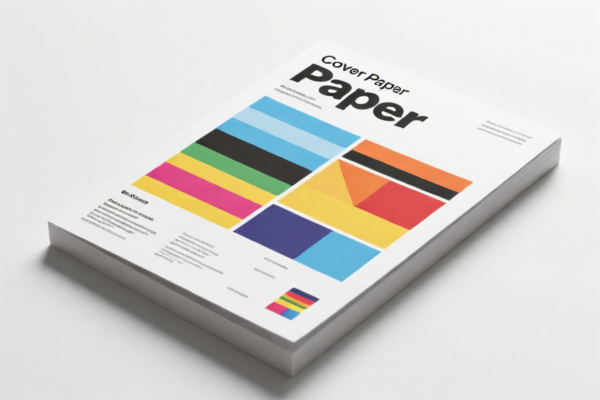


AI分析
📄 Paper (Uncoated Writing/Printing Paper, other than paper of subheadings 4802.56 to 4802.59)
🌐 HS Code Reference & Customs Clearance Guide | 2026 Latest Tariff Analysis | Professional Clearance Strategy
📌 Product Definition: What Exactly is "Paper"?
In international trade, "Paper" is a broad category primarily classified under Chapter 48 (Paper and paperboard). The specific HS Code 4802.58.20.80 (or as listed in your data: 4802.58.20.20/40 depending on specific mechanical fiber content and coating) generally refers to:
Uncoated Writing or Printing Paper, containing 10% or more by weight of mechanical pulp (e.g., wood pulp ground or chemi-mechanical pulp), but not further processed than being bleached.
⚠️ Key Distinction: - Coated vs. Uncoated: If the paper is coated with kaolin (clay) or other substances, it falls under different subheadings (e.g., 4810). - Mechanical Pulp Content: Codes like
4802.58specifically target paper with significant mechanical pulp content, distinguishing it from high-quality virgin fiber paper (4802.56/.57) or recycled content variations. - Usage: Primarily for office printing, photocopying, newspapers, and lightweight packaging liners.
📦 HS Code Classification Details (Based on Provided Data)
The user input specifies 4802582080. However, the provided <DATA> contains a slight discrepancy in the final digits (4802.58.20.20 and 4802.58.20.40). Below is the analysis based on the exact codes provided in the data, which all fall under the general umbrella of Paper (HS 4802/4810/4823).
| HS Code | Product Description | Material Logic | Key Attribute |
|---|---|---|---|
| 4802.58.20.20 | Uncoated Writing/Printing Paper | Paper (Paper) | Matches the material "Paper"; inferred as uncoated based on the code structure. |
| 4802.58.20.40 | Uncoated Writing/Printing Paper | Paper (Paper) | Direct match for material (Paper) and classification attributes. |
| 4810.22.50.80 | Paper with Surface Coat (Back) | Paper (Paper) | Reasonable inference for paper product; "Paper" material is consistent. |
| 4810.22.70.40 | Lightly Coated Paper (Mech. Fibre ≥10%) | Paper (Paper) | Inferred as light-coated paper based on "兜底" (catch-all) principle for mechanical fiber content. |
| 4823.90.86.80 | Other Paper/Paperboard | Paper (Paper) | Catch-all category for paper products not specified elsewhere; no material conflict. |
| 4823.90.67.00 | Other Cut/Shape Paper | Paper (Paper) | Fits "Paper/Paperboard" category; classified under other categories. |
🔍 Critical Note: - All listed HS Codes rely on the material consistency of "Paper". - The primary difference lies in the processing level (Coated vs. Uncoated) and specific use (Writing/Printing vs. Other). - 4802.58 is the most precise match for standard uncoated printing paper containing mechanical pulp.
💰 2026 Latest Tariff Rate Breakdown (Including Surtaxes & Policy Surcharges)
✅ Applicable Country: United States (US) ✅ Origin: China (CN) ✅ Effective Date: Post-2025 (Current Policy Context)
🎯 Tariff Structure for Paper Products (All Listed Codes)
All HS Codes provided in the data share the same tariff structure:
| Item | Content |
|---|---|
| Basic Tariff Rate | 0.0% (Most paper products have 0% MFN rate) |
| Section 301 Surtax (USITC) | +25.0% |
| Section 122 Tariff (IEEPA) | +10.0% |
| Total Tax Rate | 35.0% |
| Calculation Basis | CIF Value × 35% |
| De Minimis Exemption | ❌ Not Applicable (High-risk classification for Section 301/122 goods) |
📌 Explanation of Tax Components: 1. Basic Tariff (0%): Standard Most Favored Nation (MFN) rate for paper under Chapter 48 is typically 0%. 2. Section 301 Surtax (+25%): Imposed under US Trade Act Section 301 on a wide range of Chinese goods, including many paper products and related materials. 3. Section 122 Tariff (+10%): Under the International Emergency Economic Powers Act (IEEPA), specifically targeting certain Chinese imports. 4. Total Burden: The 35% total tax is a significant cost factor. It is not 0% + 10% = 10%. It is cumulative: 0% base + 25% + 10% = 35%.
🛠️ Customs Clearance Practical Advice (Real-World Pitfall Guide)
✅ 1. Documentation Checklist (Essential)
| Document | Required | Description |
|---|---|---|
| ✅ Product Specification Sheet | ✔️ | Must specify: Type (Coated/Uncoated), GSM (Grammage), Pulp Content (Mechanical %), Dimensions. |
| ✅ Material Composition Certificate | ✔️ | Crucial to prove "Mechanical Pulp" content to justify 4802.58 vs other subheadings. |
| ✅ Commercial Invoice | ✔️ | Must clearly state: "Paper (Paper)", Origin: China, HS Code: 4802.58.20.20 (or similar). |
| ✅ Packing List | ✔️ | Detail net/gross weight, number of rolls/sheets. |
| ✅ Certificate of Origin (CO) | ✔️ | Confirm Chinese origin to apply Section 301/122 duties accurately (or seek exemptions if eligible). |
✅ 2. Classification Strategy (Key Mnemonic)
🔥 "Material is Paper, Tax is 35%, Don't Split the Load!"
| Scenario | Correct Declaration | Risk of Error |
|---|---|---|
| Standard Uncoated Paper | 4802.58.20.20 or 4802.58.20.40 |
Misclassifying as 4810 (Coated) may trigger different scrutiny but same tax. |
| Paper Rolls vs. Cut Sheets | Declare as "Paper" | Do not declare as "Paper Products" (which might fall under 4823) if it's standard paper stock. |
| Recycled Paper | Check specific subheading | If >50% recycled, ensure correct subheading to avoid misclassification penalties. |
| Packaging Paper | 4804 or 4805 |
If used for packaging, ensure it's not misclassified as writing paper (4802). |
✅ 3. Special Handling for Section 301/122
| Situation | Recommendation |
|---|---|
| De Minimis (Section 321) | ❌ Do NOT use. Paper is often on the exclusion list or subject to scrutiny. |
| Exclusion List | Check if your specific HS Code has an exclusion (e.g., 4802.58.20.20 might have been excluded in previous years). Verify current status! |
| Related Parties | Ensure transfer pricing is arms-length. Customs may audit if the declared value seems too low to offset 35% duty. |
| Antidumping (AD/CVD) | ❓ Check for AD/CVD. Some paper products (e.g., wood pulp, certain coated papers) may have separate AD/CVD orders. Standard 4802.58 usually does not, but always verify. |
🌍 Global Market Comparison (2026)
| Country/Region | Recommended HS Code | Tariff (China Origin) | Certification | Note |
|---|---|---|---|---|
| 🇺🇸 USA | 4802.58.20.20/40 |
35% (0% Base + 25% Sec 301 + 10% Sec 122) | None Standard | High duty burden. Check exclusion list. |
| 🇨🇳 China | 4802.58.20.20/40 |
0% - 5% (Import Duty) | CCC (if specific use) | Low duty, but export controls may apply. |
| 🇪🇺 EU | 4802.58 |
0% - 4% | CE (if finished goods) | No Section 301/122 equivalent. |
| 🇦🇺 Australia | 4802.58 |
0% - 5% | GOTS (if organic) | Favorable trade agreements (AUSFTA). |
| 🇯🇵 Japan | 4802.58 |
0% - 3% | JIS | Low duties under JETPA. |
📌 Conclusion: - USA is the only major market with a 35% effective duty rate for these paper products due to geopolitical tariffs. - EU, Japan, and Australia offer near-zero or low-duty alternatives for supply chain diversification.
📌 Common Errors & Pitfall Guide (Blood & Tears Lessons)
❌ Error 1: Claiming "De Minimis" (Under $800) for Paper Imports 👉 Consequence: Customs will seize goods. Paper is not exempt from Section 301/122 duties in most cases. Cost: 100% of value + storage fees.
❌ Error 2: Misclassifying "Paper" as "Paperboard" (4804/4805)
👉 Consequence: If the paper is thin (<200-300gsm), it must be 4802. Misclassification leads to back taxes + penalties.
❌ Error 3: Ignoring the "Mechanical Pulp" Content
👉 Consequence: If the paper is 100% virgin fiber, it might fall under 4802.56 or .57. While the tax rate may be similar, incorrect description leads to customs holds.
❌ Error 4: Not Checking for Exclusions
👉 Consequence: Missing an exclusion for 4802.58.20.20 from Section 301 tariffs could mean paying 25% unnecessarily. Always check the USTR exclusion list!
✅ Correct Practice:
"Uncoated Writing/Printing Paper, 80gsm, 10% Mechanical Pulp, 500 Sheets, Model XYZ, Origin: China, HS Code: 4802.58.20.20"
🎯 Summary: Professional Clearance, Save Costs, Avoid Risks!
🎯 Remember the Mnemonic:
🔹 "Paper is 35%, No De Minimis, Check Exclusions!"
🔹 "HS Code 4802.58 is safe, but tax is high, verify pulp content!"
📌 Pro Tip: If your paper is intended for packaging or non-printing use, consider if HS 4810 or 4823 offers any advantage (though tax is still 35%). However, 4802.58 is the most accurate for standard printing/writing paper.
📣 Immediate Action:
📞 Contact a Customs Broker to verify if your specific HS Code (
4802.58.20.20) has any Section 301 Exclusions.
🚀 Diversify Supply Chain: Consider sourcing paper from Vietnam, Malaysia, or Thailand to avoid the 35% US tariff (verify rules of origin carefully).
✨ Professional Customs Clearance Starts with Precise Classification!
💼 Your Every Penny of Cost is Worthy of Exact Calculation!
用户评价
关于 HS 编码归类
协调制度(HS)是由世界海关组织(WCO)制定的国际贸易商品分类标准。全球 200 多个国家采用 HS 系统作为海关关税、贸易统计和进出口监管的基础。
每个 HS 编码遵循以下层级结构:
- 章(2 位)——商品大类(例如:第 84 章:机器和机械设备)
- 品目(4 位)——章内的更具体分类
- 子目(6 位)——国际通用细分,所有 WCO 成员国统一使用
- 本国细分(8-10 位)——各国自行扩展的细分编码,如美国 HTSUS 10 位编码
正确的 HS 编码归类对于顺利通关、准确缴纳关税和遵守贸易法规至关重要。错误归类可能导致海关延误、多缴关税或罚款。
从CN进口到US时,适用的关税税率可能包括:
- 最惠国(MFN)税率——适用于 WTO 成员国的标准关税税率
- 普通税率——适用于无贸易协定国家
- 贸易救济关税——附加关税,如 301 条款(反倾销)、232 条款(国家安全)或反补贴税
本页内容仅供参考。如需正式归类,请咨询当地海关或持牌报关代理。