pet bottle
CN → US| HS编码 | 关税税率 | 原产国 | 目的国 | 文档 |
|---|---|---|---|---|
| 3923300010 | 38.0% | CN | US | 官方文档 |
| 3923300090 | 38.0% | CN | US | 官方文档 |
| 3923300010 | 38.0% | CN | US | 官方文档 |
| 3923300090 | 38.0% | CN | US | 官方文档 |
| 3923300010 | 38.0% | CN | US | 官方文档 |
商品图片
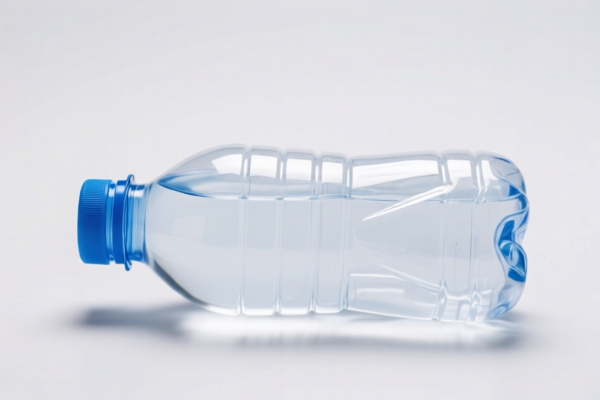
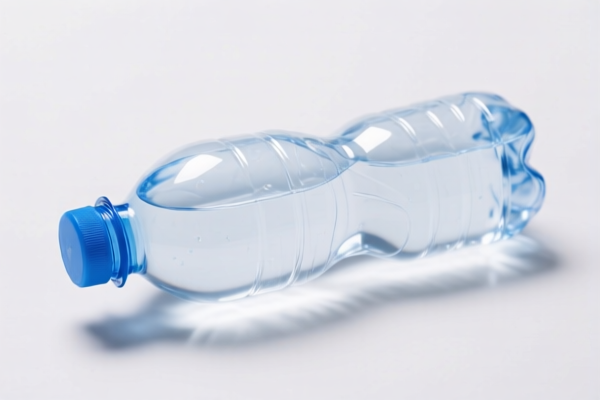
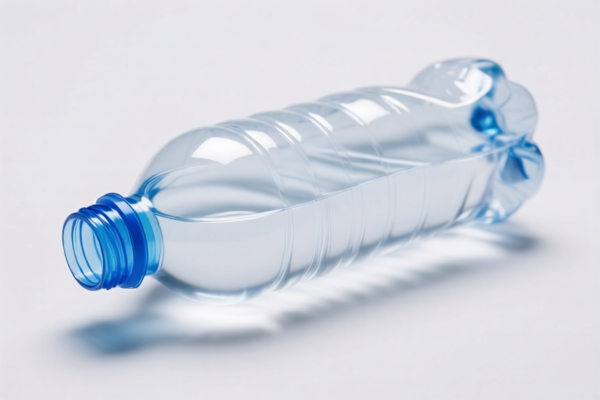
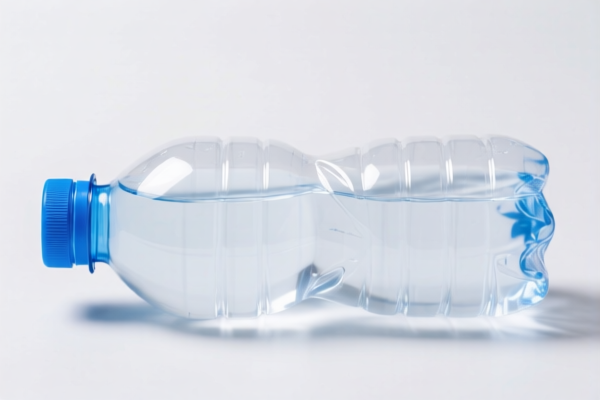
AI分析
🧴 Pet Bottle (PET Beverage Bottles)
🌐 HS Code Reference & Customs Clearance Guide | 2026 Latest Tariff Analysis | Professional Clearance Strategy
📌 I. Product Definition & Classification: Do You Truly Understand "PET Bottles"?
PET bottles, primarily made of Polyethylene Terephthalate (PET), are the dominant packaging material for beverages, water, and food products due to their lightweight, durability, and recyclability. In international trade, they are classified under Chapter 39: Plastics and Articles Thereof.
The classification hinges on the specific sub-category of plastic containers:
1. Bottles for Beverages (Specific Use):
Often classified under more specific national sub-headings if a country distinguishes between "beverage bottles" and "general plastic containers." This often falls under 3923.30 (Bottles, jars, flasks, and similar articles).
2. General Plastic Bottles/Flasks:
If not specifically designated as beverage-only in the national tariff schedule, they fall under the general category of plastic bottles and flasks within 3923.30.
⚠️ Key Distinction Point:
- If the bottle is new/unused and clearly intended for beverage packaging → 3923.30.00.10 (Specific sub-heading for certain plastic containers/bottles in many schedules).
- If the bottle is generic or the specific sub-heading for "beverage bottles" is not applicable/exists only as a residual category → 3923.30.00.90 (Other plastic bottles, flasks, and similar articles).
- Note: Both codes fall under the broader heading 3923.30. The distinction between .10 and .90 often depends on national tariff granularity (e.g., US HTS often uses .10 for specific plastic articles and .90 for "other"). In the provided data, both are linked to PET beverage bottles, implying a slight variation in specific national sub-coding or description nuance.
📦 II. HS Code Classification Details (2026 Latest Tariff Authority Reference)
| HS Code | Product Description | Applicable Scenario | Material |
|---|---|---|---|
3923.30.00.10 |
PET Beverage Bottles, Plastic Articles | Specific classification for plastic bottles/flasks, often used for beverage packaging. | PET (Polyester/Plastic) |
3923.30.00.90 |
Other Plastic Bottles, Flasks, and Similar Articles | General classification for plastic bottles not falling under specific sub-codes, or "other" plastic containers. | PET (Polyester/Plastic) |
🔍 Important Reminder:
- Both codes are under Heading 3923 (Articles for the conveyance or packing of goods, of plastics).
- Sub-heading 3923.30 covers "Bottles, jars, flasks, and similar articles, of plastics."
- The difference between.10and.90is typically at the national sub-level (e.g., US HTS 10-digit). In many contexts,.10may refer to specific types (like bottles for certain goods) and.90to "other." However, the provided data links both to PET beverage bottles, suggesting that depending on the specific customs interpretation or minor design variations, either code might be used, or they represent alternative valid classifications for the same product in certain contexts.
- Crucially: Both are subject to the same tariff rates in the provided data.
💰 III. 2026 Latest Tariff Rate Breakdown (Including Surcharges & Policy Add-ons)
✅ Applicable Country: United States (US)
✅ Origin: China (CN)
✅ Effective Date: From November 10, 2025 (and subsequent imports)
🎯 1. 3923.30.00.10 —— PET Beverage Bottles (Plastic Articles)
| Item | Detail |
|---|---|
| Base Tariff Rate | 3.0% (Ad Valorem) |
| Section 301 Surcharge (Trade War Tariff) | +25% |
| Section 122 Tariff (USMCA/USMCA-related/Other Policy Tariff) | +10% |
| Total Effective Tariff Rate | 38.0% |
| Tax Calculation | CIF Value × 38.0% |
| De Minimis Eligibility | ❌ Not Eligible (Deny De Minimis) |
| Legal Basis Path | HTS:3923.30.00.10 → USITC Footnote: 9903.88.01 → IEEPA:9903.01.25 (Section 301) + Section 122 |
📌 Explanation:
- Base Tariff (3.0%): Standard Most-Favored-Nation (MFN) rate for plastic bottles under Chapter 39.
- Section 301 Surcharge (25%): Imposed under the US Trade Act of 1974, Section 301, targeting Chinese imports. This is a significant additional cost.
- Section 122 Tariff (10%): Refers to tariffs imposed under Section 122 of the Trade Act of 1974 (often related to national security or specific trade remedies, though in recent contexts, it may refer to additional policy surcharges or specific trade actions). Note: In the provided data, this is explicitly listed as "122条款关税10%".
- Total (38.0%): The sum of 3.0% + 25.0% + 10.0%. This is a high tariff burden, significantly impacting cost competitiveness.
- No De Minimis: Items valued under $800 (de minimis) are not exempt from these tariffs when imported from China into the US for these HS codes.
🎯 2. 3923.30.00.90 —— Other Plastic Bottles, Flasks, and Similar Articles
| Item | Detail |
|---|---|
| Base Tariff Rate | 3.0% (Ad Valorem) |
| Section 301 Surcharge (Trade War Tariff) | +25% |
| Section 122 Tariff (USMCA/USMCA-related/Other Policy Tariff) | +10% |
| Total Effective Tariff Rate | 38.0% |
| Tax Calculation | CIF Value × 38.0% |
| De Minimis Eligibility | ❌ Not Eligible (Deny De Minimis) |
| Legal Basis Path | HTS:3923.30.00.90 → USITC Footnote: 9903.88.01 → IEEPA:9903.01.25 (Section 301) + Section 122 |
📌 Note:
- The tariff structure is identical to3923.30.00.10.
- Whether you classify under.10or.90, the total tax burden remains 38.0%.
- This consistency simplifies cost forecasting but underscores the significant impact of US-China trade policies on plastic packaging imports.
🛠️ IV. Customs Clearance Practical Advice (Real-World Pitfall Avoidance Guide)
✅ 1. Required Documentation Checklist (No Exceptions)
| Document | Required? | Description |
|---|---|---|
| ✅ Product Specification Sheet | ✔️ | Must detail material (PET), capacity, weight, neck finish type, and intended use (beverage packaging). |
| ✅ Product Photographs | ✔️ | Clear images of the bottle, including labels, neck, and base (with resin code "1" for PET). |
| ✅ Commercial Invoice | ✔️ | Must clearly state "PET Beverage Bottles" and HS Code. |
| ✅ Packing List | ✔️ | Specify units (e.g., 1,000 bottles/carton) and gross/net weights. |
| ✅ Certificate of Origin (CO) | ✔️ | Critical: Must confirm Chinese origin to apply correct tariffs. Non-Chinese origin (e.g., Vietnam, Mexico) may qualify for exemptions or lower rates. |
| ✅ FCC/CE/RoHS Certificates | ❌ (Usually not required for plain plastic bottles, but check) | Some importers request these for compliance, but standard PET bottles typically do not require electronic compliance certs. However, if the bottle has embedded electronics (e.g., smart labels), additional certs may be needed. |
✅ 2. Declaration Tips (Key Mantras)
🔥 “Be Specific, Be Honest, Avoid Ambiguity!”
| Scenario | Correct Declaration | Wrong Approach |
|---|---|---|
| Plain PET Bottles | "PET Beverage Bottles, 500ml, Clear, New" | "Plastic Containers" → Too vague, may lead to inspection. |
| Printed/Labelled Bottles | "PET Bottles with Pre-Printed Label, for Soft Drinks" | "Bottles" → Misses key detail, may affect classification. |
| Bulk vs. Retail | Declare as "New, Unused" | "Used" → If used, different rules may apply (though rare for imports). |
| Misclassification | Use 3923.30.00.10 or .90 based on national specificity |
Use 3926.90 (Other plastic articles) → Incorrect, leads to penalties. |
✅ 3. Special Case Handling
| Scenario | Handling Advice |
|---|---|
| OEM Custom Bottles | Provide design files or samples. Ensure the description matches the physical product to avoid "material misstatement." |
| Bottles with Caps/Seals | Declare separately if caps are made of different materials (e.g., PP caps). Caps may fall under 3923.21 or 3923.29, with potentially different tariffs. Do not bundle them into the bottle HS Code unless they are inseparable and sold as a set. |
| Recycled PET (rPET) Bottles | If the bottle is made from recycled material, the HS Code remains the same (3923.30), but tariff treatment may differ in some countries if preferential trade agreements apply (e.g., USMCA). Check for specific rPET provisions. |
| Origin Shift | If bottles are shipped from Vietnam/Mexico but originated in China, they are still subject to the 38% tariff unless a substantial transformation occurred. Transshipment does not exempt tariffs. |
🌍 V. Global Market Clearance Comparison (2026 Latest)
| Country/Region | Recommended HS Code | Base Tariff | Additional Tariffs (China Origin) | Notes |
|---|---|---|---|---|
| 🇺🇸 USA | 3923.30.00.10 / .90 |
3.0% | +25% (301) + 10% (122) = 38% Total | High barrier. No de minimis exemption. |
| 🇨🇳 China | 3923.30.00 |
0%~5% | None | Low import tariff. Domestic production dominates. |
| 🇪🇺 EU | 3923.30 |
0%~6.5% | None (WTO MFN) | No Section 301 equivalent. Standard MFN rates apply. |
| 🇦🇺 Australia | 3923.30 |
0%~5% | None | Free Trade Agreement (AUSFTA) may apply if originating in Australia. |
| 🇯🇵 Japan | 3923.30 |
0%~5% | None | Japan-China Economic Partnership Agreement may reduce tariffs. |
📌 Conclusion:
- The USA is the most challenging market due to the 38% total tariff burden on Chinese PET bottles.
- EU, Australia, and Japan offer significantly lower tariff barriers (0–6.5%), making them more attractive for Chinese exporters.
- Strategy: Consider supply chain diversification (e.g., manufacturing in Vietnam, Mexico, or Thailand) to mitigate US tariffs, but ensure substantial transformation rules are met.
📌 VI. Common Mistakes & Pitfall Guide (Lessons from Experience)
❌ Mistake 1: Declaring "Plastic Containers" instead of "PET Bottles"
👉 Consequence: Customs may misclassify, leading to delays, audits, or incorrect tariff application.
👉 Fix: Use precise terminology: "PET Beverage Bottles."
❌ Mistake 2: Ignoring the Caps
👉 Consequence: If caps (PP) are not declared separately, customs may assess the entire shipment at the bottle rate or vice versa, causing discrepancies.
👉 Fix: Declare caps separately under 3923.21/3923.29 if sold separately or if value is significant.
❌ Mistake 3: Assuming De Minimis Applies
👉 Consequence: Sending small samples via courier (e.g., DHL/FedEx) valued under $800, only to have them seized or taxed at 38%.
👉 Fix: De minimis does NOT apply to Chinese-origin goods under these HS codes in the US. Plan for tariff costs even for small shipments.
❌ Mistake 4: Using Generic Terms in Invoice
👉 Consequence: "Bottles" → Customs requests additional info, causing clearance delays.
👉 Fix: Invoice must read: "PET Beverage Bottles, 500ml, Clear, New, HS Code 3923.30.00.10/90."
✅ Best Practice:
“PET Bottles, 500ml, Clear, New, Designed for Beverage Packaging, Origin: China, HS: 3923.30.00.10”
🎯 VII. Conclusion: Precise Classification, Cost Control, and Efficient Clearance
🎯 Remember These Mantras:
🔹 “PET Bottles, Chapter 39, Heading 3923.30”
🔹 “USA Tariff: 3% + 25% + 10% = 38%”
🔹 “No De Minimis for China Origin”
🔹 “Caps and Bottles: Declare Separately if Possible”
🔹 “Supply Chain Diversification: Consider Vietnam/Mexico for US Market”
📌 Pro Tip:
If your PET bottles are originally manufactured in Vietnam, Mexico, or Thailand, and meet the Rules of Origin for the respective trade agreements (e.g., USMCA, CPTPP), you may qualify for zero or reduced tariffs in the US.
Recommendation:
📞 Consult a licensed customs broker.
📄 Apply for Advance Rulings (Prenex Ruling) for HS code confirmation.
🚀 Optimize your supply chain to reduce tariff exposure and ensure smooth clearance.
📣 Immediate Action:
📞 Contact a professional customs broker + Provide product images + Apply for HS Code Advance Ruling
🚀 Ensure your PET bottles clear customs efficiently, minimize costs, and maximize profit!
✨ Professional Customs Clearance Starts with Precise Classification!
💼 Every Cent in Tariffs is a Cent in Profit! Optimize Now!
用户评价
关于 HS 编码归类
协调制度(HS)是由世界海关组织(WCO)制定的国际贸易商品分类标准。全球 200 多个国家采用 HS 系统作为海关关税、贸易统计和进出口监管的基础。
每个 HS 编码遵循以下层级结构:
- 章(2 位)——商品大类(例如:第 84 章:机器和机械设备)
- 品目(4 位)——章内的更具体分类
- 子目(6 位)——国际通用细分,所有 WCO 成员国统一使用
- 本国细分(8-10 位)——各国自行扩展的细分编码,如美国 HTSUS 10 位编码
正确的 HS 编码归类对于顺利通关、准确缴纳关税和遵守贸易法规至关重要。错误归类可能导致海关延误、多缴关税或罚款。
从CN进口到US时,适用的关税税率可能包括:
- 最惠国(MFN)税率——适用于 WTO 成员国的标准关税税率
- 普通税率——适用于无贸易协定国家
- 贸易救济关税——附加关税,如 301 条款(反倾销)、232 条款(国家安全)或反补贴税
本页内容仅供参考。如需正式归类,请咨询当地海关或持牌报关代理。