pickled cucumbers
CN → US商品图片
AI分析
🥒 Pickled Cucumbers (Pickles)
🌐 HS Code Reference & Customs Clearance Guide | 2026 Latest Tariff Analysis | Professional-Level Entry Strategy
📌 I. Product Definition and Classification: Do You Really Understand "Pickled Cucumbers"?
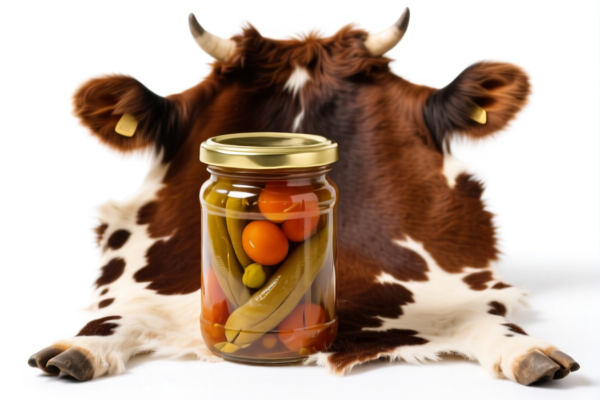
Pickled cucumbers, commonly known as pickles, are preserved cucumbers prepared by soaking in a solution of brine (salt water), vinegar, or lemon juice. In international trade, they are primarily classified based on their preservation method (vinegar/acid vs. fermentation) and processing level.
Fermented Pickles: Cucumbers preserved naturally through lactic acid fermentation (often labeled as "sour," "kosher," or "traditional" pickles).
Vinegar-Pickled Cucumbers: Cucumbers preserved using added vinegar or other acids, often with sugar and spices (common "relish" or "sweet and sour" styles).
⚠️ Key Distinction Point:
- If preserved primarily through fermentation (lactic acid bacteria) → Classified under Chapter 20 or 0711 (depending on temporary preservation).
- If preserved primarily through vinegar/acetic acid → Classified under HS 2001.
- Note: Most commercially available pickles in global trade are vinegar-pickled or acidified, falling squarely under 0711.90 or 2001.90.
📦 II. HS Code Classification Details (2026 Latest Tariff Authority Comparison)
| HS Code | Product Description | Application Scenario | Preservation Method |
|---|---|---|---|
0711.90.10.00 |
Cucumbers and gherkins, provisionally preserved (e.g., in brine, SO₂, etc.), ** unfit for immediate consumption** | Temporary storage during transport; not yet final product | ✅ Provisional (not final) |
0711.90.90.00 |
Other vegetables provisionally preserved | Bulk fermentation in transit | ✅ Provisional |
2001.90.60.00 |
Cucumbers and gherkins, prepared or preserved by vinegar or acetic acid | Most common pickles (jarred, bottled, canned) | ✅ Vinegar/Acid |
2001.90.65.00 |
Other fruits and vegetables, prepared/preserved by vinegar/acetic acid | Relishes, mixed pickles | ✅ Vinegar/Acid |
2005.70.00.00 |
Other vegetables, provisionally preserved (but not frozen), other than vinegar/acetic acid | Fermented pickles (non-vinegar) | ❌ No Vinegar |
0712.90.90.00 |
Dried vegetables, whole, cut, sliced, etc. | Pickle chips (dehydrated) | ✅ Dried |
🔍 Key Reminder:
- Final consumer pickles (ready-to-eat) are almost always classified under 2001.90.60.00 if vinegar-pickled.
- If the product is fermented without added vinegar (e.g., traditional kosher dills), it may fall under 2005.70.00.00 or 0711.90 depending on moisture content and final state.
- Do not classify ready-to-eat pickles as fresh cucumbers (0707.00); this is a common error that leads to heavy penalties.
💰 III. 2026 Latest Tariff Rate Details (Including Surcharges, Policy Add-ons)
✅ Applicable Country: United States (US)
✅ Origin: China (CN)
✅ Effective Time: November 10, 2025 onwards (including subsequent imports)
🎯 1. 2001.90.60.00 —— Cucumbers and Gherkins, Prepared or Preserved by Vinegar or Acetic Acid
| Item | Content |
|---|---|
| Basic Tariff Rate | 6.4% (ad valorem) |
| USITC Surcharge | 0% (No 301 Section surcharge on this specific subheading for food items in many cases, but verify latest USITC footnote) |
| IEEPA Surcharge | 10% (Applicable to Chinese/origin products under IEEPA Executive Orders, effective Nov 2025) |
| Total Tariff Rate | 16.4% |
| Tax Calculation | CIF Value × 16.4% |
| De Minimis Eligibility | ❌ Not Eligible (deny_de_minimis for food items from China) |
| Legal Basis Path | IEEPA:9903.01.25 → USITC:2001.90.60.00 |
📌 Explanation:
- 6.4% is the standard MFN rate for prepared pickles.
- 10% IEEPA surcharge applies to most Chinese-origin agricultural processed goods as of late 2025.
- Note: Some specific pickle products may be exempt from 301 tariffs, but IEEPA surcharges are broader. Always check the latest USITC footnote for 2001.90.60.
🎯 2. 0711.90.10.00 —— Provisionally Preserved Cucumbers (Unfit for Immediate Consumption)
| Item | Content |
|---|---|
| Basic Tariff Rate | 8% |
| USITC Surcharge | 0% |
| IEEPA Surcharge | 10% |
| Total Tariff Rate | 18% |
| Tax Calculation | CIF Value × 18% |
| De Minimis Eligibility | ❌ Not Eligible |
| Legal Basis Path | IEEPA:9903.01.25 → USITC:0711.90.10.00 |
📌 Note:
- This applies to bulk cucumbers in brine shipped for further processing, not ready-to-eat products.
- Higher base rate due to provisional status.
🎯 3. 2005.70.00.00 —— Other Vegetables (Fermented, Non-Vinegar)
| Item | Content |
|---|---|
| Basic Tariff Rate | 5.5% |
| USITC Surcharge | 0% |
| IEEPA Surcharge | 10% |
| Total Tariff Rate | 15.5% |
| Tax Calculation | CIF Value × 15.5% |
| De Minimis Eligibility | ❌ Not Eligible |
| Legal Basis Path | IEEPA:9903.01.25 → USITC:2005.70.00.00 |
📌 Note:
- Applies to traditional fermented pickles without added vinegar.
- Lower base rate, but still subject to IEEPA.
🛠️ IV. Customs Clearance Practical Advice (Real-World Pitfall Avoidance Guide)
✅ 1. Required Documentation Checklist (Missing Any Will Cause Delays)
| Document | Required | Description |
|---|---|---|
| ✅ Product Specification Sheet | ✔️ | Includes ingredients, preservatives, pH level, sugar content |
| ✅ Formula Sheet | ✔️ | Exact composition for FDA/USDA review |
| ✅ Product Photos (Including Label) | ✔️ | Clear image of front/back label, nutrition facts, ingredients |
| ✅ Third-Party Test Report | ✔️ | pH test, microbiological safety, heavy metals |
| ✅ Commercial Invoice | ✔️ | Must clearly state "Pickled Cucumbers Prepared by Vinegar" |
| ✅ Certificate of Origin (CO) | ✔️ | Required for IEEPA assessment |
| ✅ Packing List | ✔️ | Detail net/gross weight, pallet details |
✅ 2. Declaration Tips (Key Mantra)
🔥 "Vinegar = 2001, Fermented = 2005, Fresh = 0707. Wrong Code = Penalty!"
| Scenario | Correct Declaration | Incorrect Practice |
|---|---|---|
| Jarred pickles with vinegar | 2001.90.60.00 |
Misdeclared as "cucumbers" → 0% but flagged for fraud |
| Bulk cucumbers in brine for processing | 0711.90.10.00 |
Declared as finished goods → Wrong tariff |
| Fermented "sour" pickles (no vinegar) | 2005.70.00.00 |
Declared as vinegar pickles → Over/underpayment |
| Pickle relish (mixed veggies) | 2001.90.65.00 |
Declared as single ingredient → Inaccurate |
✅ 3. Special Circumstances Handling
| Scenario | Handling Advice |
|---|---|
| OEM/Private Label | Provide client order + design proof to avoid "generic" classification issues |
| Spicy/Kosher Variants | Still 2001.90.60.00 if vinegar-based; provide ingredient list for allergen control |
| Low-Sodium Pickles | Same HS code; declare sodium content for FDA compliance |
| Import for Research/Sample | May qualify for temporary admission; apply for exemption if eligible |
🌍 V. Global Main Market Customs Comparison (2026 Latest)
| Country/Region | Recommended HS Code | Tariff | Certification Requirements | Remarks |
|---|---|---|---|---|
| 🇺🇸 USA | 2001.90.60.00 |
16.4% (China) | FDA + FSMA Compliance | High scrutiny on additives |
| 🇨🇳 China | 2001.90.60.00 |
10% | None | Low barrier |
| 🇪🇺 EU | 2001.90.60.00 |
8% (MFN) | CE + ErP (for packaging) | Strict on preservatives |
| 🇦🇺 Australia | 2001.90.60.00 |
5% | Biosecurity Inspection | Quota restrictions may apply |
| 🇯🇵 Japan | 2001.90.60.00 |
8.5% | JAS + Food Sanitation Act | Strict on pesticide residues |
📌 Conclusion:
- USA has the highest effective tariff due to IEEPA surcharges;
- EU and Japan are strict on food safety certifications;
- China imports pickles with low barriers, making it a potential alternative market.
📌 VI. Common Errors & Pitfall Guide (Blood and Tears Lessons)
❌ Error 1: Declaring ready-to-eat pickles as "Fresh Cucumbers" (0707.00)
👉 Consequence: Tariff evasion detection → Fines + Seizure
❌ Error 2: Not providing pH test for acidic pickles
👉 Consequence: FDA rejection → Product Destruction or Re-export
❌ Error 3: Mixing vinegar and fermented pickles in one shipment without clear segregation
👉 Consequence: Customs confusion → Delay + Additional Inspection Costs
❌ Error 4: Ignoring IEEPA surcharges on IEEPA-listed food items
👉 Consequence: Underpayment → Back Taxes + Penalties
✅ Correct Practice:
"Vinegar-Pickled Cucumbers, 12 oz Jar, Net Weight 350g, Ingredients: Cucumbers, Vinegar, Salt, Sugar, Spices. pH < 4.6. FDA Registered Facility."
🎯 VII. Conclusion: Professional Declaration, Save Time, Cut Costs!
🎯 Remember the Mantra:
🔹 "Vinegar is 2001, Fermented is 2005, Fresh is 0707. Wrong Code = Big Trouble!"
🔹 "HS Code determines fate, tariff difference is 10 points, wrong declaration costs thousands!"
📌 Pro Tip:
If your pickles are originated from Vietnam, Mexico, or Thailand, you may apply for IEEPA Exemption, reducing tariffs to 0%~6%;
Recommend pre-approval (Advance Ruling) for complex formulations to avoid clearance risks.
📣 Immediate Action:
📞 Contact a professional customs broker + Provide product photos + Apply for HS Code Pre-ruling
🚀 Let your pickles clear customs smoothly, export efficiently, and double profits!
✨ Professional clearance starts with accurate classification!
💼 Every penny of your cost deserves to be precisely calculated!
用户评价
关于 HS 编码归类
协调制度(HS)是由世界海关组织(WCO)制定的国际贸易商品分类标准。全球 200 多个国家采用 HS 系统作为海关关税、贸易统计和进出口监管的基础。
每个 HS 编码遵循以下层级结构:
- 章(2 位)——商品大类(例如:第 84 章:机器和机械设备)
- 品目(4 位)——章内的更具体分类
- 子目(6 位)——国际通用细分,所有 WCO 成员国统一使用
- 本国细分(8-10 位)——各国自行扩展的细分编码,如美国 HTSUS 10 位编码
正确的 HS 编码归类对于顺利通关、准确缴纳关税和遵守贸易法规至关重要。错误归类可能导致海关延误、多缴关税或罚款。
从CN进口到US时,适用的关税税率可能包括:
- 最惠国(MFN)税率——适用于 WTO 成员国的标准关税税率
- 普通税率——适用于无贸易协定国家
- 贸易救济关税——附加关税,如 301 条款(反倾销)、232 条款(国家安全)或反补贴税
本页内容仅供参考。如需正式归类,请咨询当地海关或持牌报关代理。