pickled sheepskins without wool for leather processing
CN → US商品图片
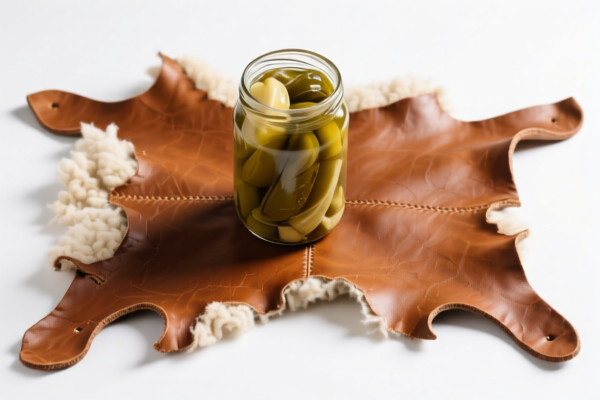
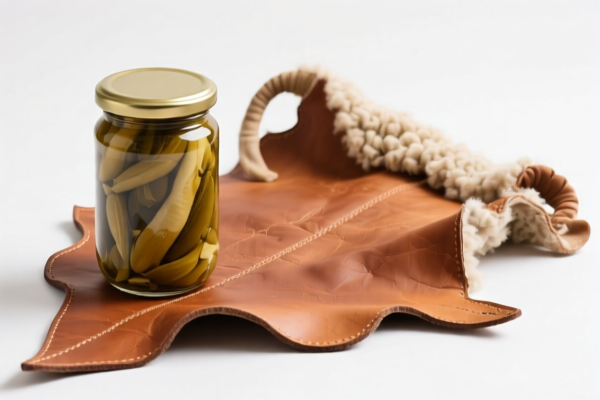


AI分析
🐑 Pickled Sheepskins Without Wool for Leather Processing (Pickled Skins)
🌐 HS Code Reference & Clearance Guide | 2026 Latest Tariff Analysis | Professional通关 Strategy
📌 1. Product Definition & Classification: What Are "Pickled Sheepskins"?
Pickled sheepskins without wool (also known as pickled sheeppelts) are raw animal hides that have undergone a pickling process (acidification, typically with hydrochloric acid or formic acid) to lower the pH and preserve them during transport.
- Key Feature: The wool is removed (burred/scoured), leaving only the hide/skin layer suitable for further leather processing (tanning, dyeing, finishing).
- State: Preserved, not fully tanned into leather yet.
- Usage: Primary raw material for producing sheepskin leather (e.g., for gloves, jackets, linings, luxury goods).
⚠️ Critical Distinction:
- Pickled hides/skins ≠ Tanned leather (Chapter 41 vs. Chapter 41/42 depending on further processing).
- With wool (sheepskins) vs. Without wool (sheepskins/skins): Wool removal significantly affects classification.
- Raw (undried/salted) vs. Pickled (acid-preserved): Pickling is a specific preservation method under HS heading 4104/4105.
📦 2. HS Code Classification Details (2026 Latest Tariff Alignment)
| HS Code | Product Description | Applicable Scenario | Wool Present? | Preservation Method |
|---|---|---|---|---|
4104.41.00.00 |
Bovine leather, tanned/pickled | Cattle hides | ❌ N/A | Pickled/Tanned |
4105.30.00.00 |
Sheepskin/Skin, pickled | Sheepskins without wool, pickled | ❌ No | Pickled |
4105.30.90.00 |
Other sheepskins, pickled | Sheepskins with wool, pickled | ✅ Yes | Pickled |
4105.90.00.00 |
Other sheepskins, not tanned | Raw sheepskins (salted/dried) | ❌/✅ | Raw |
4106.21.00.00 |
Skins of other animals, pickled | Goat, pig, etc. | ❌ | Pickled |
🔍 Key Reminder:
- HS Code4105.30.00.00is the most accurate for sheepskins without wool, pickled.
- If wool is still present, use4105.30.90.00.
- Do NOT classify as "raw skins" (4105.90) if pickled, as pickling is a distinct preservation process.
- Do NOT classify as "tanned leather" (4106) unless chrome/vet tanning is complete.
💰 3. 2026 Latest Tariff Rates (US Import from China)
✅ Applicable Country: United States (US)
✅ Origin: China (CN)
✅ Effective Date: From November 10, 2025 (including subsequent imports)
🎯 1. 4105.30.00.00 – Sheepskin, Pickled (Without Wool)
| Item | Content |
|---|---|
| Base Duty Rate | 0% (ad valorem) |
| USITC Additional Duty | +25% (from USITC Footnote 9903.88.01) |
| IEEPA Additional Duty | +10% (for China/HK origin, effective Nov 10, 2025) |
| Total Duty Rate | 35% |
| Tax Calculation | CIF Value × 35% |
| De Minimis Exemption | ❌ Not Eligible (deny_de_minimis) |
| Legal Basis Path | IEEPA:9903.01.25 → IEEPA:9903.01.24 → USITC:4105.30.00.00 → FOOTNOTE:9903.88.01 |
📌 Explanation:
- "USITC Additional Duty 25%" comes from Section 301 of the US Trade Act.
- "IEEPA 10%" is the additional tariff under the International Emergency Economic Powers Act for Chinese goods.
- Total 35% is a high duty rate, requiring advance planning!
- No de minimis exemption: Even small shipments are subject to full duty.
🛠️ 4. Customs Clearance Practical Advice (Pitfall Avoidance Guide)
✅ 1. Required Documentation Checklist (All Mandatory)
| Document | Mandatory | Description |
|---|---|---|
| ✅ Product Specification Sheet | ✔️ | Include: animal species (sheep), skin type (no wool), preservation method (pickled), pH value, moisture content |
| ✅ Photos (with Label) | ✔️ | Clear image of the skin showing no wool, pickling residue, and labels |
| ✅ Commercial Invoice | ✔️ | Must state "Sheepskins, Pickled, Without Wool, for Leather Processing" |
| ✅ Packing List | ✔️ | Detail gross/net weight, number of skins, packaging type |
| ✅ Origin Certificate (CO) | ✔️ | If not China-origin, may qualify for lower rates |
| ✅ Fumigation Certificate | ✔️ | Required for animal products to prevent pest import |
| ✅ Phytosanitary/Animal Health Certificate | ✔️ | Some states require this for animal skins |
✅ 2. Declaration Tips (Key Mnemonics)
🔥 "Pickled ≠ Raw, No Wool ≠ With Wool, Declare Accurately, Avoid Penalties!"
| Scenario | Correct Declaration | Incorrect Action |
|---|---|---|
| Pickled sheepskins (no wool) | 4105.30.00.00 |
Misdeclare as "raw skins" (4105.90) → 20% rate (but risk of reclassification + penalty) |
| Pickled sheepskins (with wool) | 4105.30.90.00 |
Misdeclare as "no wool" → 35% vs. 35% (same rate, but compliance risk) |
| Tanned sheepskin leather | 4106.21.00.00 or 4106.31.00.00 |
Misdeclare as "pickled skin" → Higher rate + seizure risk |
| Mixed shipments (pickled + tanned) | Separate declarations | Mixed declaration → Delays + audits |
✅ 3. Special Circumstances Handling
| Situation | Handling Advice |
|---|---|
| OEM Custom Pickling | Provide pickling formula (acid type, concentration) to prove preservation method |
| Damaged Skins | Provide inspection report; may qualify for lower value assessment |
| Small Shipments (< $800) | ❌ No de minimis exemption for animal products; full duty applies |
| EPA/FDA Regulations | Check if additional environmental or health permits are required |
🌍 5. Global Market Comparison (2026 Latest)
| Country/Region | Recommended HS Code | Duty Rate | Certification Requirements | Notes |
|---|---|---|---|---|
| 🇺🇸 USA | 4105.30.00.00 |
35% (China) | Fumigation + Phytosanitary | High duty due to Section 301 & IEEPA |
| 🇨🇳 China | 4105.30.00.00 |
5% | None | No additional tariffs |
| 🇪🇺 EU | 4105.30.00 |
0% (if CE/FSC) | REACH Compliance | No additional tariffs |
| 🇦🇺 Australia | 4105.30.00 |
5% | Biosecurity Permit | Strict animal product controls |
| 🇯🇵 Japan | 4105.30.00 |
0% | None | Low duty rate |
📌 Conclusion:
- USA has the highest duty rate (35%) for Chinese-origin pickled sheepskins.
- EU, Japan, and Australia have 0-5% rates, making them more cost-effective for re-export.
- China-origin skins in the US face significant tariff barriers.
📌 6. Common Mistakes & Pitfall Guide (Lessons Learned)
❌ Mistake 1: Declaring "pickled skins" as "raw skins" to avoid 25% USITC duty
👉 Consequence: Customs reclassifies → 35% duty + penalty + detention
❌ Mistake 2: Not separating "with wool" vs. "without wool"
👉 Consequence: While rates may be similar, misdeclaration can lead to audit flags for compliance violations
❌ Mistake 3: Omitting fumigation certificate
👉 Consequence: Shipment held or destroyed due to pest control violations
❌ Mistake 4: Using "leather" in declaration when product is still "pickled skin"
👉 Consequence: Misclassification → Higher duty + potential fraud allegations
✅ Correct Declaration Example:
"Sheepskins, Pickled, Without Wool, for Leather Processing, HS Code 4105.30.00.00, Fumigated, Origin: China"
🎯 7. Conclusion: Precise Classification, Cost Savings, Smooth Clearance!
🎯 Remember the Mnemonic:
🔹 "Pickled = 4105.30, No Wool = .00, With Wool = .90, Raw = 4105.90, Tanned = 4106."
🔹 "HS Code Determines Duty, 35% in US, 0% in EU, Declare Accurately, Avoid Fines!"
📌 Tips:
- If your pickled sheepskins are originating from Turkey, India, or Vietnam, you may apply for preferential tariffs (0-5%).
- Consider pre-ruling application with US Customs (CBP) for complex cases.
- For large shipments, negotiate duty drawback programs if re-exporting.
📣 Immediate Action:
📞 Contact a licensed customs broker + Provide product photos + Apply for HS Code pre-ruling
🚀 Ensure your pickled sheepskins clear customs smoothly, reduce costs, and maximize profits!
✨ Professional clearance starts with accurate classification!
💼 Every dollar saved counts!
用户评价
关于 HS 编码归类
协调制度(HS)是由世界海关组织(WCO)制定的国际贸易商品分类标准。全球 200 多个国家采用 HS 系统作为海关关税、贸易统计和进出口监管的基础。
每个 HS 编码遵循以下层级结构:
- 章(2 位)——商品大类(例如:第 84 章:机器和机械设备)
- 品目(4 位)——章内的更具体分类
- 子目(6 位)——国际通用细分,所有 WCO 成员国统一使用
- 本国细分(8-10 位)——各国自行扩展的细分编码,如美国 HTSUS 10 位编码
正确的 HS 编码归类对于顺利通关、准确缴纳关税和遵守贸易法规至关重要。错误归类可能导致海关延误、多缴关税或罚款。
从CN进口到US时,适用的关税税率可能包括:
- 最惠国(MFN)税率——适用于 WTO 成员国的标准关税税率
- 普通税率——适用于无贸易协定国家
- 贸易救济关税——附加关税,如 301 条款(反倾销)、232 条款(国家安全)或反补贴税
本页内容仅供参考。如需正式归类,请咨询当地海关或持牌报关代理。