plastic coated men's/boys' uniform
CN → US| HS编码 | 关税税率 | 原产国 | 目的国 | 文档 |
|---|---|---|---|---|
| 6113001005 | 21.3% | CN | US | 官方文档 |
| 6210403500 | 13.8% | CN | US | 官方文档 |
| 6210407500 | 20.8% | CN | US | 官方文档 |
| 3926206000 | 35.0% | CN | US | 官方文档 |
| 6113001005 | 21.3% | CN | US | 官方文档 |
商品图片

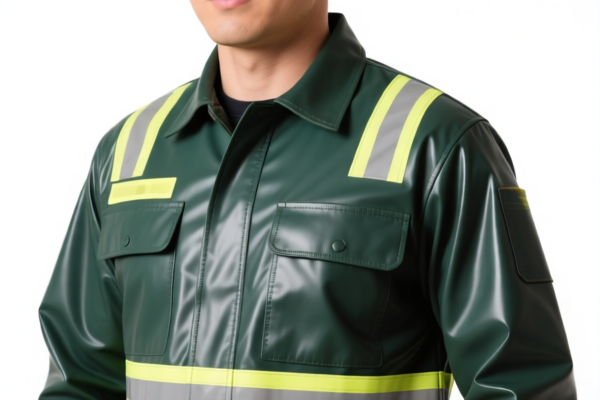
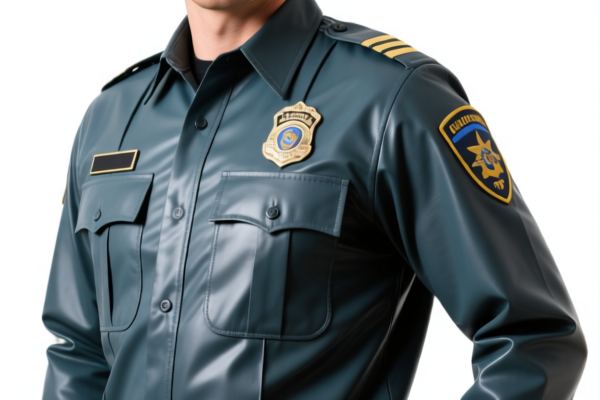
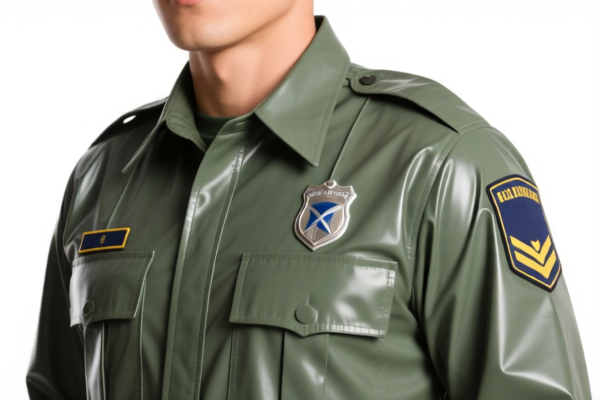
AI分析
🧥 Plastic-Coated Men's/Boys' Uniforms & Workwear
🌐 HS Code Reference & Customs Clearance Guide | 2026 Latest Tariff Analysis | Professional Strategy for US Imports
📌 I. Product Definition & Classification: What Exactly Are "Plastic-Coated Uniforms"?
Plastic-coated men's and boys' uniforms represent a specialized category of protective workwear and specialized attire. In international trade, these garments are defined by their outer layer treatment rather than just their fabric base.
Key Distinctions: 1. Coated Textiles (Headings 6113/6210): Garments made from textile fabrics (knitted or woven) that have been impregnated, coated, covered, or laminated with rubber or plastic. These retain the character of "garments." 2. Plastic Articles (Heading 3926): Articles of plastic (e.g., solid plastic raincoats, PVC suits) that are not essentially textile-based. These are classified as "plastic articles" rather than "garments."
⚠️ Critical Classification Point:
- If the garment has a textile base with a plastic/rubber coating on the outer surface → HS 6113 or 6210
- If the garment is essentially a plastic mold/shape (no textile foundation) → HS 3926
- Men's/Boys' Specificity: Classification depends heavily on whether the garment is "knitted" (6113) or "woven/non-knitted" (6210).
📦 II. HS Code Classification Matrix (2026 Latest Tariff Authority)
| HS Code | Product Description | Key Characteristics | Applicable Garment Type |
|---|---|---|---|
6113.00.10.05 |
Plastic-Coated Men's/Boys' Workwear/Uniforms (Knitted) | Outer layer impregnated/coated with plastic; Knitted construction | Workwear, Jackets, Uniforms (Knitted fabric base) |
6210.40.35.00 |
Plastic-Coated Men's/Boys' Uniforms (Woven) | Outer layer coated with rubber/plastic; Non-knitted (woven) | General Uniforms (Woven fabric base, specific use cases) |
6210.40.75.00 |
Plastic-Coated Men's/Boys' Garments (Woven) | Outer layer coated with rubber/plastic; Specific usage features | Workwear, Protective Clothing (Woven fabric base) |
3926.20.60.00 |
Plastic Articles: Clothing (Non-Textile) | Solid plastic material; Not essentially textile | Plastic Raincoats, PVC Suits, Solid Plastic Uniforms |
🔍 Key Reminder:
- Knitted vs. Woven: The first digit determines the fabric structure.61= Knitted/Crocheted;62= Non-knitted/Woven.
- Plastic-Coated: The coating must be the defining feature for chapters 61/62. If the plastic layer is the entirety of the garment (no fabric), use 3926.
- "Men's/Boys'": Ensure the description explicitly states the gender/age group to avoid misclassification under women's/girls' codes.
💰 III. 2026 Latest Tariff Rate Breakdown (Including Section 301 & IEEPA)
✅ Applicable Country: United States (US)
✅ Origin: China (CN)
✅ Effective Date: November 10, 2025 (and subsequent imports)
🎯 1. 6113.00.10.05 —— Plastic-Coated Men's/Boys' Workwear/Uniforms (Knitted)
| Item | Detail |
|---|---|
| Base MFN Rate | 3.8% (Ad Valorem) |
| Section 301 Additional Duty | +7.5% |
| IEEPA Section 122 Duty | +10% |
| Total Effective Rate | 21.3% |
| Tax Calculation | CIF Value × 21.3% |
| De Minimis Exemption? | ❌ No (deny_de_minimis) |
| Legal Basis Path | IEEPA:9903.01.25 → USITC:6113.00.10.05 |
📌 Explanation:
- Base 3.8%: Standard US MFN tariff for plastic-coated knitted garments.
- Section 301 (7.5%): Additional tariff on Chinese-origin goods under US Trade Act Section 301.
- IEEPA 122 (10%): Additional duty under the International Emergency Economic Powers Act.
- Total 21.3%: High cost impact. De minimis (Section 321) does NOT apply, meaning even small shipments are subject to full duties and entry formalities.
🎯 2. 6210.40.35.00 —— Plastic-Coated Men's/Boys' Uniforms (Woven)
| Item | Detail |
|---|---|
| Base MFN Rate | 3.8% (Ad Valorem) |
| Section 301 Additional Duty | 0.0% |
| IEEPA Section 122 Duty | +10% |
| Total Effective Rate | 13.8% |
| Tax Calculation | CIF Value × 13.8% |
| De Minimis Exemption? | ❌ No (deny_de_minimis) |
| Legal Basis Path | IEEPA:9903.01.25 → USITC:6210.40.35.00 |
📌 Note:
- This code benefits from $0% Section 301 additional duty, making it significantly cheaper than6113.00.10.05.
- However, it is subject to the 10% IEEPA duty.
- Total 13.8%: The most cost-effective option for woven plastic-coated uniforms.
- Crucial: Must strictly meet the "uniform" and "woven" criteria. Misclassification here can lead to audits.
🎯 3. 6210.40.75.00 —— Plastic-Coated Men's/Boys' Garments (Woven, Other)
| Item | Detail |
|---|---|
| Base MFN Rate | 3.3% (Ad Valorem) |
| Section 301 Additional Duty | +7.5% |
| IEEPA Section 122 Duty | +10% |
| Total Effective Rate | 20.8% |
| Tax Calculation | CIF Value × 20.8% |
| De Minimis Exemption? | ❌ No (deny_de_minimis) |
| Legal Basis Path | IEEPA:9903.01.25 → USITC:6210.40.75.00 |
📌 Explanation:
- Used for woven garments that are not specifically classified as "uniforms" under6210.40.35or have different usage characteristics.
- Higher base rate (3.3% vs 3.8%? Wait, 3.3 is lower, but 301 applies) and 301 duty apply.
- Total 20.8%: Slightly cheaper than knitted (6113) but more expensive than6210.40.35.
🎯 4. 3926.20.60.00 —— Plastic Articles: Clothing (Non-Textile)
| Item | Detail |
|---|---|
| Base MFN Rate | 0.0% (Ad Valorem) |
| Section 301 Additional Duty | +25.0% |
| IEEPA Section 122 Duty | +10% |
| Total Effective Rate | 35.0% |
| Tax Calculation | CIF Value × 35.0% |
| De Minimis Exemption? | ❌ No (deny_de_minimis) |
| Legal Basis Path | IEEPA:9901.25 → USITC:3926.20.60.00 |
📌 Warning:
- Highest Tariff Risk! Even though the base rate is 0%, the 25% Section 301 duty is the highest in this list.
- Only use this for garments made entirely of plastic (e.g., solid PVC raincoats) with no textile foundation.
- Total 35.0%: Considered a "penalty rate" compared to textile-based options. Avoid if a textile base exists.
🛠️ IV. Customs Clearance Practical Advice (Real-World Pitfall Avoidance)
✅ 1. Documentation Checklist (Mandatory)
| Document | Required | Explanation |
|---|---|---|
| ✅ Product Specification Sheet | ✔️ | Detail: Fabric composition (e.g., 100% Polyester woven), Coating material (e.g., PVC, Rubber), Coating weight/Thickness. |
| ✅ Garment Photos | ✔️ | Show outer coating, inner lining (if any), labels, and structure. Must distinguish "coated fabric" from "solid plastic." |
| ✅ Commercial Invoice | ✔️ | Must explicitly state: "Plastic-Coated Men's Workwear, HS Code [XXX]" |
| ✅ Bill of Lading | ✔️ | Standard shipping document. |
| ✅ Origin Certificate (CO) | ✔️ | If claiming preferential treatment (none for CN-US in this case), but still required for origin declaration. |
| ✅ Sample/Physical Inspection | ⚠️ | CBP may request a sample to verify if it is truly "plastic-coated textile" vs "plastic article." |
✅ 2. Classification Strategy (Critical Tips)
🔥 Golden Rule: "Textile Base = 61/62 (Lower Tax); Solid Plastic = 3926 (High Tax)!"
| Scenario | Correct HS Code | Incorrect HS Code | Consequence |
|---|---|---|---|
| Woven fabric + PVC coating | 6210.40.35.00 |
3926.20.60.00 |
Save 21.2% (13.8% vs 35.0%) |
| Knitted fabric + Rubber coating | 6113.00.10.05 |
3926.20.60.00 |
Save 13.7% (21.3% vs 35.0%) |
| Solid PVC Raincoat (no fabric) | 3926.20.60.00 |
6210.40.35.00 |
Audit Risk! Misclassification leads to penalties. |
| Men's vs. Women's | 6113/6210 (Men's) |
6101/6201 (Women's) |
Different Tax Rates! Ensure gender specificity. |
✅ 3. Special Considerations
| Situation | Handling Advice |
|---|---|
| De Minimis (Section 321) | ❌ NOT APPLICABLE. All these HS codes are flagged as deny_de_minimis. Even packages under $800 must file formal entry and pay duties. |
| Mixed Containers | If a shipment contains both plastic-coated uniforms and non-coated uniforms, separate HS Codes must be declared. Do not lump them together. |
| "Uniform" Definition | Ensure the garment is clearly identifiable as a "uniform" (e.g., specific logos, standard design for employees) to support 6210.40.35. If it's generic workwear, 6210.40.75 may be safer. |
| Pre-Submission Ruling | 🚀 Strongly Recommended. Apply for a CBP Binding Ruling before shipping. Given the high stakes (13.8% vs 35.0%), a pre-ruling protects against retroactive penalties. |
🌍 V. Global Market Comparison (2026)
| Country/Region | Recommended HS Code | Tariff (China Origin) | Key Certification | Remarks |
|---|---|---|---|---|
| 🇺🇸 United States | 6210.40.35.00 |
13.8% | No specific, but COOL may apply | Best Value for woven. Avoid 3926. |
| 🇨🇳 China | 6210.40.35.00 |
Varies (Import Duty) | N/A | Focus on export compliance. |
| 🇪🇺 EU | 6210.40.35.00 |
4.5% | REACH, CE (if protective) | No Section 301 equivalent, but VAT applies. |
| 🇬🇧 UK | 6210.40.35.00 |
4.5% | UKCA | Post-Brexit rules apply. |
| 🇨🇦 Canada | 6210.40.35.00 |
0-6.5% | Canada Border Services | Lower tariffs than US, but strict origin rules. |
📌 Conclusion:
- The US market is the most expensive due to Section 301 and IEEPA duties.
- Woven garments (6210) are significantly cheaper than knitted (6113) or solid plastic (3926).
- Plastic-Coated Textiles are the optimal classification for cost-saving, provided the product has a textile base.
📌 VI. Common Errors & Pitfall Guide (Lessons Learned)
❌ Error 1: Classifying a woven, plastic-coated uniform as 3926.20.60.00 (Plastic Article).
👉 Consequence: Pay 35% instead of 13.8%. Loss of 21.2% in profit margin.
❌ Error 2: Ignoring the De Minimis Exemption.
👉 Consequence: Attempting to ship under $800 without formal entry leads to seizure or forced return.
❌ Error 3: Failing to specify "Men's/Boys'" in the description.
👉 Consequence: CBP may reclassify under Women's/Girls' codes (e.g., 6101, 6204), which have different tariff rates and may attract higher scrutiny or different duty rates.
✅ Correct Practice:
Product Description: "Plastic-Coated Woven Men's Work Uniform, PVC Outer Layer, Polyester Base, Logo Embroidered, Model XYZ"
HS Code:6210.40.35.00
Duty Rate: 13.8%
🎯 VII. Conclusion: Strategic Sourcing & Compliance
🎯 Key Takeaway:
🔹 "Woven > Knitted > Solid Plastic" in terms of tariff efficiency for US imports.
🔹 "Textile Base is King" to avoid the 35% penalty rate of HS 3926.
🔹 "No De Minimis" means every shipment requires professional customs brokerage.
📌 Pro Tip:
If your supplier is in China, consider shifting production to Vietnam, Bangladesh, or India if possible, as these countries may not be subject to the same Section 301/IEEPA penalties. Always verify Country of Origin carefully.
📣 Immediate Action Required:
📞 Contact a Licensed US Customs Broker for a Binding Ruling before your first shipment.
📄 Provide Detailed Product Specs (Fabric + Coating) to ensure correct HS classification.
🚀 Optimize for6210.40.35.00to save over 20% in duties.
✨ Precision in Classification, Profit in Clearance!
💼 Your Bottom Line Depends on the First Digit!
用户评价
关于 HS 编码归类
协调制度(HS)是由世界海关组织(WCO)制定的国际贸易商品分类标准。全球 200 多个国家采用 HS 系统作为海关关税、贸易统计和进出口监管的基础。
每个 HS 编码遵循以下层级结构:
- 章(2 位)——商品大类(例如:第 84 章:机器和机械设备)
- 品目(4 位)——章内的更具体分类
- 子目(6 位)——国际通用细分,所有 WCO 成员国统一使用
- 本国细分(8-10 位)——各国自行扩展的细分编码,如美国 HTSUS 10 位编码
正确的 HS 编码归类对于顺利通关、准确缴纳关税和遵守贸易法规至关重要。错误归类可能导致海关延误、多缴关税或罚款。
从CN进口到US时,适用的关税税率可能包括:
- 最惠国(MFN)税率——适用于 WTO 成员国的标准关税税率
- 普通税率——适用于无贸易协定国家
- 贸易救济关税——附加关税,如 301 条款(反倾销)、232 条款(国家安全)或反补贴税
本页内容仅供参考。如需正式归类,请咨询当地海关或持牌报关代理。