plastic floor tiles
CN → US| HS编码 | 关税税率 | 原产国 | 目的国 | 文档 |
|---|---|---|---|---|
| 3918101040 | 40.3% | CN | US | 官方文档 |
| 3926906090 | 39.2% | CN | US | 官方文档 |
| 3926909989 | 22.8% | CN | US | 官方文档 |
| 5904901000 | 35.0% | CN | US | 官方文档 |
| 5904909000 | 35.0% | CN | US | 官方文档 |
| 3925900000 | 40.3% | CN | US | 官方文档 |
商品图片
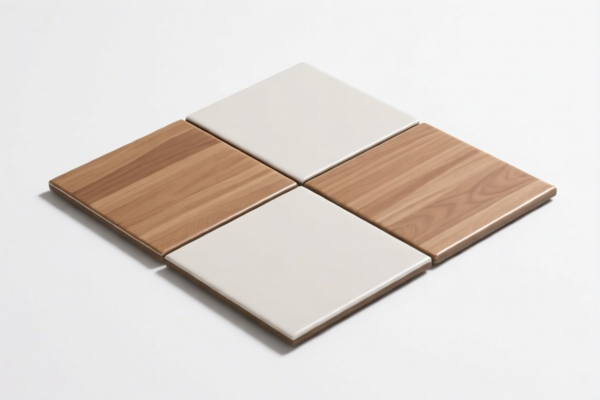
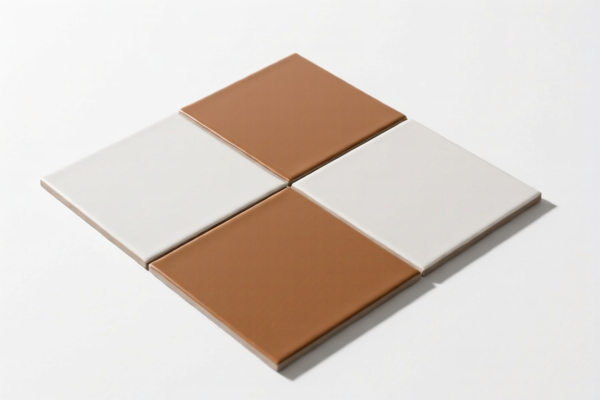
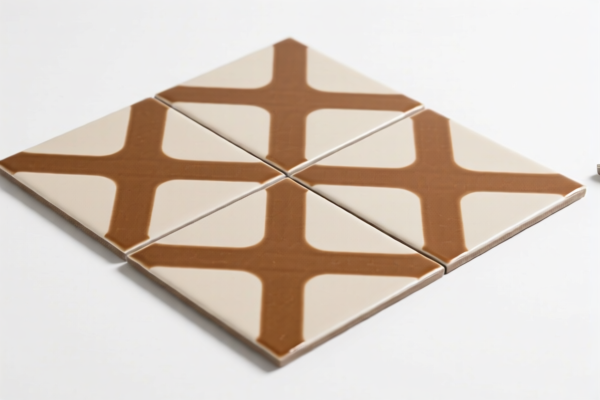
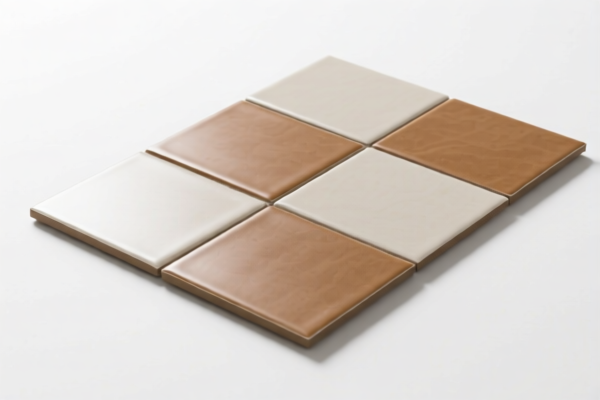
AI分析
🏗️ Plastic Floor Tiles: The Ultimate HS Code & Customs Clearance Guide
🌐 HS Code Reference & Customs Clearance Guide | 2024/2025 Latest Tariff Analysis | Professional Strategy
📌 One Product, Five Potential Classifications: Which One Fits Your Tile?
Plastic floor tiles are ubiquitous in residential, commercial, and industrial settings. However, under the Harmonized System (HS), they don't have a single, obvious code. Depending on the specific material composition, structure, and intended use, they can fall into five different categories. Misclassification can lead to severe tariff penalties (up to 40.3%) or customs delays.
⚠️ Key Challenge:
The biggest risk is misclassifying a "floor covering" as a generic "plastic article" or vice versa. The difference in tariffs ranges from 22.8% to 40.3%.
📦 Section I: HS Code Classification Matrix (Based on Provided Data)
| HS Code | Product Description | Summary/Matching Logic | Total Tax Rate | Key Tax Components |
|---|---|---|---|---|
| 3918.10.10.40 | Floor Coverings, of Plastics | Direct Match: Name contains "plastic" and "floor." Fits PVC/plastic flooring logic perfectly. | 40.3% | Base: 5.3% + Section 301: 25% + Section 122: 10% |
| 3926.90.60.90 | Other Articles of Plastics | Material Match: Plastic material fits Ch. 3926. Falls under "other articles." | 39.2% | Base: 4.2% + Section 301: 25% + Section 122: 10% |
| 3926.90.99.89 | Other Plastic Articles | Broad Fit: Plastic material fits. Generic "other" category for plastic制品. | 22.8% | Base: 5.3% + Section 301: 7.5% + Section 122: 10% |
| 5904.90.10.00 | Floor Coverings, Textile Base | Use Match: Intended as flooring. Inferred as having a plastic coating/layer on textile. | 35.0% | Base: 0.0% + Section 301: 25% + Section 122: 10% |
| 5904.90.90.00 | Other Floor Coverings | Fallback: "Other" category for floor coverings. Plastic inferred as coating/layer. | 35.0% | Base: 0.0% + Section 301: 25% + Section 122: 10% |
| 3925.90.00.00 | Builders' Plastering Work | Construction Fit: Plastic building component. Inferred as architectural element. | 40.3% | Base: 5.3% + Section 301: 25% + Section 122: 10% |
💰 Section II: Detailed Tariff Breakdown & Legal Basis
✅ Applicable Country: United States (US)
✅ Origin: China (CN)
✅ Effective Dates: Various (See below)
🎯 1. The "Perfect Match": HS 3918.10.10.40
Why it fits: The product name explicitly states "Plastic Floor Tiles." HS Chapter 3918 covers "Floor, wall and ceiling coverings of plastics." This is the most accurate classification if the tiles are made primarily of PVC or other polymers specifically designed for flooring.
| Item | Details |
|---|---|
| Base Duty | 5.3% |
| Section 301 Tariff | +25.0% (High tariff impact) |
| Section 122 Tariff | +10.0% (Temporary rate, expires May 2024/2025 depending on renewal) |
| Total Effective Rate | 40.3% |
| De Minimis Eligibility | ❌ No (Deny de minimis for Section 301 goods) |
| Legal Path | USITC:3918.10.10.40 → Footnote 9903.08.10 (Section 301) → IEEPA:9903.01.24 (Section 122) |
📌 Note: This is the highest liability scenario if the product is indeed flooring. Do not assume it's a "cheap" item; the tariff is punitive.
🎯 2. The "Alternative" Matches: HS 3926 Series
Why it fits: If the "tiles" are not technically "floor coverings" but rather loose plastic squares (e.g., interlocking storage bins or non-slip mats not classified as flooring), they might fall under "Other articles of plastics."
Option A: HS 3926.90.60.90
| Item | Details |
|---|---|
| Base Duty | 4.2% |
| Section 301 | +25.0% |
| Section 122 | +10.0% |
| Total | 39.2% |
Option B: HS 3926.90.99.89
| Item | Details |
|---|---|
| Base Duty | 5.3% |
| Section 301 | +7.5% (Lower tier for some plastic goods) |
| Section 122 | +10.0% |
| Total | 22.8% |
📌 Strategy: If your product is not explicitly a "floor covering" (e.g., it's a decorative plastic element or a mat), HS 3926.90.99.89 offers the lowest tax burden (22.8%). However, you must prove it is not a flooring product.
🎯 3. The "Textile Base" Hypothesis: HS 5904 Series
Why it fits: Some "plastic" floor tiles are actually vinyl-coated textile mats. If the backing is textile and the top is plastic/vinyl, it may fall under Chapter 59 (Impregnated, coated, covered or laminated textile fabrics).
| HS Code | Total Tax | Breakdown |
|---|---|---|
| 5904.90.10.00 | 35.0% | Base 0% + Sec 301 25% + Sec 122 10% |
| 5904.90.90.00 | 35.0% | Base 0% + Sec 301 25% + Sec 122 10% |
⚠️ Risk: If you classify as 5904 but the product is 100% plastic with no textile backing, customs will reclassify it to 3918 (40.3%) and penalize you.
🎯 4. The "Construction Component" Hypothesis: HS 3925
Why it fits: If the tiles are large, industrial-grade, or installed as permanent architectural fixtures, they might be viewed as "builders' work of plastics."
| Item | Details |
|---|---|
| HS Code | 3925.90.00.00 |
| Total Tax | 40.3% |
| Breakdown | Base 5.3% + Sec 301 25% + Sec 122 10% |
🛠️ Section III: Customs Clearance Strategy & Recommendations
✅ 1. Classification Decision Tree
-
Is the product installed as permanent flooring?
- ✅ Yes → HS 3918.10.10.40 (40.3%) is the safest and most accurate.
- ❌ No → Proceed to Step 2.
-
Does it have a textile backing?
- ✅ Yes → Consider HS 5904.90.10.00 (35.0%). Requires proof of textile base.
- ❌ No → Proceed to Step 3.
-
Is it a loose, non-permanent plastic mat/square?
- ✅ Yes → Argue for HS 3926.90.99.89 (22.8%). Requires strong product specs showing it's not "flooring."
✅ 2. Critical Documentation for Clearance
| Document | Purpose | Tip |
|---|---|---|
| Product Spec Sheet | Define material composition. | Explicitly state: "100% PVC," "No textile backing," or "Textile base with PVC coating." |
| Installation Manual | Define intended use. | If it says "interlocking" or "removable," it supports HS 3926 (22.8%). If it says "glue down" or "permanent," it supports HS 3918 (40.3%). |
| Photos | Visual proof. | Show cross-section of the tile to prove/disprove textile backing. |
| Commercial Invoice | Accurate description. | Avoid vague terms like "Floor Tile." Use "Plastic Interlocking Mat, Non-Permanent." |
✅ 3. Avoiding the "De Minimis" Trap
🚫 WARNING: Section 301 tariffs (25% or 7.5%) do NOT apply to the $800 de minimis exemption (Section 321).
- If you are shipping small quantities via courier (DHL/FedEx) under $800, you still owe the tariff.
- Customs will assess the Total Tax Rate (e.g., 40.3%) on the entire shipment value.
🌍 Section IV: Global Market Comparison
| Market | Recommended HS Code | Est. Duty Rate | Notes |
|---|---|---|---|
| 🇺🇸 USA | 3918.10.10.40 | 40.3% | Highest risk. Consider alternative HS 3926.90.99.89 (22.8%) if product qualifies. |
| 🇨🇳 China | 3918.10.10.00 | ~5-10% | Lower base rates. No Section 301 retaliation. |
| 🇪🇺 EU | 3918.90.00 | ~6.5% | Standard MFN rate. No punitive surcharges. |
| 🇬🇧 UK | 3918.90.00 | ~6.5% | Post-Brexit trade terms apply. |
📌 Conclusion: The US market is the most hostile due to Section 301 and Section 122 tariffs. The 22.8% vs 40.3% difference is $17,500 per $100,000 shipment. This is a massive cost driver.
📌 Section V: Common Mistakes & Pitfalls
❌ Mistake 1: Using "Plastic Mat" to avoid HS 3918.
👉 Consequence: If customs determines it's primarily used for flooring, they will reclassify to 3918 (40.3%) + penalties.
❌ Mistake 2: Assuming $800 de minimis applies.
👉 Consequence: You will be billed for the full tariff (22.8%-40.3%) by the carrier, plus handling fees.
❌ Mistake 3: Ignoring Section 122.
👉 Consequence: Section 122 (10%) is temporary but significant. It expires in May 2024 (check for renewal). If renewed, the cost is locked in. If not, it drops by 10%. Always check current IEEPA status.
✅ Correct Action:
"Provide a detailed product description: 'Interlocking Plastic Floor Tiles, PVC Material, Non-Permanent, For Residential Use.' Submit photos showing the interlocking mechanism and lack of adhesive backing."
🎯 Section VI: Final Recommendation
- If you want the lowest tax: Argue for HS 3926.90.99.89 (22.8%).
- Requirement: Prove the product is NOT a permanent flooring covering. Emphasize "interlocking," "removable," "mat-like" properties.
- If you want the safest/classic route: Use HS 3918.10.10.40 (40.3%).
- Requirement: Ensure the product is described accurately as a floor covering. This avoids audits and reclassification penalties.
- If the product has a textile base: Use HS 5904.90.10.00 (35.0%).
- Requirement: Provide material analysis confirming textile backing.
📞 Pro Tip: Apply for a Binding Tariff Information (BTI) or Advance Ruling from US Customs (CBP) before large shipments. The cost of the ruling is far less than the risk of a 40.3% tariff penalty.
✨ Accurate Classification Saves Money. Smart Documentation Ensures Speed.
💼 Don't let tariff surprises erode your profit margins.
用户评价
关于 HS 编码归类
协调制度(HS)是由世界海关组织(WCO)制定的国际贸易商品分类标准。全球 200 多个国家采用 HS 系统作为海关关税、贸易统计和进出口监管的基础。
每个 HS 编码遵循以下层级结构:
- 章(2 位)——商品大类(例如:第 84 章:机器和机械设备)
- 品目(4 位)——章内的更具体分类
- 子目(6 位)——国际通用细分,所有 WCO 成员国统一使用
- 本国细分(8-10 位)——各国自行扩展的细分编码,如美国 HTSUS 10 位编码
正确的 HS 编码归类对于顺利通关、准确缴纳关税和遵守贸易法规至关重要。错误归类可能导致海关延误、多缴关税或罚款。
从CN进口到US时,适用的关税税率可能包括:
- 最惠国(MFN)税率——适用于 WTO 成员国的标准关税税率
- 普通税率——适用于无贸易协定国家
- 贸易救济关税——附加关税,如 301 条款(反倾销)、232 条款(国家安全)或反补贴税
本页内容仅供参考。如需正式归类,请咨询当地海关或持牌报关代理。